Pillows for Sale?

It seems last week’s herringbone pillow tutorial was a hit, so I’m back with a follow-up of, you guessed it, more pillows. 

About a year ago, I created this pillow to resemble our house.  Simple and cute, I think.  I don’t think this has popped up in any photos, either, so I thought it was time to share. 
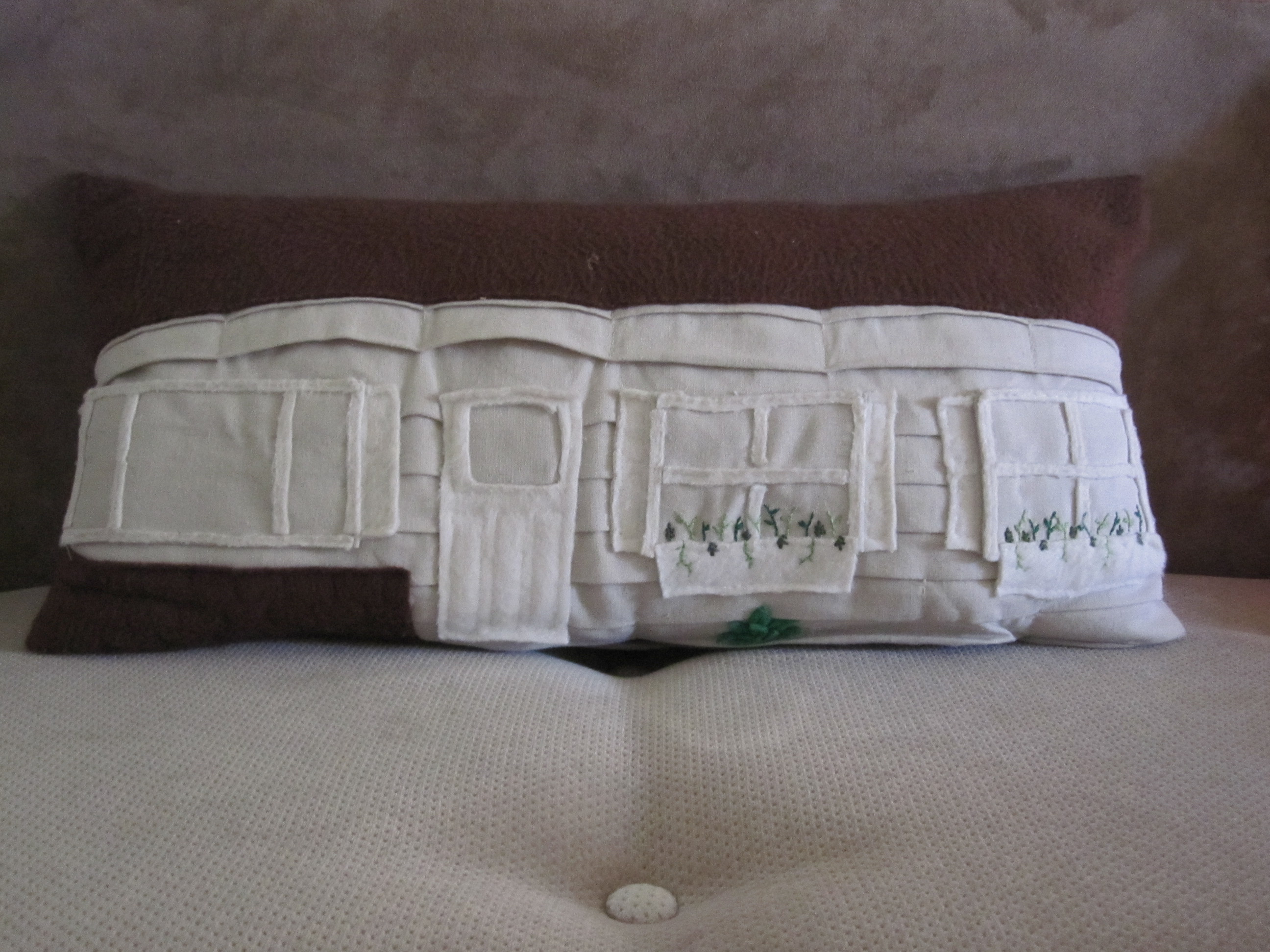
The most difficult part was creating the siding, keeping it even and straight.   To recreate the siding, I used a linen looking cotton and folded it to create pleats.  Then I used felt and fleece to add the detail of windows, doors and plants.

Now, I know these pillows have made a brief appearance in the past, but no explanation has been given.

When we turned the nursery into a big boy room the first time, I make a V monogrammed pillow to go with the new look.  
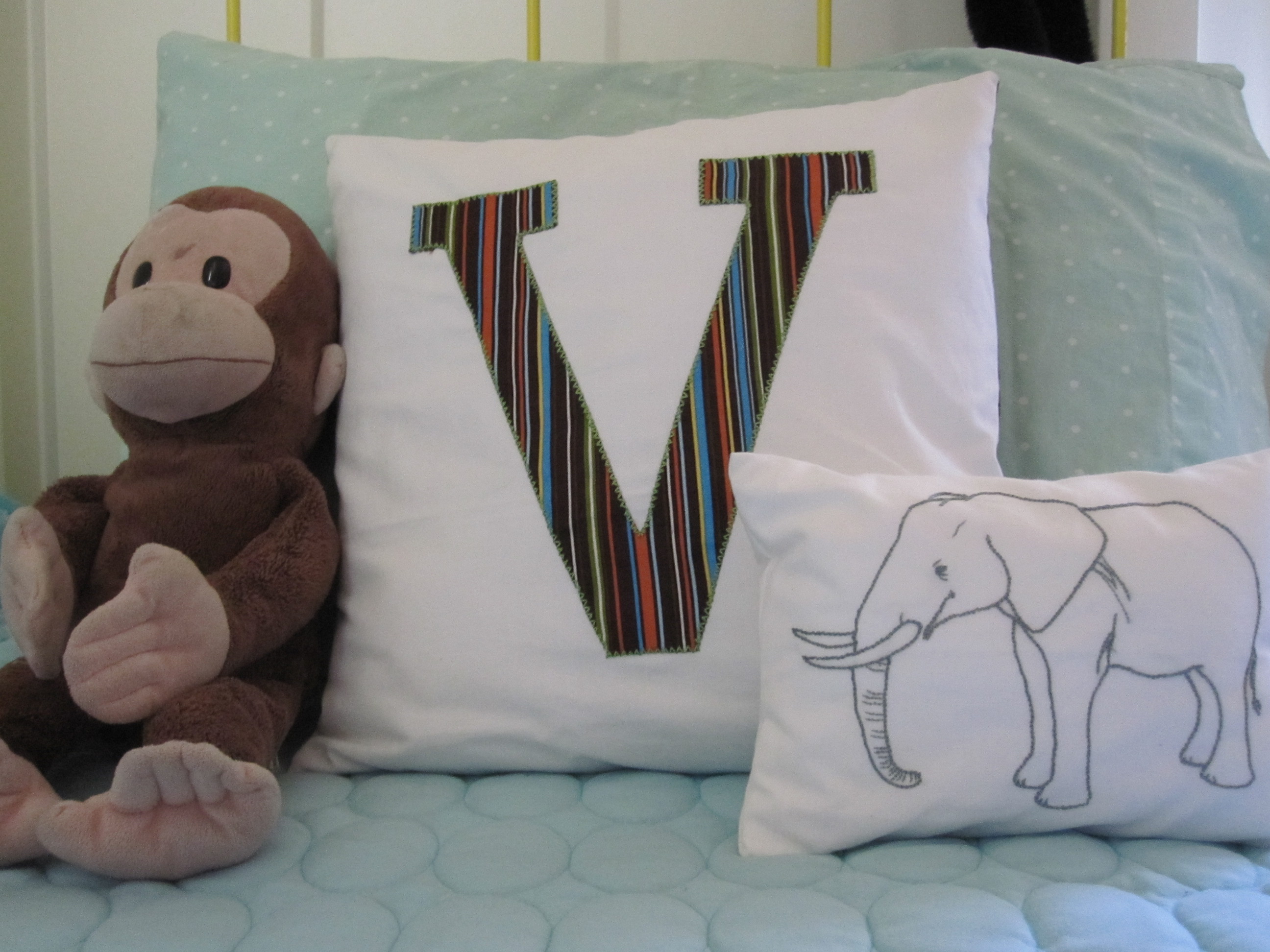
I cut my letter out of the fabric, leaving a 1/2 inch allowance on all sides.  To get clean edges, I folded the 1/2 inch over and used hem tape to glue the edges.  I pinned the V in place and hand stitched a zigzag all around the edges using embroidery floss.  The pillow cover is an envelope closure with buttons keeping it tight.  See the little elephant pillow?  I found an outline of an elephant online, printed it to size, traced the design on my fabric and embroidered the design using a back-stitch. 

For a little more pillow talk, how about these beauties over at Urban Outfitters?

I love the texture of these!  I feel confident that I could recreate the Ruffle Maze pillow and the Tuxedo Ruffles Curved pillow, but I have no clue how to make the texture of the Hand Quilted Velvet pillow

Now, onto the title subject.  I have considered adding pillows to my Etsy shop, would you like to be able to buy my pillow creations?  I don’t think I can accommodate custom orders at the time, but I would like to have a nice selection available.  However, I can’t justify sewing a million pillow covers for myself, so I would love to know if people out there would like to order something.  Any ideas would be greatly appreciated!

Herringbone Pattern Pillow

While the boys and I were wandering the aisles of Target, I spotted this beautiful Fieldcrest pillow.

The only color Target carries is this grey, and we don’t have much, if any, grey in our house.  After inspecting it for a few minutes, I felt confident that I could create something similar.  Luckily, Joann Fabric is within walking distance of Target, so that was our next stop.  I bought a relatively thick light blue fabric on clearance, then we went home and got to work. 

To make a herring bone textured pillow, you’ll need:

Fabric, at least two and a half times as much as the pillow size you want. 

Pins

An iron

Pillow stuffing or a pillow form

Optional:

Hem tape

To make the pillow, first, cut strips of fabric into rough 4 inch wide pieces.  I made strips that were the entire length of my two yard piece.  Cut several strips, then fold in half and iron to create a nice, straight edge.  I chose to add hem tape, just to make sure things couldn’t move around when I started sewing.   

Once you have your strips pressed, cut a piece of fabric one inch larger than the desired finished pillow size; this is the backing piece you will sew your strips to.  Fold in half or measure to find the center of the fabric.  Mark with a pen or pencil. 

Now you’re ready to start cutting, pinning and sewing.  Place the first strip of fabric at a 45 degree angle from your center line.  Trim the end to match the edge of the pillow.  You don’t have to do this, but it will help keep everything straight.  Pin in place.  Place another strip over the top of the first piece, but make a 90 degree angle.  Cut the bottom piece at the end of the one on top.  You will sew over it, but you don’t want the pieces to be short. 

Keep overlapping pieces, pinning in place.  I would suggest doing a few at a time, then remove and sew into place.  Allign the edge of your presser foot with the folded edge of the strip and sew one at a time.  Make sure your pattern stays straight and your pieces are overlapping in the same order.

Repeat until you reach the other end. 

Follow this tutorial to create an envelope closure, then stuff and enjoy!

To see other pillow ideas, check out this felt circle pillow cover I recently shared or these inspiration ideas from Etsy.

How To: Felt Leaf Bowls

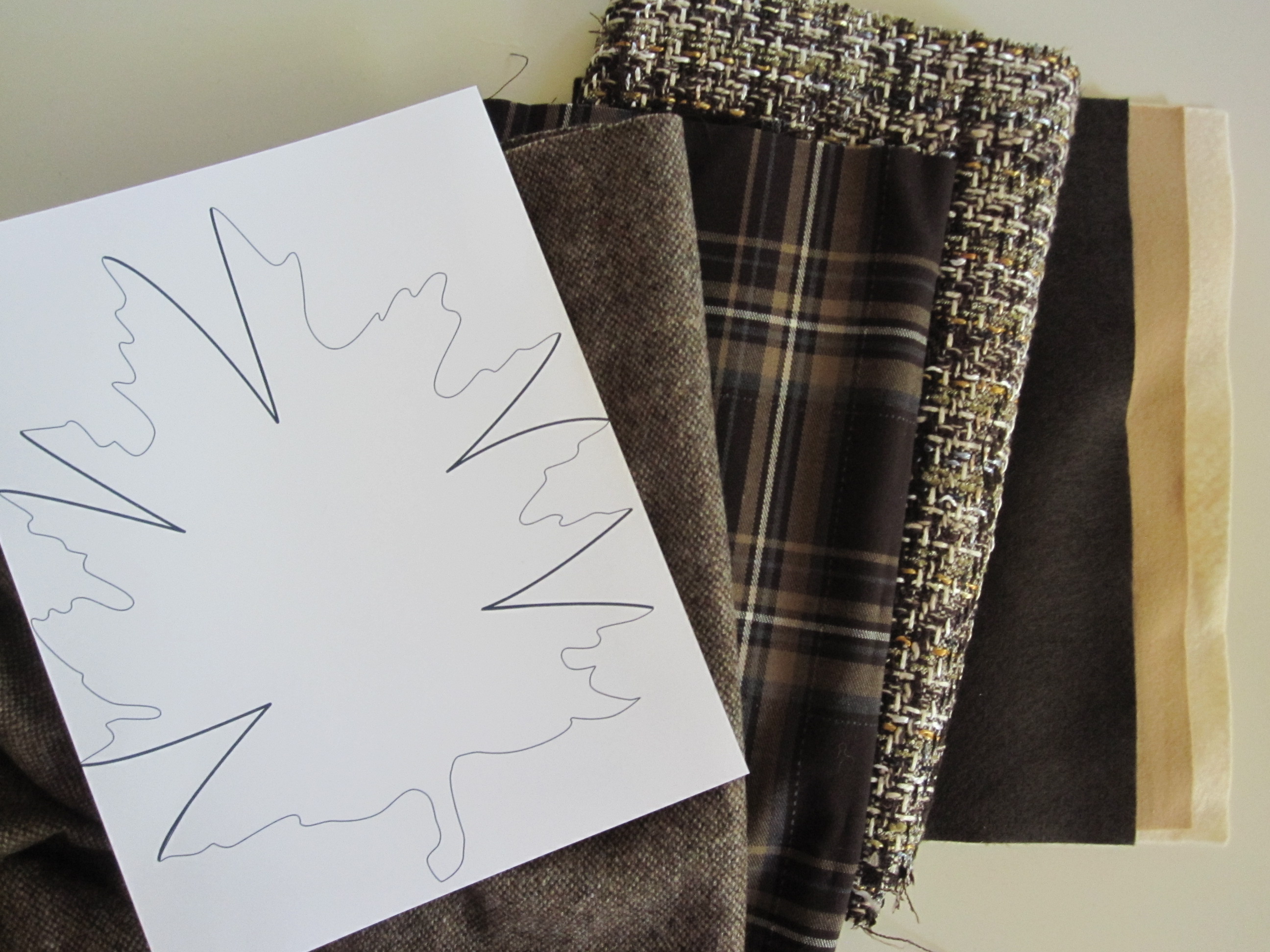
Last week, I shared a  few simple tablescapes, one of which included a set of felt leaf bowls.  I promised to share more about the bowls, so here I am.  Martha told me about this great DIY project.  When I say told, I mean her website suggested I look at these felt and tweed oak leaf bowls.  I printed the template on cardstock and bought a variety of felt and tweed. 

I thought I had purchased the right fusible interface, but I didn’t.  I took a trip to Hobby Lobby and asked for a little help to make sure I had the right interface.  What the woman suggested was “Wonder Under.”  Basically, it’s a sheet of iron on hem tape. One side is rough and the other side is covered in smooth paper.  Perfect for the job. 

I followed Ms. Martha’s instructions, but here are a few photos to help you along.  First, place the interface rough side down on the wrong side (the back) of the tweed square.  Press for 5 to 10 seconds, move the iron to overlap slightly and press again.  Do this until your entire square is fused.  Then, trace the oak leaf pattern on the paper side of the interface.  You don’t have to be precise with the tracing.  You could even make your own leaf pattern, just add the darts. 

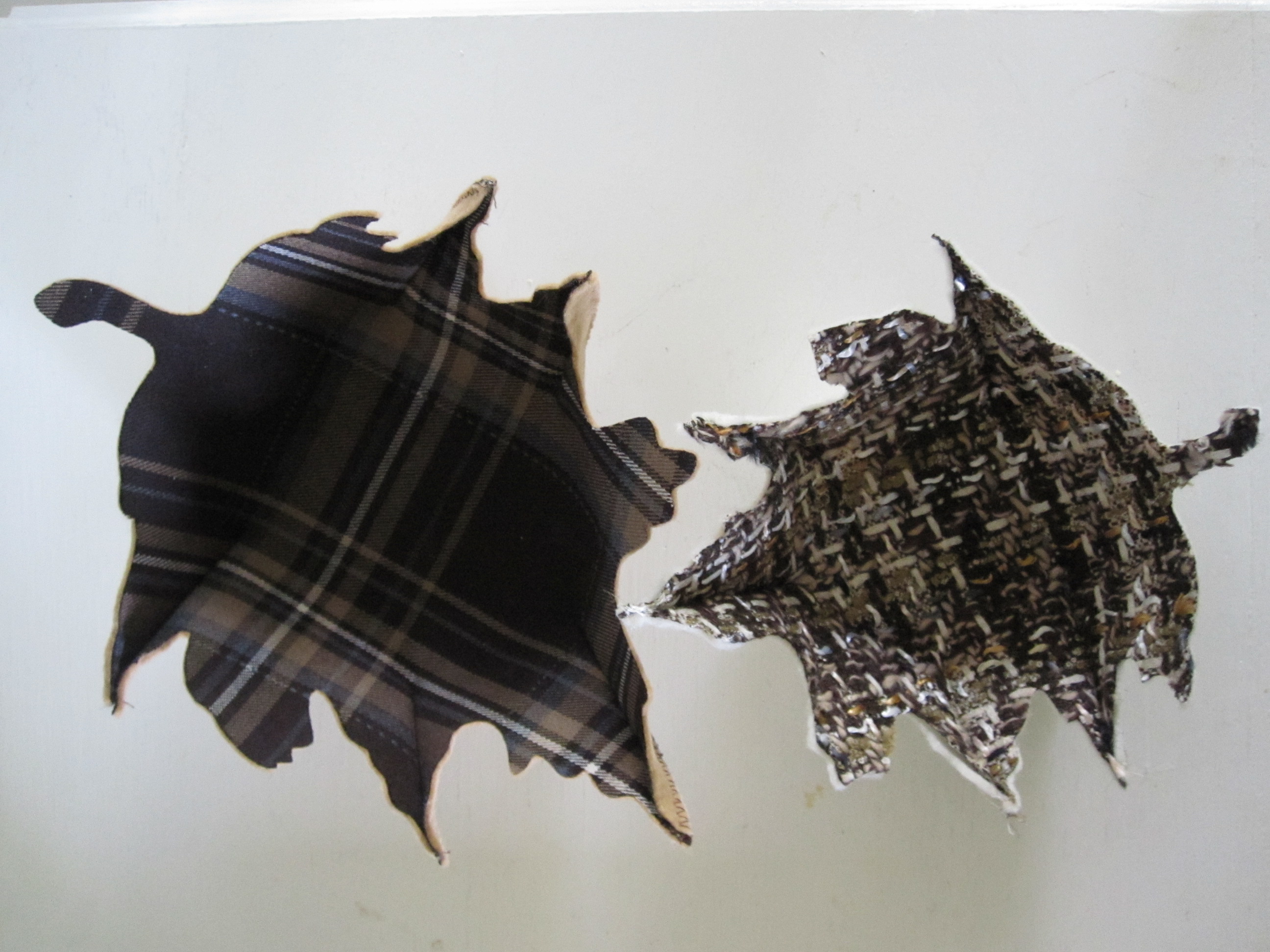
Once you’ve traced the oak leaf, cut the design out.  Remove paper backing and place on the felt square.  Cover with a damp cloth and press for 10 to 15 seconds, or until fused with the felt. 

Cut around the tweed leaf design, getting as close as possible. 

One more step, sewing the darted areas.  I overlapped the backs of my pattern to make a deeper bowl, but Martha suggest sewing with a zig zag stitch without overlapping the fabric. 

I may make another set of shallower bowls, but I like how these look, so I may not.

What do you think?  Anyone going to give these a try?

We’re Stumped!

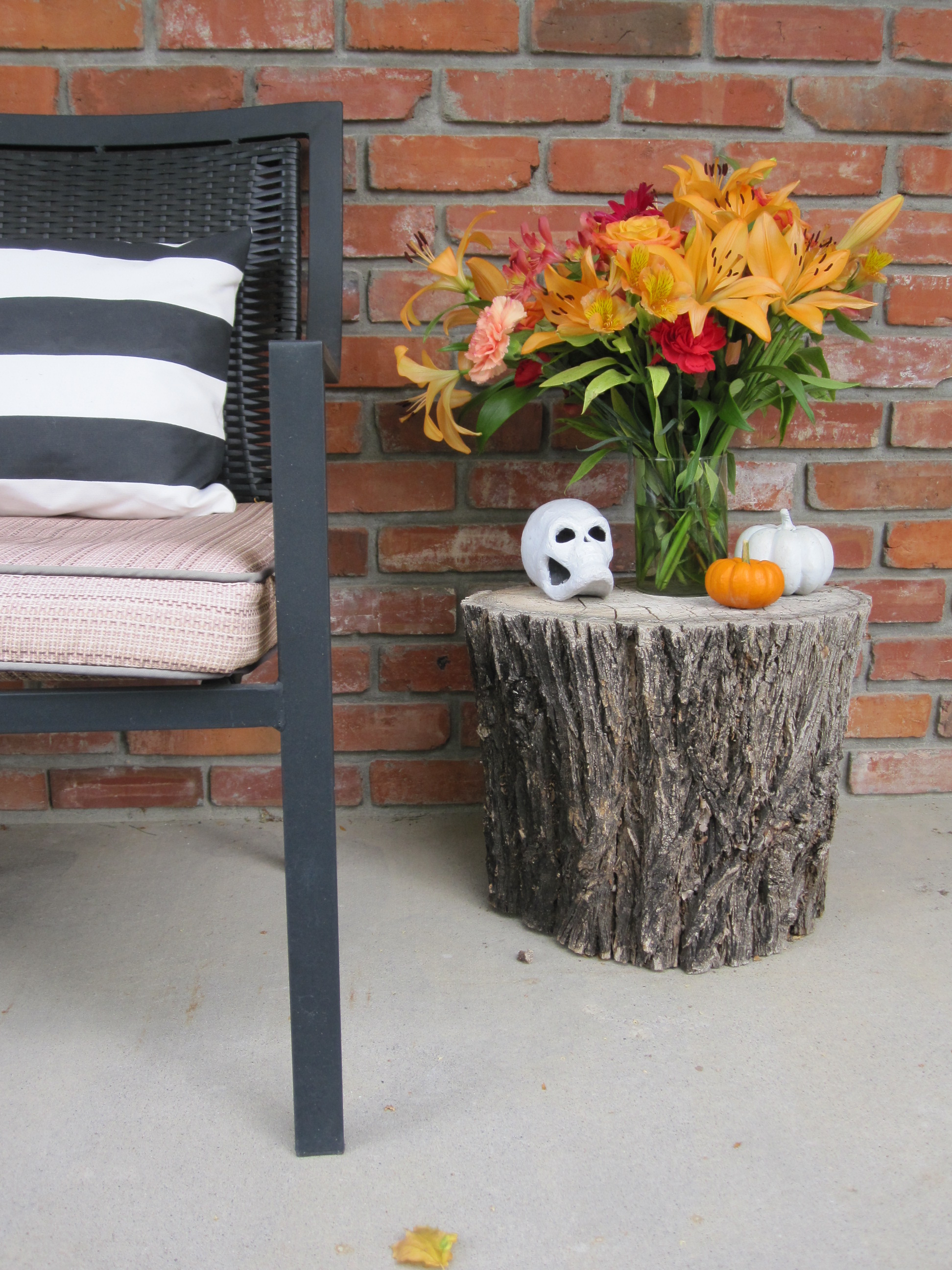
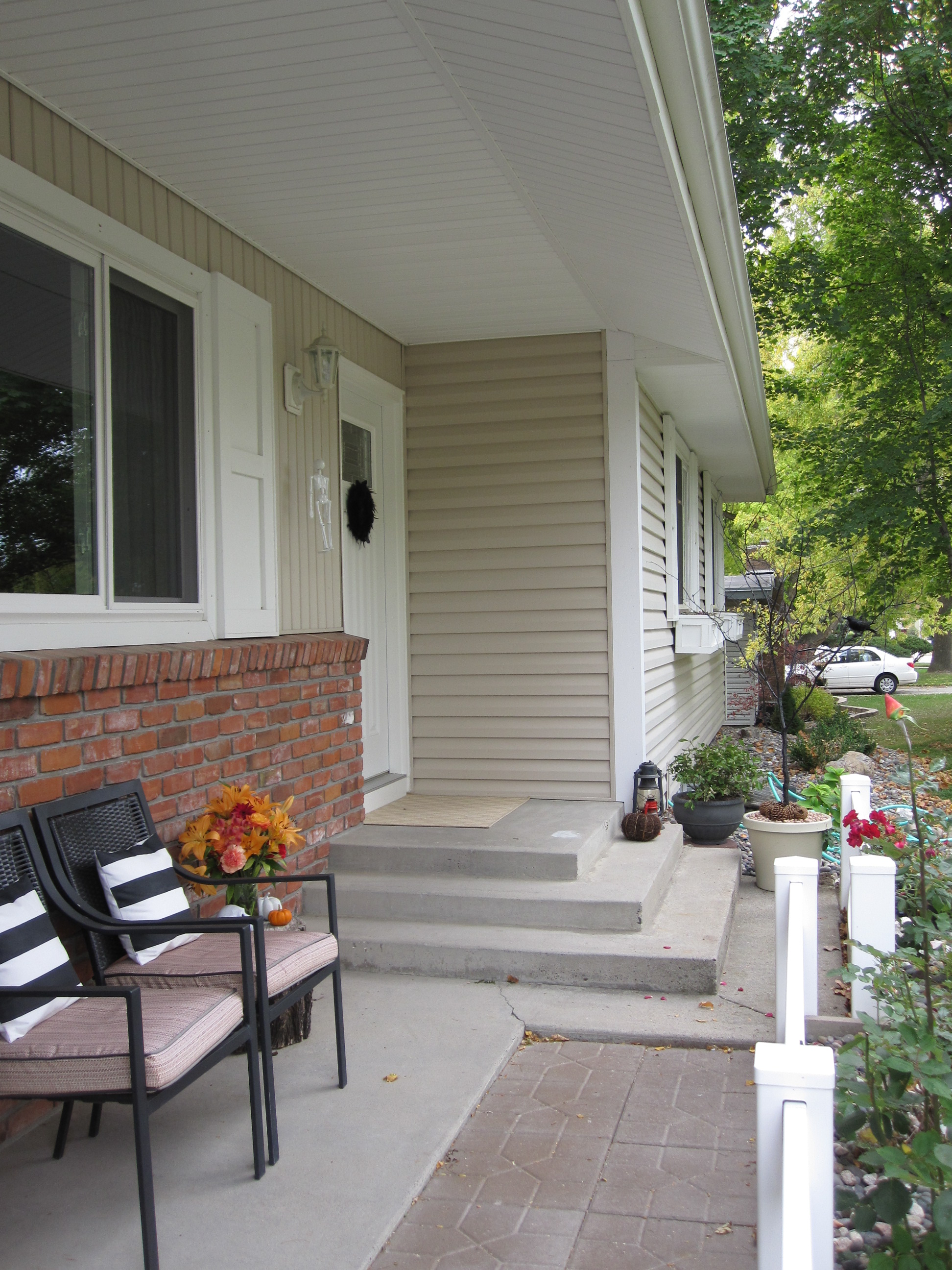
We’re back with yet another Halloween decorating idea.  We’ve already shared a DIY feather wreath and a spooky tree, but why not add a stump side table to an outdoor setting?  We did.  We have a huge woodpile in our backyard.  Usually it helps keep us warm throughout the winter months, but I decided to make it work a little harder.  I picked out a relatively level stump and rolled it to our front walkway and parked it next to our chairs.  I didn’t do anything else to it. 

Then, to Halloween it up a little, I topped it with a vase of pretty flowers, a paper mache skull from Michael’s that I spray painted white, a faux pumpkin from Hobby Lobby (also painted white) and a real baby pumpkin.

 Stump decoration breakdown:

Stump:  FREE

Paper mache skull:  $1.49

Faux pumpkin:  $1.49

White spray paint:  Left over from our DIY dining table

Baby Pumpkin: FREE from a friend

Total for stump and decorations:  $2.98

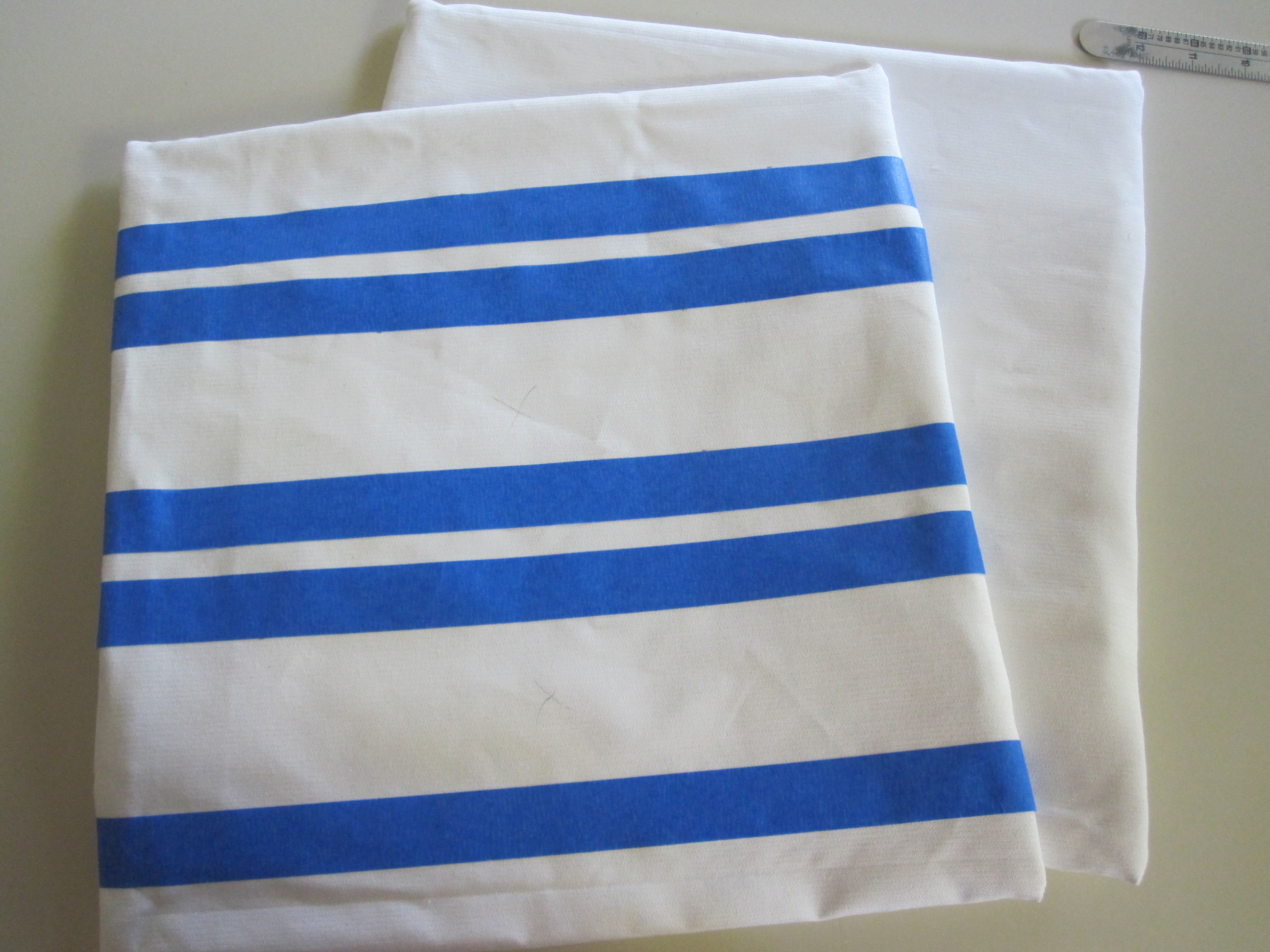
See the striped pillow?  I made that.  I had a few yards of white corduroy fabric left over from an earlier project, so I decided to use that rather than buy more fabric.  First, I sewed the cover, (here’s a tutorial) turning the fabric inside out.  I wanted the smooth part facing out so it would be easier to paint.  Once I had my cover, I taped off 2 1/2 inch wide stripes.

After that, it was easy.  Use black fabric paint and fill in between the lines.  Remove the tape soon after and stuff with a pillow form when completely dry. 

Pillow budget breakdown:

Fabric:  Left over from another project

Fabric paint:  Also left over from a previous project

Two pillow forms: $8.99 at JoAnn Fabric

Total cost for Halloween Pillows:  $8.99

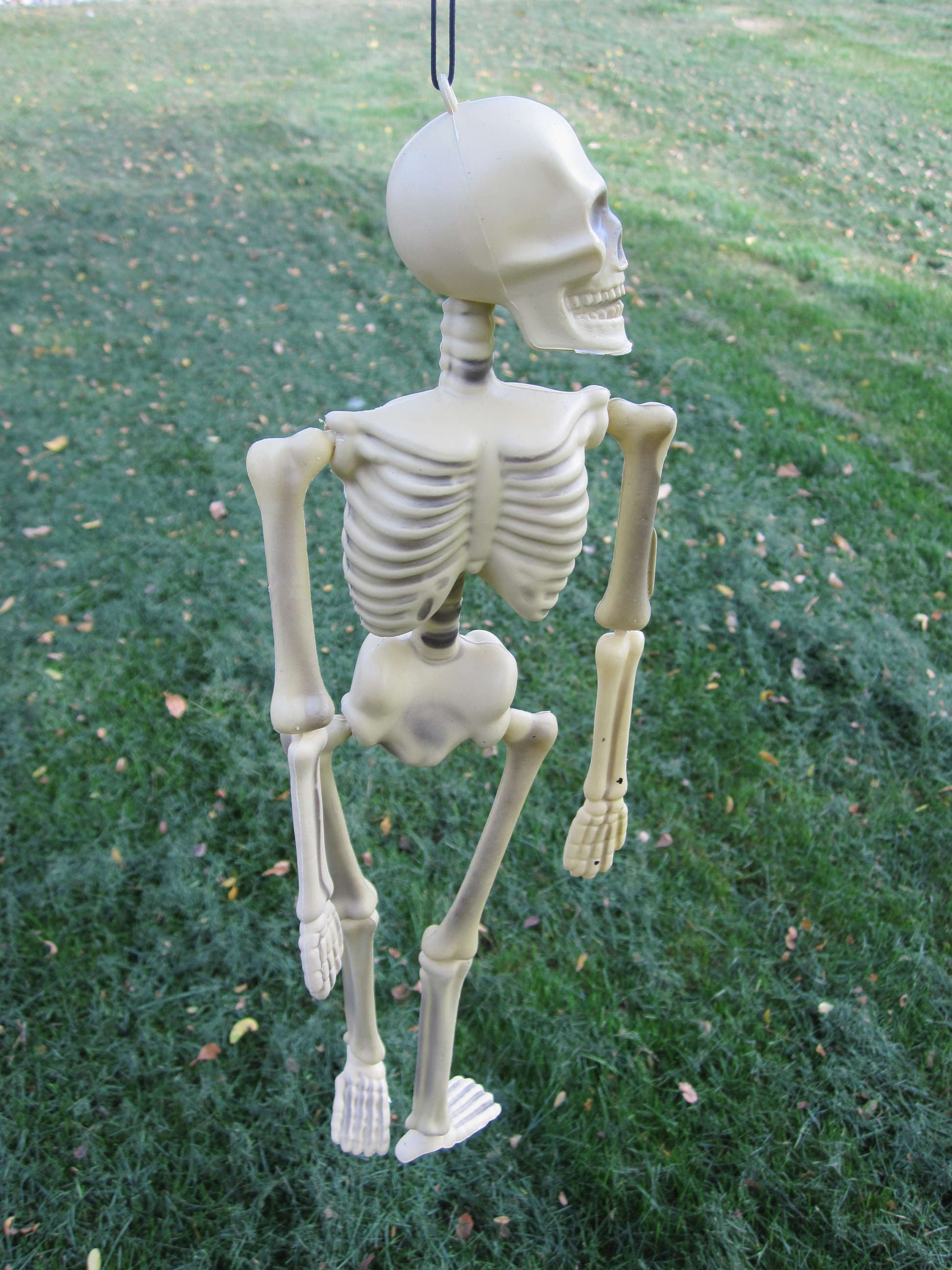
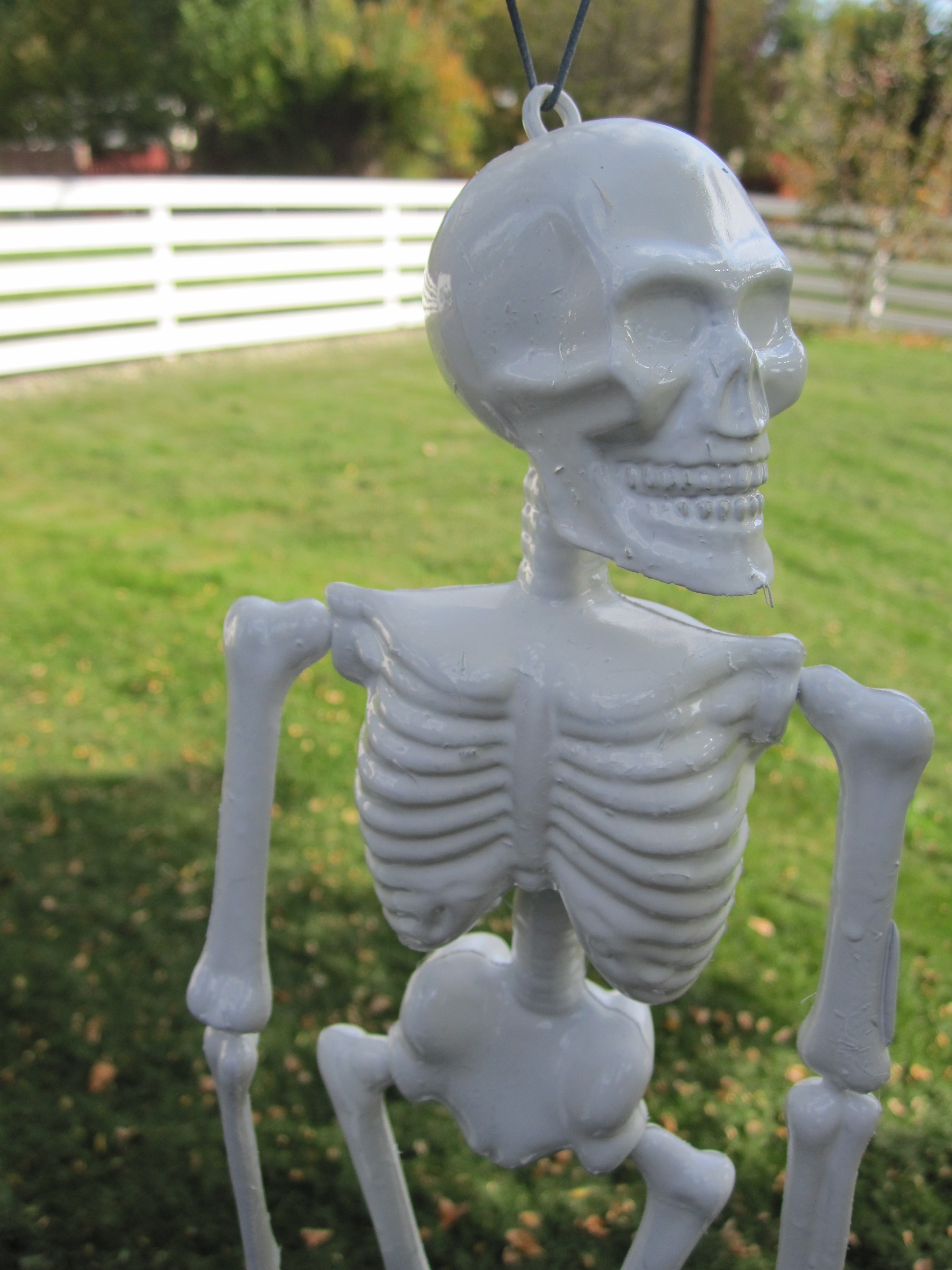
To add more spookyness on the cheap, I picked up a plastic skeleton from Dollar Tree.

 I didn’t like the color, so covered that baby in white spray paint, too. 

Then, my skeleton fell into the freshly cut grass.  I let him dry and pulled off as much as I could and hit him with another coat of white.  He survived – he’s already dead.  Hang with fishing line and you’re done. 

One thing I loved about the Pottery Barn inspiration image were the candles.  Well, I wasn’t about to spend $30.00 or more on candles, so I looked around the house for suitable substitutes.  I had a few vintage oil lamps, so I added those to the mix.  Toss in a grapevine pumpkin and we’re done!

Miscellaneous decoration cost:

Skeleton: $1.00

White spray paint:  Left over

Oil lamps:  FREE (The black one was hanging on our fence when we bought the house and the red was a thrift store find a few years ago.  I think it was $1.50 or so.)

Grapevine pumpkin:  $2.50 at Target (but can multi-purpose for Thanksgiving, too!)

Miscellaneous Total:  $3.50

Which brings our Halloween decoration grand total to…$20.45!  And here’s how it all looks together.

Of course, we still need real pumpkins, but we’re not quite ready yet.

Sew it Begins…

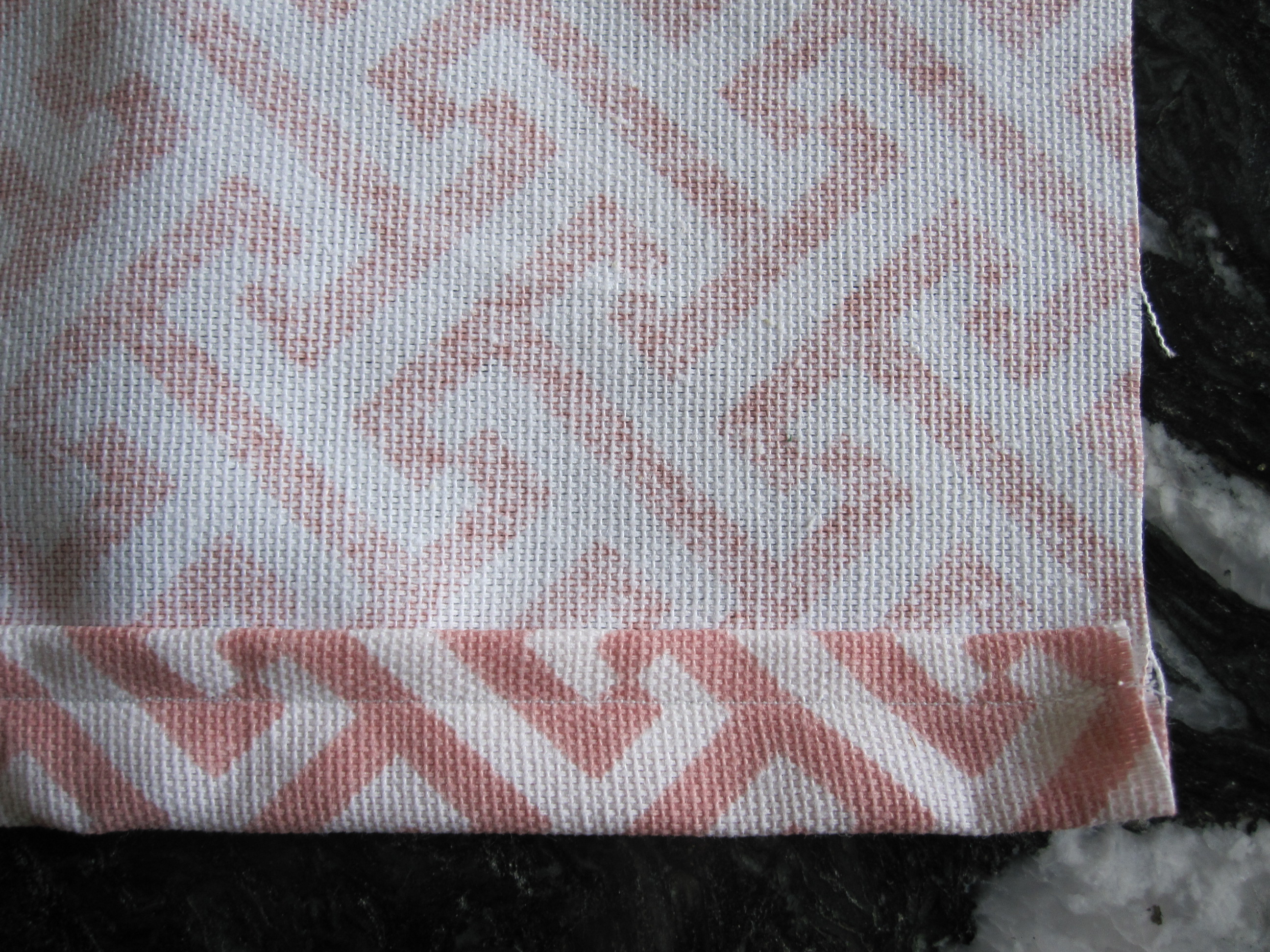
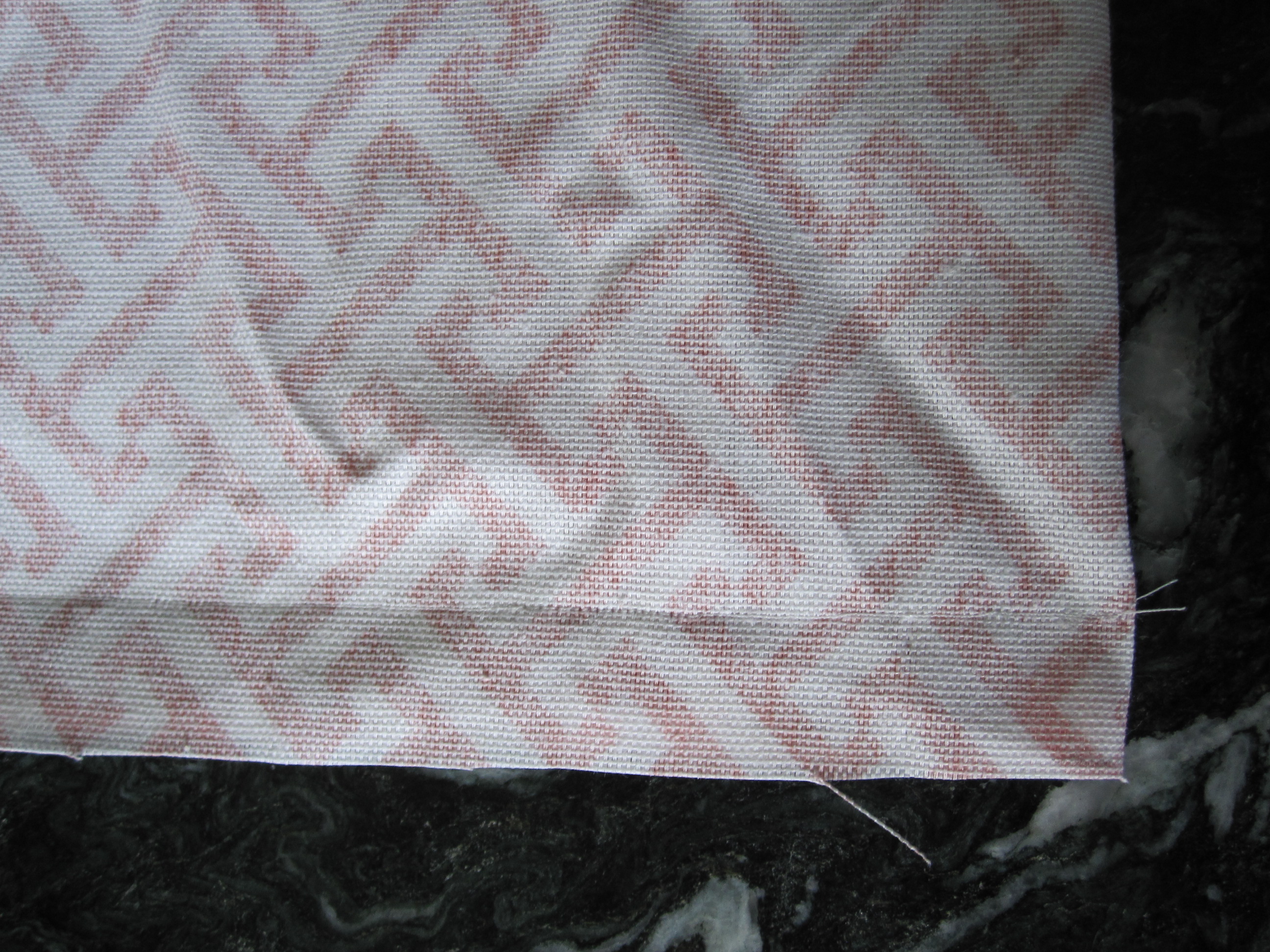
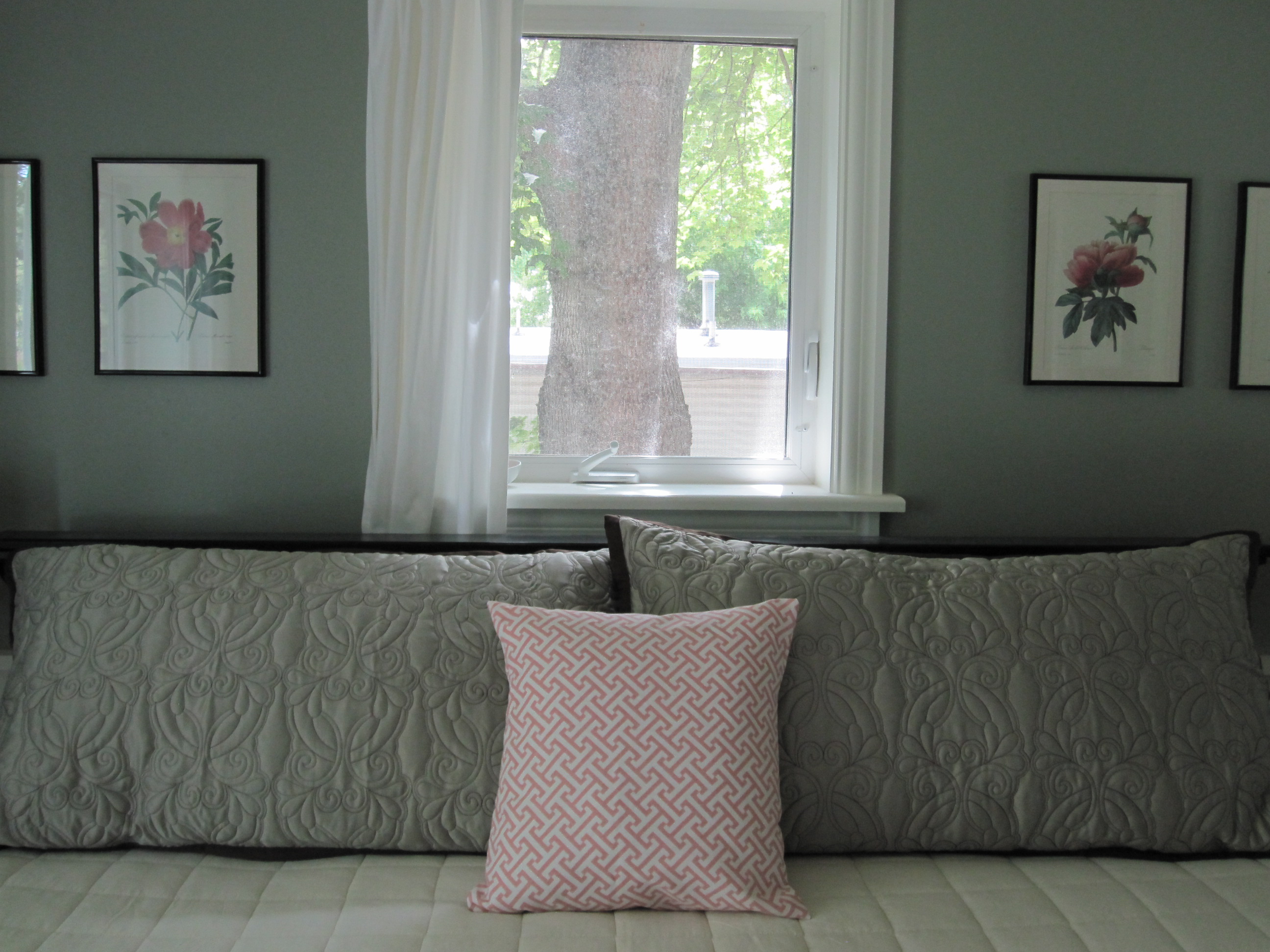
I love patterns and pops of color to freshen up a room.  One easy way to add pattern, color or both is with fabrics.  Pillow covers are an easy, simple and affordable solution.  First,  find a  fabric you like.  I chose this pink geometric pattern for $7.00 per yard from Joann Fabric.  Determine the size of the pillow insert you’ll use; you can also buy inserts from Joann.  I bought a 16 inch square pillow form. 

To make your pillow cover, cut a piece of fabric 1 inch wider than your insert size and 6 to 8 inches longer than double the pillow size.  To make a 16 inch pillow cover, I cut my fabric 17 inches wide by 42 inches long.  

Starting with your fabric face down, fold your short ends over about 1/2 inch and pin to secure.  Then, fold over again, pinning in place.  Sew a straight line across.  Do this to both ends.  Flip your fabric over, right side up. 

Fold one end near the center of the piece. 

Fold the other end over, overlapping the other end about 4 inches.  Measure the distance to make a 16 inch square.  Pin the sides together and sew.

Cut your corners, being careful not to cut your sewn edge, to remove the excess fabric to make sharp corners. 

Turn right side out and you’ve just completed an envelope closure pillow cover.