Sun Bursting

I’m sure you’ve seen DIY sunburst mirrors all around the blogosphere recently, but because this is a hot trend (pun intended), I don’t think you’ll mind if I share another one.  Last fall, I hot glued bamboo kitchen skewers to the back of a bevel edged mirror.  After spray painting it white and living with it in our master bedroom for the winter, I decided it wasn’t the right fit.  You see, most of the accessories and furniture in our room are black, and the white didn’t stand out against the wall like I had hoped.  And the skewers we a little too thin for my liking, at least in this case.  I may hang it in the basement bedroom for some drama.

So, I started brainstorming a cheap or free way to make an awesome, chunkier sunburst mirror.  Then, while planning a paint chip project, it figuratively hit me.  Paint sticks!  They’re free and chunky.  I snagged 27 from Wal-Mart thinking I would have plenty.  Then, I chose a 12 inch diameter beveled mirror from Hobby Lobby (in the candle section).  Candles were 50% off, so my mirror cost $3.00.

I went home ready to get my sun bursting on.  I started by marking the mirror in quarters, using a Sharpie.  Then, I placed a stick on each mark and filling in.  Then, I realized I wouldn’t have enough for two tiers.  Our weather took a turn for the worse, so I waited to get more sticks.  While waiting for the weather, Kate at Centsational Girl posted about her DIY paint stick mirror.  Apparently, great minds think alike.  Though our plans of attack were slightly different, I knew the results would be stunning, too.

Finally, our weather cleared up and I packed the kids to go to Home Depot.  I avoid Wal-Mart like the plague.  Immediately, I knew the Wal-Mart sticks were thinner and had rounded corners, so I had to make a few changes.

Turns out 80  grit sand paper rounds corners of paint sticks really quickly.

Now that I had all of my supplies, I got started.

I applied a coat of black paint to the front and sides of each stick.  For my first tier, I knew I had to cut the sticks so the curved edge didn’t show, so I didn’t bother painting that far.

After the black paint dried, I applied a coat of metallic silver paint.  The silver is semi transparent, so the black still showed through making a really great metallic charcoal grey.  See the difference?

So, after a few hours of painting, letting it dry, painting again, and letting it dry, I warmed up my glue gun.  Before I could start gluing, I had to cut the sticks.  With a baby and toddler in tow, it wasn’t an option to use a saw.  I opted for a wire cutter.

I just squeezed hard twice on each side and then snapped it off.  Worked great, but not a super clean edge.  I measured 8 inches long on a sample stick and marked the back of each stick for a reference to keep the same length.

I tried to place each stick as evenly as possible.  A few lines of hot glue held each stick firmly in place.  After finishing the first tier, I flipped it for a quick look.  I’m a likin’.

On to the next round.  I was able to keep half of the sticks the full length by alternating non cut and cut.  This round is 10 inches long with the curved edges hidden behind the first round.  Yay for not needing to trim everything down.

With the sticks in place, I glued a picture hook to the back of the mirror with Liquid Nails.  48 hours of dry time later, I hung the mirror on our wall.
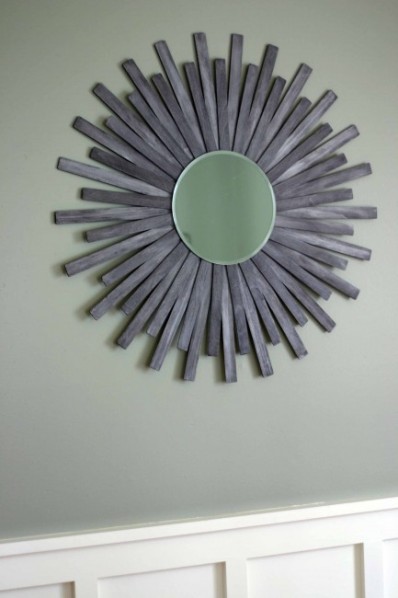
Paint Stick Sunburst Mirror Over Bench

The grey contrasts beautifully against the grey/green walls.
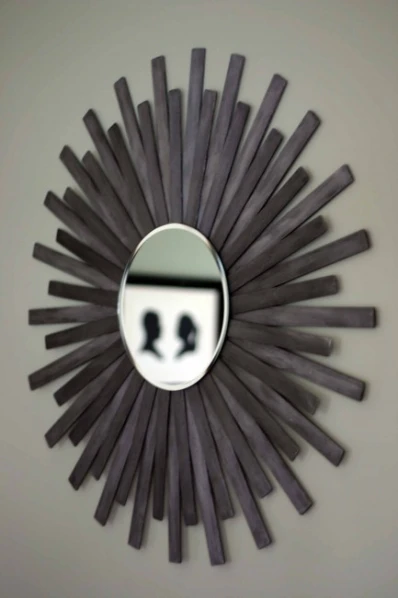
Paint Stick Sunburst Mirror After

The metallic sheen also changes with the lighting.  The wall against the bench is now nicely filled with the sun burst mirror.

Paint Stick Sunburst Mirror Over Bench

How about a little budget breakdown?

50 paint sticks:  Free

Paint:  Already owned

Glue gun and sticks:  Already owned

Picture hook:  Already owned (are you noticing a trend?)

Mirror:  Originally $5.99, but 50% off to $3.00

Total:  $3.00

Have you jumped on the sun burst band wagon?  Did you go the store-bought or DIY route?  Which store version do you have your eye on?  Maybe you have a favorite tutorial?  If you’ve made a mirror, we’d love to see yours on our Facebook page.

We’re still looking for questions for our blog anniversary.  If there’s something you want to know, just ask.

P.S.  We’ve had another request to size down our photos.  What do you think of this change?  Too large, too small?  We need your opinions so we can make the best changes.

Cool in the Shade

Have you found a great lamp base with an ugly shade at a thrift store?  I did, for ten bucks.  The base is great, but the shade has seen better days.

One support was broken, leaving the shade lopsided.  The bright teal, stained pleated fabric shade wasn’t doing it for me either.

So, I took the shade, er, matters into my own hands.  We had a small scrap of canvas left over from sewing a drop cloth curtain for our laundry room.  It was perfect.  Neutral and free!  I set to work on transforming the lampshade.  While my iron was heating up, I ripped all the teal fabric off.

I measured the circumference and height of my shade and cut a piece of canvas slighty larger, keeping one finished edge of the dropcloth.  Using iron on tape, I hemmed the edges to fit.

I clipped the extra fabric from the corners to cut bulk.

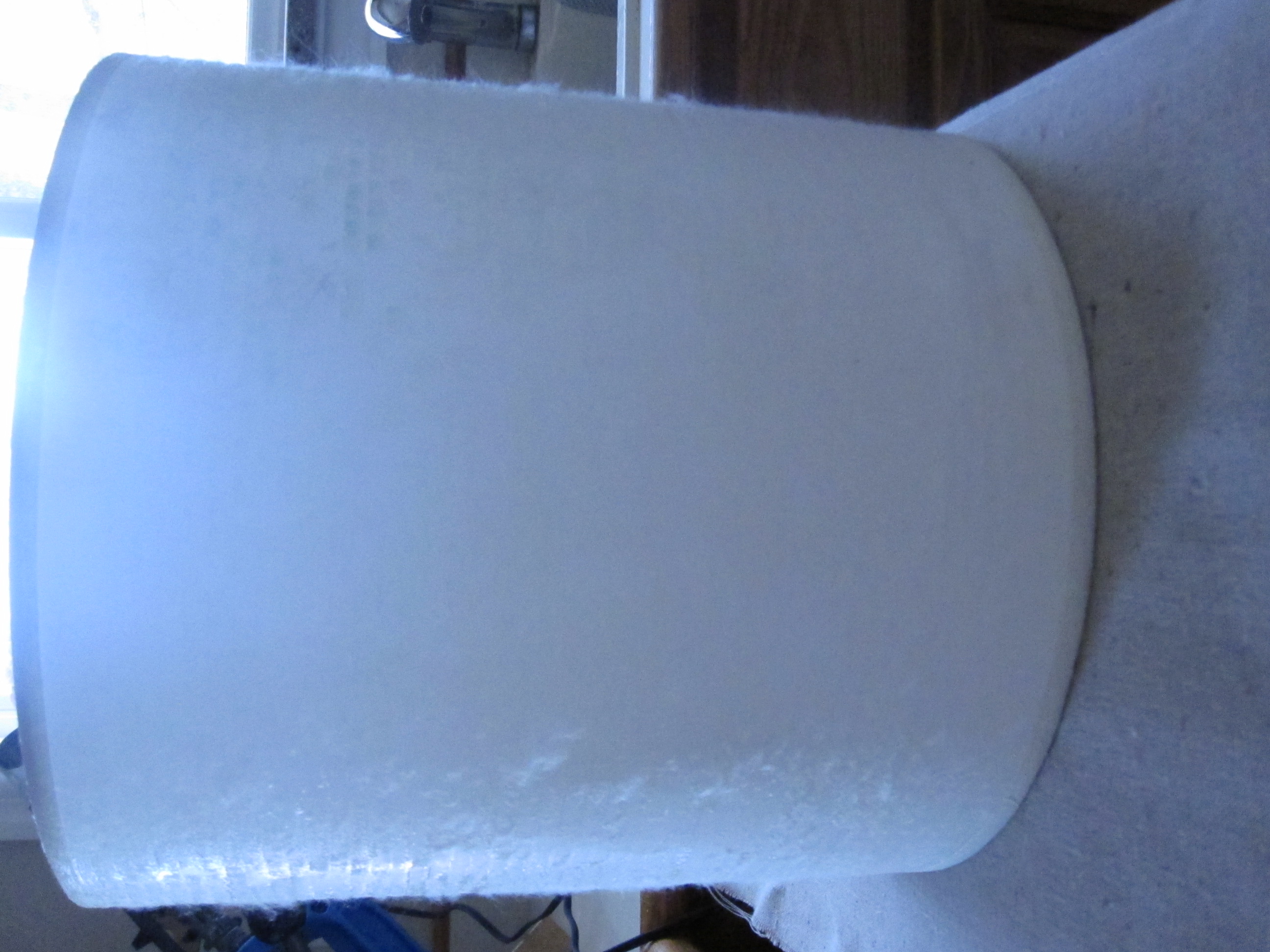
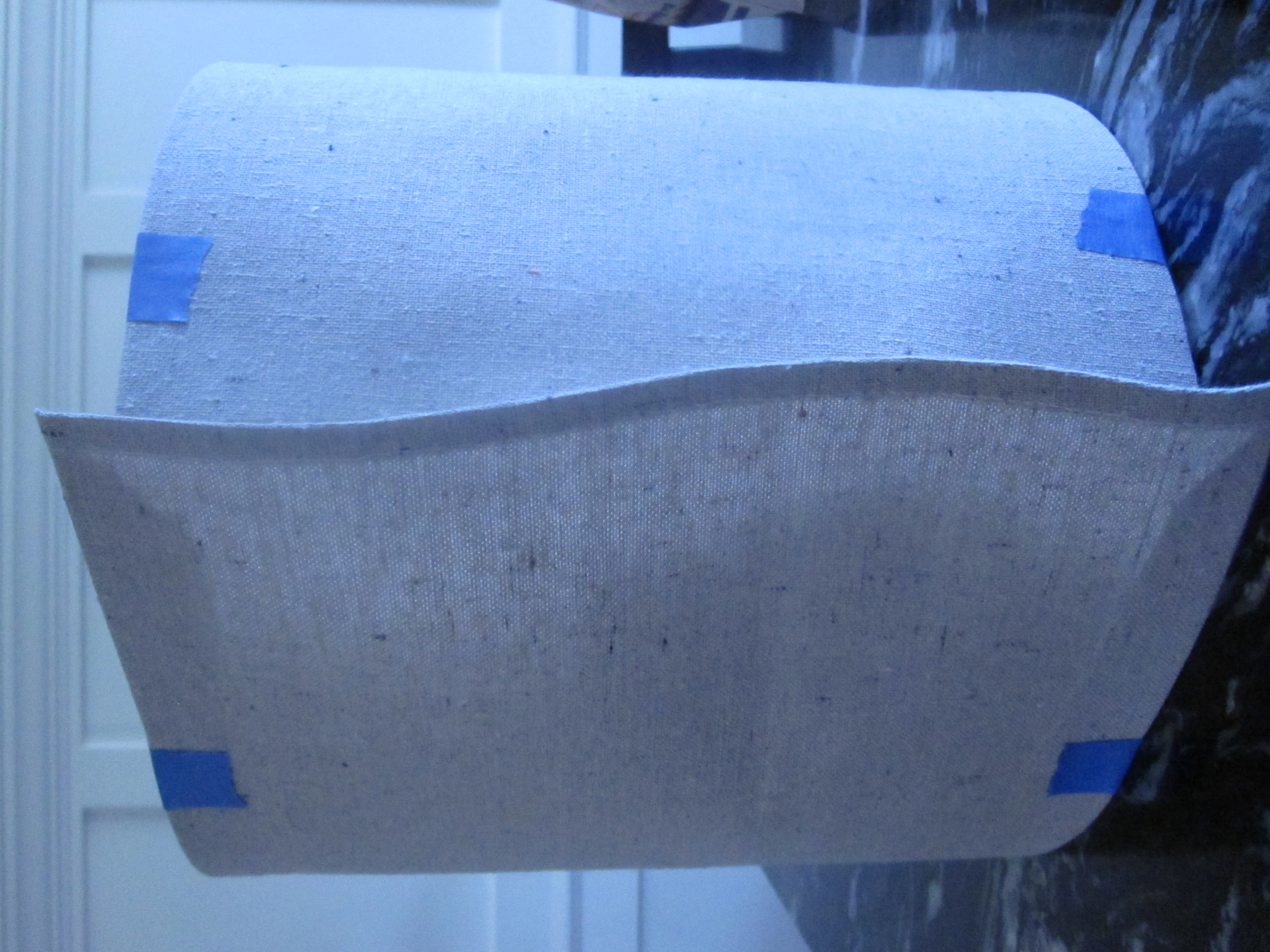
Now I was ready to start on the shade.  To cover the shade, first I taped my unfinished edge in place.

Wrap the fabric around the shade, smoothing out along the way.  Tape the finished end in place and in a few other places, just to prevent movement.  Hot glue the unfinished edge to the shade. 

Run a thin bead of hot glue between the edge of the lampshade and the fabric.  Press down to secure.

When you reach the finished edge, hot glue in place.  I was almost finished with my shade.  I still had to fix the broken support.  I dug a bamboo skewer out of the drawer and cut it to fit in the shade.  Then, I added a dollop of hot glue to the shade to secure the skewer.  Worked like a charm!

I popped the shade on the base and it looked like a million bucks.  And we finally have a lamp for the basement bedroom.

Of course, there are tons of options to update a lampshade, like dye, ribbon or coffee filters, to name a few.  Have you updated an old shade?  Maybe you’ve transformed a thrift store lamp or two?  We’d love to see your ideas, so share a link, too.

P.S.  I turn a quarter of a century old today, maybe I’ll have some b-day goodies to share with you…

Chunky Wood Moooi Random

Way back in November, I attempted a wire version of the Moooi Random pendant.  I failed miserably.  After my failure, I brainstormed other DIY lighting options.   Then we got busy finishing our laundry room and my quest for a cool light fell to the back burner.  Ben bought a 250 foot roll of iron-on wood veneer edging for our laundry room shelving and drawers.  We tried it on one drawer and hated it.  Having used some of the roll, we couldn’t return it.  What’s a DIY gal in need of a light to do?  Use the otherwise unusable veneer to create a light, of course. 

So, I gathered supplies.

A hot glue gun, scissors, small clips and the veneer.  I also bought a ceiling canopy and socket kit, just like the ones I used to make my coffee filter pendant, from Home Depot. 

As my glue gun was heating up, I looped a piece of veneer until I liked the size, which is about the final size of the fixture.  Cut the end and cut about 20 more of the same length.  Overlap the ends slightly, about 1 inch, apply a large pea sized dollop of hot glue.  Press the ends in place until the glue has dried.  If you attempt this and use iron-on veneer, the heat from the glue will start to melt the glue backing.  This isn’t a problem, just something to be aware of.  If any hot glue seeps out, wait a few seconds, then peel the glue away. 

Glue the ends together of about 15 strips.  Now the fun begins.  Start by overlapping two circles, perpendicular to one another.  Glue at both touch points. 

Continue gluing, overlapping to create a random pattern.  Bend the veneer circles to fit in the holes.  They’ll pop back into shape. 

Make a smaller fitting triangle for the socket to fit into.  I marked mine with a small clip.  This will help keep visible seams toward the top, out of sight.  When your sphere starts getting full, it will be more difficult to place the circles inside.  At this point, start weaving your strips through the light to fill any large gaps.  Be sure to leave at least one gap that is large enough to get your hand and a bulb in, though. 

Cut a piece of coordinating cardstock for your socket.  Mark a circle at the center and cut a slit from one side to the center.  Place your socket in to keep the socket from shifting.  This is a super simple, cool (I think so, anyway.   Ha!) light.  It took me less than two hours from beginning to installation.  Baby breaks and all.  Stay tuned for pictures of the light installed. 

Anyone interested in giving it a try?  Or another DIY light?  Maybe you’ve already tried one.  Care to share some pictures?  Head on over to our Facebook page to show off your hard work.

In the Works

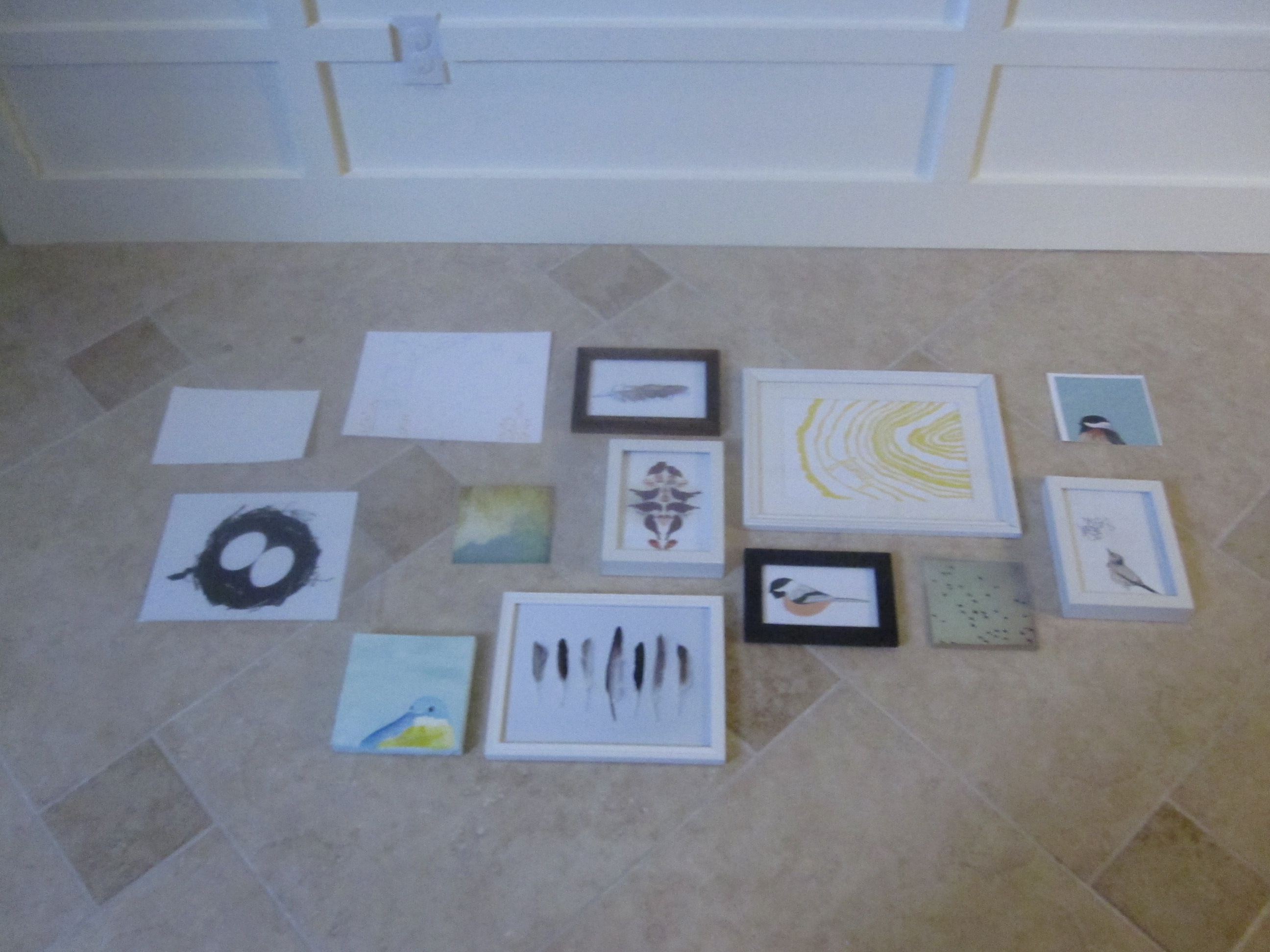
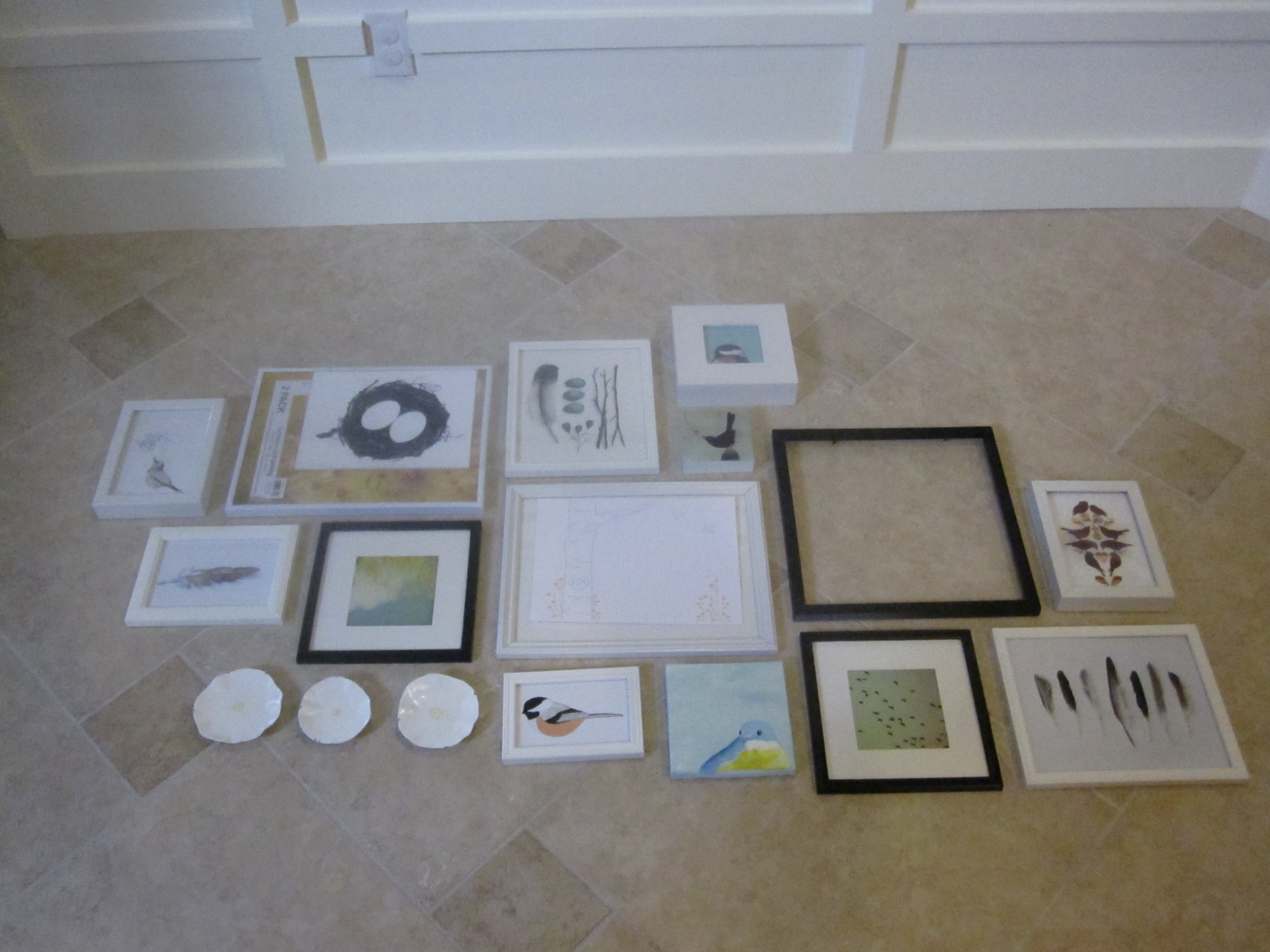
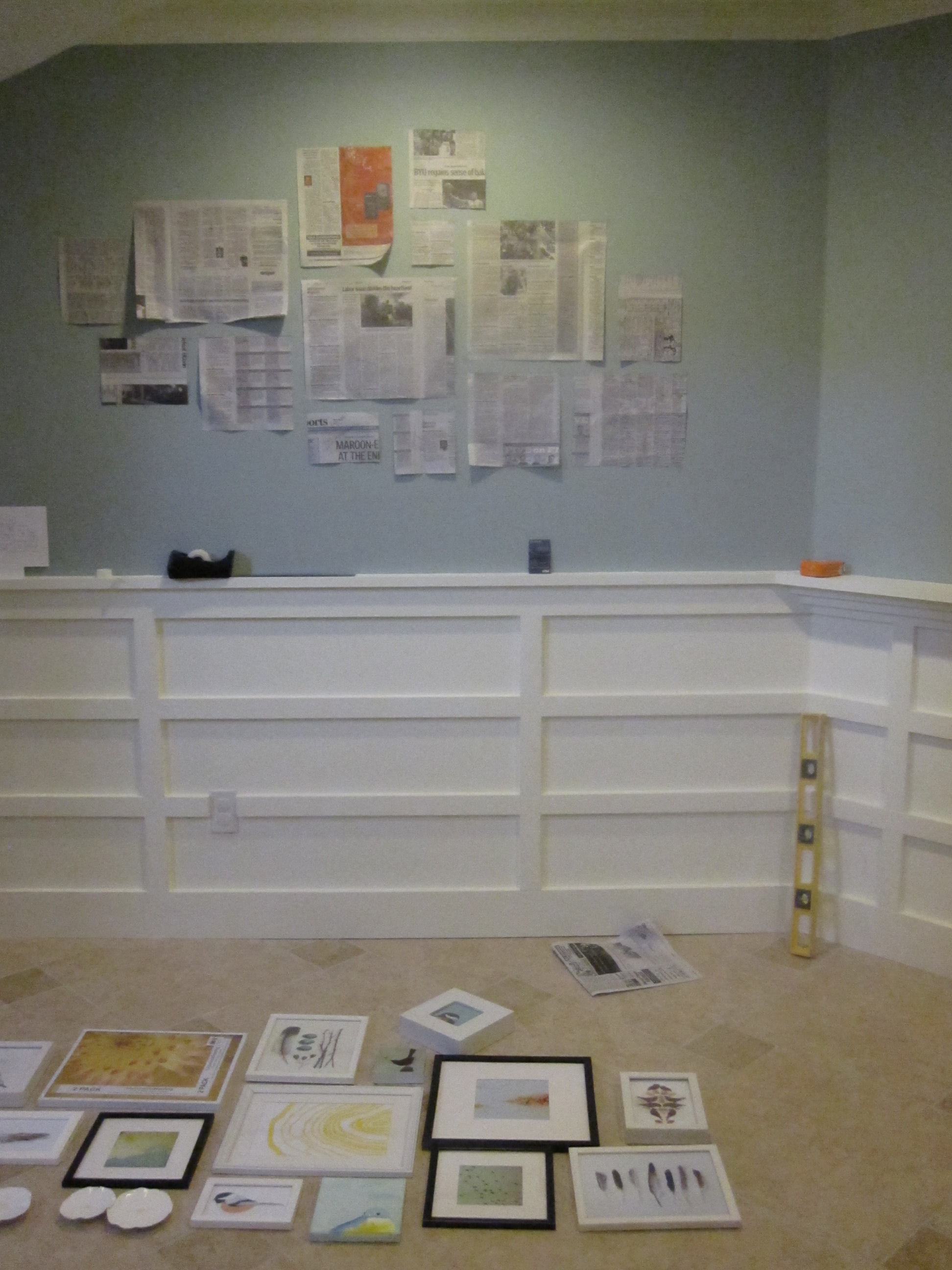
Gallery walls are all the rage right now.  We already have one in our main level hallwayI’ve been scouring Etsy lately to find the perfect art to fill a gallery wall in our basement.  I’ve finally found enough art to fill the wall.  Now, I’m fiddling with the arrangement.  Something asymmetrical containing all my bird, feather and tree art.  To find the perfect arrangement, I started moving the frames around on the floor in front of the wall.  One layout I liked, the other I loved.

Option number one:

Option number 2 is the winner!

With the layout decided, I traced each frame on newspaper and marked where to nail.  Seriously, this saves so. much. time.  After determining the center of the arrangement and the center of the wall, I taped my templates up. 

My frame arrangement as well as my drawing were close by for reference. 

Stay tuned for the final reveal.  In the mean time, I’m wondering how many of you have or would like to have a gallery wall?  Where do you have it?  Sprucing up a hall?  Meandering down the stairs?  What fills those frames?  Family photos?  Travel mementos?  Etsy art?

Simple Solution: Great Bathroom Lighting

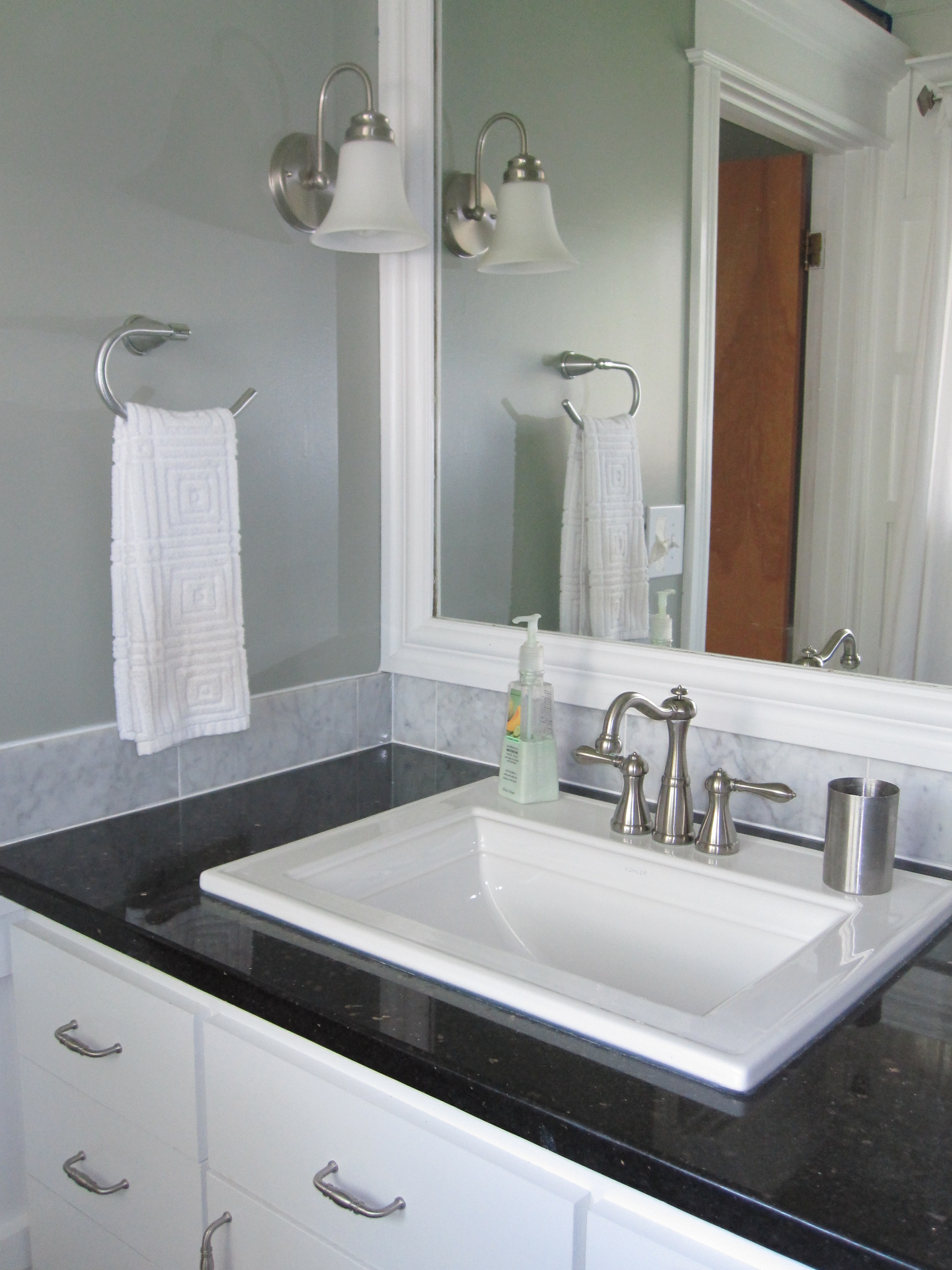
So, this might seem strange.  More than once, we’ve had people ask, “Why is the lighting in your bathroom so great?”  They weren’t referring to the actual lights, rather the quality of light.  Three things are going on to make that happen.

1.  Large mirrors.  Both of the mirrors in our upstairs baths are huge.  The main bath mirror is three feet wide and 4 1/2 feet tall, so it reflects a lot of light.  Our master bathroom mirror is about the same size, filling the wall both in width and height.  Mirrors are your friend, in almost any situation. 

2.  Light colored walls.  This isn’t a must, but again, it helps bounce light around the room. 

3.  Ditch the overhead light fixture which casts harsh shadows.  Opt for sconces on either side of the mirror.  By using sconces, you’re getting equal lighting from both sides, eliminating those harsh shadows.  It doesn’t matter much if you choose a down lit or up lit style.  Ours happen to be down lit, just because the fixtures we chose looked better hanging.  Height matters!  A rule of thumb for hanging pictures is eye level or 60 inches from the floor. 

We have sconces in all three of our bathrooms and all are within five inches of each other.  The main bathroom sconces are 70 inches from the floor to the center of the electrical box.  The master bath are 66 inches from floor to center.  By keeping the fixtures near eye level (even if it is someone who is 6’2″), the lighting is more direct.  This also means you can use a lower watt bulb and pitch the flood light. 

Anyone interested in changing out their bathroom lighting?  Do you have a design problem and would like our help?  Send us an e-mail at ourhumbleabowed@gmail.com.