Painted Pantry

As I recently showed, we did a little deep cleaning and organizing around the house.  Of course, I couldn’t stop obsessing over the great pantry update I saw over at House of Smith’s.  In true Amanda style, I really needed wanted our pantry to be pretty.  In true Ben style, he thought I was crazy.  Yep, that’s us; Amanda equals the desire for pretty, even in unseen places.  Ben equals utilitarian.  Well, I went ahead and spruced up our pantry anyway.

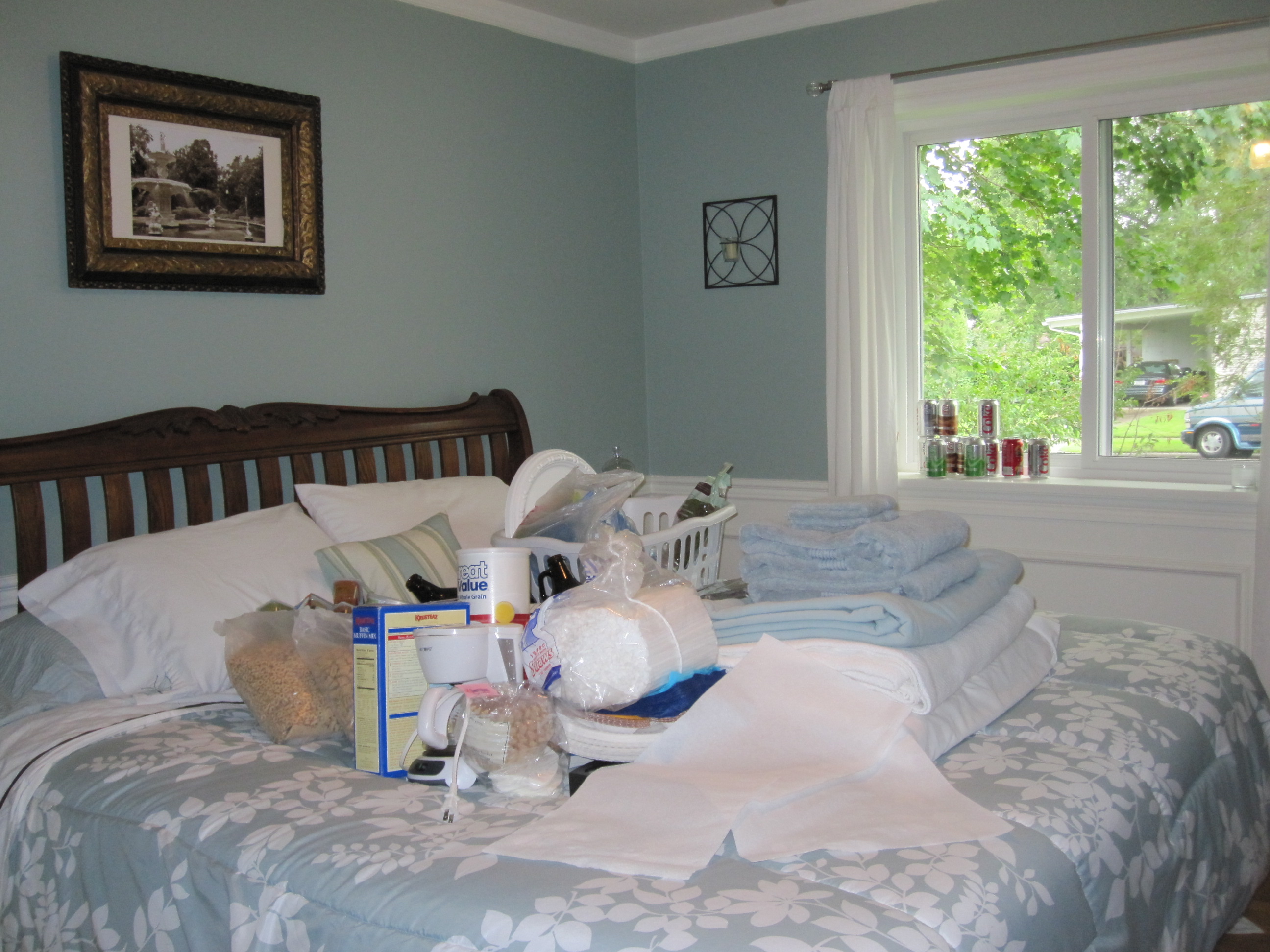
First, I removed everything and put it on the guest bed.
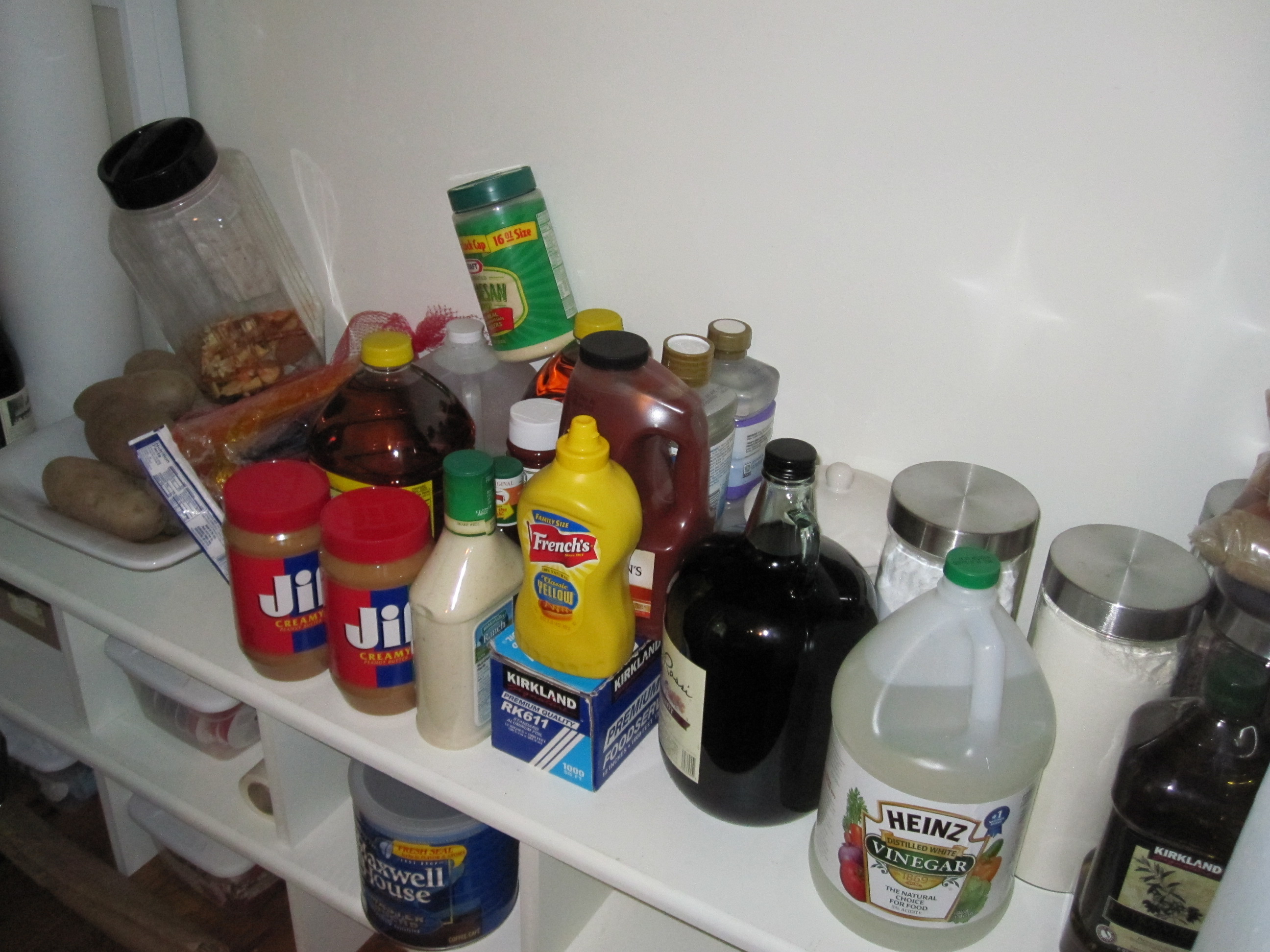
And the closet…
After turning our guest room into a make-shift pantry, I prepped the real pantry for paint.  Here’s a sneak peek inside.
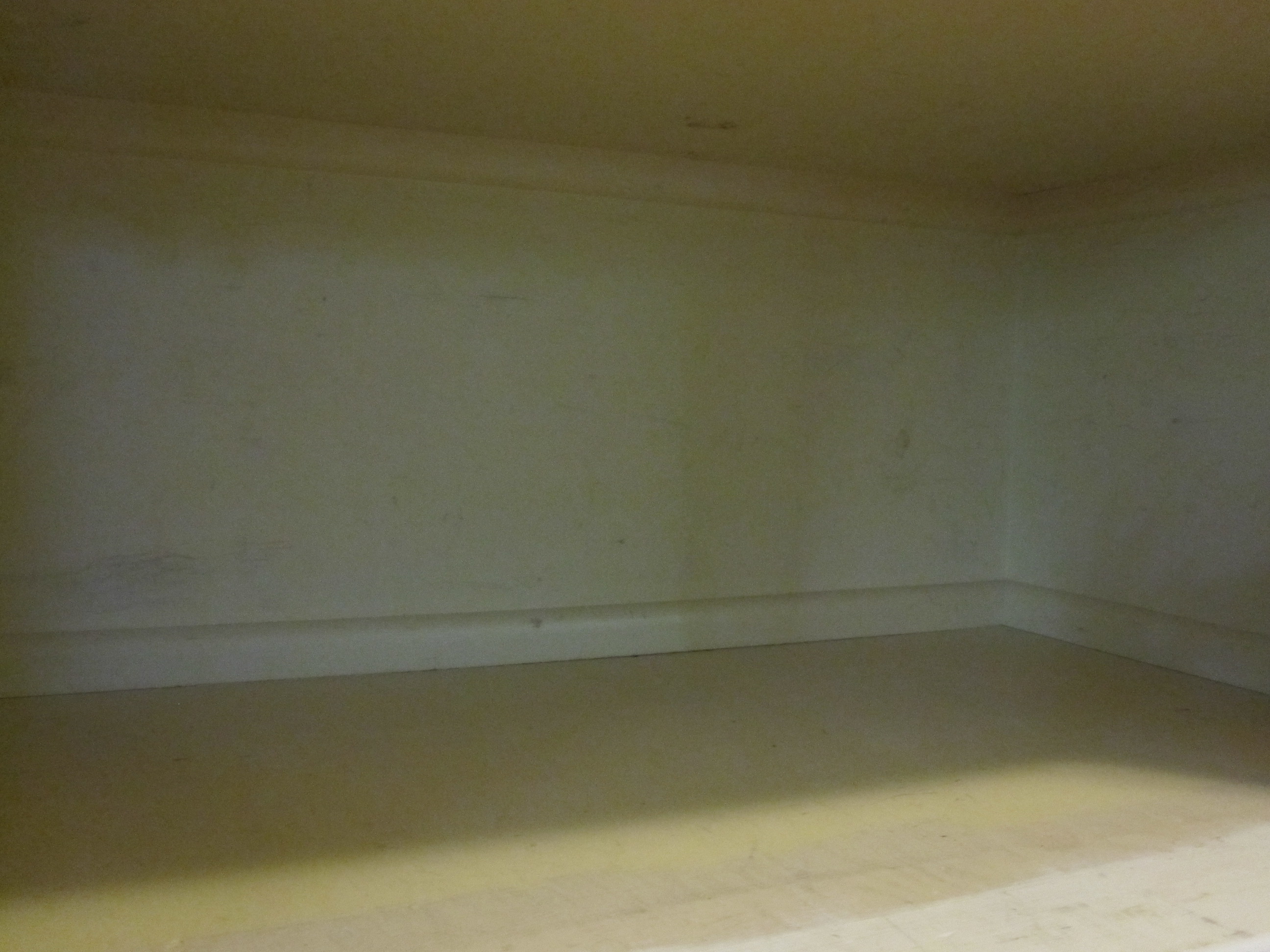
Yeah, not that bad, but not great, either.  I don’t think the pantry has seen a paint brush since the house was built.  I started by giving the shelves and supports two coats of Vermont Cream, the same paint we’ve used for all the trim in our house. 


Now you can see just how ugly the color really was.  I had forgotten how much of a pain it is to paint shelves.  Yeah, it’s not just one side…  I let everything dry, then taped the white portions off to prepare for my accent color.

Then, I brushed the same paint we used in the dining room and basement on the walls of the pantry.  Two coats and we were in business.  Right after applying the second coat, I removed the tape and paper.  This is the trick to getting nice, crisp lines.

Voila!  A pretty pantry.  Now for the fun part, organizing.  Because I had recently organized everything, I had an idea of where things would go.  I didn’t, however, have pretty jars to store baking staples then.  Remember this post?  Well, I went back to Hobby Lobby and picked up six more of the tall guys.

Can you believe they were only $2.50 each?!  I know! 

Rather than keeping flour and such items in their bags, I filled the bad boys up.  Don’t they look pretty in their new home?  (The answer is yes).
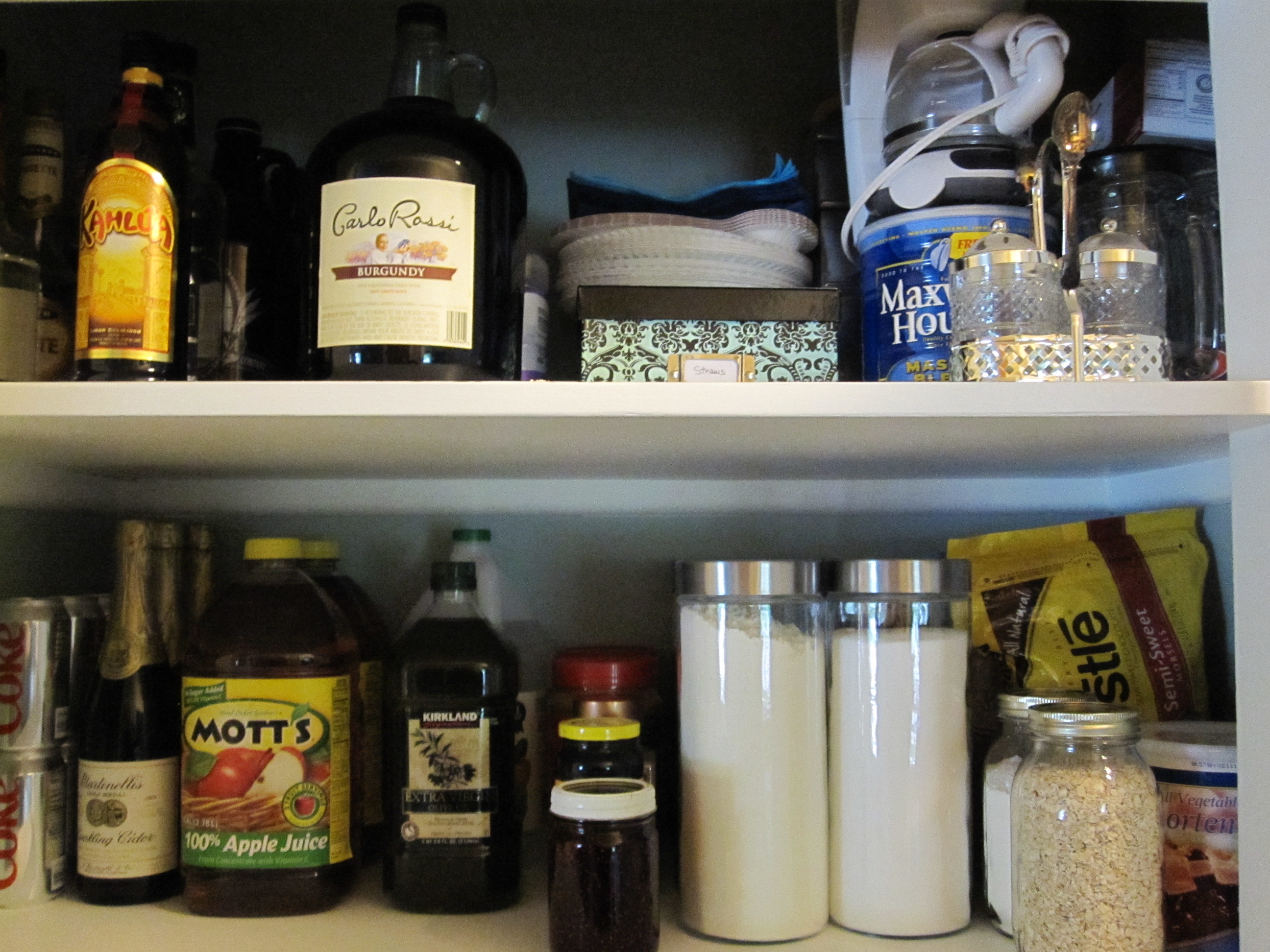
Am I lame that they make me smile?  (The answer is yes).  I filled my canning jars with baking powder (blame Costco) and quick oats, getting rid of the ugly containers and freeing up valuable space.  I had a cute storage box (see on the top?) lying around, so I filled it with our abundance of straws (blame Costco again).

After sorting the canned goods, I grouped liked items, making stacks out of the items we had more of so we can see what we have.  Pasta and mac and cheese are in a little group, as well as the cereal and baby food.  We also have mass quantity of Salted Nut Rolls (blame my brother-in-law), so they are in the treat jar. 

My organization fixation doesn’t stop there, though.  Shelley over at Wonderfully Wordy (and House of Smith’s) hooked me up with this awesome set of custom vinyl labels. 
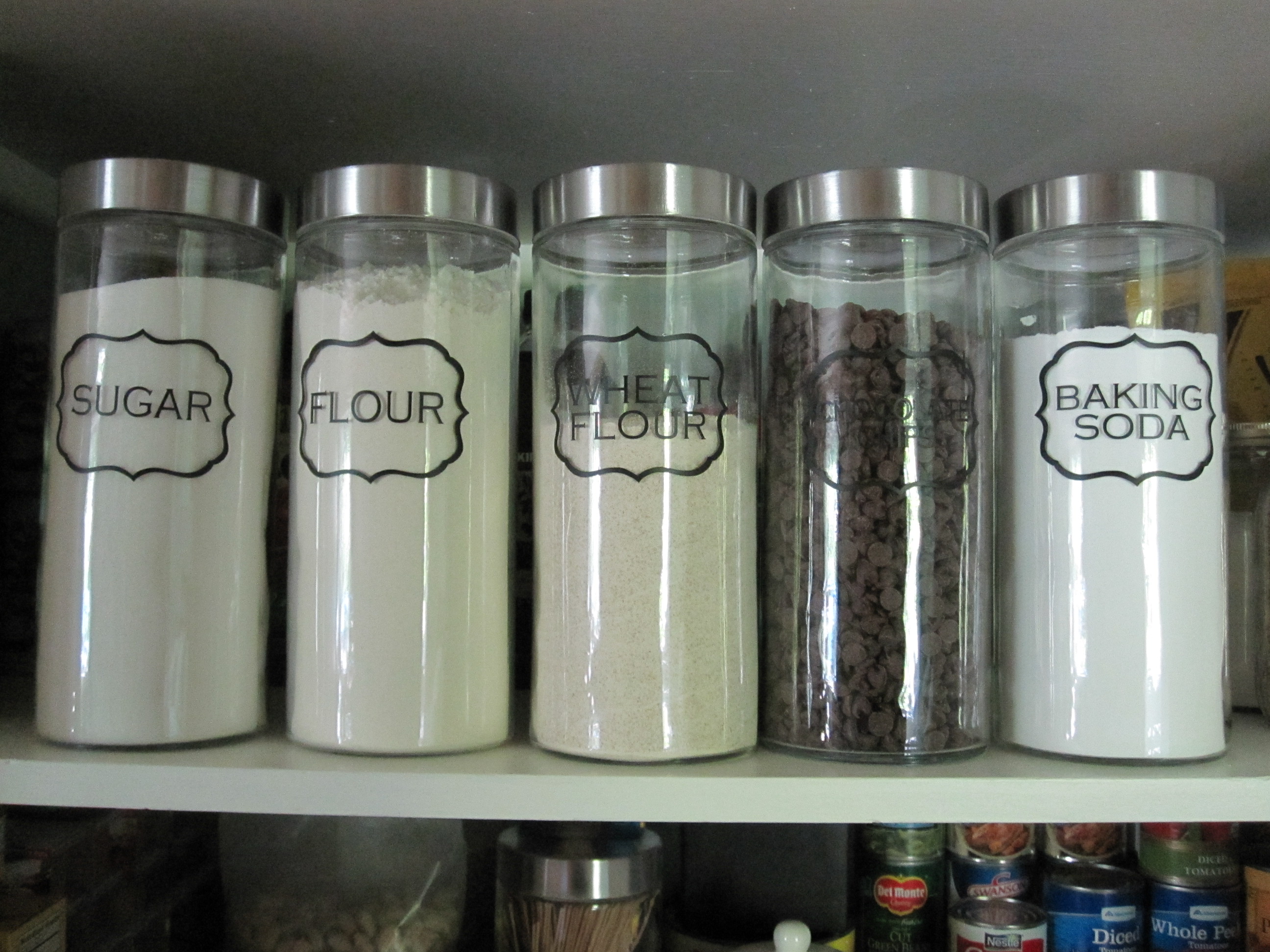
The labels are affordable and super easy to apply.  And they are the icing on my cake.  So, there you have it.  A few days, $15.00, and 5 labels later, our pantry is finally pretty.

How about you?  Have you ever had the itch to give a seldom seen place a make over?

Mission: Organization

Project: Pantry

Technically, our pantry never was unorganized.  If you know me, most things are organized.  That’s not to say things can never be more organized.  Ever since I saw a fantastic pantry redesign on House of Smith’s, I’ve been itching to change things up with our pantry.  Over the weekend, I got a metaphorical bug up my butt and started changing things up. 

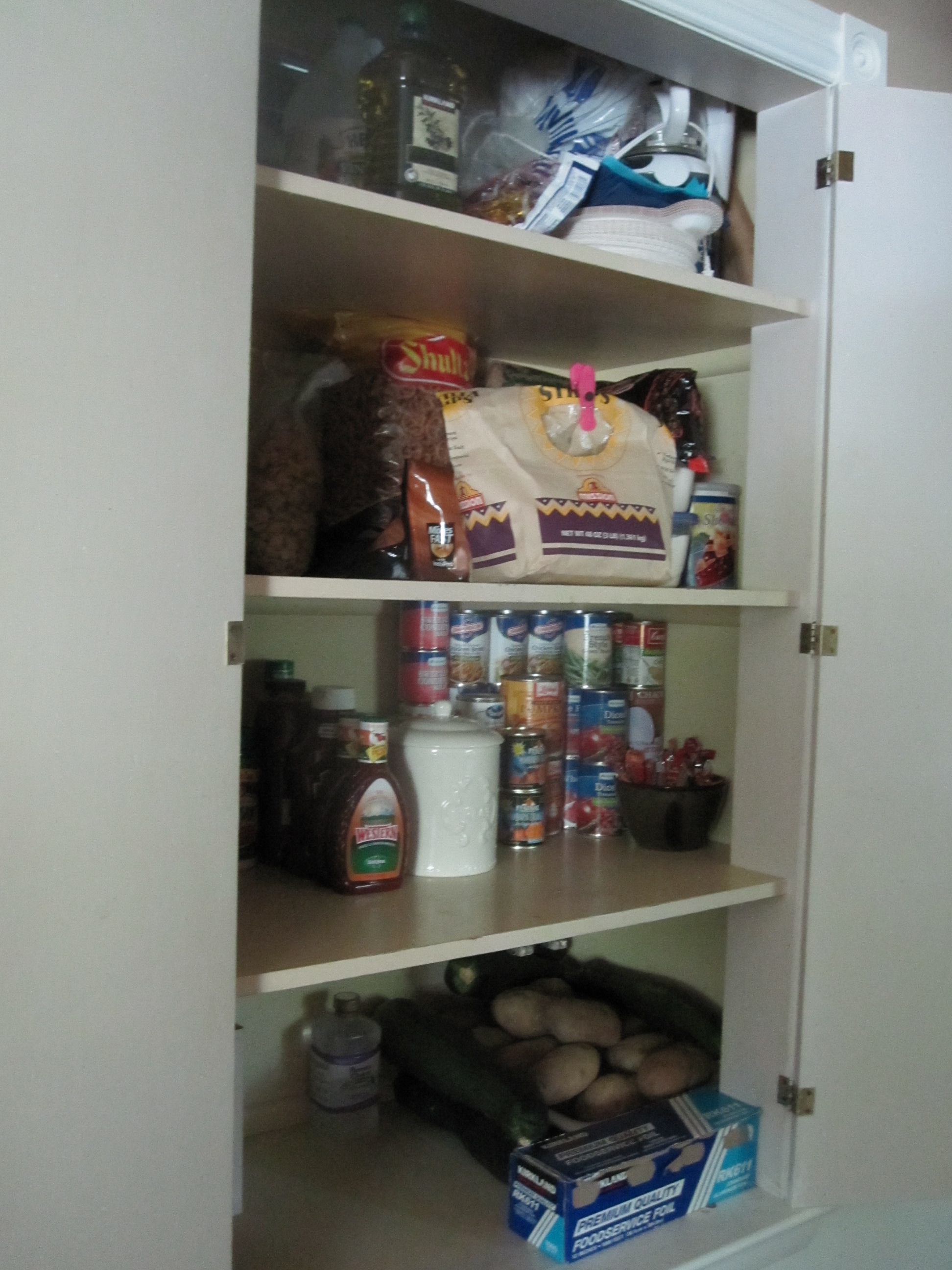
Here is the before:

Yeah, not super great.  Most of our grocery shopping is done at Costco, so everything is in bulk and a little tricky to store.  I will admit, we are lower on some of our supplies shown in the after photos. 

Ben and I started by throwing out everything that was past its prime or giving it away.  I grouped like items together and made a shelf for each grouping. 

The bottom shelf has cookbooks and potatoes, leaving room for larger items to be stored after a Costco trip.  All canned, boxed and bagged dry food items are on the same shelf along with baby food and formula.  Then we have a baking shelf, including flour, sugar, and chocolate chips.  Cereals and soda joined the baking party.  Finally, the top shelf has alcohols, large serving platters, straws, paper plates and coffee supplies.

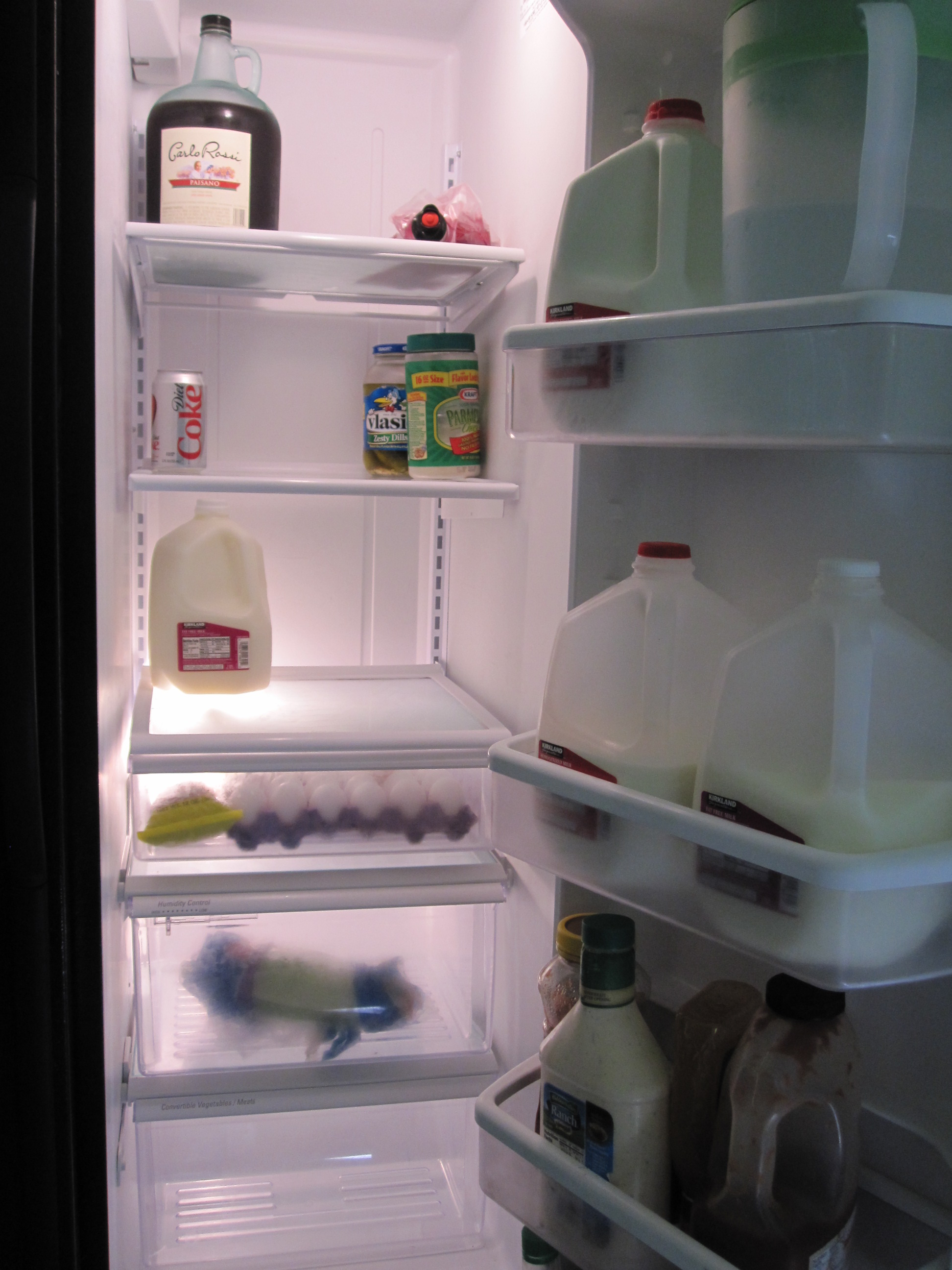
Lucky for me, Ben got in one of his deep clean moods after this!  I love when this happens.  Ben becomes a cleaning machine.  He removed all the screens and windows (our window panels can be removed to leave a huge opening) and cleaned every piece.  Then, he took everything out of our refrigerator and scrubbed down every surface.  It’s like we have a brand new fridge. 

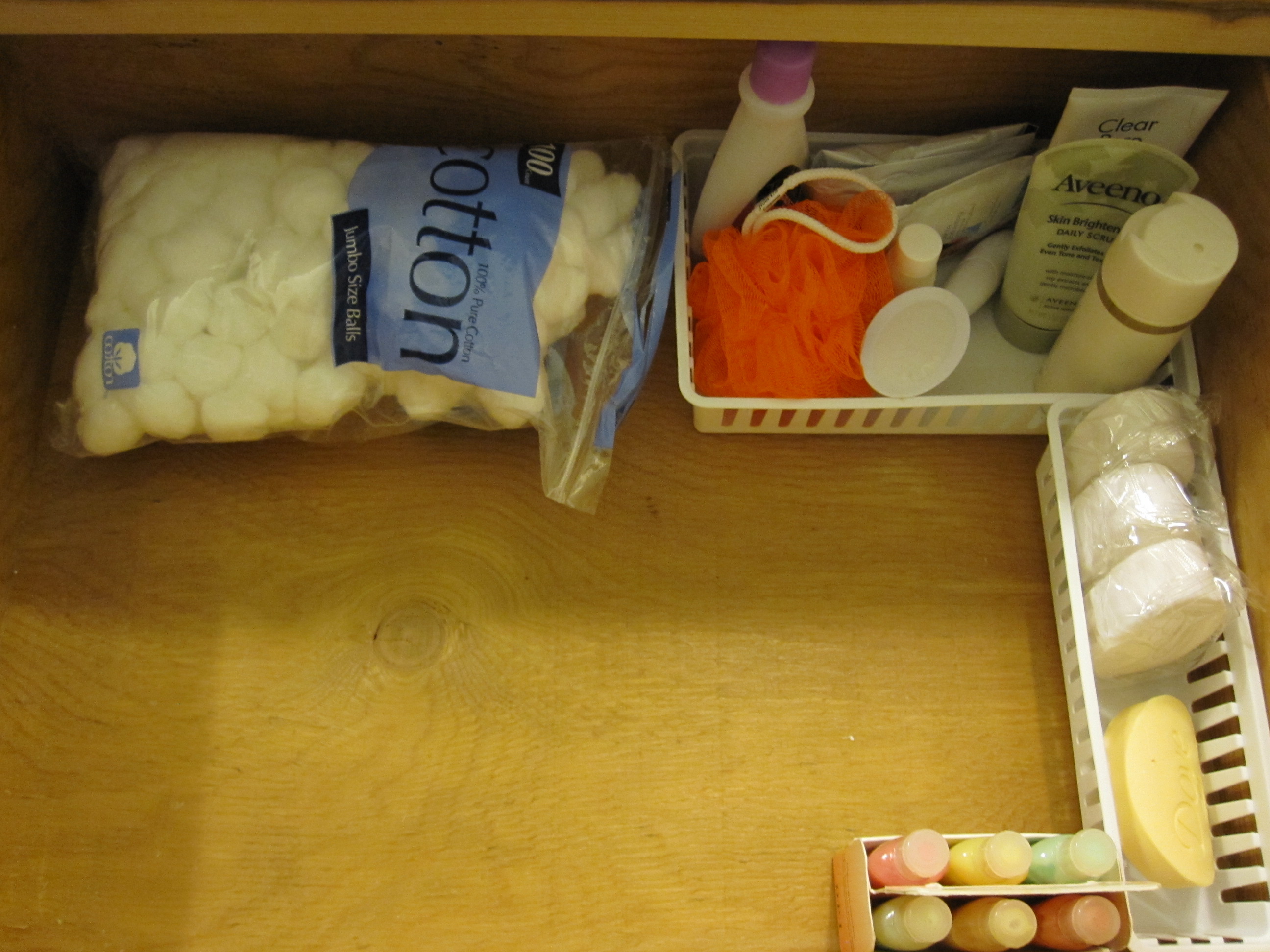
As if cleaning windows and refrigerators wasn’t enough fun, Ben also removed everything from both bathroom drawers, vacuumed and scrubbed the insides.  Yes, I am one lucky girl.  Then I went through all the contents.  I threw some things away, donated others, and organized the rest. 

And our drawers are clean, too!

So, that was our fun-filled weekend of cleaning.  Have you deep-cleaned or organized anything recently?

Trim: Office

While planning my office, I fell in love with a box pattern so much, that we added it as trim.  The custom cabinets Ben built were already in place, so we wanted to have the top of the trim match the top of the cabinets.

Our cabinets are 36 inches high, not including the Brazilian cherry top, so our total trim height is 36 inches.

After determining the trim height, measure each wall, marking the center.  If you have cabinets, mark the center of the area between the wall and cabinet to make the design centered on the visible area.  Then, mark the center of the height.  The easiest way to calculate the center is to add the height of the baseboard and top trim pieces then subtract that number from your total height.  For example, we used 5 inch base board, 2 inch top trim and a 1 inch thick ‘shelf.’  Subrtact 8 from 36 to get 28 inches.  Now, divide in half and mark.

To create your box grid trim, first install the baseboard.  Now you’re ready to start creating the boxes.

We wanted 10 inches of space inside the boxes, so Ben marked 5 inches each side from his center lines.  We cut 3/4 inch thick MDF sheets to our dimensions, but you can also use square stock trim.

After ripping down the pieces, Ben cut the horizontal box trim 14 inches long to allow the vertical box pieces to butt into the horizontals.  Secure the horizontal pieces to the wall, keeping level.  Once the horizontals are in, add the vertical pieces to complete the box.  After completing one box, measure from the outside of the box to the baseboard and top trim.  Cut several pieces to length, ours are 7 inches on all sides,  nailing centered on the box.  Use the additional pieces as spacers to continue creating the boxes.  Repeat, repeat, repeat.  Then, fill the nail holes, sand, prime and paint both the trim and wall.

Trim: Main Bathroom

Before we remodeled our main bathroom, it had pink on nearly every surface.  Even the walls were covered in a metallic pink floral wallpaper.

Before the wallpaper removal began, we planned to have 18 inches of white trim at the top of the walls, a shelf below and lilac paint covering most of the walls.  We thought the paper would be easy to remove becuase it was peeling.  With our trim plan in mind, we began tearing down the wall paper.

It turned out to be far more difficult than we initially thought.  After hours of scraping, peeling and subsequently damaging the sheet rock, we had removed about 18 inches from the ceiling down.  And that was on one wall!  Time for plan B; we opted to install sheets of beadboard to cover up the remaining wallpaper.  A few more hours of scraping and we had the top 18 inches of wallpaper removed from the entire bathroom.

Once we had the paper removed from the areas we knew would be visible, we cut our sheets of bead board from 4 foot by 8 foot down to 76 inches, leaving them four feet wide.  Ben used an air nailer to secure the sheets to the wall, going in to the studs.  Then, we covered the bottom of the bead board with baseboard, hiding the unevenly cut ends and gap between the panel and floor.

To build the shelf to display and store items, Ben cut a sheet of 3/4 inch thick MDF into 3.5 inch,  3 inch, and 1.25 inch wide pieces.  Then, Ben nailed the 3.5 inch cut piece to the wall 77 inches from the floor, checking to keep it level.  He added shims in areas because this piece was partially covering up the bead board panels.

Once the trim was secured, the 1.25 inch pieces were added to provide additional support for the shelf.  Keep the tops of the trim flush with one another.  Cut the trim pieces at a 45 degree angle when approaching doors or other vertical trim.  Finally, the 3 inch shelf was installed on top of the trim pieces.

Then, of course, fill, sand, prime and paint.  This can be modified to any height.  If a shelf is added, be sure the height works for the use of the space.  You don’t want to bump into it.

Oh, Baby! Clutter?

A few weeks ago, I touched on the subject of storing toys, but I’m back to give a few more tips, specifically baby related.  How can someone so small have so much junk stuff?  Clothes, blankets, baby bathtub, car seat, and toys!

Tip number 1:  Stick to the basics and necessities.  Let me start this off by telling you my little secret.  When Vincent was an infant, we received a hand me down swing and bouncer seat from relatives.  I think V used each item once in his first month, so I donated them.  He didn’t seem to mind.  If your baby never uses these items, he or she can’t miss having them.  There are so many baby items being manufactured today that we never had as children, and we’re fine.  I mean seriously, wipe warmers?  By sticking to the essentials, you’ll have minimal baby junk to store.

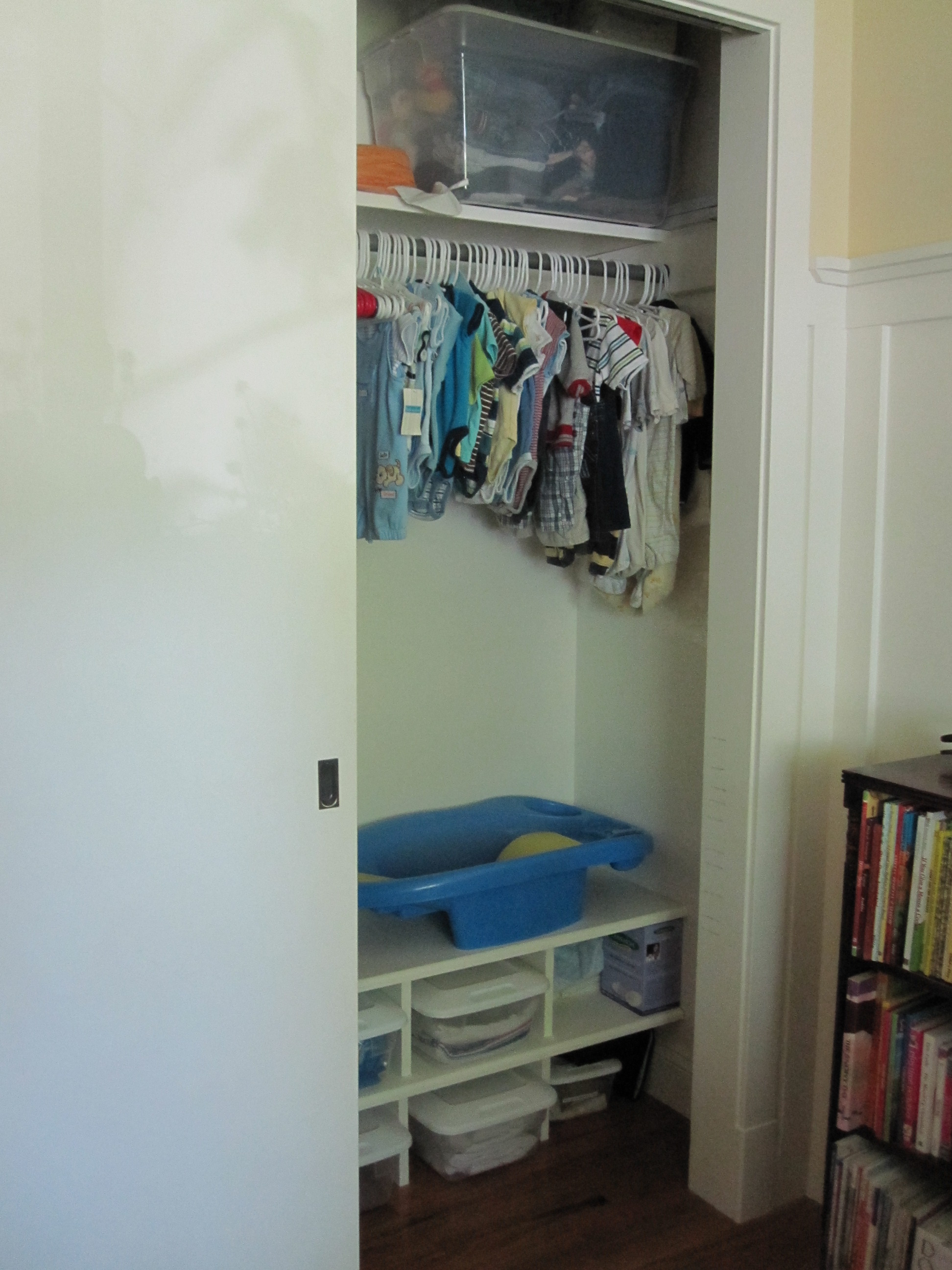
I think an infant bathtub is an essential, so we keep ours in Everett’s side of the closet.  Of course, he won’t use it forever, but it is so helpful.  It’s relatively convenient to get it when preparing for a bath, seeing as we have to get an outfit, too. 

Hang clothes and not fold.  If you have floorspace, add a dresser to hold toys and smaller items. 

Tip number 2.  If you have the space, go vertically with your storage.  The cubes in the closet were designed to hold shoes, but it turns out they are the perfect solution for storing diapers in storage totes.  If you can’t build cubes, add a hanging shoe organizer, like this one.  Get smaller items up and off the floor to make room for larger, harder to store items. 

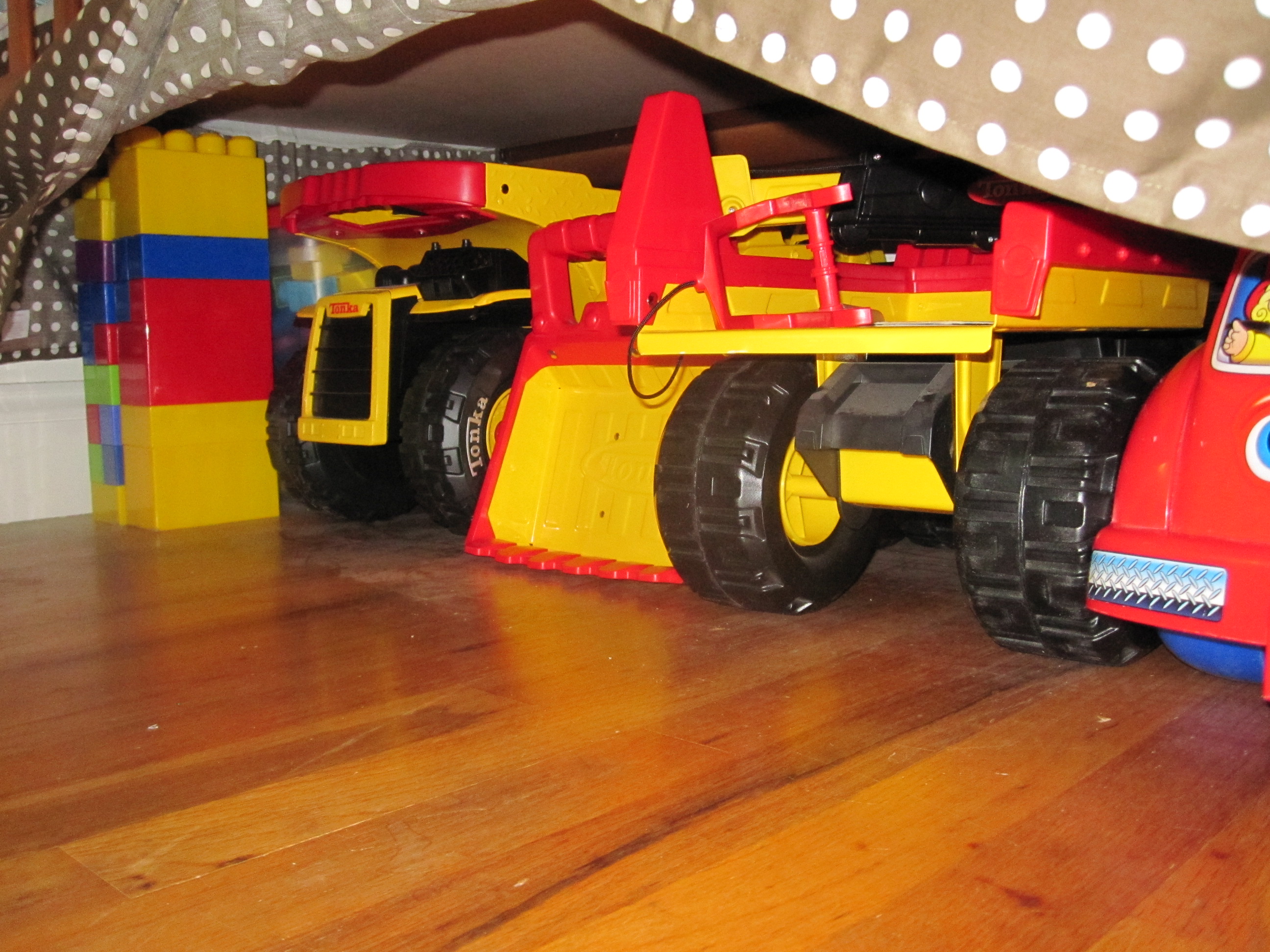
Tip number 3.  Utilize under the bed storage.  Don’t let valuable floor space go to waste under a bed.  Buy totes to store clothes, toys or bedding to free up closet space.  Vincent actually has a fleet of Tonka trucks and blocks stored under Everett’s crib.

Tip number 4.  Buy tons of clear storage bins.  Store larger clothes in clear bins with labels so you can see what you have.  This will keep everything at hand, so you can quickly swap items out when the seasons change or baby gets bigger.  We know they grow so quickly.  Once you have a bin of too small clothes, label it and you can put it in the garage or basement to keep it out of the main storage areas. 

Tip number 5.  Don’t be afraid to store some items in more conveniently located closets.  Store the car seat and diaper bag in the entry closet along with your shoes and purse.  You know you’ll need the car seat when you’ll also need your purse, so keep it close. 

The car seat is in clear view, but you can see the very bottom of the diaper bag on the upper shelf. 

Some baby toys are awkward to store, so we keep those in our guest bedroom closet, which is just off the main living room.  It keeps it out-of-the-way, but close by.

If you have a linen closet, keep baby blankets, sheets, burp cloths, towels, etc. along with everyday items.  Storing some items in more logical closets will free up some nursery closet space, leaving room for toys! 

Tip number 6.  Choose items that can easily fold or be disassembled.  Both of our boys love(d) the Graco jumper.  I allow it because it doesn’t take up much space when it is out.

When it isn’t in use, we easily slide it over to the side.

If we have company, we pull the jumper off and slide it under the guest bed. 

So, there you have it.  These storage methods have worked for us, but I want to know what you do.  I do plan to cover some kitchen ideas, too, so keep reading.