Basement Progress: Bathroom

While writing this post, I realized we’ve never shared true before pictures of our basement bathroom.  So, here is the completely blank slate we started with.

And the Frankenstein-esque vanity before paint.

For the bathtub surround, we cut the large floor tiles in half to create a large subway tile pattern.  The height of our trim treatment hinged upon the height of the tile and the window sill.
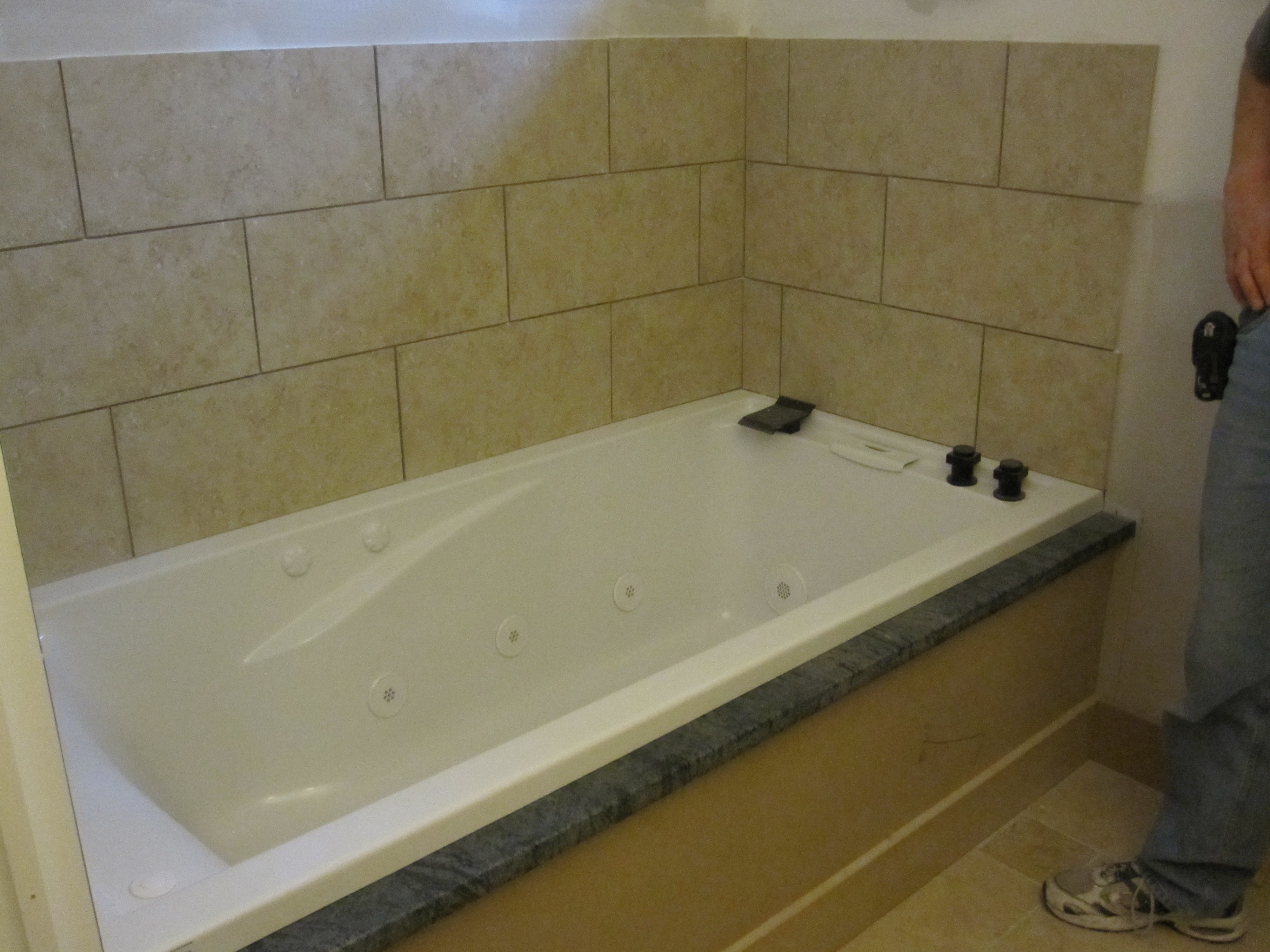
We used a sprayer to prime and paint the entire basement at the same time.  Here is what our bathroom (and the rest of the basement) looked like one year ago.  Remember, I was due on April 1.  Can you say, “Down to the wire?” 

Lots of white paint!

Finally, after a year (with breaks) of renovating, we were ready to add color to our walls.  That was a huge relief!  We still haven’t finished everything, but here it is today.
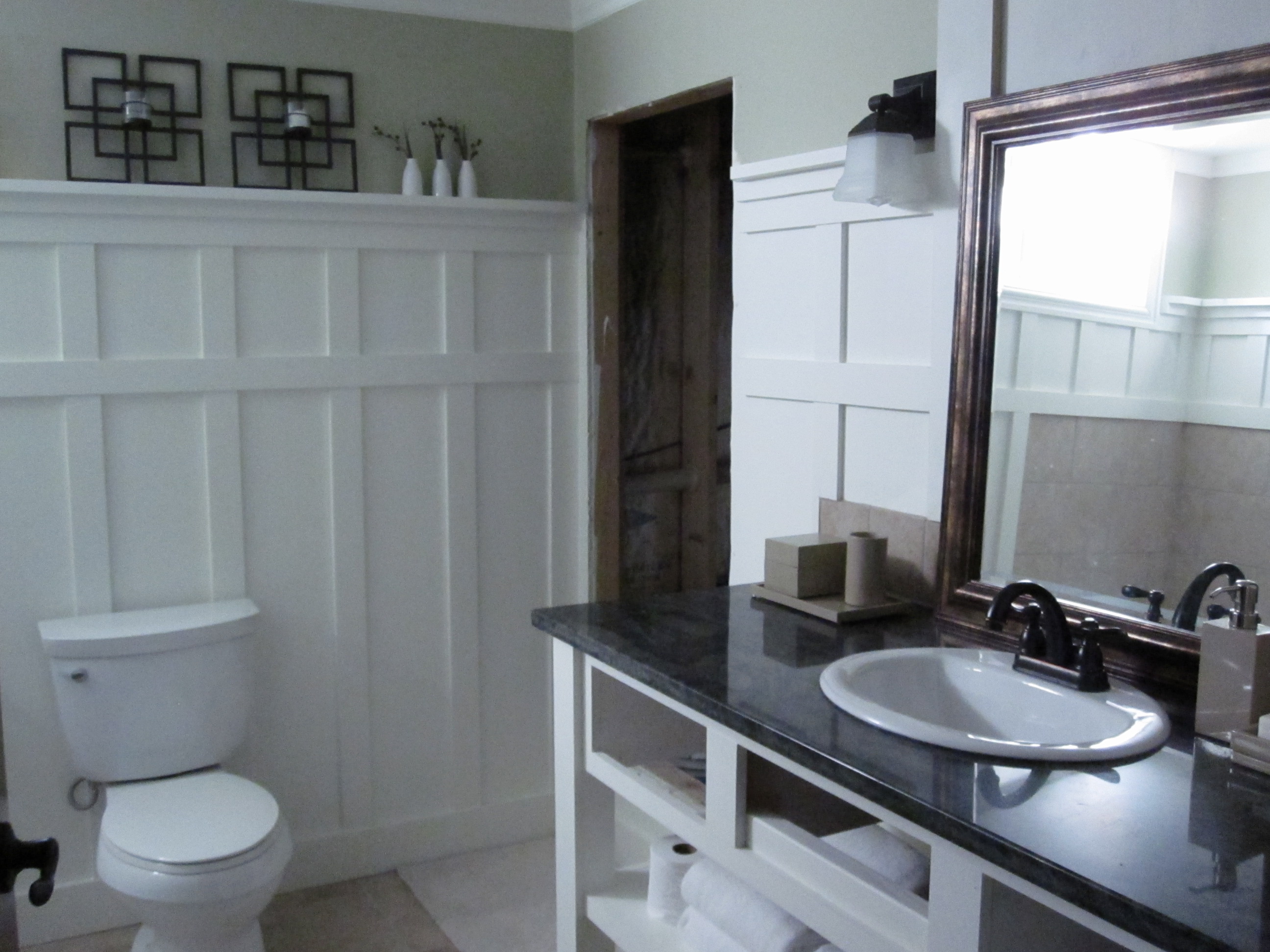
Still to do: build drawers and false front for the vanity, start finish the shower under the stairs, which will also be a steam room, and hang the mirror.

There you have it, folks.  Our basement bathroom in all its unfinished glory! 

How long does it take for you to complete a project?  Are you like us: finish 90% and then move on to something else until you get a bug up your butt to finally finish it?  Or do you keep focused until the entire project is just as you’d like?  I’m afraid to put anything too personal in bathrooms due to the creep factor.  How have you decorated your bathroom?  Any art I should know about?  Share links, too, please.

Basement Progress: Large Bedroom

I have meant to post about the progress of our basement for months now.  I’m a bad friend and haven’t shown you, until now.  We’ll start with the first room we finished down there.  This room is sort of the ugly step-child of our house.  We were given loads of free solid oak trim, so we used it in here.  Now we want to change it, but don’t really care to get around to it.

Anyway, here’s what this room looked like in 2006. 

When we learned we were expecting a baby in 2007, we kick started this project.  This is the view from the entrance.

All the furniture were hand-me-downs from Ben’s boss.  This room is really long, like 18 feet by 12 feet wide.  This is the other side of the room.  The door to the left is the walk-in closet and the door on the right is the entrance.  The window is egress, too.

Last February, while scrambling (I was 8 months pregnant with Ev) to finish the rest of the basement, this room became a storage room for everything that was downstairs. 

Yes, those little legs belong to Vincent.  And yes, our sectional was a pain to get into this room and up on the bed frame.

The next shot is from June 2010, after we cleared the room of most everything.  You will notice a gradual accumulation of stuff from this point on.  Everything that is in this room is left over and unwanted junk from the main level.

We haven’t done much to this room but turn it into an exercise/storage/dumping ground and occasionally, we banish our guests here. 

Yep, not much progress, just junk.  (This is exactly how the room looked before I decided to take pictures.  In the interest of keeping it real, I left the stack of pillows and sleeping blanket on the chair.)  I have decided on a color scheme for this room.  We’re keeping the wall color until we get the energy to replace the trim and paint, but I want to add yellow and grey for a cheery, modern feel. 

Moving the exercise equipment should help, too.  Those boxes are the filled with hardwood flooring for our kitchen, by the way.  See what I mean about a storage/dumping ground?!?

Oh, and our Target rug has found a temporary home until our laundry room is finished.  Who knows when it will make it there.  Also, would anyone be interested in a messy house tour?  Is your basement a warehouse, too?  What do you do with your exercise equipment?

Trim Tutorial: Board and Batten

We’ve had a few requests to give a tutorial on how we created the trim in our boys’ room.  This is actually one of the most simple trim designs we have in our house.  To start, determine the height of the trim you want.  Our trim is 66 inches from the floor to the top if the shelf.

Start with your baseboards.  If you plan to keep your current baseboard, you may have to cut notches out, depending on the profile of the trim.  We had to cut out the designed area of the baseboard to meet the square stock pieces together.

Once you’ve determined your baseboard situation, install the top horizontal piece, keeping it level.  Our trim is 4 inches tall, but you can choose any size you want.  I think the verticals look better if they are slightly smaller than the horizontal.  To determine the spacing of the verticals, find the center of each wall and install a vertical, keeping the trim piece centered on the center line.  Here’s where you have a decision to make.  You can choose any width of spacing for your verticals.  We preferred the wider spacing.  We placed our remaining verticals half way between the centered vertical and the corners.  Then, we added verticals on each side of the corner.

We started with a traditional board and batten style trim.  A year later, we added a picture shelf, but of course, you don’t have to do this.

To create this picture shelf, cut (or buy) a piece of 1 inch thick material into 3 inches wide.  This piece will be the actual shelf.  We used a large sheet of MDF and cut it ourselves.  Cut (or buy) a piece of 3/4 inch material to one inch strips; this will support the shelf.  Securely nail the 1 inch by 3/4 inch piece to the horizontal piece, keeping the tops flush.  If you pieces are too short to span the entire length of the wall, cut your pieces at a 45 degree angle to keep them tight, rather than two blunt ends butted together.  Once you’ve installed the support pieces, you’re ready to add your shelf.  Place your shelf against the wall and securely nail the shelf into your trim pieces and the wall.

As I mentioned above, you can vary the width of your verticals to achieve the look you have in mind.  Here are a few more great rooms that have been updated with board and batten trim.

Jen at Tatertots and Jello transformed her Tuscan inspired bathroom into a beachy cottage with trim.  Karla at It’s the Little Things also has a great tutorial about her board and batten trim.

On a completely unrelated note, I did a little shopping at Pier 1 yesterday (more on that later) and had to share this:  Pier 1 will donate $1.00 for each person who likes Pier 1 on Facebook!  How cool is that?!

Cloud Light

By now, I’m sure you’ve realized I love a good DIY project.  I don’t get too intimidated by projects so long as it doesn’t include building.  That’s Ben’s domain.  It’s a definite plus when I get to use a glue gun, too.  With that out on the table, I have another confession.  I loathe ceiling fans.  We have two in our house, well,now we have one.  They were in the house when Ben bought it and we kept them because we didn’t have air conditioning before.  Now that we have air, (not to mention we’re going into winter) we no longer needed the fans.  I saw a DIY lighting idea over at Kara Paslay Designs and I knew I had to make one. 

I already had a paper lantern (I think mine is smaller than this one listed at IKEA), so I bought a package of coffee filters and warmed up my glue gun. 

First, I crumpled up a batch of filters.

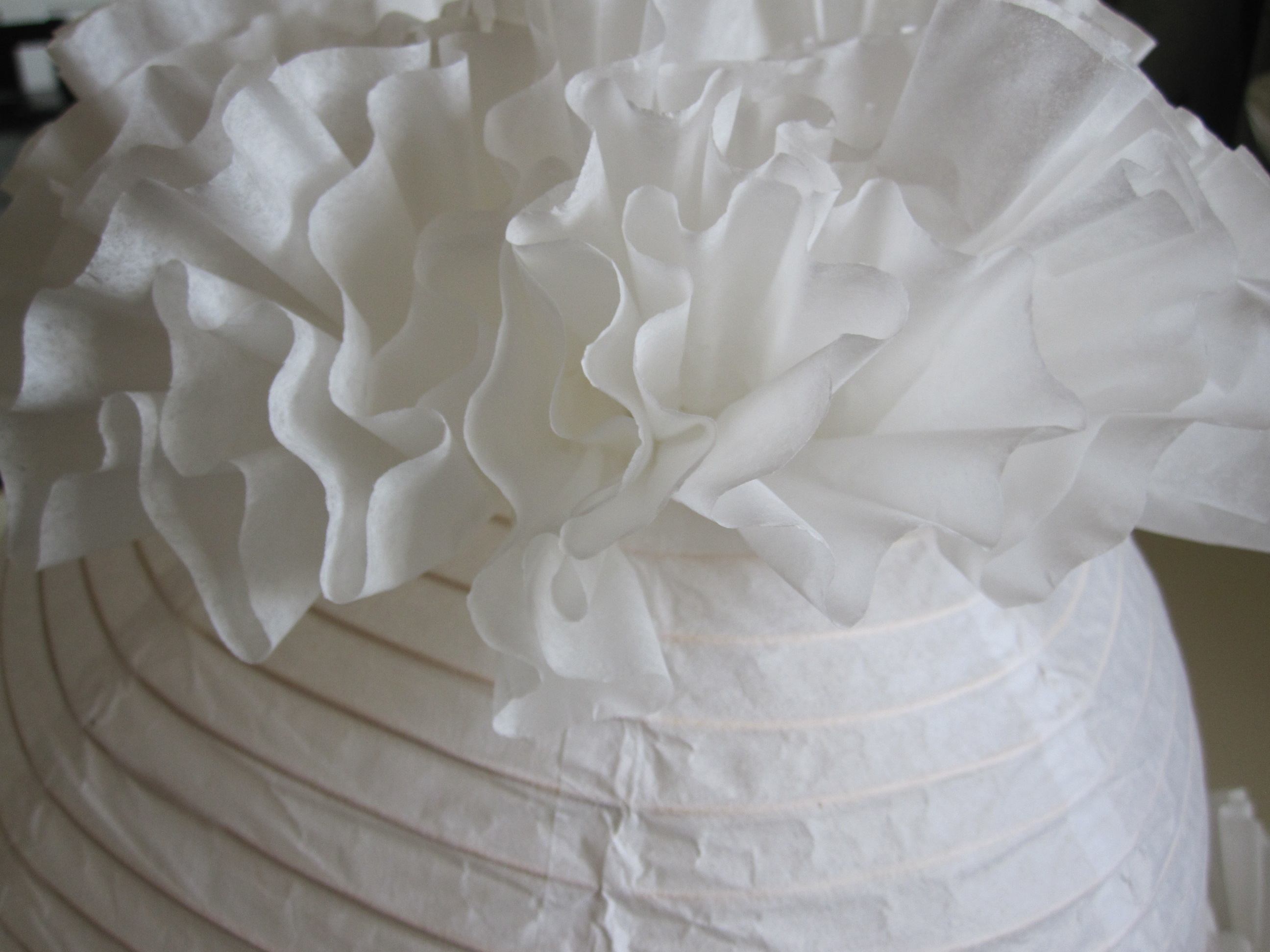
Add a liberal amount of hot glue at the base and press firmly to the lantern.  To avoid glue burns, put your fingers inside the filter to press.  Yeah, learned that a few times…

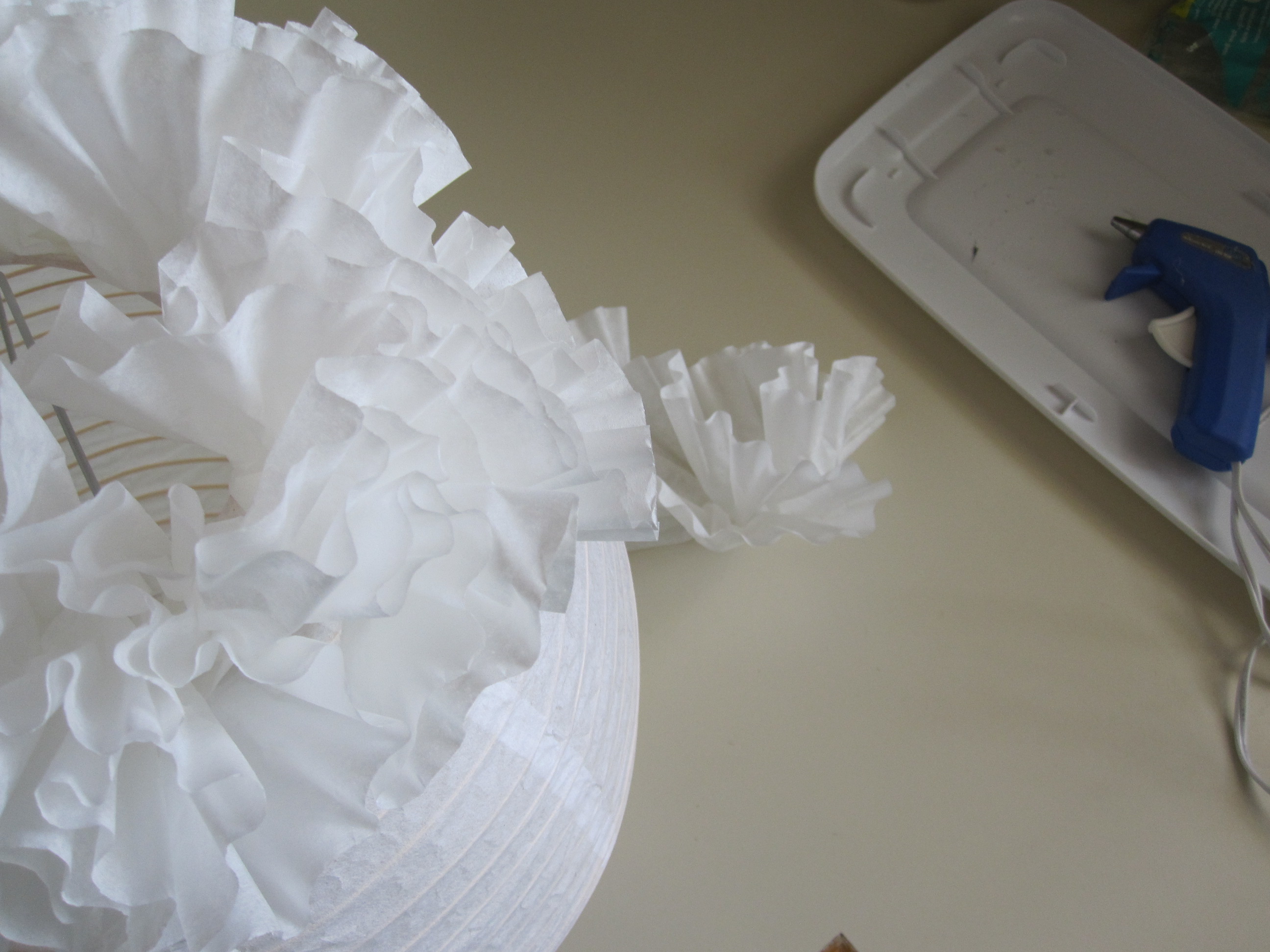
Start at the base, working around the center opening.

Work your way down and around, keeping the filters close to one another.

Keep gluing, and gluing, and gluing. 

Run out of coffee filters because you only bought 200 thinking that would be plenty for a small light.  Unplug glue gun, go to Target and get more.  Come back, warm up glue gun and proceed gluing. 

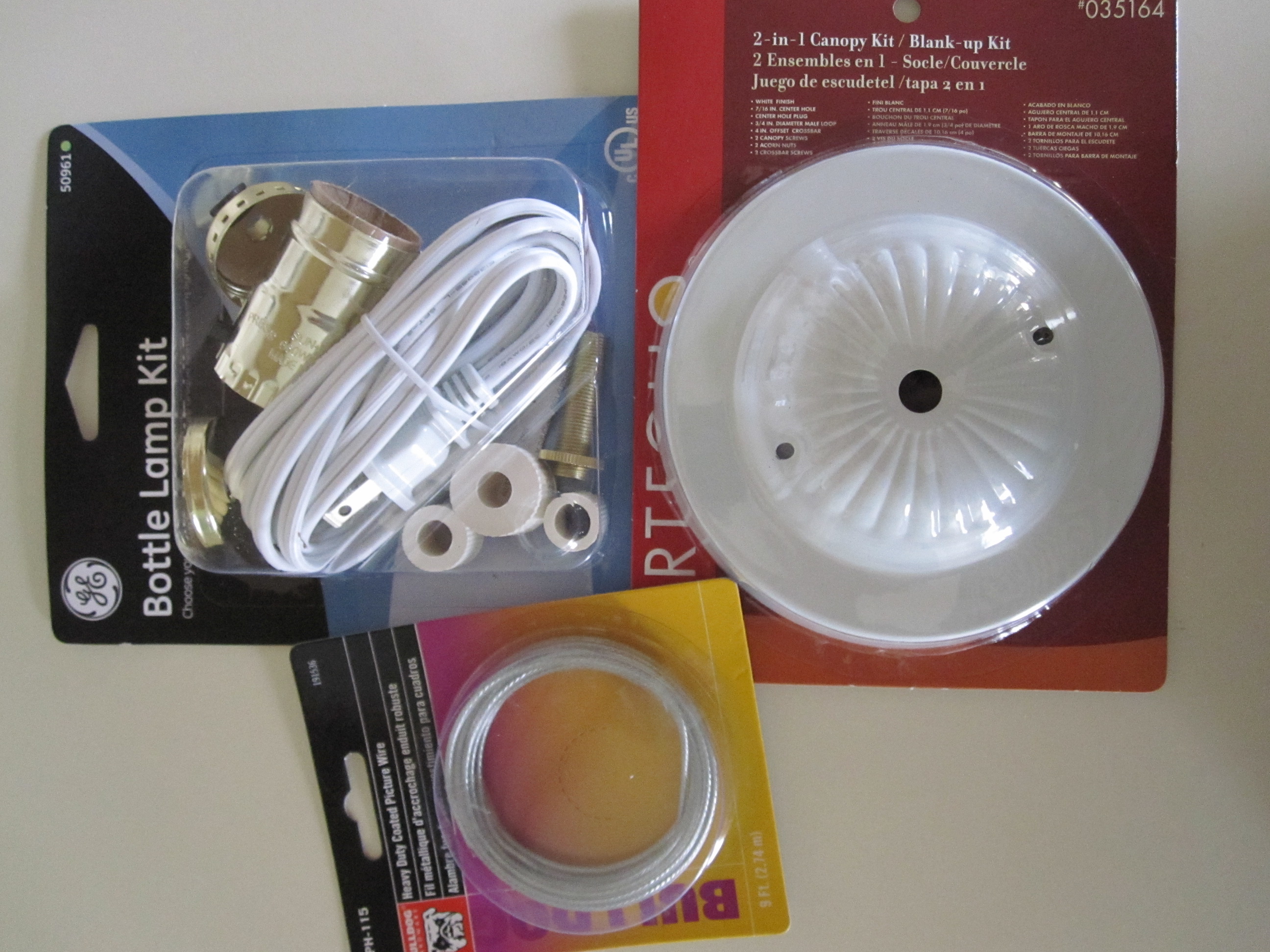
Once the shade is finished, I needed to find a cord kit.  How hard could that be?  Very, without an IKEA nearby.  I suggest picking up their cord kit.  Because I didn’t have their handy-dandy cord, I bought this assortment.

The lamp kit cost $4.97 and the picture wire was $1.97, both from Wal-Mart.  The ceiling canopy was from Lowe’s for $4.98.  I needed the canopy because we were hard wiring the light. 

To hang, get the help of an electrician or your handy husband.  Once handy man is present and accounted for, assemble socket, switch, and cord, securing to the lantern.  Throw away remaining bottle lamp kit pieces.  Add a length of wire to bear the weight of the shade.  Hardwire and affix to canopy.  Flip the switch and bask in the beauty that is your new, cheap pendant.

I still have some touch up work to do on the ceiling where the fan covered, but I’m happy to procrastinate on that.

So, now I’m sure you’re wondering what the thing cost. 

Paper shade:  Already owned

500 coffee filters: $3.98

Glue gun and glue:  Already owned

Lamp cord kit: $4.97

Picture wire: $1.97

Ceiling canopy:  $4.98

for a grand total of: $15.90. 

As if that wasn’t enough inspiration to make your own, here’s another fabulous coffee filter light made by Nichole at Parlour. 

Have you attempted a DIY light fixture?  Seen any you want to attempt?  Maybe you’ve seen a designer light that you would love to recreate?  Spill.

I See a Red Bed and I Want it Painted Yellow

Yep, that was my DIY version of The Rolling Stones ‘Paint it Black.’

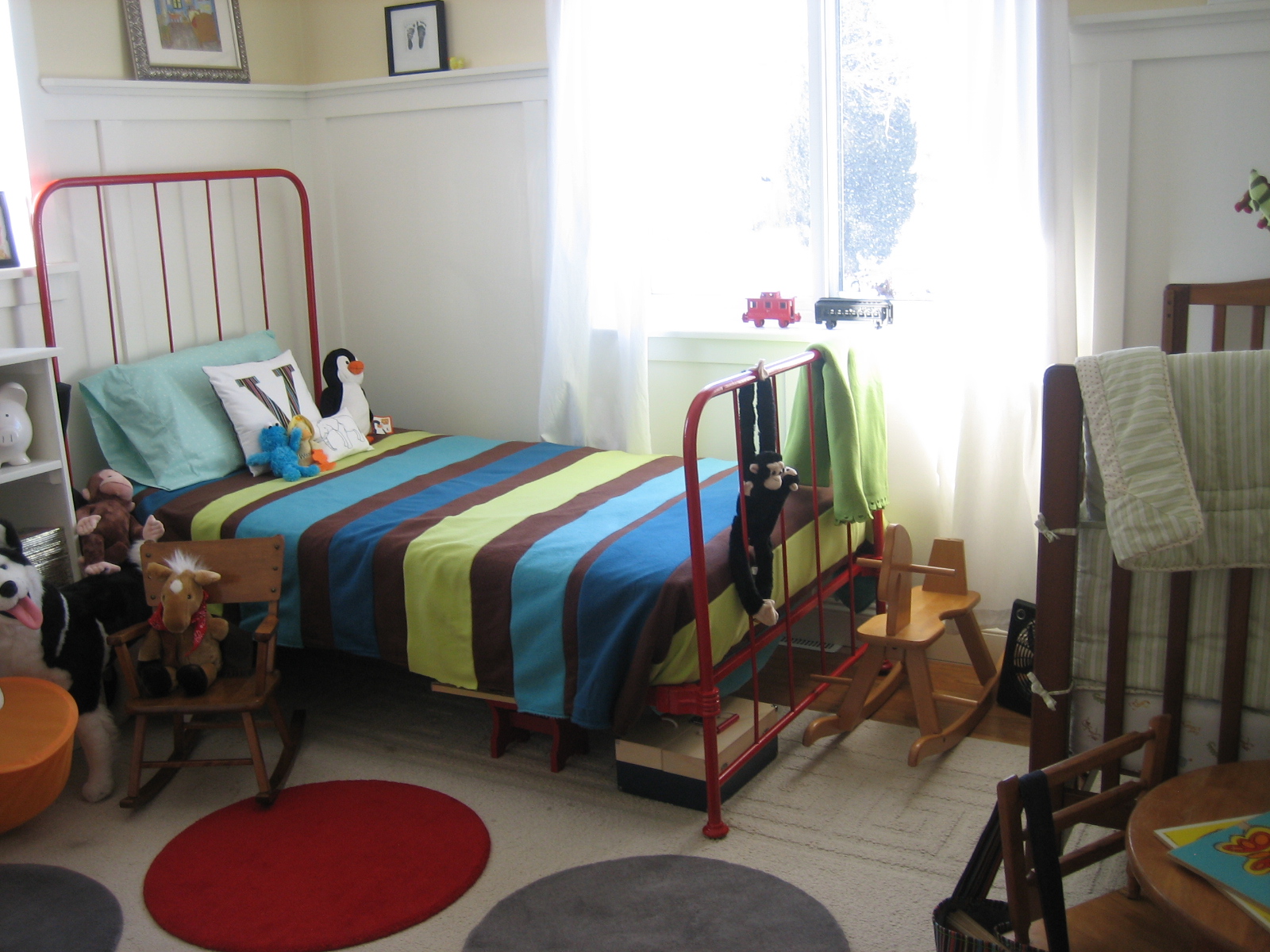
Two years ago, we got a hand me down twin mattress and frame for Vincent.  It’s a simple, 100-year-old steel bed, reminiscent of an old hospital bed.  The frame was green, but we painted it red to work better in Vincent’s newly designed room.

I loved it, until recently.  Now, I want to add a light aqua, lemon grass green and sun yellow to freshen up our boys’ room without repainting.  Initially, I wanted to make an upholstered headboard, but that would require buying a new mattress, box spring, and frame because the current bed is about 5 inches wider than standard twin beds.  We don’t want to buy a new bed yet, so we opted to repaint the bed frame.

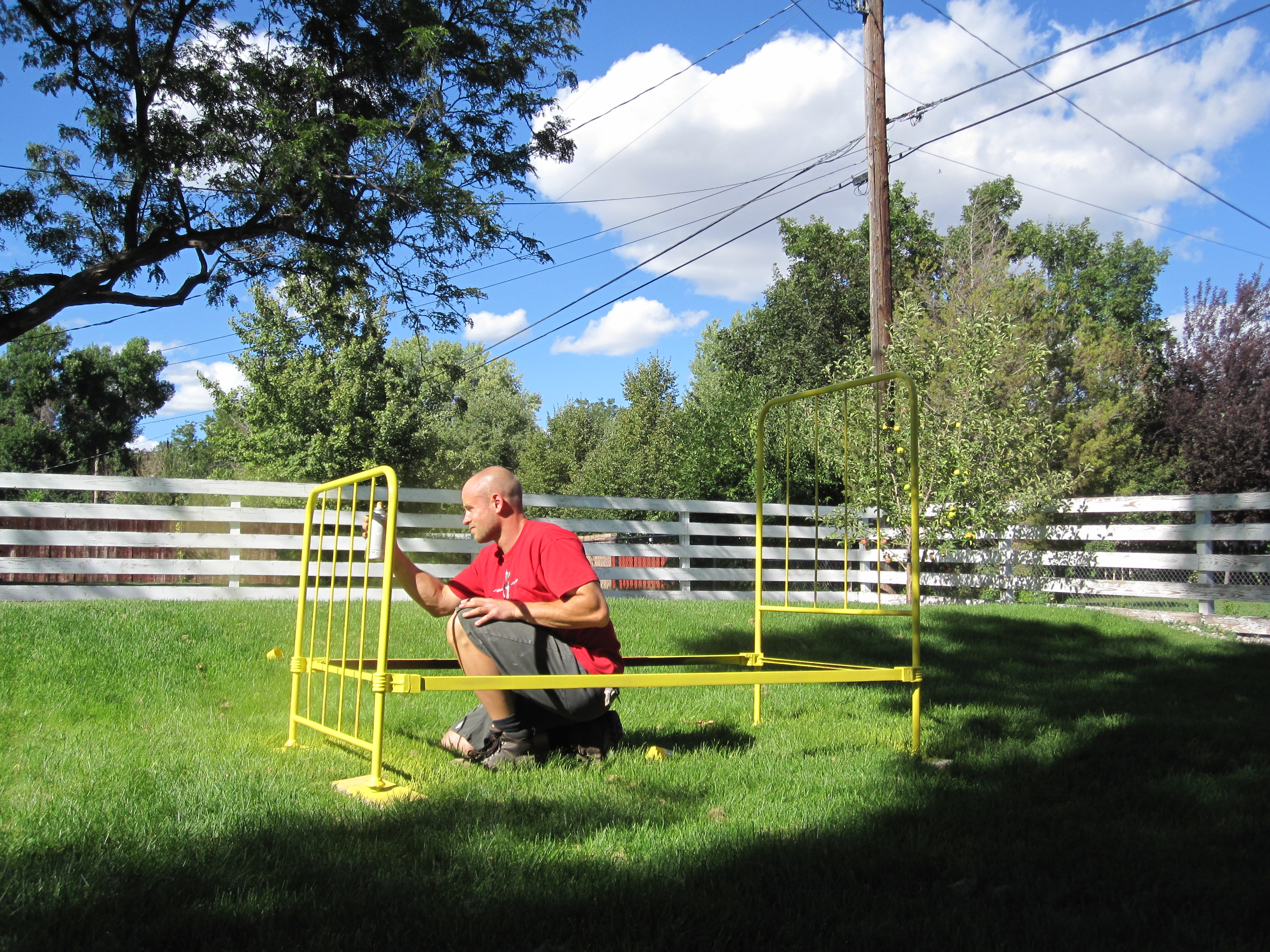
I sent Ben to the hardware store and he picked up Rustoleum’s Sun Yellow spray paint.  Rustoleum claims to have 2 times the coverage, so maybe we won’t have to prime.  After disassembling the bed and setting it up outside on wood blocks, Ben started painting.

Sure enough, Rustoleum does have two times the coverage.

While Ben was painting, the boy’s room was a mess.  Fortunately, it didn’t last too long, but here is what it looked like.

Better yet, Rustoleum dries to the touch in 20 minutes and to handle in 1 hour.  That’s great for impatient people, such as myself.  We left the bed outside for 5 hours or so, just to let it air out.  We brought it inside and added bedding.  Vincent did not sleep in the bed, as it was a little smelly, but I love the new look.

I really love the yellow bed with the chevron painted rug.

Next step, bedding!  I have debated between a sun yellow/charcoal grey color palette and sun yellow, light aqua, and lemon grass-green.  I think the yellow/grey is a little too sophisticated for a kids room, so we decided on yellow, aqua and green.  What is your favorite color combination?