A Boatload of Thanks

With Thanksgiving three days away, we thought it was time to share a simple table setting.  Several weeks ago, while at a thrift store, I found a beautiful gold ringed glass and pitcher set.  My sister and I both wanted it, so she took four of the six glasses and the pitcher.  Those two glasses I got sparked this place setting.  Not one to like warm colors like red, I decided on a color scheme of blue and gold.

While at HoLo (Hobby Lobby), I spied bandannas for 99 cents each.  I bought one in an aqua color to see if it washed well.  If it did, I thought it would make a perfect napkin.  Luckily, after one wash cycle, it softened enough.

Then I started thinking about seating cards.  I didn’t want to do the same turkey idea we did last year and I wanted something multi purpose.  Something sparked.  A vessel to hold bread.  Like a boat!  Yes, that’s just what I needed.  Only I didn’t want it to scream, “I’m a boat!”  Incorporating leaves seemed like a perfect sail.  That’s what I did.  See, a little bread boat.

To make each boat, I cut each sheet of 25 cent felt in half, then folded that half in half.

I pinned the short ends to keep things in place and folded it in half width wise.  With sharp scissors, I cut an angle through all four layers, wider part at the top.

Blanket stitch (or whatever hand stitch you prefer) the short ends.  Now it’s time to make the mast and sail.  Start by printing this template on colored card stock.

I found the easiest way to make the leaves even was to print half of the design, fold it over, then cut each leaf.  Don’t worry about being too precise with cutting on the line.  When you’re done cutting, flip the leaf so the printed part is on the inside.  Repeat until you’ve finished cutting two leaves per place card.  Then, cut a bamboo skewer to about 5 or six inches long and wire each guest’s name on a leaf.

Spread a little glue stick over the inside of each leaf, including a little in the middle.

Fold the leaf over and press firmly.

Repeat with the named leaf.

Poke the stick into a roll.  Pop the roll in the felt boat and you’re done.

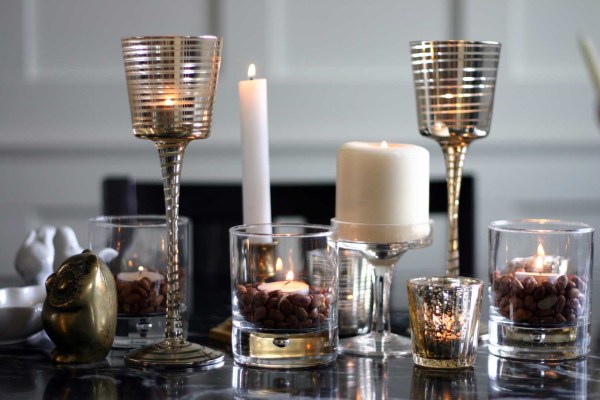
Here’s another cheap and festive idea.  Pour dried beans or peas in a small juice glass, toss in a tea light and you’ve got a cute candle holder.
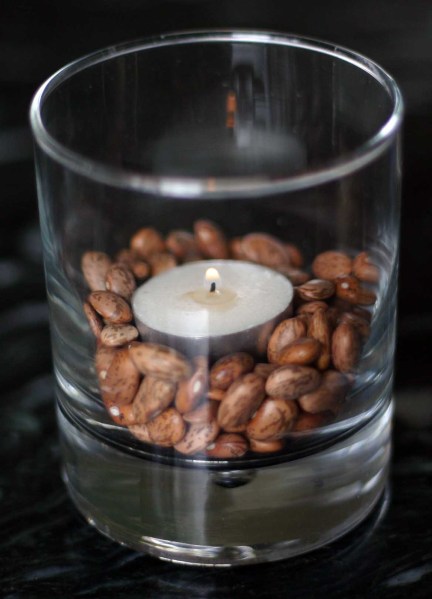
If you’re hosting Thanksgiving, you’re probably stressed enough worrying about the food.  Keep the centerpiece simple by corralling various candles.  Keep it cohesive with similar colors.  I even added a small brass owl for fun.
If you’re anything like I am, you’re unreasonably attracted to miniature dishes.  Put these to good use when hosting a large dinner group.  Fill with butter or even salt and pepper to cut waiting and passing.

Usually we don’t use table cloths.  Two crazy boys + table-cloth + tons of dishes = pile of food and broken plates on the floor.  No, it’s never actually happened, but I can see it.  This year, we’re having more people than we have in the past and our table doesn’t expand.  Which means we’ll have to use a folding table for extra seating.  Therefore, we’ll need a table-cloth to cover the ugly table.  I found this shower curtain on clearance for $3.74 at Target and thought it would be a perfect table-cloth.

How about a budget breakdown?

Tablecloth: $3.74

Bandanna napkins: $.99 each

Felt boat place cards: $.15 each

We already had the gold charger, white plates, glasses, salt and pepper shakers, leaf dishes for butter, and candle holders.    Oh, here’s a thrifty tip.  If you’re looking for cheap chargers, check out the dollar store.  I saw some there a month or so ago.

There it is.  Our Thanksgiving table setting.  It’s nothing too fancy, but it glitters and sparkles, which makes me happy.

What’s your favorite turkey day color scheme?  Do you prefer something more traditional or do you like to mix it up?
Gray Matter

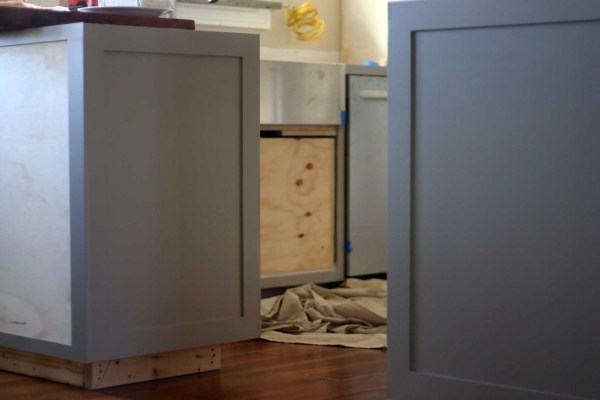
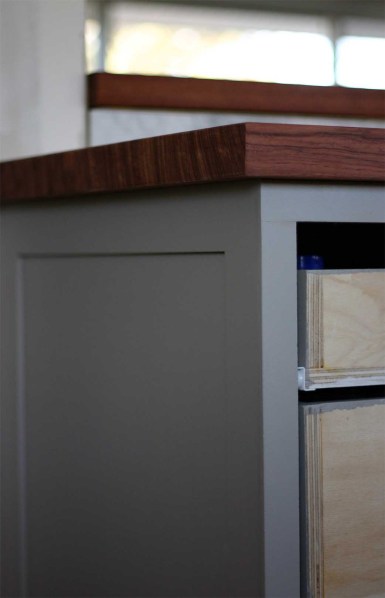
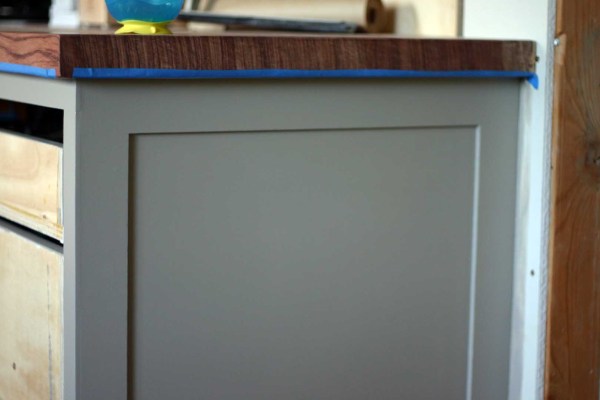
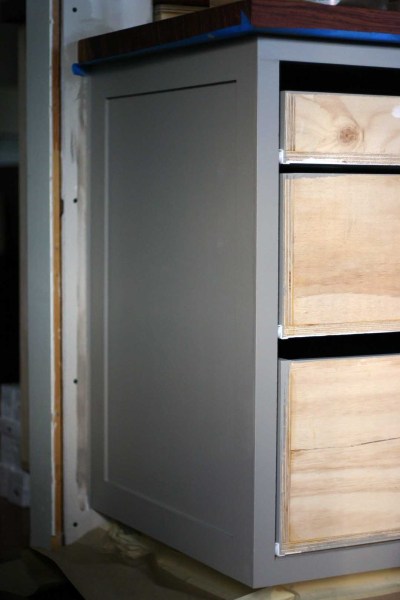
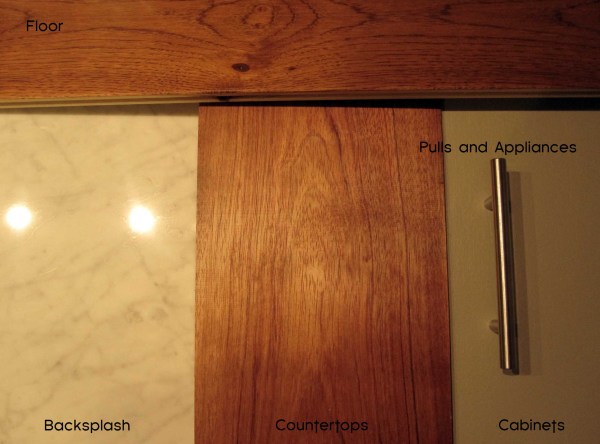
As we’ve shared, we’ve decided to paint the lower kitchen cabinets a medium grey.  Pewter Tankard by Sherwin Williams because it is warm without being beige.

Originally, we thought we’d paint all the cabinets white, just to keep everything light and airy.  Then, we examined the oak cabinets and realized how much grime was actually on the doors.  Partially due to the lack of pulls, but probably more because of two small boys.  So, we decided to paint the lower cabinets grey to disguise the dirt.  We’re also adding sleek drawer pulls.

After installing the face framing, filling the nail holes and joints and sanding smooth I gave everything a coat of primer.

Don’t worry if your primer doesn’t have 100% opaque coverage.  The point is to cover bare material for best paint adhesion and stain blocking.

Then, I finally started painting the cabinets.  For a super durable painted finish, we decided to use Acry-Shield paint by Columbia Paints in an eggshell finish.

Ben used this on exterior doors at the apartment and it has held up wonderfully.  Something super durable also costs more than normal latex paint, and this stuff ain’t cheap at $52.39 per gallon.  We decided to off set the cost by painting a coat of the cheaper Glidden before the Acry-Shield.  That, and we still have two gallons of Glidden paint left over from the drawers.

We considered spraying the cabinets before installing, but decided against it because we wanted to add the face framing after for the smoothest finish possible.  And  we should be able to touch up the rolled finish down the road without it being obvious.

For the record, I love the way the gray cabinets and red toned wood counters look together.  Haa-taa.

Even though we opted for a rolled finish, we still wanted it to look as professional as possible.  To get the smoothest finish, I worked in small sections using a good quality paint brush (we prefer Purdy) to get along the edge of the counter tops and the box detailing.  Right after using the brush, I follow up with a foam roller barely covered in paint.  Glidden paint goes on nicely and has a reasonably long working window.

After painting a coat of cheaper paint as a ‘tinted primer’ I started with the good stuff.  Actually, I tried, but it had a layer of gunk at the bottom that I couldn’t get to mix in.

I took a trip to the paint store and they replaced my old gallon of paint with a new, clump free can.  Back at home, I painted a thin and even coat of Acry-Shield.  It was a slight learning curve.  The paint is slightly thicker and dries a littler faster.  To counter this, I worked in smaller sections and made sure to go over the brushed areas well with the roller.

The color matched the Glidden paint perfectly, too.

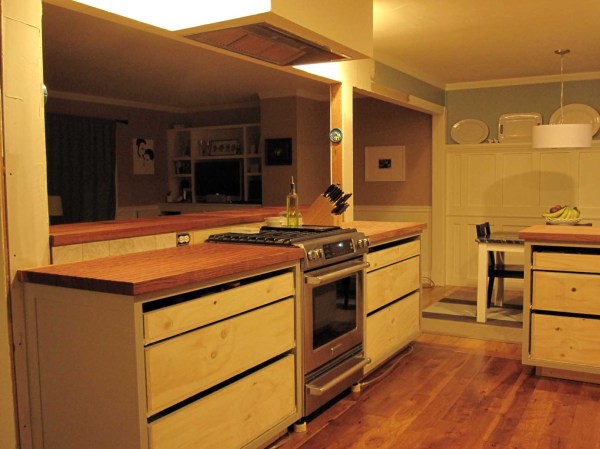
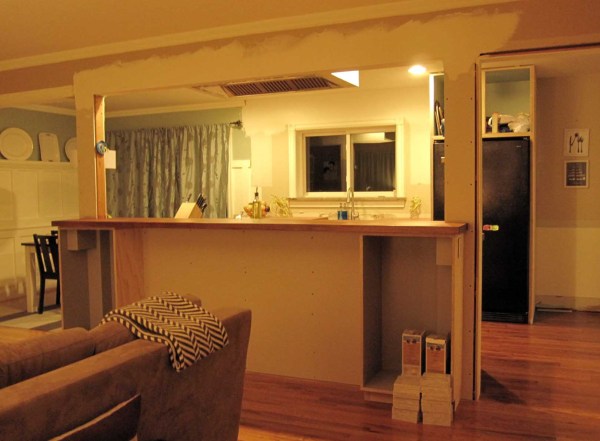
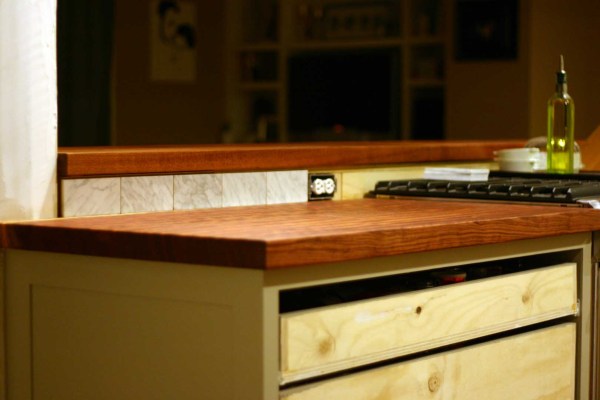
Here’s what our kitchen currently looks like:

Sorry for the off colored photos.  It gets dark far too early for my liking these days.

You can see our stash of tile and sconces.

I’m glad to be done with that part of painting, but there’s still tons more in my future.  Gotta paint all the drawer and door fronts once they’ve been built (20 drawers and 8 cabinet doors).  And I’ll have to paint the giant refrigerator case.

Counter Productive

Counter productive is actually counter productive in describing the progress we’ve made with the counters this weekend.  In fact, we have every countertop installed.  Of course with wood jokes a plenty.  My favorites, “Don’t hit me with your wood” said to Ben while holding the door open for him.  And Ben asking me if I like his wood.  Yes, yes I do.  Vincent even made an unintentional dirty joke telling Ben he “kissed his back door” while waiting to open the door for him.  Bahaha.  It’s a good thing he has no clue what he said.

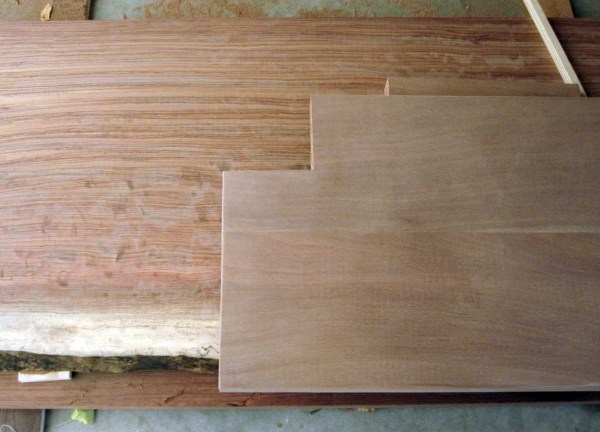
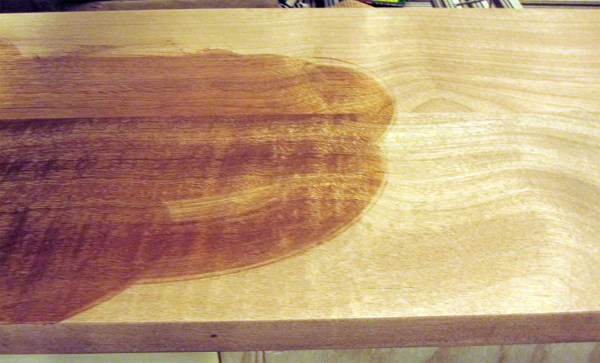
I wish I could say the counter cutting and installation was quick and simple.  In actuality, Ben spent the better part of yesterday (and a few hours on Saturday) working to get er done.  It would have taken a million times longer if Ben hadn’t had the slabs sanded at the cabinet shop on Tuesday.  Speaking of the cabinet shop, Ben picked up the piece for the bar top on Wednesday.  Have a look.

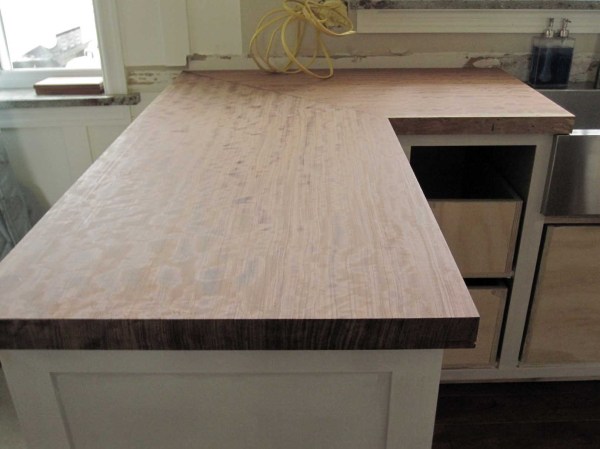
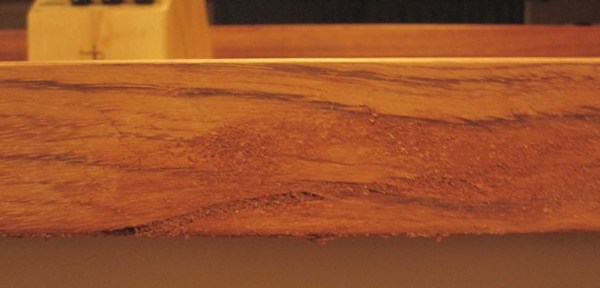
With phase one complete, Ben started phase two, cutting the pieces to size.  I took the picture above after Ben had started cutting the bar top, but you can really see the difference of grain.  Because Ben is so awesome, he was able to get the bar  top in on Saturday night.

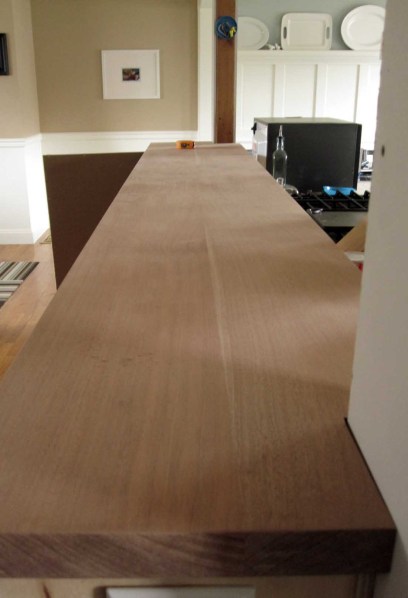
You can bet we wasted no time oiling that baby up.  And it’s amazing how different Sappelle looks with a coat of oil.

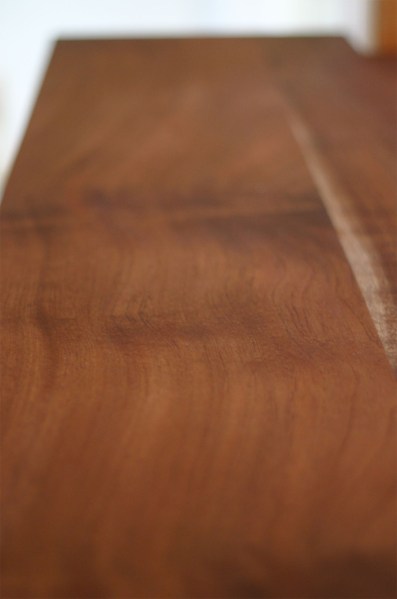
I love how much character the oil brings out.  And how rich the tone is.

There are a few knots, which look great and add tons of character.

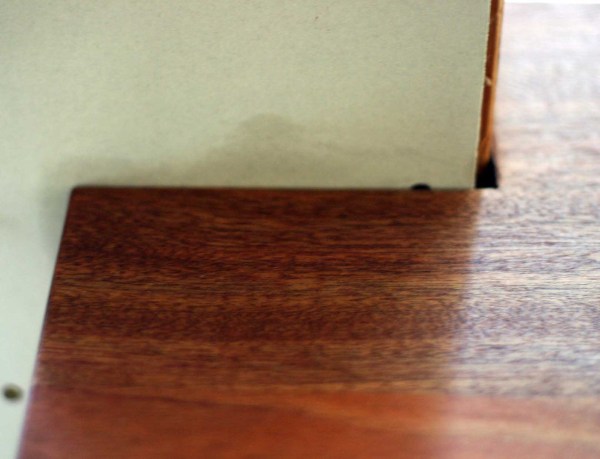
The cuts around the post are snug, which is perfect because some of it will be visible even after installing the trim.

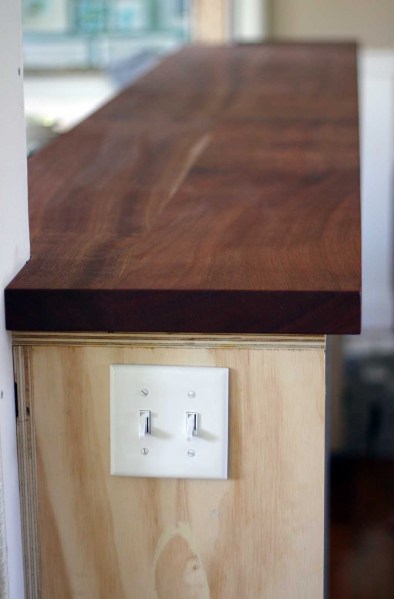
And here she is now, patiently awaiting bar stools to complete the look.

Ben worried most about the 45 degree angle he had to cut for the peninsula seam.  He cut the long side, brought it in to check the angle.

Luckily, it was perfect, so he brought in the adjoining piece.

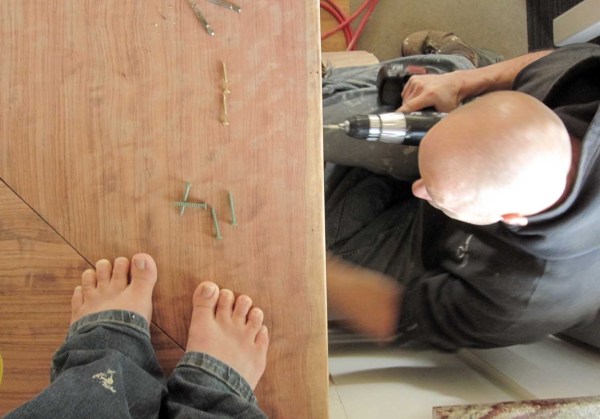
He secured the small piece next to the sink first using silicone caulking along the sink seam.  This piece was the first to go in because we wanted the line against the sink to be straight.  If we had installed the larger piece of the peninsula first, it could have shifted the smaller slab.  Ben did have a slight problem when screwing it in.  Bubinga is a hard wood, which is the reason we chose it for our counters.  Because it is so dense, a few screws snapped off.  To help this, Ben drilled pilot holes with the wood in place, going through the cabinet top and into the counter.  I had the task of standing on a slightly bowed seam to keep the joints flush.

(Don’t mock my Flintstones feet.)  While I was up there, I thought I’d give you a never before seen and probably never will see again angle of the kitchen, with living room and front door beyond.  We hadn’t finished the pieces by the range.

Ben moved onto install the rest of the tops.  The piece above the dishwasher went in the same as the angled chunk to the left.

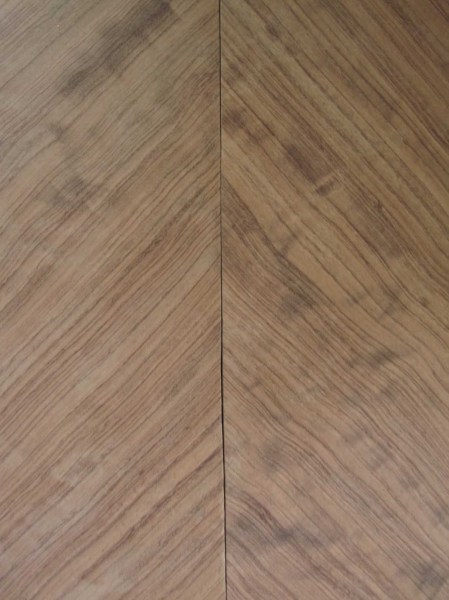
With the two pieces securely in their new home, we worked to fill the slight gap.

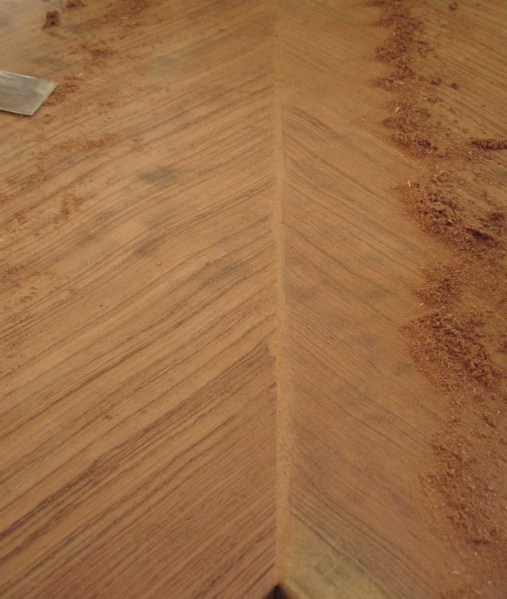
We wanted the filler to be as close of a match as possible, to keep the seam from being noticed.  The guy at the cabinet shop told Ben they usually make their filler out of sawdust and super glue.  We spread some glue into the crack (haha) and sprinkled saw dust over the top, pressing in place.

While it was still wet, we started scraping the excess off and lightly sanded it.

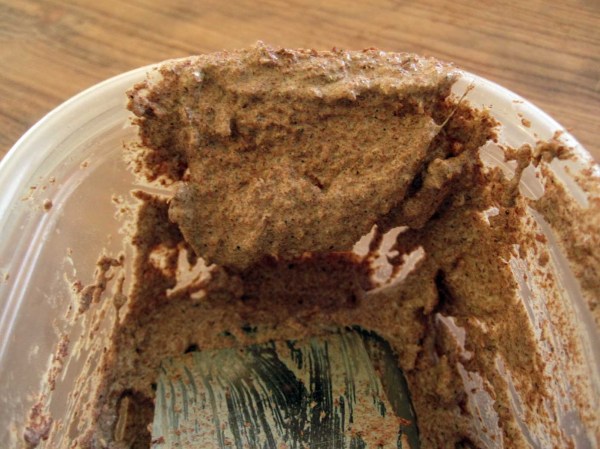
Still not happy with it, so I mixed wood glue and more sawdust in a container until it had a peanut butter like consistency.

A few other pieces had small cracks where the wood had split while drying.  We tested the glue/sawdust mixture here.  Once it’s sanded down, it should blend in nicely.

So, folks at home.  If you need a special colored wood filler, try making your own.

We’re still waiting for filler to dry, which we’ll sand and may have to give another coat before we can oil the tops.  The only piece that didn’t have any areas to fill was this one on the left side of the stove.  Pretty, huh?

But we couldn’t wait until the rest were ready for oil.  Just like the bar top, the oil enhanced so much of the grain and darkened up the color.  The wood absorbed the oil differently.  I think the darker areas are softer, so they drink the oil up quicker.

Once absorbed completely, the finish is even and pretty.  I couldn’t resist putting a few marble tiles against it.

The colors of the counters and bar top are very similar, despite coming from two different species of trees.

This was a huge item crossed off the to do list.

  • Install the new dishwasher.
  • Sand the ceiling and walls smooth
  • Build the five remaining drawers we’ve waited on (we needed to see how things were in place before we could build one drawer in the dining room, the trash can pull out, and the under the sink drawer)
  • Fill, sand, prime and paint said drawers
  • Install every drawer, 16 total
  • Buy the wood for the counters.  
  • Haul the wood slabs to a cabinet shop to have them sand both sides smooth
  • Cut the wood to fit and install the counters
  • Hang the upper cabinets
  • Add decorative face trim to all cabinets for a smooth, pretty, even front
  • Fill, sand, prime, and paint all cabinet faces
  • Build the drawer and cabinet fronts, including two glass front doors
  • More filling, sanding, priming, and painting of the cabinet fronts
  • Install the drawer fronts and hardware pulls
  • Prime and paint the kitchen and living room.  Probably the dining room too.
  • Add lights: sconces, recessed light halos, and the rope lighting
  • Trim out the posts and door frames
  • Add crown molding to the top of the cabinets
  • Decide whether we want to add decorative trim to the vent hood or paint it to match the wall color
  • Install the pretty new marble tile backsplash
  • Put everything back in place and enjoy
We’ll share more pictures and details once we’ve filled, sanded, and oiled everything.
What did you do this weekend?  Have you ever made your own wood filler?  Installed your own counter tops?  Do you get school girl for Justin Bieber excited over home improvement projects?

Just Face It

As I had hoped, we crossed a few more items off our kitchen to do list.

  • Install the new dishwasher.  Did that on Thursday night.
  • Sand the ceiling and walls smooth
  • Build the five remaining drawers we’ve waited on (we needed to see how things were in place before we could build one drawer in the dining room, the trash can pull out, and the under the sink drawer)
  • Fill, sand, prime and paint said drawers
  • Install every drawer, 16 total
  • Buy the wood for the counters.  Hopefully we’ll get a call today!
  • Haul the wood slabs to a cabinet shop to have them sand both sides smooth
  • Cut the wood to fit and install the counters
  • Hang the upper cabinets
  • Add decorative face trim to all cabinets for a smooth, pretty, even front
  • Fill, sand, prime, and paint all cabinet faces
  • Build the drawer and cabinet fronts, including two glass front doors
  • More filling, sanding, priming, and painting of the cabinet fronts
  • Install the drawer fronts and hardware pulls
  • Prime and paint the kitchen and living room.  Probably the dining room too.
  • Add lights: sconces, recessed light halos, and the rope lighting
  • Trim out the posts and door frames
  • Add crown molding to the top of the cabinets
  • Decide whether we want to add decorative trim to the vent hood or paint it to match the wall color
  • Install the pretty new marble tile backsplash
  • Put everything back in place and enjoy
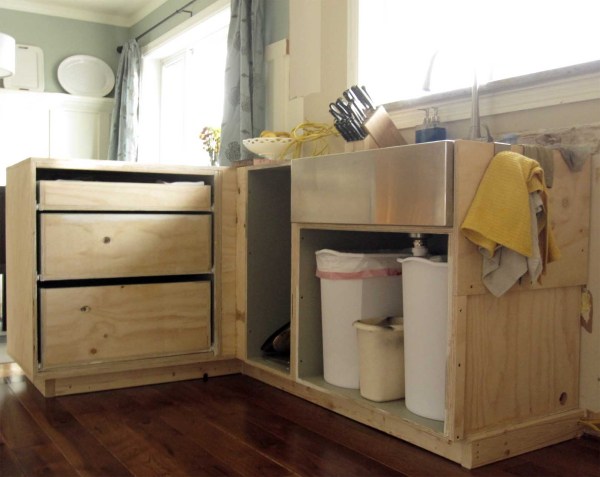
Ben built five drawers: the top dining side:
See the window sill?  We had to make this drawer narrower than the others so it doesn’t hit the sill.  Instead of wasting three inches on the entire stack, Ben attached a few plywood scraps to build the cabinet out to the width of just the top drawer.
Three for the drawer stack we thought would be the trash drawer:
The top drawer by the sink isn’t installed because we ran out of drawer glides.  We bought 15 when we planned to have only two drawers in that stack.  We’ll install it once we get another set of glides.
And one under the sink:
I think this one is my favorite, just because I’ve never seen a drawer under the sink, and it’s so much more functional with the drawer.  To cover the exposed plywood edges, we filled the top with wood filler, let it dry, then sanded it smooth.
We could have used iron-on wood veneer, but it peeled off easily when we tested it for the laundry room.  That’s why I’ve made a few light fixtures with it.
After fitting the drawers, Ben started on the cabinet face framing.  Quarter inch MDF cut into strips cover the rough plywood edges.
Visible cabinet ends got a layer of 1/2 inch MDF followed by a 2 1/2 inch wide by 1/4 inch thick MDF decorative frame.
Wood filler seals the cracks.  Once everything is sanded, it should have a seamless edge.
We have a special plan to deal with the bare back and the drawer front for the dining side.
And, the trim covers the gap between the dishwasher and counter.
If all goes well, I’ll have the trim sanded and primed later today.  Hoping Everett takes a long nap.
What did you do this weekend?  Start or finish any big projects?  Planned out your Thanksgiving dinner menu?  Rake up leaves?  We tried but then it snowed.  Can you believe winter has already started?  Folks in warm climates, please send your weather our way.

Manormous Cabinet

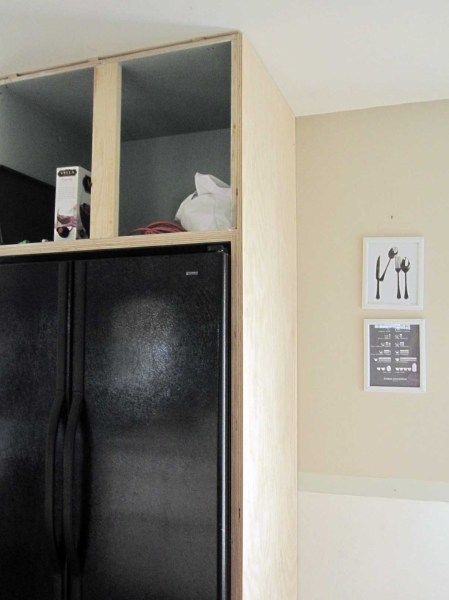
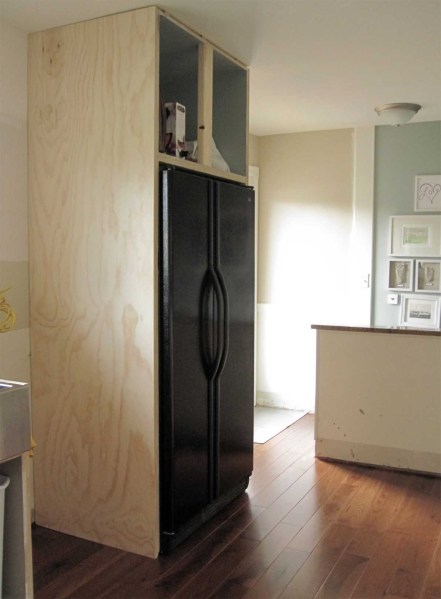
All of our lower cabinets are in and we’ve even installed one of the three uppers.  A giant cabinet over the refrigerator, in fact.  We decided to frame out our refrigerator for a more finished look.  This started with hanging the large cabinet, screwing into the joists and studs along the back wall.

Now do you realize how huge.  It is 36 inches wide, two feet tall and 29 inches deep.  In a small kitchen, every inch counts.  Actually, when I was painting the insides of the lower cabinets, I accidentally painted this guy because he was that big.  Moving on.  After installing the cabinet, Ben screwed a small strip of plywood to the floor.  The sheet of plywood screwed into the cabinet and this small strip to keep it from shifting.

He did the same thing on the other side, too.  Another strip of 3/4 inch plywood on each side filled the gap between the fridge and wood nicely.

We’ll cover the ugly edges with a face frame for a smooth, polished look.  But this already does a lot to make the kitchen look fancy and custom.

The doors still swing open all the way because the panels are set back slightly.  We also made the opening a standard size as we plan to get a new refrigerator when this one conks out.  And it helps detract from seeing the fridge when you walk in the front door.

Of course once we get the dishwasher, which should be here today, install the counters, (we’re hoping they get the wood by tomorrow), and hang the other upper cabinets, everything will look much more cohesive.

While we’re discussing cavernous kitchen storage, let’s look at the newly installed drawers.

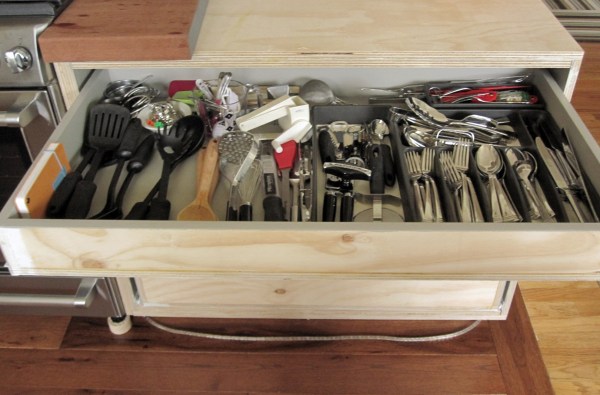
Obviously we still have more to install.  Well, we have to build them first.  But the drawers on either side of the stove are in.  Those puppies are massive.  43 inches wide to be exact.  Oh, and you can see the rope lights.  Vincent wanted to show you.

I’ve already started putting things in the drawers, too.  What used to be split into three drawers now fits in the top right drawer.  Yep, every single utensil we own is visible with the pull of one drawer.

The middle drawer has all of our mixing bowls, strainers, a salad spinner, and food storage containers.

And the bottom drawer holds our pots, pans, baking dishes, and toaster with room to spare.

Other drawers have some stuff, too, but nothing else is in a permanent place.  Before we started the kitchen reno, I had a few moments of concern about having enough storage space.  Now, I’m wondering what I’ll put in the other side.  Not really because we still have food in the pantry and dishes in the guest bedroom closet.  But we’re both so excited about the space we’ve gained without enlarging the footprint of the kitchen.

So how ’bout you.  Are your drawers over sized?  No, not your pants.  Have you encased your fridge for a high-end look?  Do you have similar items dispersed all over your kitchen?