Even though summer hasn’t officially come to an end, Labor Day seems to signal fall’s arrival. Kids are going back to school, temperatures are dropping and warm clothes are coming out of storage.
We thought we’d kick off the unofficial start of fall with a round-up of our past fall projects.
A tree stump makes a quick and easy outdoor side table. If you like the looks but want to use indoors, clean it up a bit before bringing it inside.
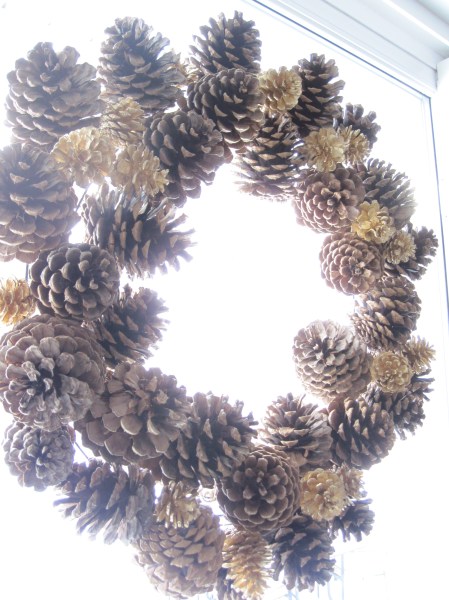
Craft a pine cone wreath to hang in your house on greet guests at the front door.
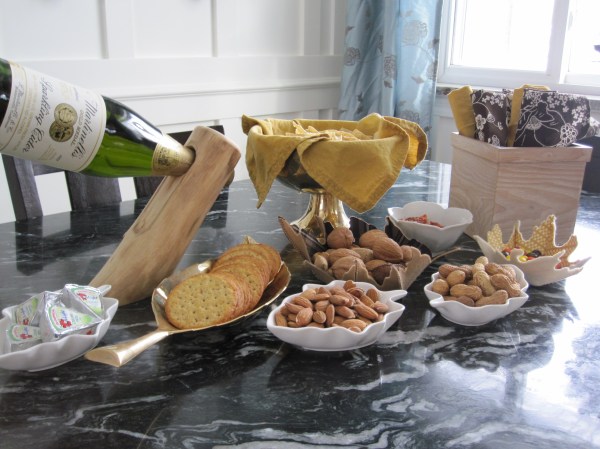
Gather leaf-shaped dishes, brass accessories, fall colored napkins, and nuts to assemble a festive table setting for your next party.
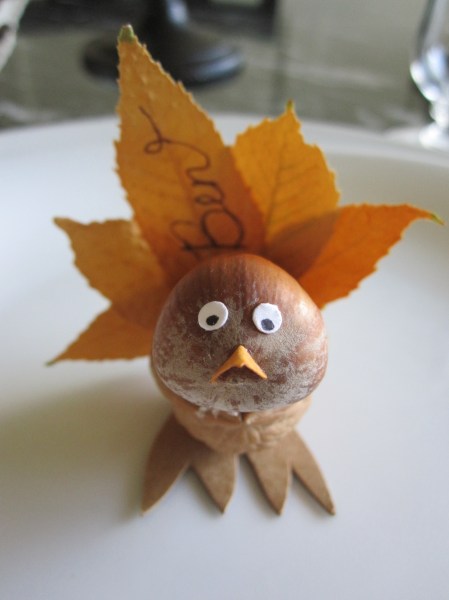
Use nuts, dried leaves and hot glue to create turkey place cards. Cute enough to use throughout the fall, not just Thanksgiving.
What is your favorite fall craft? Are you glad fall is officially around the corner? What is your favorite aspect of fall? The cooler weather? Pretty colored leaves? The return of football? Sending your kids back to school?
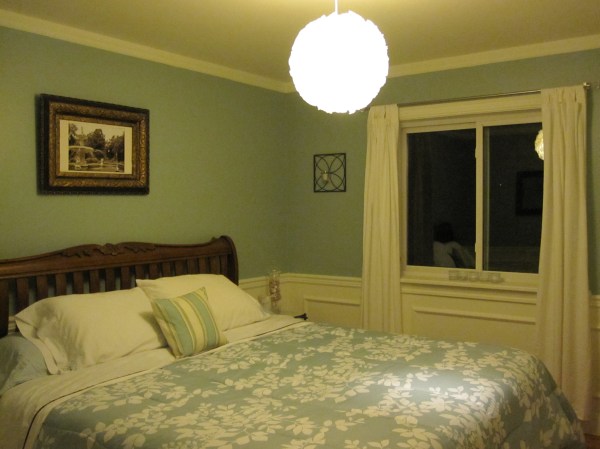
If you can get past Ben’s faux grumpy expression, the half built wall, holes in the ceiling and wall, and the awful 70’s carpet, you’ll notice hanging wiring for a light. Since this photo circa 2007, we’ve finished the half wall, filled the holes in the ceiling and wall, replaced the carpet and the light fixture. The problems? The fixture is a cheapo ‘boob’ light we had on hand, and it’s off centered. Technically, the light is centered on the entire wall, but I’d prefer for the light to be centered over the stairs.
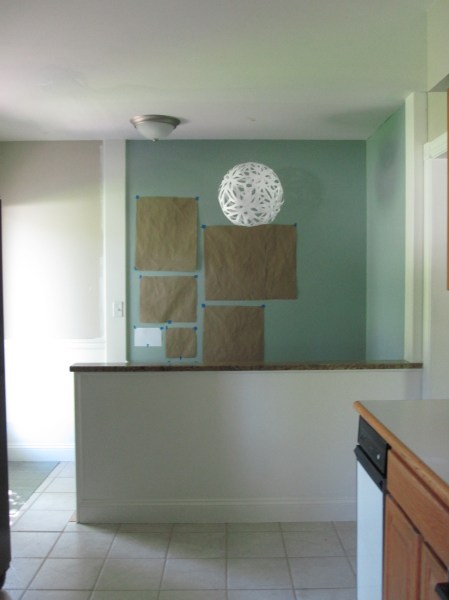
If we keep the light centered on the entire wall, we can’t have anything that hangs down because tall people (unlike myself) would hit their heads. We still haven’t touched the kitchen, except installing a new faucet, but when we do, we’ll probably move that light fixture. Ben is still undecided, so I decided to use materials I had on hand to make a floral pendant shade for a visual of a centered light.
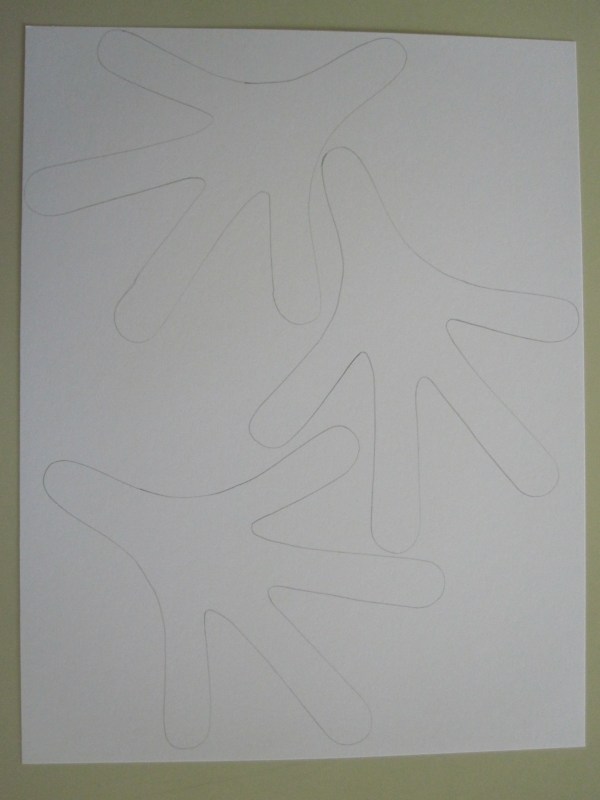
Using 8.5 by 11 inch sheets of white cardstock, I started by tracing the free pattern on my sheets.
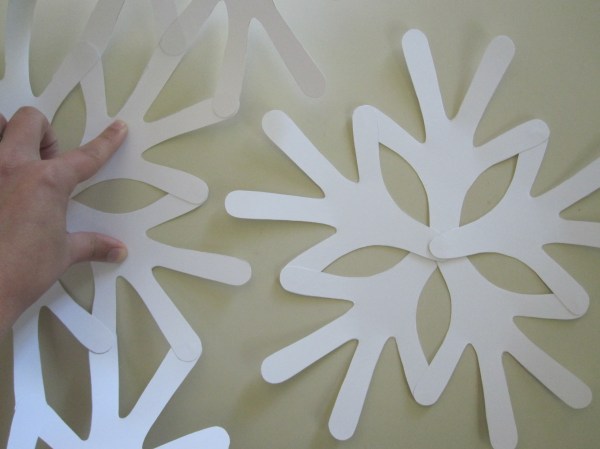
Then, I painstakingly cut out each piece, starting with 60 individual pieces. Several hours and a hand cramp later, I got out my trusty glue gun to attach and assemble the design. First, I made several five point flowers.
A quick reference to the original design to see how to assemble the five point flowers together, I was ready to go. Basically, the long points join with short points and vice versa.
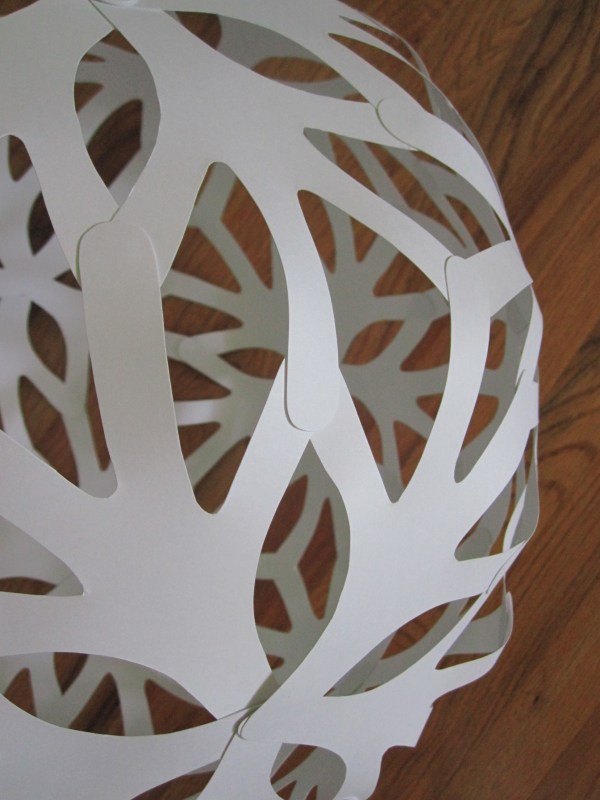
Gluing and assembling went much quicker than cutting. Unfortunately, some of the glued pieces didn’t meet up perfectly, so the design is slightly lumpy. Perhaps it is better to use brads to allow wiggle room. Lesson learned.
If we move the wiring and we like the floral shade, I’ll make another, using brads.
For now, the lumpy place holder works as a lovely visual.
And, the paper templates are a good visual of an in the works gallery wall. Of course, we’ll fill in the area on the right, but I’m too short to reach. Right now, I’m trying to decide if I want to hang a picture (or a few) behind the light, or box around the temporary fixture with frames. We’re also debating how close to the ceiling we want to get and whether to wrap the gallery around to the wall on the right. Thoughts on the matter?
Now, the real question is how many gallery walls and DIY light fixtures belong in 2500 square feet? Including those shown today,three gallery walls (the others are here and here) and three home-made fixtures (here and here) so far.
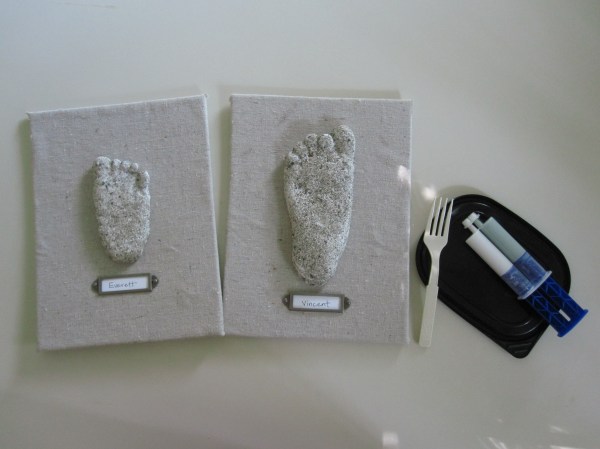
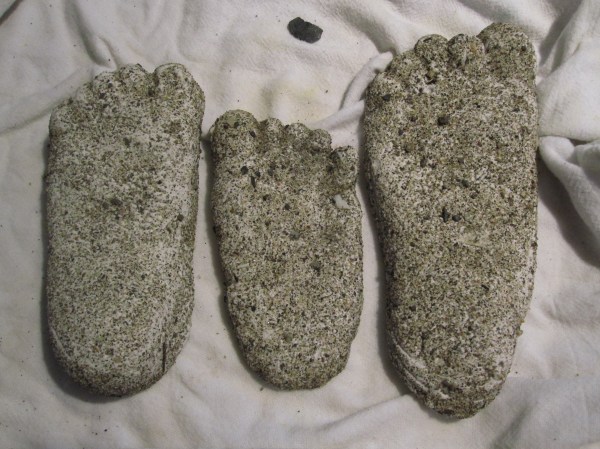
Wanna see what we did with the plaster feet we made? If you answered yes, keep reading. If your answer was no, stop by tomorrow. I decided these feet would look adorable framed in shadow boxes. I had two sitting in my office, so I gathered other supplies. Two pieces of foam core, cut to the size of the glass, a piece of canvas (left over from the drop cloth curtain in the laundry room. I also used a few scraps to cover a lampshade), scissors, Mod Podge, masking tape, labels, Elmer’s glue, and epoxy.
I started by cutting my canvas to size, laying the glass down as a guide, keeping two inches of extra material on all sides.
Then, I Mod Podged one side of the foam core and placed the foam on the center of the fabric, pressing firmly for nice adhesion.
To eliminate excess fabric, I cut the corners of the fabric. I added more Mod Podge to the back and pressed the fabric down.
With each side folded down, I added a strip of masking tape, just to prevent any shifting. You could skip Mod Podge on the back and just stick masking tape.
A quick search through my scrap booking supplies left me with two label holders, with brad holders. I cut two small pieces of cardstock to label each foot.
With my fabric in place, I found the center and marked the holes of the label holder.
Because the foam is 1/4 inch thick, I used a screw to make holes for my brads.
The only problem? The brads are only 1/4 inch long. Not long enough to go through the foam. Rather than a wild goose brad chase, I opted for the easy way out, Elmer’s glue. A little glue on the brad and another dab in the hole and everything worked out.
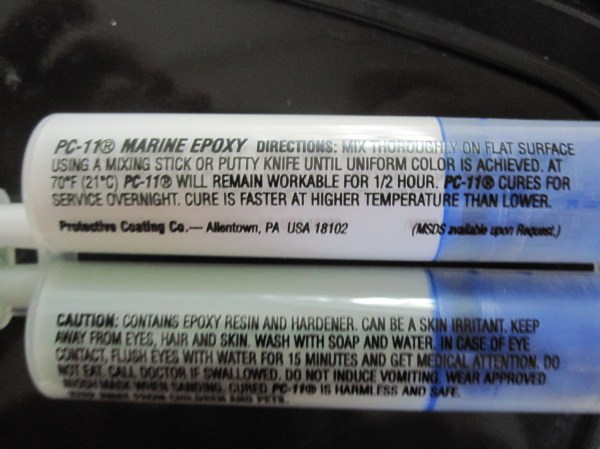
Now, it was time to glue the foot molds in place. Elmer’s just wasn’t going to work, so I used an epoxy.
I didn’t want to clean epoxy off anything, so I scoured the kitchen for a plastic lid and fork to mix on and with.
With the epoxy mixed, I generously covered the highest areas of the back of each foot.
Some areas don’t touch the backing, but that’s just fine.
Other areas touch nicely, but a little of the epoxy oozed out. Again, not a big deal.
Epoxy takes about 12 hours to set up, so I left the pieces out overnight, but I snapped a few pictures while they dried.
I like the look of the canvas backing, the grains of sand, and the official looking label holders. Next step, framing and hanging.
So, how much did this little craft project cost? The plaster cost $7.99 and I had the rest of the supplies. And, I still have plaster left over for future projects.
What do you have in shadow boxes? Have a favorite home-made art piece you made?
So, I took a trip to Hobby Lobby for plaster of Paris, but didn’t find any. I did find something that sounded like it would work, PermaStone.
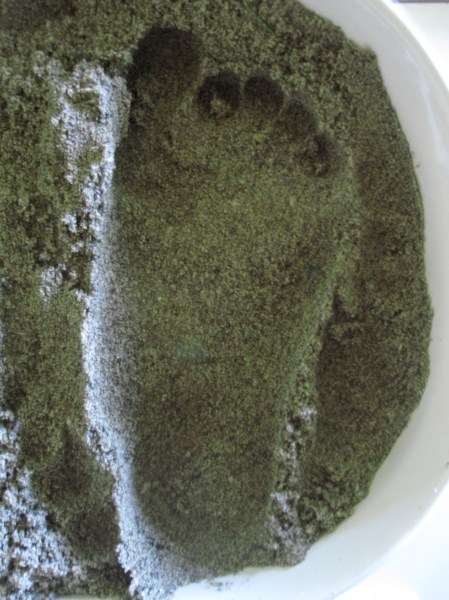
On my way home from HL, I stopped by the park by our house to steal borrow a bucket of sand. Then, I took out three shallow baking dishes. One for Vincent, another for Everett and one more for my cousin’s 18 month old son. With the wet sand firmly packed, Vincent stepped on his tray. Nothing happened; it was too tightly packed. So, I dug up the sand and had him step again, gently pulling his foot out. The impression was okay, but not great. So, we tried again. This time, I pushed his foot down and pressed sand against the sides of his feet and toes. Finally, a great mold.
Then, we tried this with the smaller kids. This proved to be much more difficult. They squirmed more and didn’t really like having their feet pressed in the sand. We originally planned to cast both feet of each boy, but it just didn’t seem worth the effort. After getting a clean impression of each foot, I mixed up the plaster. This plaster calls for three parts plaster mix and one part cold water. I mixed three-quarter cups of plaster and one-third cup water because one-quarter cup of water was really thick.
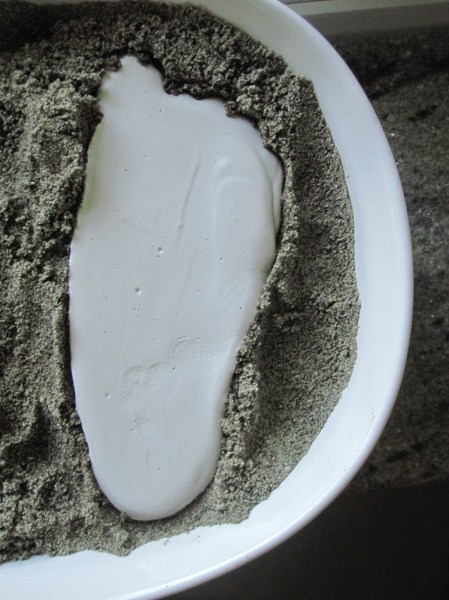
I carefully poured the mixture into the sand mold, filling to the top, but not overflowing.
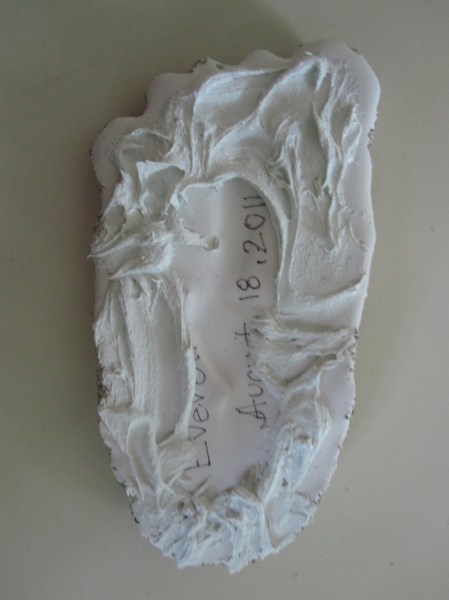
Luckily, the plaster sets up quickly, but we left to dry for a few hours. When I took the feet out, they were covered in sand.
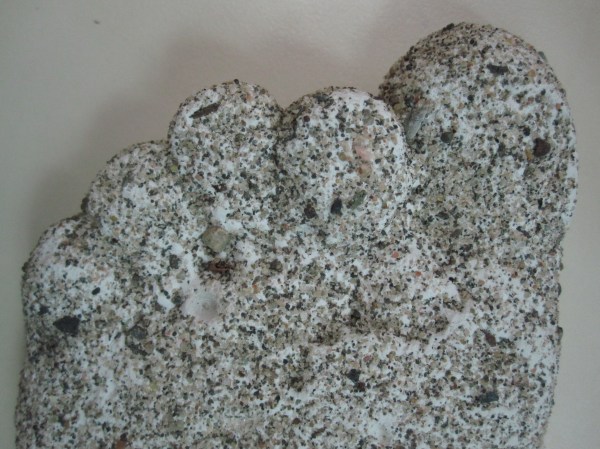
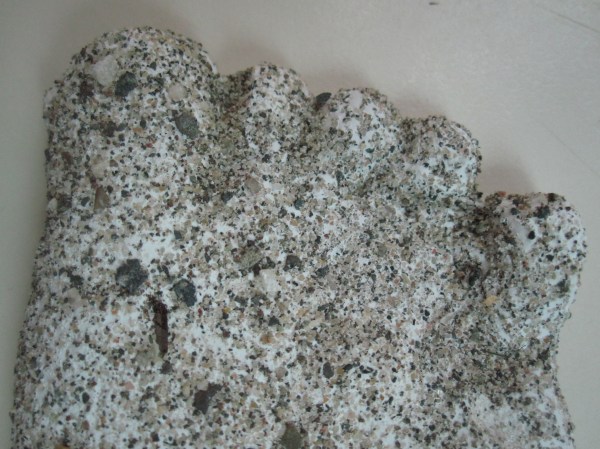
I gently brushed the sand off, then washed the rest off with water. A few larger rocks stuck in, like the one at the top of this picture, so I pulled those out, too.
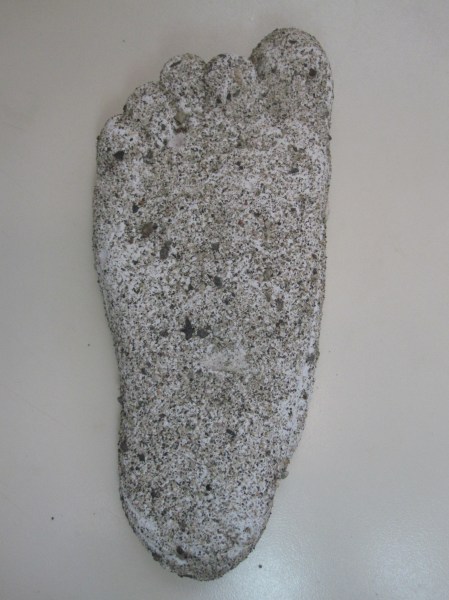
Vincent’s foot is gigantic, but it looks so cute.
Surprisingly, a lot of detail remained.
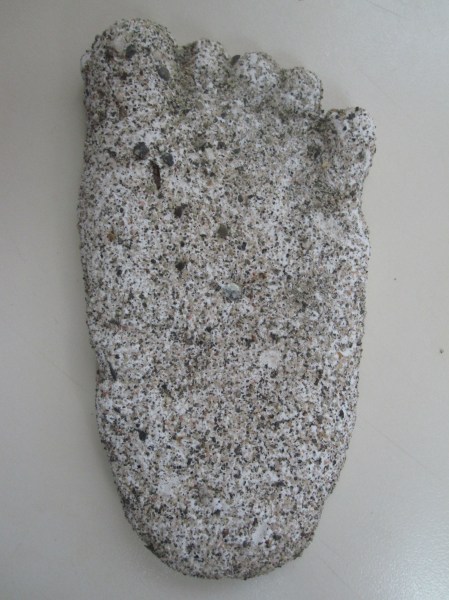
I over poured Everett’s box foot a little, but it’s close to the real thing.
His pinky toe smooshed slightly when I pulled his foot out of the sand mold, so I pressed the sand down with my finger, hence the slightly outset toe. I showed Everett, and he thought the little foot was fun. He wanted me to press the mold against his foot repeatedly. I have big plans for these little feet, so check back soon to see what happens.
Meanwhile, I would like to know if you make baby keepsakes. If so, what? Paintings? Inked foot or hand prints? Framed a small outfit? Lock of hair?
Evidently, home-made light fixtures are my thing. I don’t know how that happened, but so far I’ve made a cloud like coffee filter pendant for our guest bedroom.
Just a warning. I say embroidery hoop about 10,000 times in this post. Enjoy.
We still have more than half a roll of the veneer strips, so I brainstormed ways to use it. One of my ideas was another light fixture. I know, how many wooden light fixtures does one house need? This one isn’t for our home, actually. When I was in Minnesota visiting my blog BFF Jen, she mentioned she wanted a new light fixture for her son, Preston’s, room. That’s when I shared my diabolical plan for a wood veneer/embroidery hoop/bamboo skewer drum shade. And, she loved it. Now, I had to figure out a way to, as Project Runway’s Tim Gunn would say, “Make it work!”
In the words of my favorite 80’s school skipper, Jen Jones, this one’s for you.
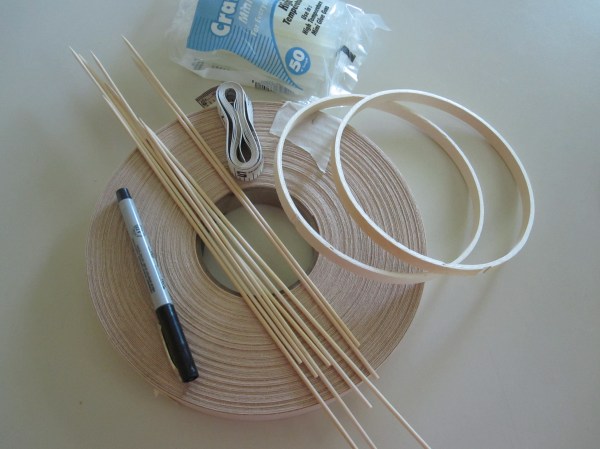
I already had the veneer and skewers, so I took a trip to Hobby Lobby to snag two wooden embroidery hoops.
After gathering a few more supplies, namely a seamstresses tape measure, permanent marker, a hot glue gun and glue sticks, I started my project. I should mention that I should have made a second trip to the craft store to get another itty bitty (like 2 inch diameter) hoop and a length (or two, depending on the diameter of your pendant) of thicker wooden dowel. Something around 1/4 inch should do. Oh, you’ll notice this pendant is tiny. That’s because I didn’t know exactly if my plan would work, so I bought cheaper, smaller hoops. Also, the outer hoop isn’t necessary for this project.
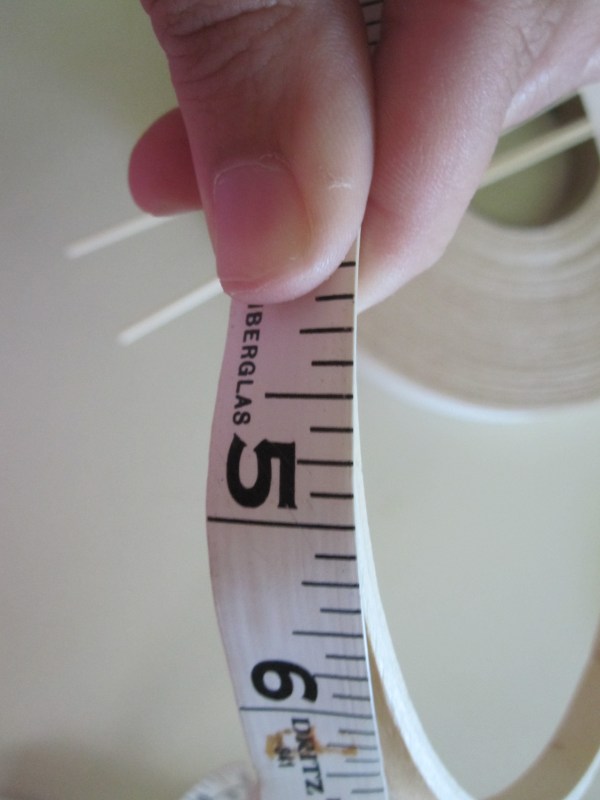
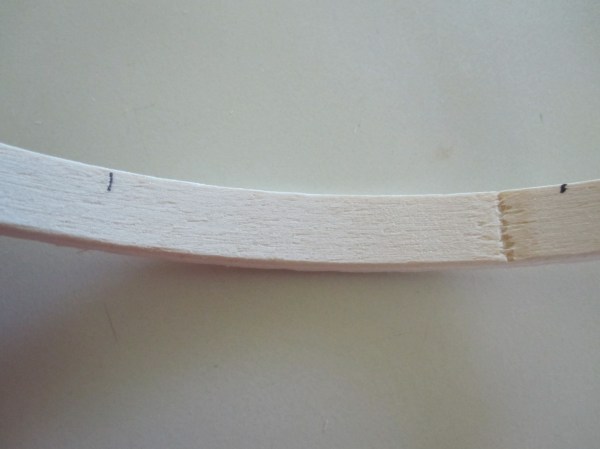
To start, measure the circumference of the hoop, marking on the inside where you started.
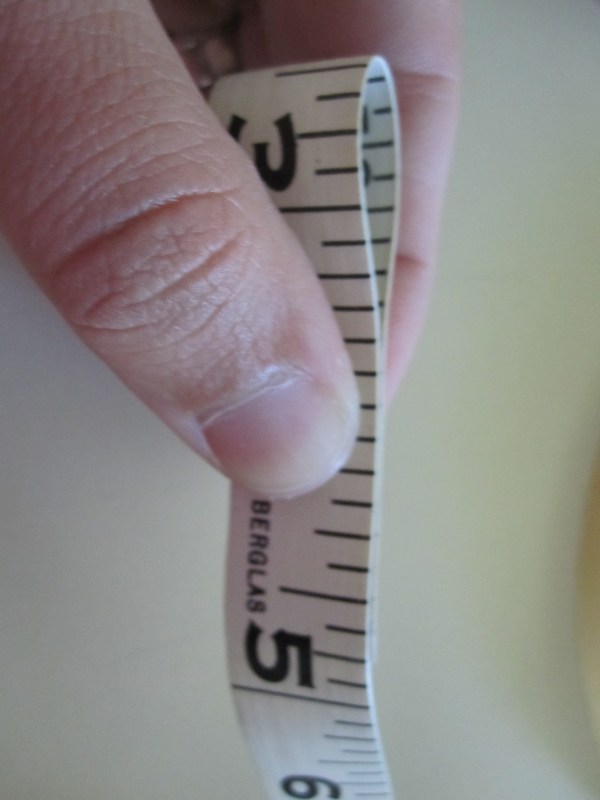
Then, fold your tape measure in half to easily (math free) find the half way measurement.
Mark this on the inside of your hoop. Continue folding the tape measure in halves until you’ve made at least 8 marks on the inside of your hoop. Stack the second hoop on top to transfer the marks.
These marks represent the skewer placement.
Helpful hint: I used 8 skewers for a 6 inch diameter pendant. If you’re making a larger pendant, you’ll need more skewers. It depends on the look you’re going for, but I would suggest about 32 skewers for a 24 inch diameter hoop.
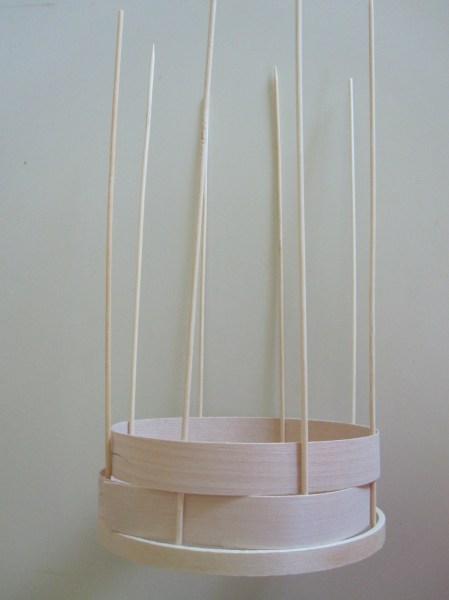
Next, use your hot glue gun to place a skewer on each of the marks you just made. Place the flat end down, against your work surface to make sure the skewers are all flush. Don’t cut the skewers to length until you’re completely finished. This eliminates guess-work or more math. Can you tell I loathe math?
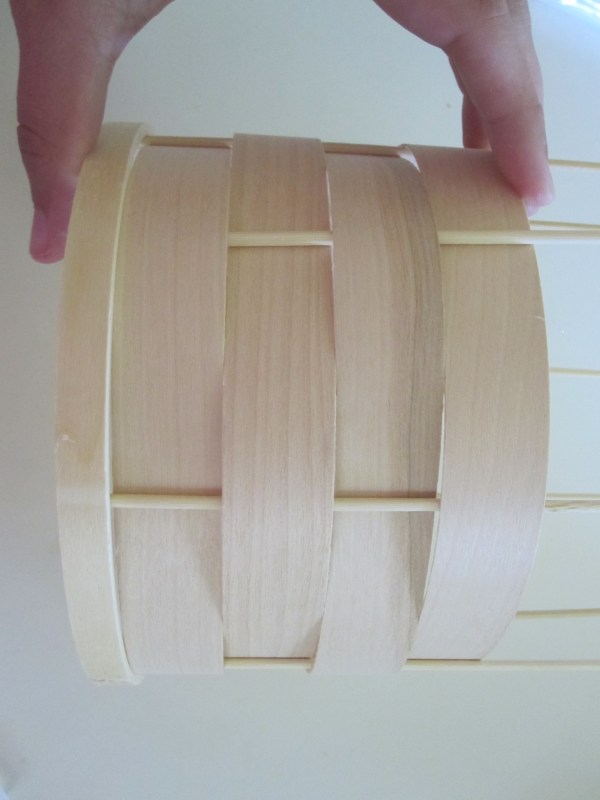
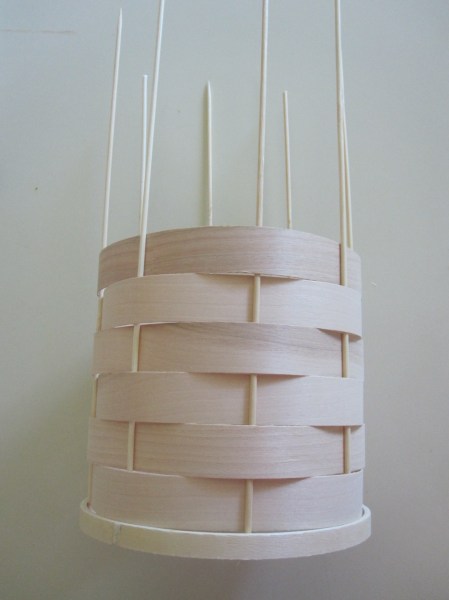
Now, cut 6 (or more depending on the look you’re going for) strips of wood veneer the same length as the circumference of your hoop. Start weaving the strip in and out until you’ve reached the opposite end. Hot glue the overlapping ends together and hold until cooled.
Helpful hint: Each embroidery hoop will have a small notch. Try to line your seams up with this notch, just to keep the ugliness all to the back.
Continue placing each row of veneer, alternating the showing skewers.
Gently push each row down for a tight, even weave.
Place the pendant vertically and slip the second hoop over the skewers. Push down until the top of the last veneer piece is flush with the bottom of the embroidery hoop. Glue the skewers to the inside of the hoop along the marks. Now, use a scissors or a wire cutter to cut the tops of the skewers, keeping them even with the top. The beauty of this plan is that every component is a blonde wood, which could be painted, stained or left natural for a different look.
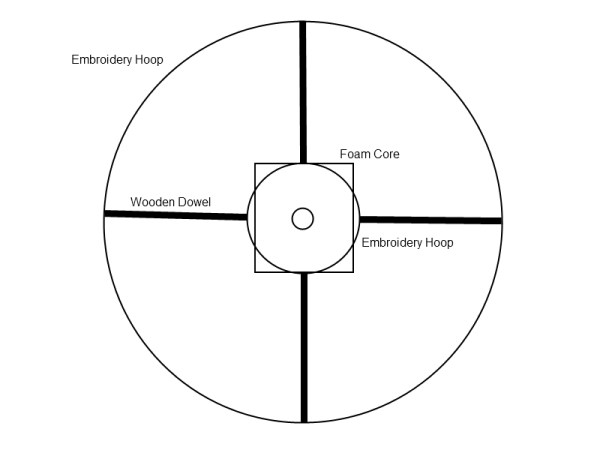
That’s great, but how am I going to hang it, you ask? Here’s how.
What, that didn’t make perfect sense to you? Let me explain. The outer circle is the top embroidery hoop of the shade you just finished. The medium-sized circle is the tiny embroidery hoop which will keep the fixture hanging. The four thick lines are 1/4 inch wooden dowel, epoxied to the pendant shade and the small hoop. Don’t use hot glue for this, you want it to be completely secure. The square is foam core with a small hole cut in the center. Place the foam under the small embroidery hoop with the wiring threaded through the hole.
If you want to make a light diffuser, buy another embroidery hoop that is about four inches smaller than your largest hoop. Stretch a piece of fabric in the hoop, add four more dowels to keep the hoop in place. Make the dowels long enough to rest on the top of the bottom shade hoop. Make sense? If not, just ask and I’ll clarify.
If you don’t want to use embroidery hoops and dowels, track down a wire lamp shade cage and weave veneer around it. You could use something like this for the top and this for the bottom. A heavy gauge wire would work to make the verticals for the weave. I would spray paint these before weaving the design, just to modernize the brass look, for around $10.00, which isn’t bad for a 24 inch diameter pendant.
Think you’re brave enough to give it a try? If you do, we’d love to see what it looks like. Are you a DIY light addict like I am? Running out of places for new lights? Share your home-made lights, please. Have you been lusting after a fancy fixture, but can’t bear to shell out the dough?












 ourhumbleabodeblog.com