Getting Preppy

Finally having the ugly popcorn off the boys ceiling feels great, but that was the easy part.  The texture came off rather smoothly and easily, but that doesn’t mean the ceiling is primer or paint worthy.  Because we’ve had a few ‘what to do after scraping’ questions, I’m back to share my steps.  Our sheet rock is held in place with nails (the quick way to hang it) and every nail hole needed filling.
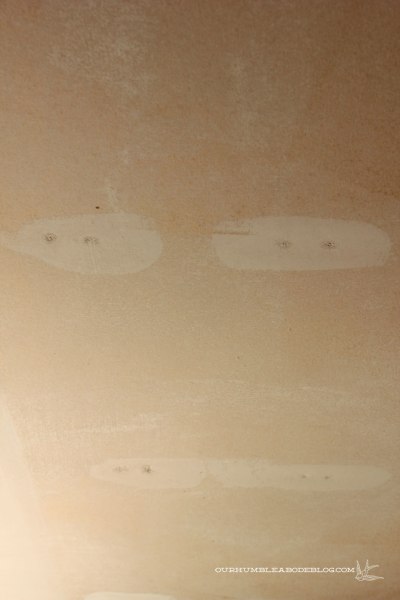
Nail-Holes-in-Boys-Ceiling-to-Fill

A few areas had scrapes from my spatula and some minor popcorn residue was still on the ceiling.  Before I could break out the primer, I first filled every nail hole (twice), filled in any scratches, then sanded the whole ceiling smooth.  I started with a drywall pole sander (like this one) but quickly got frusterated with it.

Lacking serious upper arm strength, I couldn’t keep the sander head flat on the ceiling with enough pressure to do much.  Instead, it kept flipping over, causing more damage.  So I ditched it, filled in the scratches from it, and used a sanding sponge to get ‘er done.  Oh, and I taped off the door to contain the dusty mess.  Also, wear glasses and a mask because the dust is everywhere.

Ceiling-in-Boys-Room-Ready-to-Prime

Use a fine grit paper and sand until smooth to the touch.  Carefully, sanding through the tape can be a serious pain in the butt.  Drywall mud should sand easily off, as will the popcorn residue.

Sanding drywall, it’s a dirty job (said as Mike Rowe).

It was annoying to use a small sanding block, moving a chair all around the room, but it’s done.  Even primed and painted.  Looking gloriously smooth.

Painted-Ceiling-in-Boys-Room

Unfortunately for me, the ceiling wasn’t the only wall needing attention, sanding, and spackling.  I’m 99% sure the two outside walls had wall paper.  Wall paper was all over this house: the kitchen, previously in the family room and guest room (found pieces behind outlet covers), and some painted over in our master bedroom (which will make it super easy to remove, I’m sure).  Either this paper really stuck on or someone was especially careless when removing, leaving big triangular gouges behind.  That’s bound to happen.  Then the chunks were filled, but apparently not sanded before painting over.  Behind Everett’s crib was the worst spot.
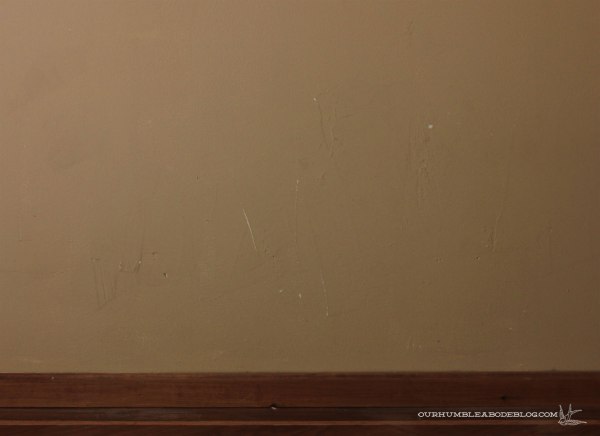
Wall-to-Fix-in-Boys-Room

So I’m currently tending to the walls before we can prime and paint.  First I used a metal putty knife to scrape off the uneven areas, filled, sanded, even primed the problem areas.  But the moisture of the primer made the surrounding paint bubble.  I scraped again, making the area larger, sanding smooth, and filling again with mud.  Annoyingly, the wet mud made more paint bubble.  You guessed it, more scraping, sanding, and filling.  Now I’ve got this to work with:

Patching-Wall-in-Boys-room

Hopefully (key word here!) I’ve gotten the flaky paint off and I can carry on with my plans.  Which should include new door trim, crown, and base boards before a few coats of Anjou Pear paint.

Door-in-Boys-Room-Waiting-for-Trim

It’s exciting to take another virtually untouched since we’ve moved in room and make it ‘us’.  Kind of getting sick of feeling like I’m living in someone else’s house, you know what I mean?  So tell me, what’s the strangest thing a previous home owner has done to your house?  Something that has you wondering, “why in the world did that happen?!”

Pop Off Popcorn

Disclaimer: Before I get to the details, it’s super important to know if your ceiling has asbestos.  You can buy a test kit to do yourself, or call a professional to check.  If your ceiling tests positive for asbestos, leave this job to the pros.  If your ceiling doesn’t have asbestos, read on.

As I mentioned last week, scraping the popcorn off our ceiling was easier than I expected.  Lucky for us, these ceilings hadn’t been painted over, allowing the texture to absorb more water.  If you’ve got a ceiling you want to smooth, get a weed sprayer, wide metal spatula, hot water, and white vinegar.  You’ll also want safety glasses or goggles, a mask, and probably a hat.

Popcorn-Scraping-Supplies

If your floors are finished (or just for easy clean up), tape plastic over floors and finished walls.  Fill the weed sprayer with the hottest water you can get from your faucet.  No need to boil or anything, just hot.  Add in vinegar.  I poured about 1 to 1 1/2 cups in the sprayer.  Start spraying the ceiling and don’t be stingy!  Note, I’m not sure if the vinegar really helped because I didn’t do a side by side test, but vinegar did help with wall paper removal…

Popcorn-Scraping-Boys-Room-Plastic

Spray a large area (the wet areas should be noticeably different from the dry ceiling – see along the back wall?), then test scrape.  If it comes off easily, keep on going.  Be careful to have your spatula at an angle so you don’t gouge the sheet rock below.

If it doesn’t come off, spray again, let it soak a few minutes then try.  If your ceilings are painted, scraping the outermost layer off to expose fresh texture, then spraying again could really help.

Popcorn-Scraping-Mid

Also, when you come up to a taped seam, scrape along it, not against it.  This way you won’t tear the tape leaving a cracked ceiling behind.  I worked toward the center, leaving my light up.  When I got close, I pulled down the canopy, covered the electrical box with plastic, carefully sprayed around the box, and scraped off the rest.

Popcorn-Scraping-Around-Light

Clean up was pretty easy thanks to the protective plastic layer, but the water did loosen the tape in some spots.  After rolling up the sheeting, I hauled the shop vac in to get the rest off the floors.

Popcorn-Scraping-After

The actual scraping took only an hour, which is about 23 shorter than I expected.  Ha!  Now I’ve got to fill a few holes to get ready for paint, which is always the tedius part.

I Chickened Out

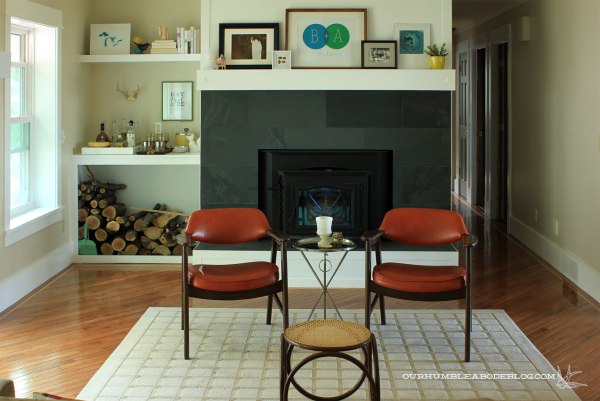
This is about those five dollar chairs I snagged at ReStore got a little overhaul.  Great lines and deceptively comfortable, but not in the best condition or colors.

ReStore-Chairs-by-Fireplace-Before

Before I started anything, I took pictures of the upholstery detail.  Because this is my first time upholstering something like this, the pictures could jog my memory if I ran into a problem.

MCM Chairs Upholstery Details Before

With the pictures on my card, I started pulling each staple out.  One at a time, prying with a flat screwdriver then pulling with a pliers.

MCM Chairs Removing Vinyl

Roughly one trillion times.  I counted.  Okay, I didn’t count, but there were a lot. of. staples.

At that point, I wondered what the h–e double hockey sticks I was thinking.  Too late now, I had to keep going.

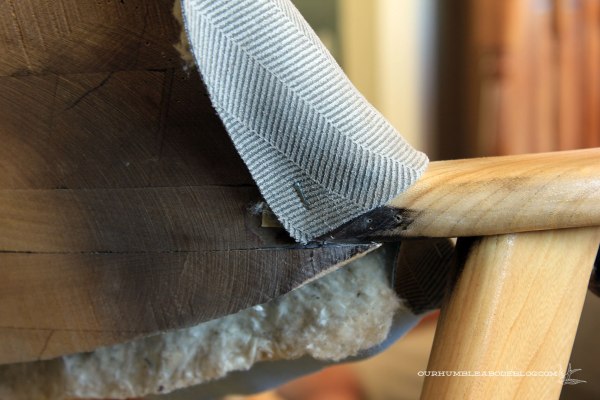
MCM Chairs Vinyl Tear Off Detail

So I did.  After pulling off the vinyl, I sanded the wood frame down using an orbital hand sander with 220 grit paper.  And loved the lightness against the dark fireplace and the subtle grain.  Two coats of Minwax Polycrylic in a satin finish brings out the grain and protects the wood.  Conveniently, it’s water-based which makes it a breeze to clean up.

MCM Chairs Clear Coat

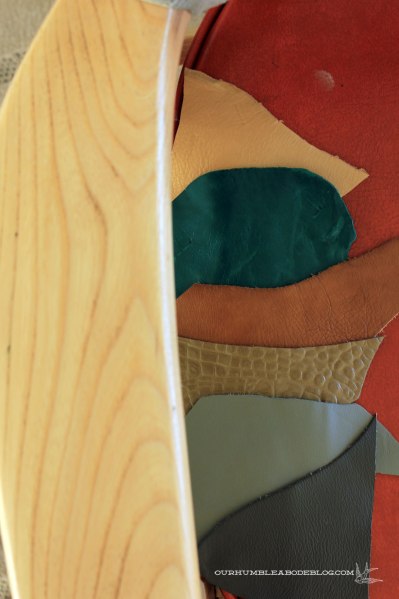
Then my indecisiveness kicked in.  Upholstery time, but which direction to go.  I stopped in a leather shop, gathered samples and prices, and thought it over.

MCM Chairs Leather Samples

Leather is super durable and easy to clean, but far more expensive than fabric.  Not to mention I could only buy the leather as a full hide, roughly twice as much material as I needed.  Perhaps if I had another use for the leather I could justify buying it.  Instead, I hit up two fabric stores where I found a beige subtle herringbone pattern upholstery fabric for 9 bucks per yard.

I bought it, then stopped in the second store where I found a greige subtle herringbone upholstery remnant for six dollars per yard.  And bought three yards.  Now that I could justify.  Yes, I chickened out on a bold color.  Pillows can fix that.  Right?!

MCM Chairs Fabric to Cut

To get started on the upholstery, I used the vinyl pieces I pulled off as templates, tracing it to the front of my fabric to keep the pattern straight.  Don’t do that!  Add at least 1/2 inch around the sides for a little wiggle room.  I don’t have four hands, so I used a clip to keep my pieces straight while I worked.

MCM Chairs Back Fabric

First tacking the arms, folding the fabric under, wrapping around the back.

MCM Chairs Back Upholstery Arm Back

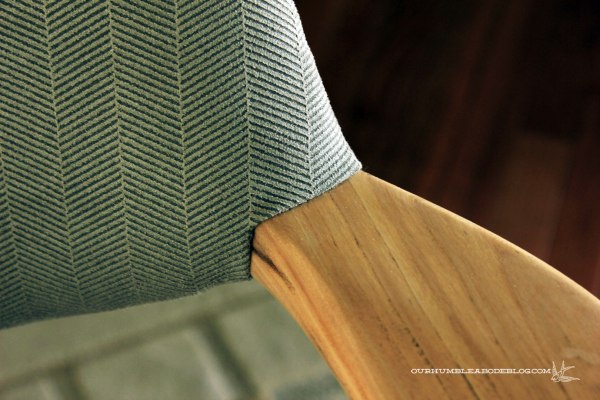
From the front, it looks like this:

MCM-Chairs-Arm-Detail

With the arms secured, I stapled along the top and bottom, pulling tightly.  Then the sides and finally the slightly rounded corners.

MCM Chairs Back Front Attached

That covers the front of the back rest, so now for the back.  Like the vinyl predecessor, I folded the fabric under, creasing it with my fingers.  Using that crease as a guide for the outer edge, I stapled just inside the crease and worked around the top.

MCM Chairs Adding Back Cover Staples

The corners are tricky to staple under, so then I tacked the bottom of the fabric to the underside.

MCM Chairs Back Cover Panel

Satin nickel nail heads, placed using a needle nose pliers, hold the sides of the fabric in place.

MCM Chairs Nail Head Detail

I’ve upholstered chair seats before, so I thought the back would be more tedious than the seat.  As usual, I under estimated.

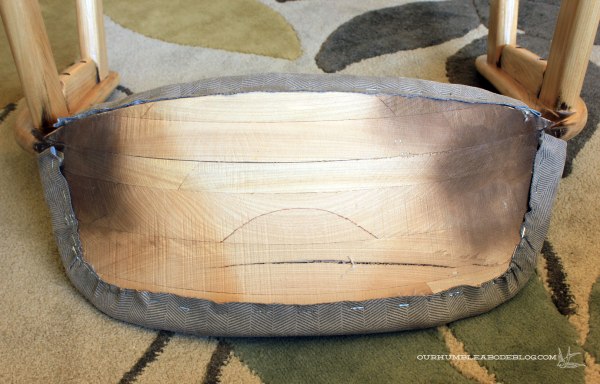
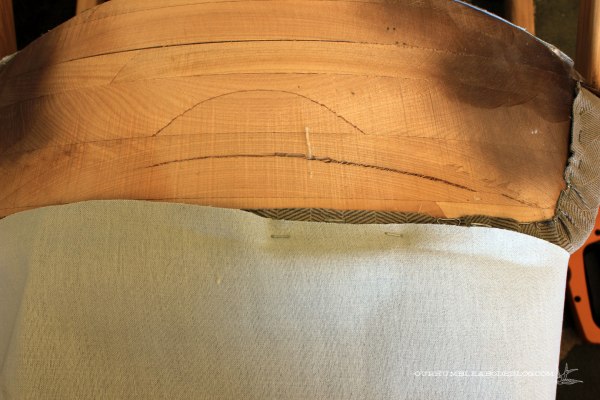
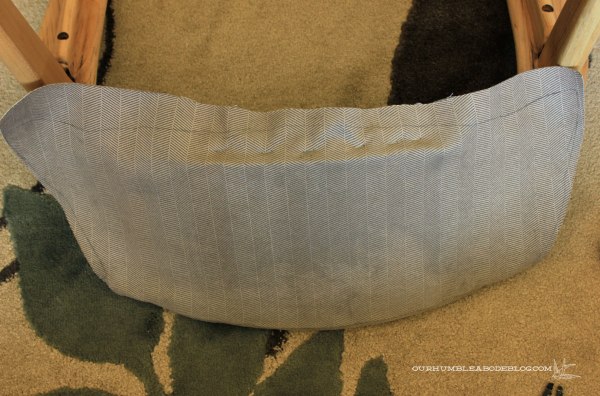
MCM Chairs Seat Upholstery

Turns out, the slight curves of the seat were a pain in the arse.  No matter how hard I tried, the fabric puckerd at the turns.  Finally I gave up and let the slight puckers stay.  So, if anyone has pointers, please share!  I’ll leave you with that, because I have to clean up the family room to take pictures of the finished chairs.  Let’s pretend it’s because there are already 17 pictures in this post, okay?

When Pins Collide

I’ve had a major crush on this pendant, dreaming of having it, or something similar in our entry since we bought this house.

While lying in bed last week, I remembered the traditional Christmas Finnish Himmeli ornaments.

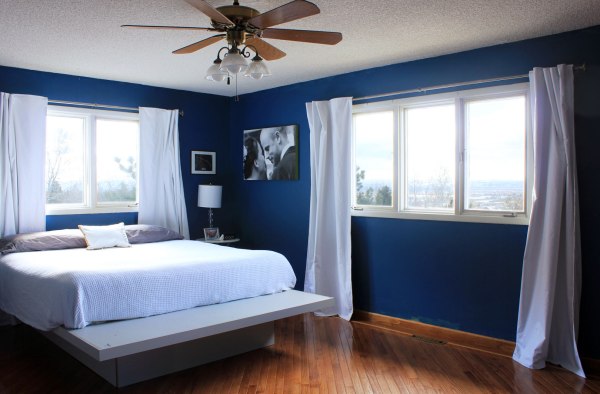
Eureka!  Couldn’t I merge these two together?  I ran my idea past Ben, but he worried a single bulb wouldn’t light the entry adequately.  Determined to give this a try, I decided to scale down the size to make a pendant for our bedroom.  Goodbye old fan.

Master-Bedroom-from-Door-One-Year-Later

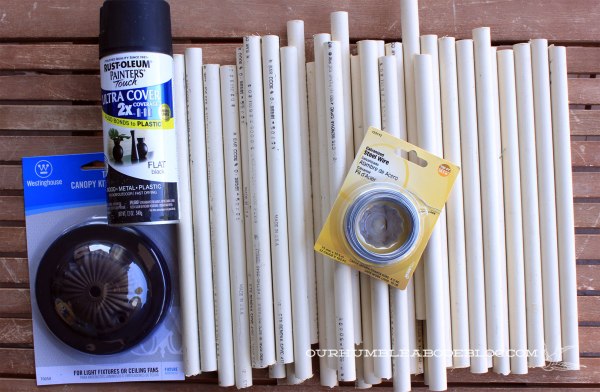
I started with my supplies, 36 one foot pieces of 1/2 inch PVC pipe (under two bucks for 10 feet!), wire, and black spray paint.

PVC-Pendant-Supplies

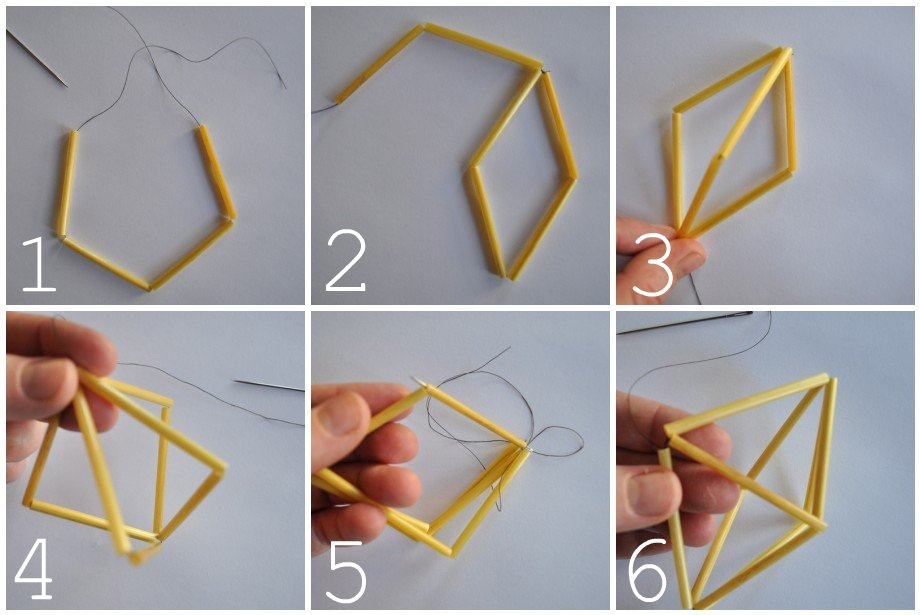
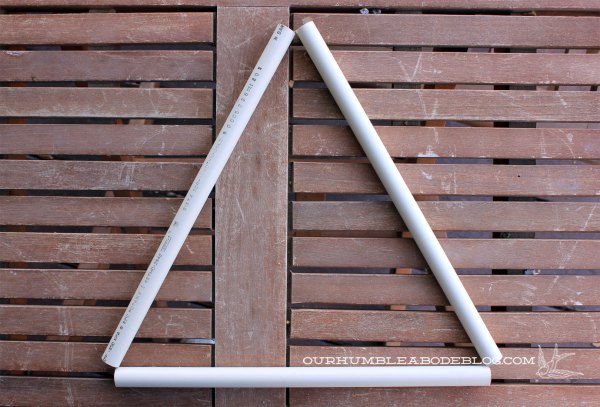
Using the wire, I threaded three pieces on and twisted the wire ends together.

PVC-Pendant-Step-1

Then strung through one of those pieces, adding two more on, securing the ends with a few twists.

PVC-Pendant-Step-2

I made a group of four, brought it in the house and realized it would hang down too far.  So, I took it apart and cut the pieces down to 8 inches.

PVC-Pendant-Step-3

Treating each triangle individually made easier and tighter connections.

PVC-Pendant-Step-4

After twisting the ends several times, I cut the wire and pushed it inside the pipe.

PVC-Pendant-Step-5

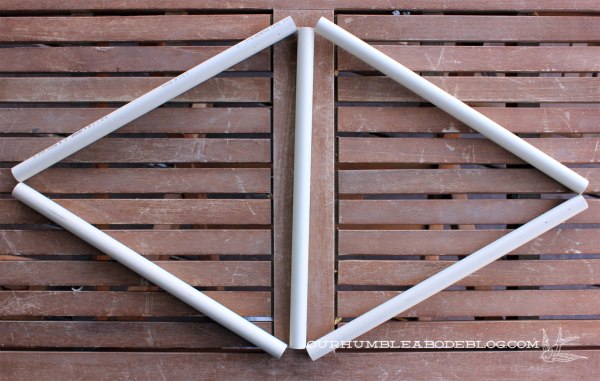
The easiest way to think about this design is a hexagon turned to a six-sided star, like this:

PVC-Pendant-Six-Sided-Star

To make the three-dimensional shape, connect the outer points with another piece.  I’d suggest hanging it to make work easier.

PVC-Pendant-Six-Sided-Star-Connect

String on the last six pieces, connecting all to the center point.  And time for spray paint.  We had beautiful weather, so I strung it up between two trees and got my spray on.

PVC-Pendant-Before-Spray-Paint

I thought I had a pendant kit, but used it in the guest bedroom.  So this guy hasn’t been installed, but is finished.  Off to ReStore to snag a cheapie pendant to hang this dude.

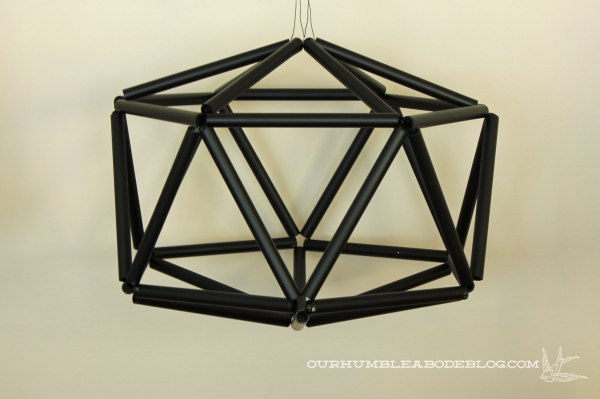
PVC-Pendant-Black-After-2

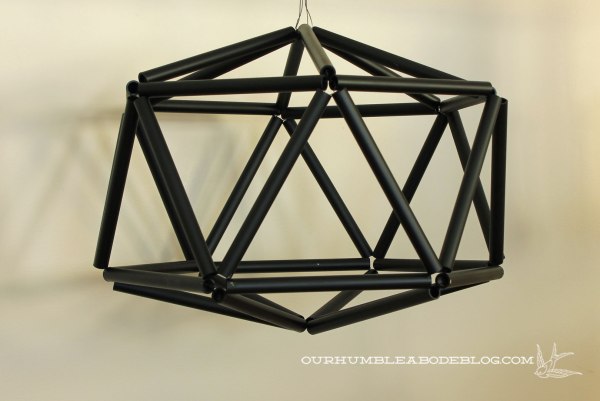
Now that it’s assembled, I wish I had made the top and bottom six pieces a little longer than the rest.  The points aren’t nearly as noticeable as the Restoration Hardware version.

PVC-Pendant-Black-After-1

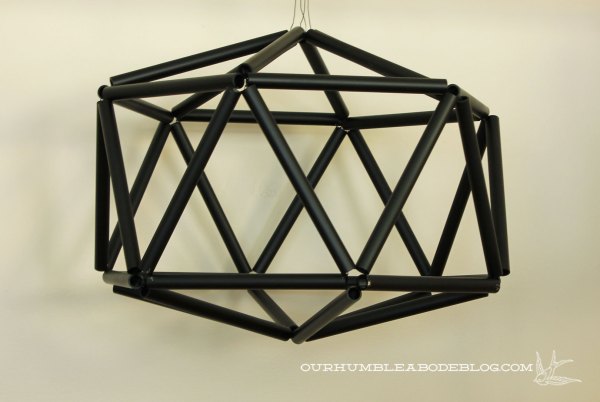
Not perfect, but for $16 in materials I can’t really complain.

PVC-Pendant-Black-After-3

What do you think?  Are you crushing on an expensive light?

It’s A-Door-able

More appropriately titled, “How I paint paneled doors.”  I’ve got six finished and three more to go and I’ve learned a lesson (or two) along the way.  The first being, we have two completely different doors on the main level.  Most of which look like this:

How to Paint a Door Starting Point

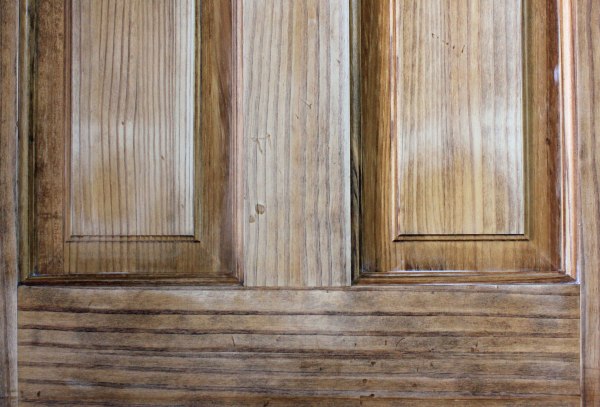
But a few that look like this:

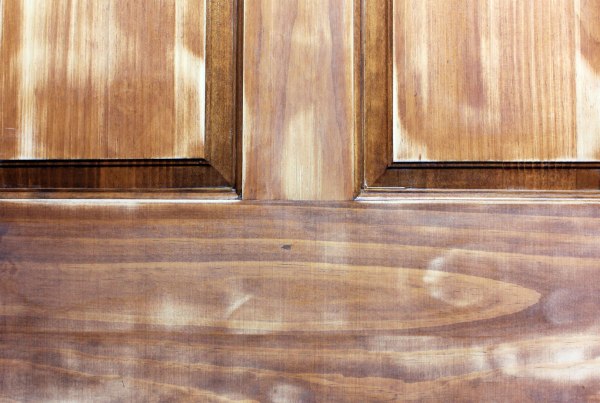
How to Paint a Door Starting Point Pine

I’m not sure what type of wood the majority of the doors are (maybe birch?) but the odd ones seem to be pine.  Not only is the wood different, making the grain drastically different (and not in a good way), but the wood is noticeably softer and easier to scratch/dent.  Oh, and the panel measurements are slightly larger.  Regardless, I start each door with a thorough-ish sanding.  To cut the dust, I tape the shop vac hose to the sander output.

How to Paint a Door Sanding

Using 120 grit paper, I cover all the flat parts.  I’ve found 120 to work best.  80 is too rough and 220 takes a while longer to get the job done.  If you’re painting, just sand until the surface looks matte.

How to Paint a Door Sanded

Some parts will need more attention, but it doesn’t take much.

How to Paint a Door Pine Sanded

For detailed parts, a coat of liquid deglosser wipes away dirt, grease, and grime, but it won’t take down the sheen.  On one door, I used Citristrip on the detailed insets.  And quickly became annoyed.  For being low odor, it worked really well.  But the wait time, scraping, and clean up with odorless mineral spirits wasn’t worth it.  Not to mention it still didn’t come off completely in some areas, so I had to scrub with liquid deglosser.  That one door took longer to finish than the previous three combined.  Simply put, unless you’re planning to re-stain, stripping the coats isn’t worth it.

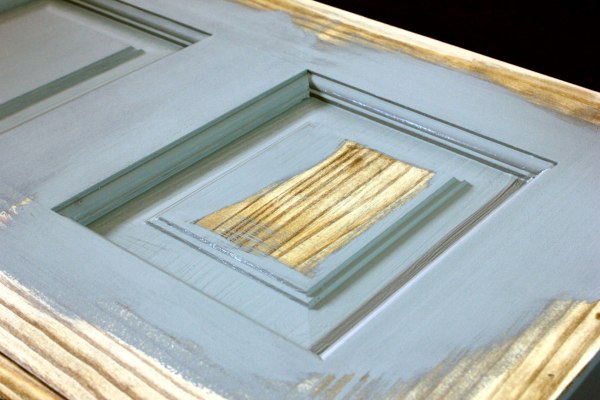
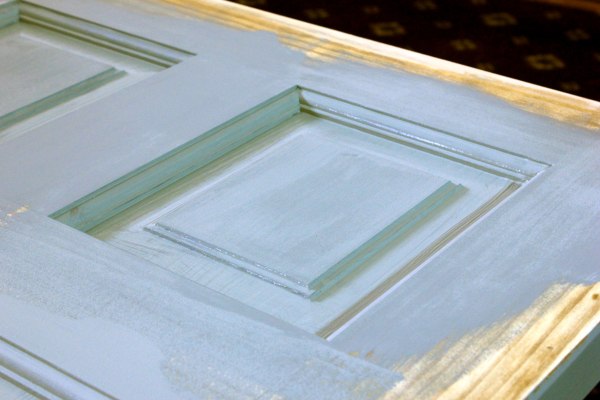
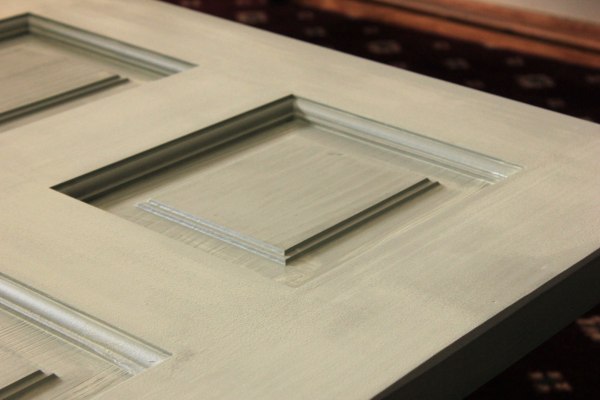
In the past, I’ve followed the previous steps using traditional primer followed by two coats of paint.  Instead, I experimented with Glidden’s Duo paint (paint and primer in one).  I’ve gotta say, I love it.  Two coats and I’m done.  For the smoothest finish, I use a small angled brush to cut in the inside detail of the panels.  It helps to paint along the outside and inside flat areas at this time.

How to Paint a Door Step One

Then use a foam roller to cover the brush strokes and fill in the flat inside.

How to Paint a Door Step 2

Once all six panels are done, I start at the top painting the frame.  Horizontal first, then the three verticals, then the horizontal below, working my way down.  Keep a wet edge to blend the paint.  Applying the paint with a brush, then rolling over to cover the brush strokes allows me to work quicker because I’m not having to load up a roller each time.

How to Paint a Door Step 3

Here’s something else I learned.  To quickly and thoroughly clean out a brush, first wipe off the sides.  Then hold it upside down under running water.  Keep your hand wrapped around it to prevent the bristles from splaying out.  Hold it under until the water runs clear, wipe off the sides, squeeze out the water and let it dry.

How to Clean a Paint Brush

No more stiff, gunked up brushes because the center of the brush is clean, too.  Obviously there are dozens of ways to do the same task, so tell me, how do you do it?  What products do you love for refinishing or painting?  And how was your weekend?