Trim Tutorial: Master Bedroom

Shame on us.  We haven’t shared a trim tutorial in quite some time.  What were we thinking?  Obviously, we weren’t.  How would you like to see our master bedroom and bathroom trim?
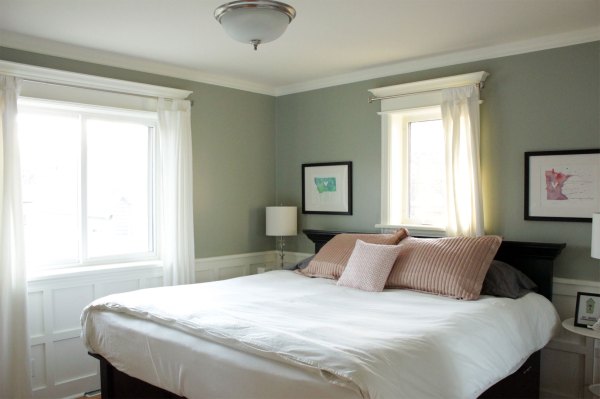
Let’s get started.  We (well, Ben) started with 4 foot by 8 foot MDF sheets.  One that is 3/4 inches thick and another that is 1 inch thick.  He cut tons of 2 inch wide strips, several 3 and 5 inch wide pieces out of the 3/4 sheet.  Then, he cut 1 1/2 inch wide pieces from the 1 inch thick MDF sheet.
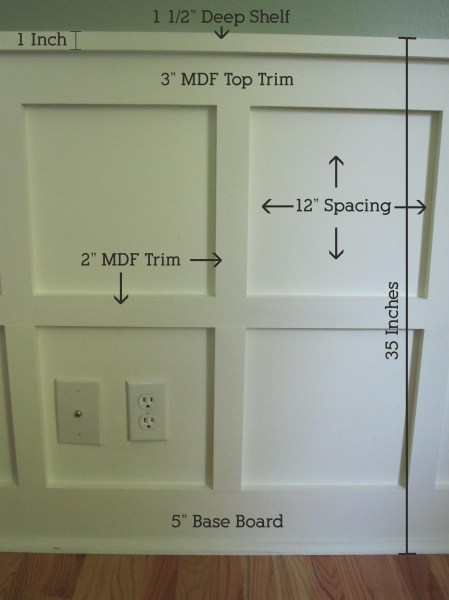
To start, we installed the 5 inch baseboard around the perimeter of the room.  Then, we started placing the 2 inch wide verticals, placing one centered on each wall.  From there, the verticals have 12 inches of wall space before the next edge.  The horizontals are also spaced 12 inches from edge to edge.  With the grid in place, we added the three-inch wide top rail, capped off with a 1 1/2 inch deep by 1 inch thick piece, to finish it off.

Now, onto the tricky parts, the doors and windows.  Ben had the idea to install lights above each window and door in our master bedroom.
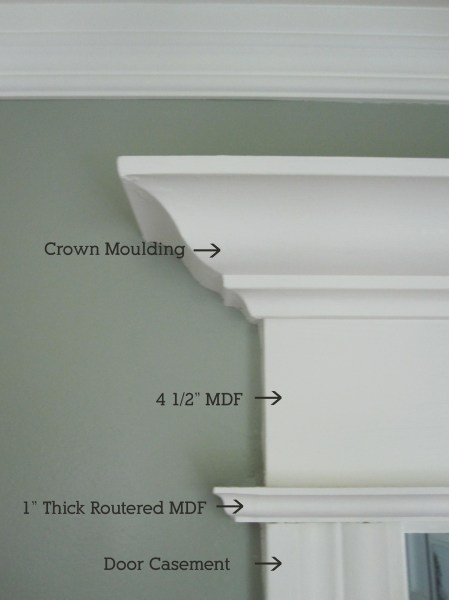
Door and window casement starts out the same as the rest.  Rather than a piece of casement at the top, we’ve added three trim pieces.  First, a piece of 1 inch thick MDF, cut into strips and routered for a decorative edge.  Then, a piece of 3/4 inch thick MDF cut into 6 1/2 inch widths.  The tricky part was cutting the crown to fit against walls; both doors nearly touch the wall.  For Ben, the easiest way to tackle this obstacle was cutting, gluing, and nailing the crown to the flat trim, leaving a 4 1/2 inch reveal.  After the glue had set, Ben cut the pieces to size, installing the whole piece over the routered rail.
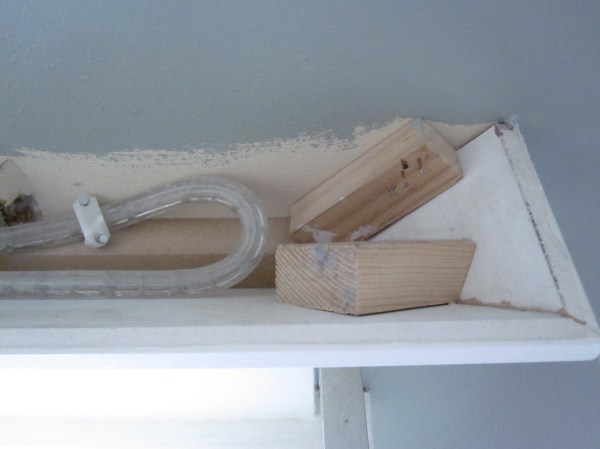
The lights tuck neatly inside the crown, glowing at night.
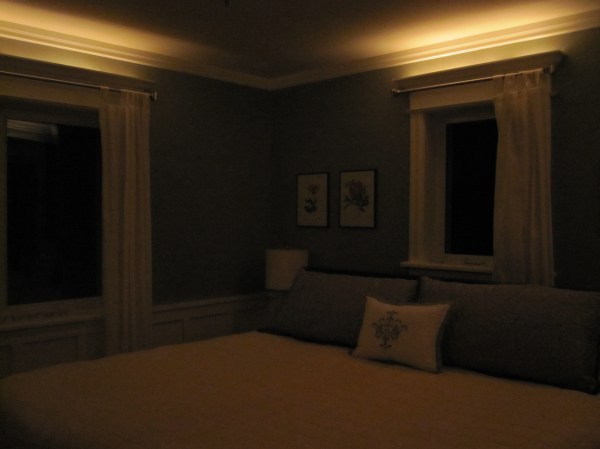
That concludes our current home’s trim treatments.  Anything else you want to know before closing day?
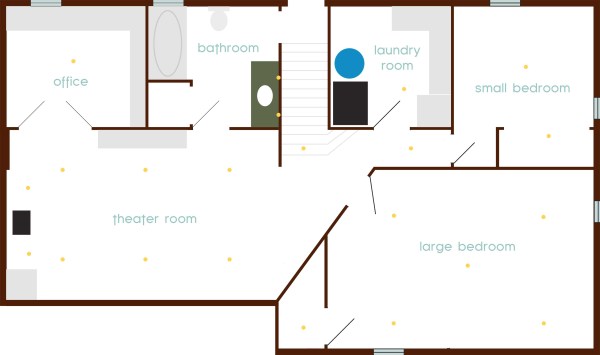
Official Office Plan

We asked what you wanted to know about our house before we moved.  You know, so we weren’t going back and forth between old and new.

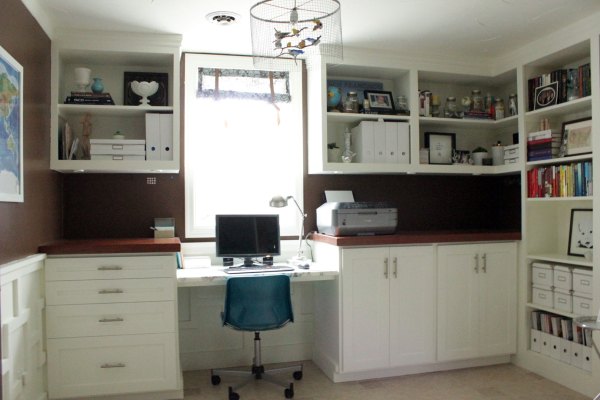
Catie wanted to know how we planned my office and how we built the bookshelves.  So here’s the story.  (Of a lovely lady.  She was bringing up three very lovely girls.  Who else loved the Brady house, especially the staircase?)  Really now, here’s the story. Before I met and married Ben, I was a real estate agent in Minnesota selling condos for a builder.  After moving to Montana, the builder had a few slightly damaged (free to us) doors, so my parents brought them out for us.  We received 9 doors, including a set of French doors.  We loved the doors, and the only place we could use the French doors was my office.  All other doorways were too small.

Like most rooms, my office has four walls.  One wall had French doors, across from that is a small-ish window.  I needed a desk space and wanted a wall of bookshelves.  The only logical place for the bookshelf was to the right upon entering.  It seemed natural to have my desk under the window.  So the general layout was simple.

When it came time to build the desk, we looked all over for something to run the length of the desk wall with no luck.  That’s when Ben proposed the idea of a raised work surface and a lower desk.  That’s just crazy enough to work!  Not only would a taller work surface prevent back pain from bending over, but I’d also get more cabinet space.  Win, win.

We found a remnant of white marble for the desk and a long slab of Brazilian cherry for the counters and got started.  Of course one can never have too much storage, so Ben built shelves above the desk.

Building the bookshelf actually wasn’t much different from our kitchen cabinets.

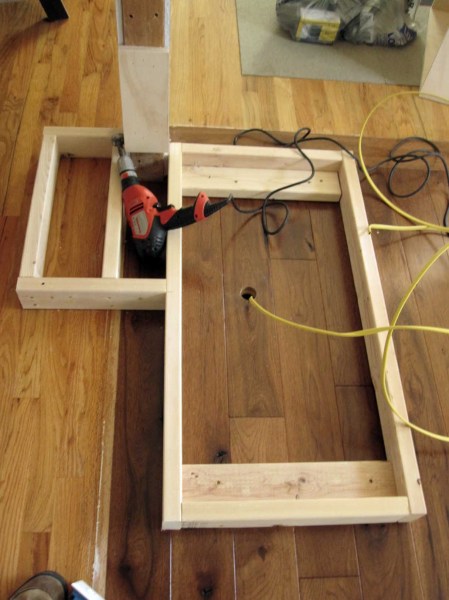
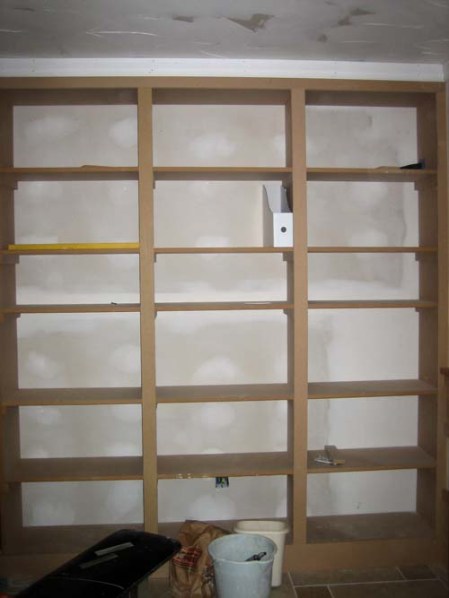
To start, Ben made three boxes from 2 by 4 boards on end, just like the cabinet toe kicks.

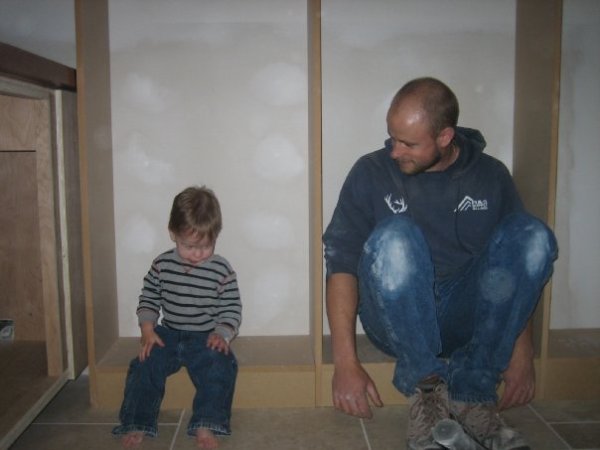
These three boxes sandwiched vertical pieces of MDF.  You can kind of see it in this picture, the 2 by 4s are just covered by 3/4 inch MDF.

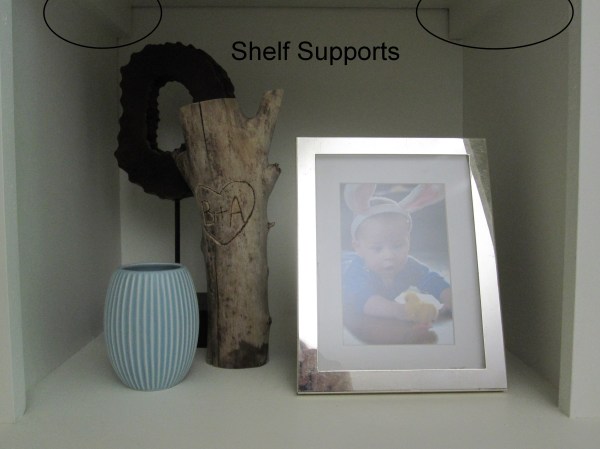
After getting everything placed right on the floor, Ben did the same thing along the ceiling.  Now we didn’t have to worry about the verticals shifting.  Then we started placing shelves.  If you want adjustable shelves, you can either buy metal strips or shelf support pegs.  We decided against adjustable shelving, so Ben cut 1 1/2 inch wide strips from a 3/4 inch thick sheet of MDF.  I determined the spacing and he put one support on each side of the shelf.

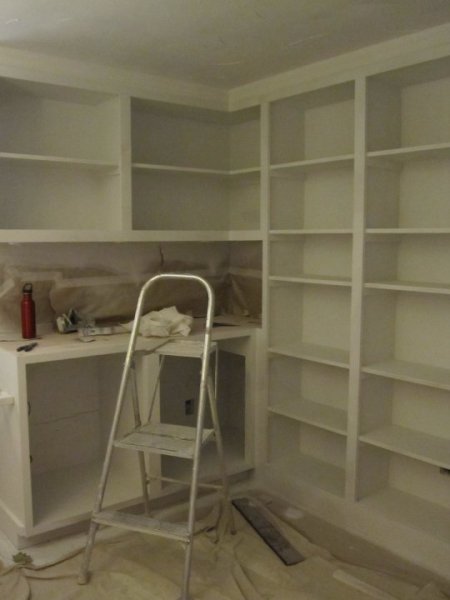
To cover the exposed edges, Ben cut strips of 3/4 inch MDF and nailed it to the fronts for a seamless look and capped the top with crown moulding to match the rest of the room.

Fill, sand, prime, and paint until you feel your hand is going to fall off.

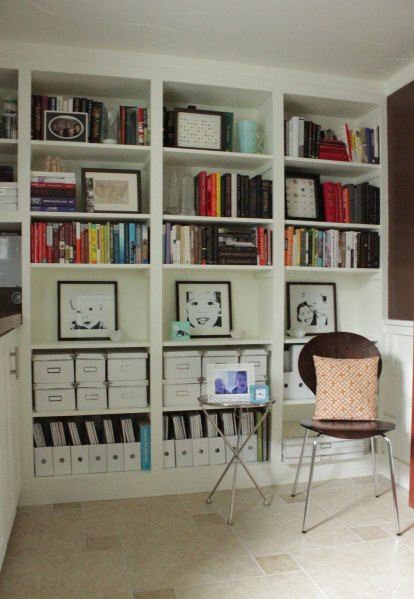
Then pack stuff in and have fun arranging and rearranging.

If you can’t or don’t want to build shelves completely from scratch, why not spruce up store-bought shelves with a little trim?  Kate, Jen, Julia, and Jenny all have with excellent results.

I love that a little trim and paint can make a totally custom look from a box store shelf system.  If you’re renting, you can make a stand alone system and take it with you when you go.

Have you ever built a bookshelf?  Or modified a store system for a completely custom look?  Do you prefer fixed or adjustable shelves?  Have any other questions?  Either about my office or anything else in our current house?  We want to tie up any loose ends before moving, so if you’ve wondered about a project, now is the best time to get it off your chest.

How To: Paint Cabinet Doors and Drawer Fronts

Last week involved a lot of primer and painting.  Specifically, drawer fronts.  Though it’s not rocket science, it does take some thought to prevent obvious brush strokes.  So, I thought a tutorial/break down was in order.  And I have a few tips for you.

First, the tips.

1:  It helps to be an OCD, detail-oriented person; if your significant other is more of a forest than a tree person, I’m sorry to say you’re stuck with this task.

2:  Use good quality brushes and a small foam roller.

3:  Before priming, make sure you’ve filled all holes and sanded smooth with a high grit sand paper.

4:  Lay down a canvas drop cloth, then thin pieces of scrap wood.  Raising the painted items will prevent sticking to the canvas.

5:  I find it helpful to rest the drawer front or cabinet on a five gallon bucket when painting.  You’ll easily be able to spin it around to get to every surface.

6:  If you have tons of painting to do, start with the fronts first.  If you’re anything like I am, you’ll start running out of patience, so use up what you’ve got on the obvious parts.  Ha.

Okay, now the tutorial.  These four steps apply whether you’re priming or painting any surface with detail.

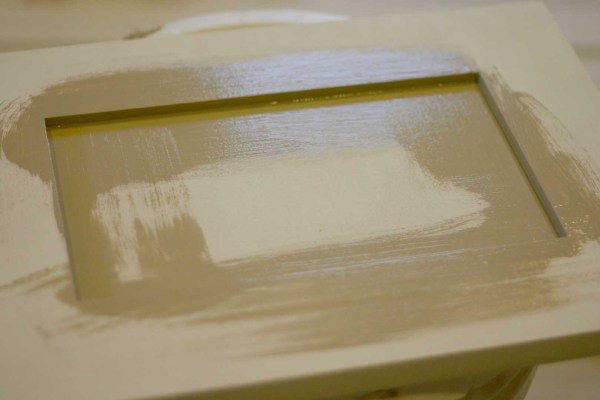
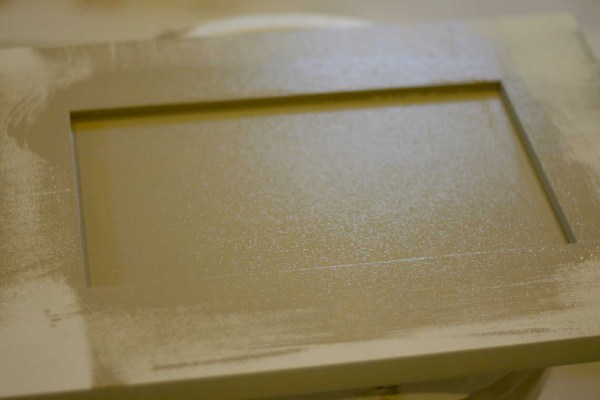
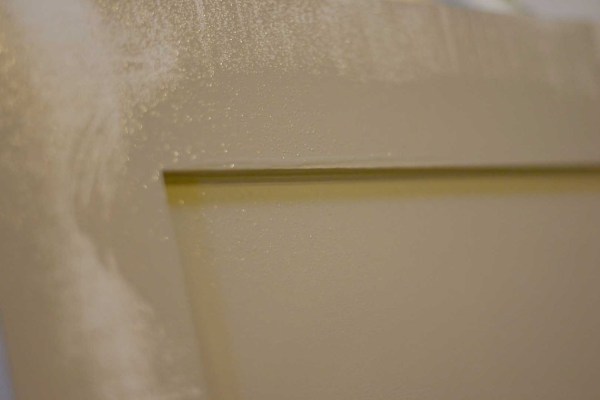
Start by brushing paint into the detailed areas, without going overboard.  Catch any globs as soon as possible.

Then, before loading your roller with paint, quickly go over the brush strokes on the raised areas.  Now dip your roller in paint and roll it around on your paint tray to get it evenly coated, but only lightly.  Roll the inside panel, getting as close to the edge as possible.

You’ll have a ridge of paint along the outer band.  Roll it smooth.

Load up your roller again to paint the sides.  Just to be save, lightly run your paintless roller along the under side because the excess paint will drip.

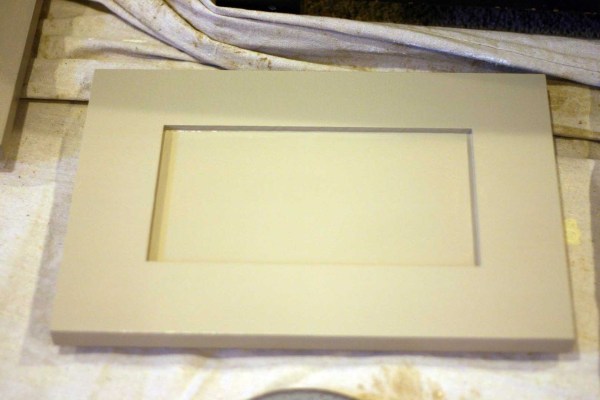
Finally, paint the outer band.  Set it on the scrap wood to dry.

Repeat at least another time on the front, then flip and roll the backs.

Finally, I’m done painting the drawer fronts (still have to build, fill, sand, prime, and paint eight cabinet doors) and we’ve installed them.  Can’t wait to show you tomorrow!

And Then Tweak for Perfection

And the ombre dye saga continues.  Last Wednesday, I eluded to yet another dyeing issue.  You’d think I would have learned my lesson, but no.  Sadly, I didn’t rinse the dye out thoroughly enough because the undyed areas were a faint purple with splotches (yes, that is a technical term) of darker color, just like my first round.

Initially, I thought I’d just hem the side with the worst of it, but I would have to remove too much of the fabric and the curtain wouldn’t be wide enough.  I thought I could live with it, but it taunted me every time I looked at it.  I needed to do something about it, or at least try.  While at JoAnn’s, I found a box Rit dye color remover.  I figured if anyone or thing could fix this, my best bet would be to use the same brand.

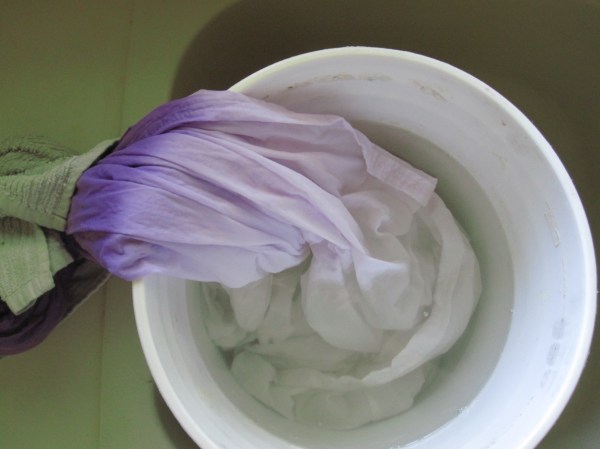
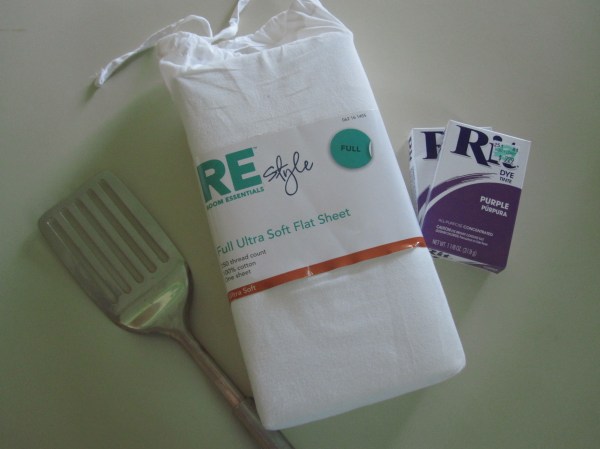
I gathered more supplies, my trusty five gallon bucket, hot water, (I boiled a small pan and filled the rest with hot tap water) rubber gloves, and a spatula.  I poured the powder in the water and let it do it’s thing.

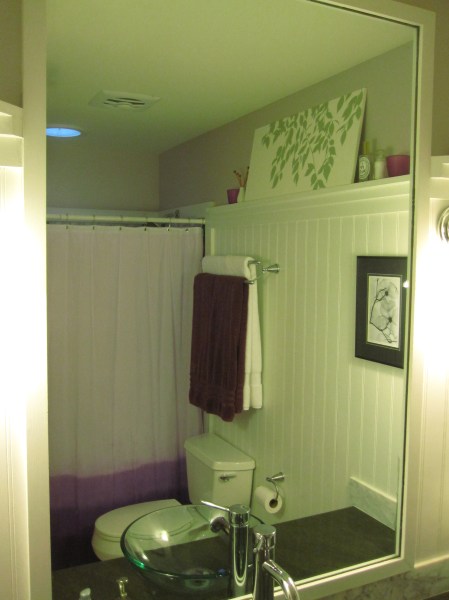
It seemed to work.  I let the curtain soak for 30 minutes, rinsed it out, then tossed it in the washer for another quick clean.  Happily, I had stunning results.  Finally, I could hang my ombre curtain.  Our bathroom is tiny, so it is really hard to get pictures from top to bottom.  Please bear with me for the abundance of photos.

I love that the colors blend well, but you can still see the lines of each level.

When the shower isn’t in use, we usually leave the curtain open to let as much light from the sky tube into the bathroom as possible.  So, this is what it looks like 95 percent of the time.

Here you can see the opened curtain and how it works with the rest of the bathroom.  That’s how small this bathroom is.  I had to reflect the rest of the bathroom in the mirror.

When closed, this is what you’re welcomed by.

The dipped end hand towels are pretty fun, too.  If only the white stitching took the dye, too.  Oh well.

Now, I need to get around to painting the ugly wooden doors.

After a little Pinterest search, (I love how Pinterest has become the new crafting Google) I found another ombre dye project with a wonderful tip that may have eliminated the need for color remover.  After dyeing, let the fabric dry before rinsing.  Apparently, this sets the dye to keep the colors vibrant, so I’m guessing it can also help reduce bleeding.  Though, this was my second attempt to dye something, so what do I know.

Now, for a total cost break down:

Flat sheet: $9.99

Three boxes of purple Rit dye: $8.25 ($2.75 each)

One box of Rit color remover: $2.75

Thread: Already owned

Grand total spent: $20.99

I’ll probably dye more things in the future, just to hone my skills.  Are you a fan of the ombre trend?  Do you have ombre in your house?  Your clothes?  Your hair?  My sisters are trying to convince me to ombre dye my hair, à la Jessica Biel.  For more ombre inspiration, check out this ruffle shower curtain and this painted dresser.  What is your favorite ombre colored item as of late?

Try Again

As I shared, my first ever fabric dye slash ombre project didn’t go as well as I imagined it would.  (Thank you so much for your tips and tricks.)  Bummer, but I don’t give up that easily. I’m Polish after all.  Wait, maybe Polocks aren’t known for stubbornness as much as ignorance.  Either way, I was determined to try it one more time.

Having learned from my mistakes, I bought two boxes of purple dye and a full-sized flat bed sheet.

I also used the main bath tub. About half way into my process, I laid a junk towel under the bucket to protect the acrylic tub.  Pretty sure a dyed bath tub would be an epic failure, even if I successfully dyed the curtain.

To keep the dye line as even as possible, I hung the sheet on the shower curtain using the existing shower curtain rings and a set of curtain clips I had in the basement. 

I slipped the curtain clips through the curtain rings because the clips were too small to fit on the shower rod.  Then, I clipped my sheet up so I wouldn’t have to touch the curtain, just the rod and clips.  I highly suggest this method.

I decided to use one half of a box to dye my first ombre layer.

I didn’t realize it until later, but I completely forgot to add salt or liquid soap.  Oops.  I did however let the sheet soak for about 20 minutes, stirring constantly with a stainless steel spatula.  With a nice, saturated color, I moved the curtain rod up about eight inches and added the second half of the box to the bucket.

After 20 or so minutes, I moved it up another eight inches and added the entire second box to the mixture to let it soak.  Before dumping the dye solution out, I dyed the ends of two white towels, just for fun.  I rinsed out the sheet and towels, but as I neared the end, Everett woke up from his nap, so I quickly rinsed out the rest and popped it into the washer for a quick clean.

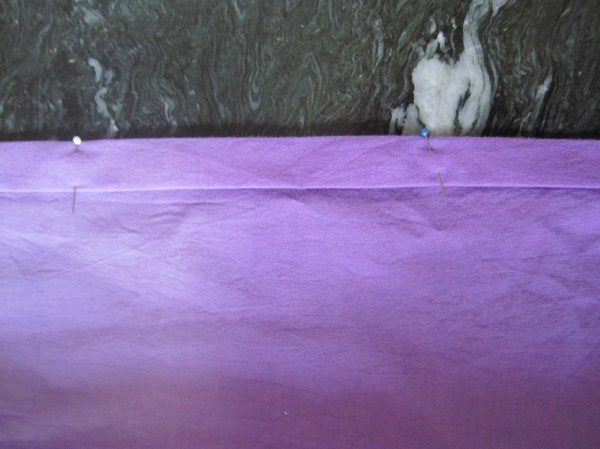
Now, I had to figure out a way to hang this thing.  I started by sewing the sides to the width of our shower curtain liner.  I ironed the edges and got freaked out because the heat of the iron turned the dye pink.  After 15 seconds or so, the color did go back to normal.  So, I continued ironing and folded the edge over twice to get a clean edge and pinned.  I planned to only sew one side and the top to get my measurements.  The white thread from the sheet didn’t absorb the dye, so I was safe using white thread to hem everything.  I sewed my side first.

I considered sewing button holes to hang from, but my button-hole function didn’t want to work for me.  Plan B.  We needed a new curtain liner for our bathroom, so I cut the grommets off the old one to sew to my sheet.  I pinned right sides together so my seam would look as seamless as possible.

Then, I stitched right along the plastic edge, but not on it.

A quick pressing with the iron made a nice crisp seam.  Unfortunately, I did have dyeing issues again.  Off to rectify that situation.

So far, I’ve spent 9 dollars and 99 one hundredths of another buck on a flat bed sheet, and $5.50 for two more boxes of Rit dye, bring our total (including yesterday’s failure) to $18.24.  Not too bad considering the only other curtain I liked cost $29.99.  So, we’re still $11.75 under budget, failures and all.

How much are you willing to spend on a shower curtain?  Have you ever made one yourself?