Woven Wood Pendant

Evidently, home-made light fixtures are my thing.  I don’t know how that happened, but so far I’ve made a cloud like coffee filter pendant for our guest bedroom.
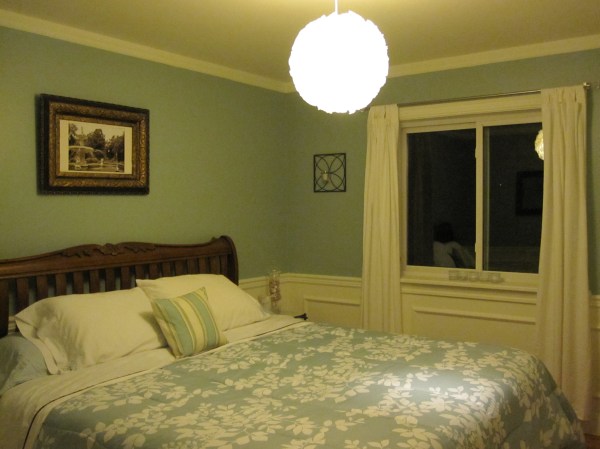
And a wood veneer shade for the boys’ bedroom.

Just a warning.  I say embroidery hoop about 10,000 times in this post.  Enjoy.

We still have more than half a roll of the veneer strips, so I brainstormed ways to use it.  One of my ideas was another light fixture.  I know, how many wooden light fixtures does one house need?  This one isn’t for our home, actually.  When I was in Minnesota visiting my blog BFF Jen, she mentioned she wanted a new light fixture for her son, Preston’s, room.  That’s when I shared my diabolical plan for a wood veneer/embroidery hoop/bamboo skewer drum shade.  And, she loved it.  Now, I had to figure out a way to, as Project Runway’s Tim Gunn would say, “Make it work!”

In the words of my favorite 80’s school skipper, Jen Jones, this one’s for you.

I already had the veneer and skewers, so I took a trip to Hobby Lobby to snag two wooden embroidery hoops.
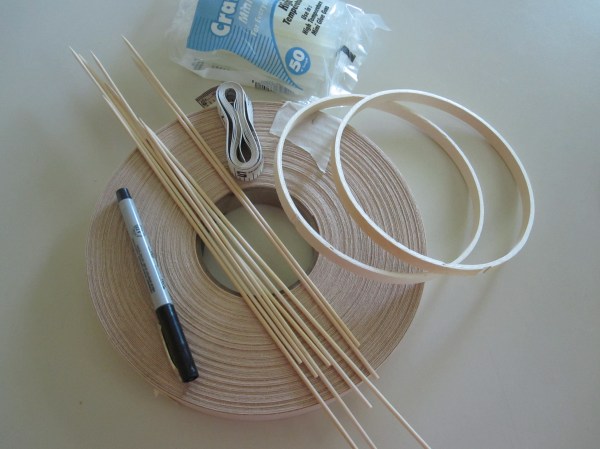
After gathering a few more supplies, namely a seamstresses tape measure, permanent marker, a hot glue gun and glue sticks, I started my project.  I should mention that I should have made a second trip to the craft store to get another itty bitty (like 2 inch diameter) hoop and a length (or two, depending on the diameter of your pendant) of thicker wooden dowel.  Something around 1/4 inch should do.  Oh, you’ll notice this pendant is tiny.  That’s because I didn’t know exactly if my plan would work, so I bought cheaper, smaller hoops.  Also, the outer hoop isn’t necessary for this project.

To start, measure the circumference of the hoop, marking on the inside where you started.
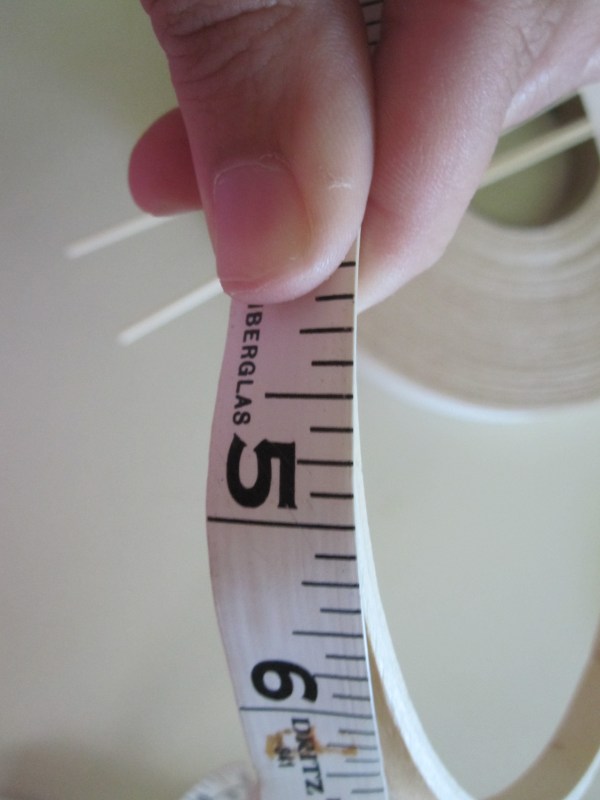
Then, fold your tape measure in half to easily (math free) find the half way measurement.
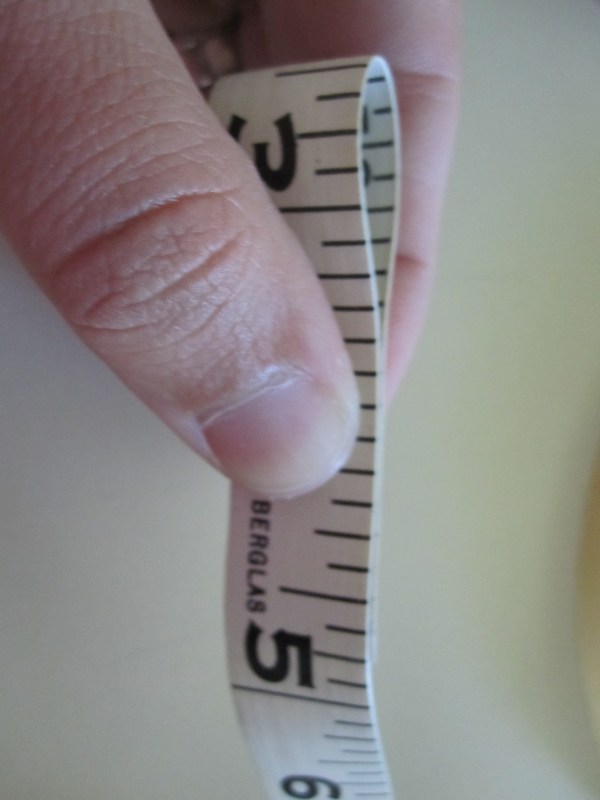
Mark this on the inside of your hoop.  Continue folding the tape measure in halves until you’ve made at least 8 marks on the inside of your hoop.  Stack the second hoop on top to transfer the marks.
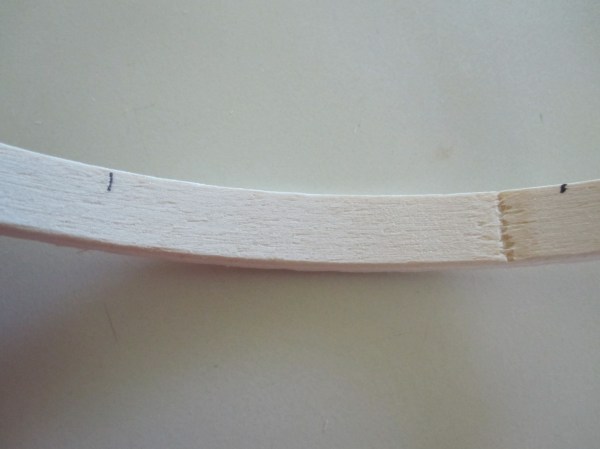
These marks represent the skewer placement.

Helpful hint: I used 8 skewers for a 6 inch diameter pendant.  If you’re making a larger pendant, you’ll need more skewers.  It depends on the look you’re going for, but I would suggest about 32 skewers for a 24 inch diameter hoop.

Next, use your hot glue gun to place a skewer on each of the marks you just made.  Place the flat end down, against your work surface to make sure the skewers are all flush.  Don’t cut the skewers to length until you’re completely finished.  This eliminates guess-work or more math.  Can you tell I loathe math?

Now, cut 6 (or more depending on the look you’re going for) strips of wood veneer the same length as the circumference of your hoop.  Start weaving the strip in and out until you’ve reached the opposite end.  Hot glue the overlapping ends together and hold until cooled.
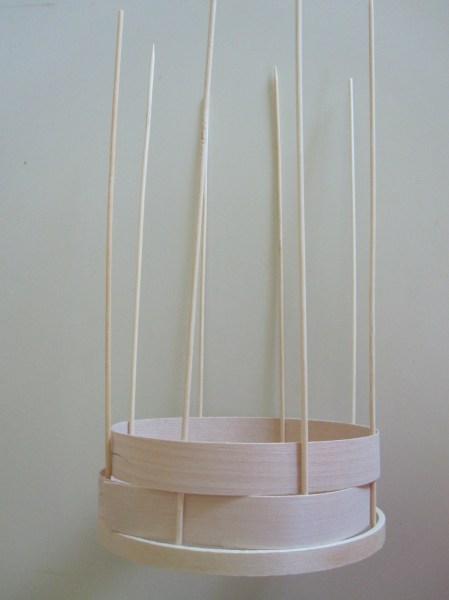
Helpful hint: Each embroidery hoop will have a small notch.  Try to line your seams up with this notch, just to keep the ugliness all to the back.

Continue placing each row of veneer, alternating the showing skewers.
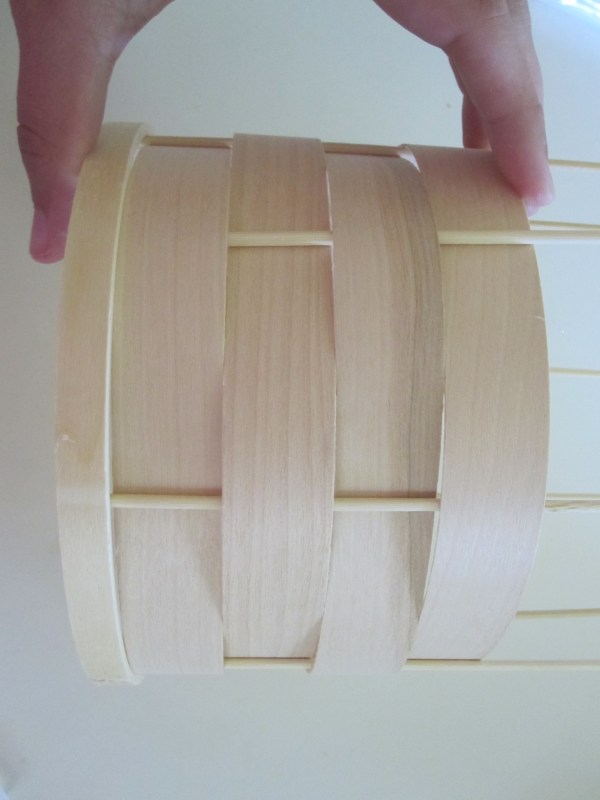
Gently push each row down for a tight, even weave.
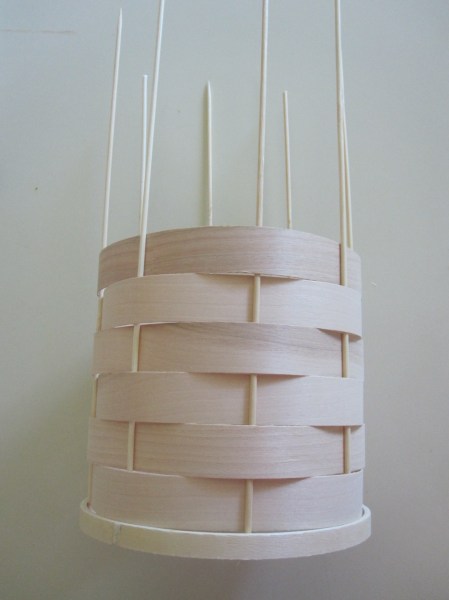
Place the pendant vertically and slip the second hoop over the skewers.  Push down until the top of the last veneer piece is flush with the bottom of the embroidery hoop.  Glue the skewers to the inside of the hoop along the marks.  Now, use a scissors or a wire cutter to cut the tops of the skewers, keeping them even with the top.  The beauty of this plan is that every component is a blonde wood, which could be painted, stained or left natural for a different look.

That’s great, but how am I going to hang it, you ask?  Here’s how.
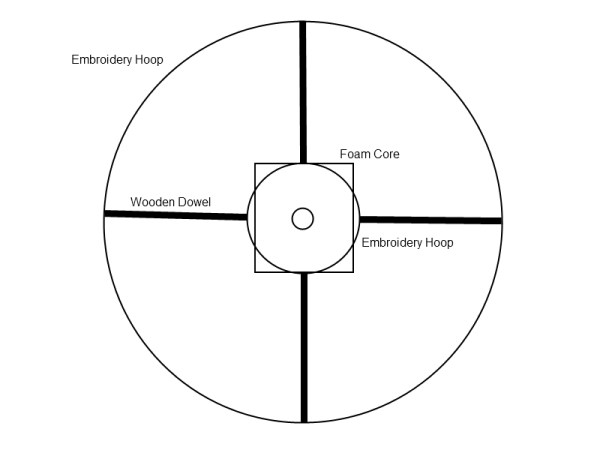
What, that didn’t make perfect sense to you?  Let me explain.  The outer circle is the top embroidery hoop of the shade you just finished.  The medium-sized circle is the tiny embroidery hoop which will keep the fixture hanging.  The four thick lines are 1/4 inch wooden dowel, epoxied to the pendant shade and the small hoop.  Don’t use hot glue for this, you want it to be completely secure.  The square is foam core with a small hole cut in the center.  Place the foam under the small embroidery hoop with the wiring threaded through the hole.

If you want to make a light diffuser, buy another embroidery hoop that is about four inches smaller than your largest hoop.  Stretch a piece of fabric in the hoop, add four more dowels to keep the hoop in place.  Make the dowels long enough to rest on the top of the bottom shade hoop.  Make sense?  If not, just ask and I’ll clarify.

If you don’t want to use embroidery hoops and dowels, track down a wire lamp shade cage and weave veneer around it.  You could use something like this for the top and this for the bottom.  A heavy gauge wire would work to make the verticals for the weave.  I would spray paint these before weaving the design, just to modernize the brass look, for around $10.00, which isn’t bad for a 24 inch diameter pendant.

If this sounds like too much work, just buy this pendant from West Elm, for at least 120 bucks more.

Think you’re brave enough to give it a try?  If you do, we’d love to see what it looks like.  Are you a DIY light addict like I am?  Running out of places for new lights?  Share your home-made lights, please.  Have you been lusting after a fancy fixture, but can’t bear to shell out the dough?

Lather, Rinse, Repeat

I know Friends has been over for years, but I still love it and watch the reruns.  When I sat down to write this post, I thought of Phoebe’s shower song and had a good laugh.  What do I have to share that would remind me of Friends?  A spiffy new set of soap pumps for the shower.  Remember Phoebe’s “Lather, Rinse, Repeat” song?

I started with two cheapie, $2.77 each, ceramic soap pumps from Wal Mart, a ceramic paint pen and an idea.  To limit guests searching through drawers or keeping ugly bottles out, I decided to make pretty pumps for shampoo and conditioner.

I made a template in Photoshop and printed several onto plain paper.  Then, taped over the bottle, placing my template over, to make a stencil.  It worked, looking like this:

Using the paint pen left over from these mugs, I filled in the exposed area and removed the tape.  Unfortunately, the ink didn’t blend well, so I nixed the filled in look.  I had hoped for something similar to Target’s line.

So, I thought of another way to make a pretty design.  Dots were the answer.  So, I carefully drew an S on one pump and a C on the other.

They letters are far from perfect, but our guests now know what they’re using.

Of course, if you want to do this at home, you could easily print off a letter to use as a template.  I used the Engravers MT font.  And, the ceramic fared just fine in the oven.  Just remove the pump part.

Don’t the new pumps look nice in the shower?

I’m considering making one for my face scrub.  But, these could look and work great for lotion in a bathroom, in the kitchen, you know, where ever a pump is necessary.  Or, mark salt and pepper shakers.  Pretty designs would look excellent and add a custom touch.

Want to make a set of your own?  Do you have a favorite bath set?  Have you used the porcelain pens?  If so, what did you make?  Do you use any Friends phrases?  My friend and I recently moved a piece of furniture and I yelled, “Pivvvvvvaaaaaat!  Pivvvvvaaaaaaat!”  We both started cracking up.

P.S.  We added a new tab including quick links to projects.  We’ll add this project soon, but check out the page for inspiration and projects to do this weekend.

Fold Over, and Over, and Over

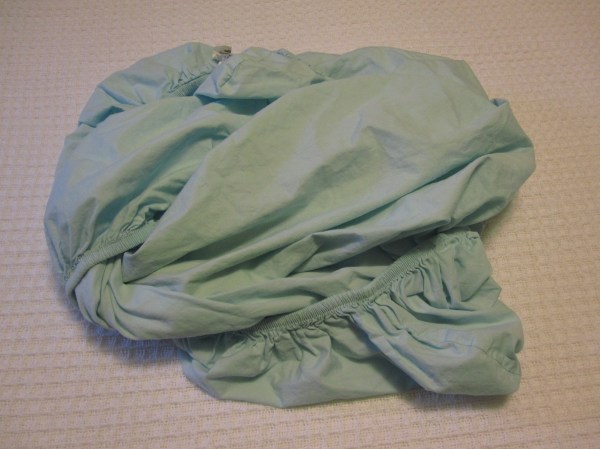
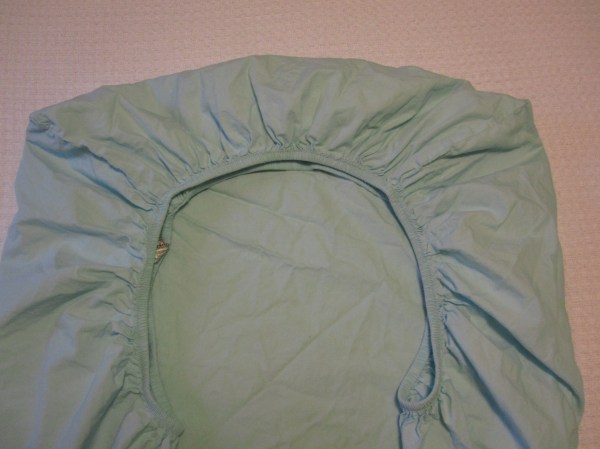
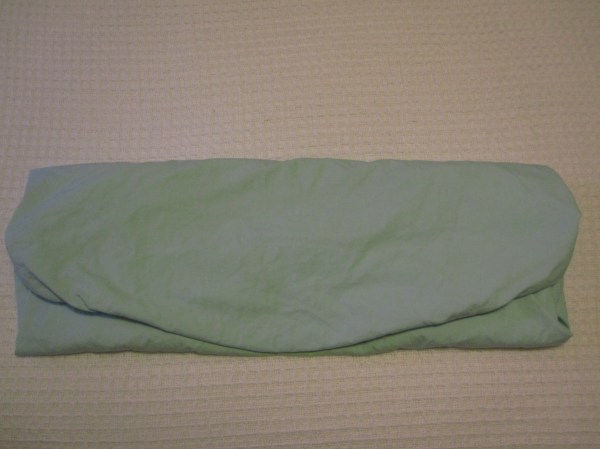
So, this is by far the most earth-shattering post to date.  Not really, though.  Only my fellow OCD geeks will think it’s the coolest thing since sliced bread.  Today, kids, we will learn how to fold a fitted sheet!  See, I told you it was earth-shattering.  As in any class, some of you will already know how to do this, but for the rest of you, read carefully.  In today’s lesson, we’ll learn how to go from this:

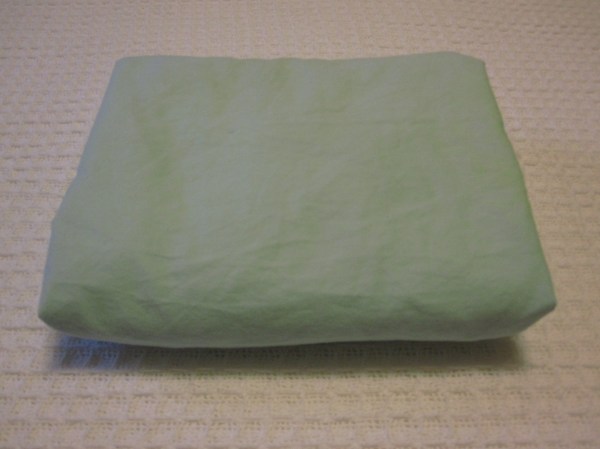
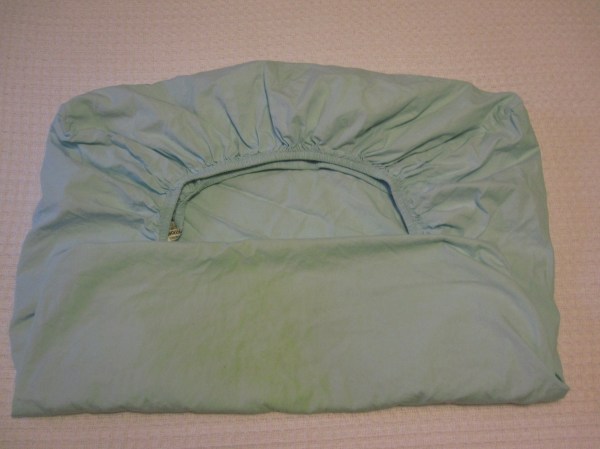
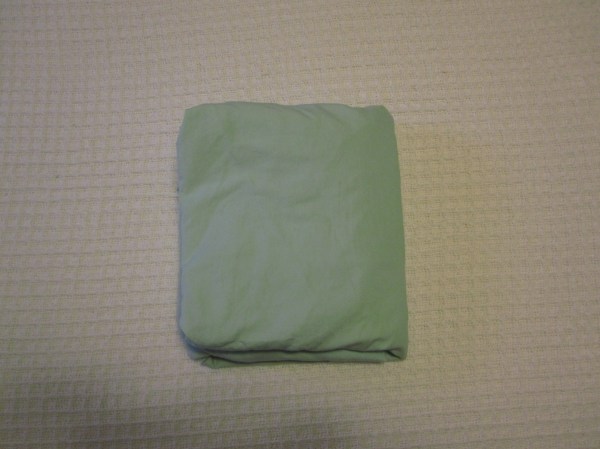
To this:

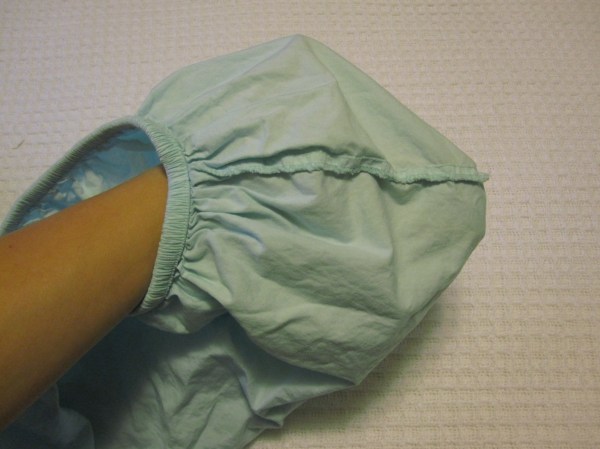
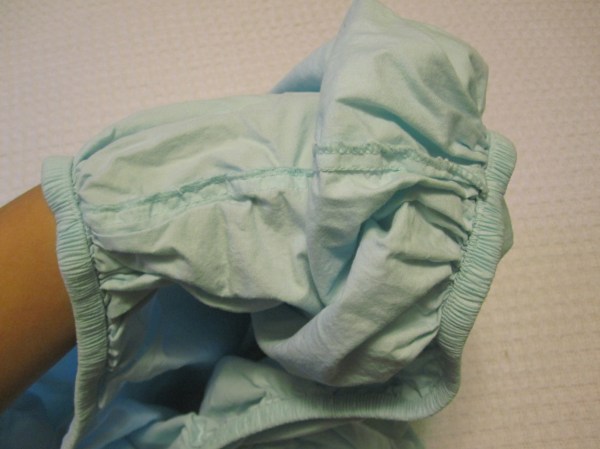
Ready? Okay!  (That was by best, most obnoxious cheerleader impression to get you psyched.)  First, find one corner.  Place a finger in the right side of the sheet, so you see the inside.

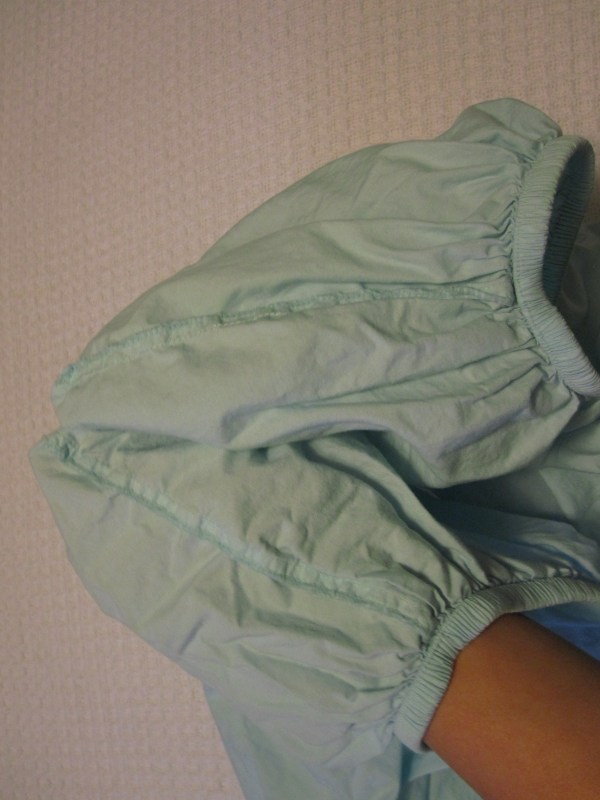
Do this to the opposite corner, too.  Then, bring your hands together and touch your fingertips together.

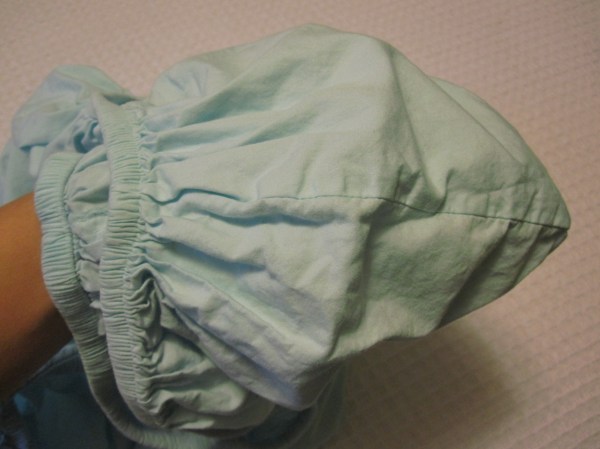
Keeping your hands together, roll one of the corners over the other.

Allign the seams according to your OCD specifications.  Then, do this to the other two corners.

Once you’ve done that, keep your corners together and lay the sheet on a flat surface.

Straighten the elastic some.  Then, fold into thirds or quarters.

I fold my outer edges toward the center, just so the outside edges aren’t showing.

And finally, into thirds or quarters again, or whatever size will fit in your closet.

Now, wasn’t that fun?!?  More fun than a barrel of monkeys.  For extra credit (and even more folding fun) try folding your plastic bags to save space.

Did you already know how to fold a fitted sheet?  Or do you already fold your plastic bags?  Got any other space-saving tips you’d like to share?  Are you crazy like I am and have to have all towels, sheets and blankets folded the same way?  Please tell me I’m not alone.

Natural Aphid Control

Perhaps you don’t have an aphid issue, but we do.  On several of the fruit trees.  And bugs creep me out.  Masses of bugs creep me out even more.  I’ll spare you the pictures, but if you want to be sufficiently grossed out, Google ‘aphids on leaves’ to get an idea of what we were dealing with.

After a little searching for a natural, home-made spray, we found something that works.

1 cup vegetable oil
2 cups water
2 teaspoons dish soap

Mix everything together and spray on the affected tree or plant every few days until you’re aphid free.

Basically, the oil in the mix suffocates the aphids.  Apparently, aphids don’t go back to the same tree once they’ve left.

Another option is a garlic oil spray:

3-4 cloves of garlic, finely chopped

2 teaspoons vegetable oil

1 pint of water

1 teaspoon liquid dish soap

To make, combine the garlic cloves and vegetable oil.  Let this mixture sit for 24 hours.  After, strain out the garlic pieces.  Then, add the liquid to one pint of water and dish soap.  This is a concentrated batch, so dilute two tablespoons of garlic oil with another pint of water before spraying on your tree.  Test this out in a small area before going crazy, though.  If the leaves turn yellow, dilute the mixture with more water until you’ve determined it is safe for your plant.

You should know that these mixtures can harm helpful bugs, too.  Fortunately, the lady bugs have arrived to do some work and our aphid problem isn’t as bad.

How To: Make Laminate Countertops

Laminate countertops may not be the most beautiful option, but they certainly are cheap, durable and DIY friendly.  Which is exactly why we chose a laminate top for our laundry room.  To make your own countertop, you’ll need:

3/4 inch thick Plywood, MDF or OSB, enough for two layers.  The top layer must be particle board.

Laminate sheeting (ours was 4 feet by 8 feet)

1 1/2 inch tall by 3/4 inch thick material to cover the edges

3M Fastbond Contact Adhesive

Foam roller to spread the glue

Heavy roller to press firmly into place

To start, create a solid surface of plywood.  Secure two pieces together to create a thickness of 1 1/2 inches.  Fill any holes with wood filler and sand smooth.  Place the sheet of laminate on top of the area and cut roughly to size.  Ben used a router.

Attach your 1 1/2 inch tall edging on all exposed sides.  We used oak, but anything will do.

Then, pour some glue on the back of the laminate sheet and spread in a thin layer with a roller.  This stuff is stinky, so you should wear a mask and/or work in a well-ventilated room.  You may need to let the glue set up for a few minutes.  Read the instructions on the glue.

Then, place wooden dowels every 8 to 12 inches to keep the laminate from touching the top before you’re ready.   Flip the laminate over and start at one end of the piece, pressing into place.  Use the roller to smooth the surface and bond securely.  Work in only one direction to prevent shifting and bubbling.

We placed weights on top, just to prevent any movement.  After adequate dry time, usually 24 to 72 hours, use a router along the exposed edges to clean the edges of the wood and laminate up.  We cut ours to a clean, kid-friendly 45 degree angle.  Run the router along the edges until smooth and uniform.

With the edges cleaned up, fill any nail holes, sand, and paint or stain to finish.

Because Ben installs laminate counters in the apartments, we already had access to all the supplies.  Fortunately, we also got a piece of white laminate from the apartments because the owner didn’t like it.  I don’t love it, because it has a tan cross hatch pattern.

See what I mean?  But, it isn’t noticeable unless you’re super close.  I wouldn’t choose it, but it was free, so it will work.  Fortunately, it is light to help brighten up the small basement space.

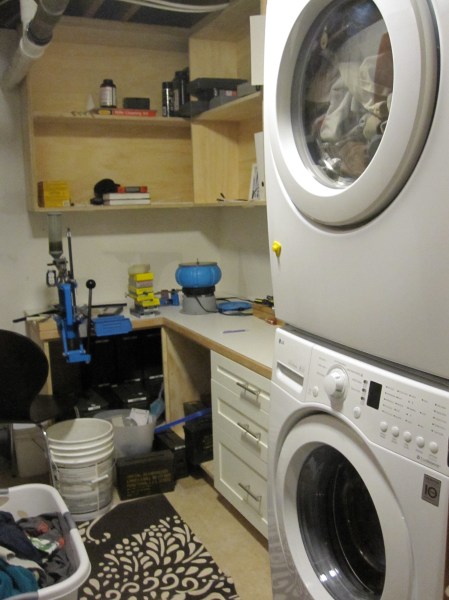
Oh, and here is what our laundry room looks like today.  A total mess.

You can see the installed drawer fronts, but we still have to finish the cabinet doors and shelving.  We had a slight change of plans.  You’ll also notice that we haven’t sanded the sheet rock yet, but paint will go on those walls someday.