How To: Refinish a Bookshelf

We have this little bookshelf in the boys’ room.  My mom gave it to us, but it was originally her grandparent’s shelf.  It’s functional and cute, right? 

Well, it’s not so cute when the books have been removed; the finish has seen better days. 

The top was even worse, too!
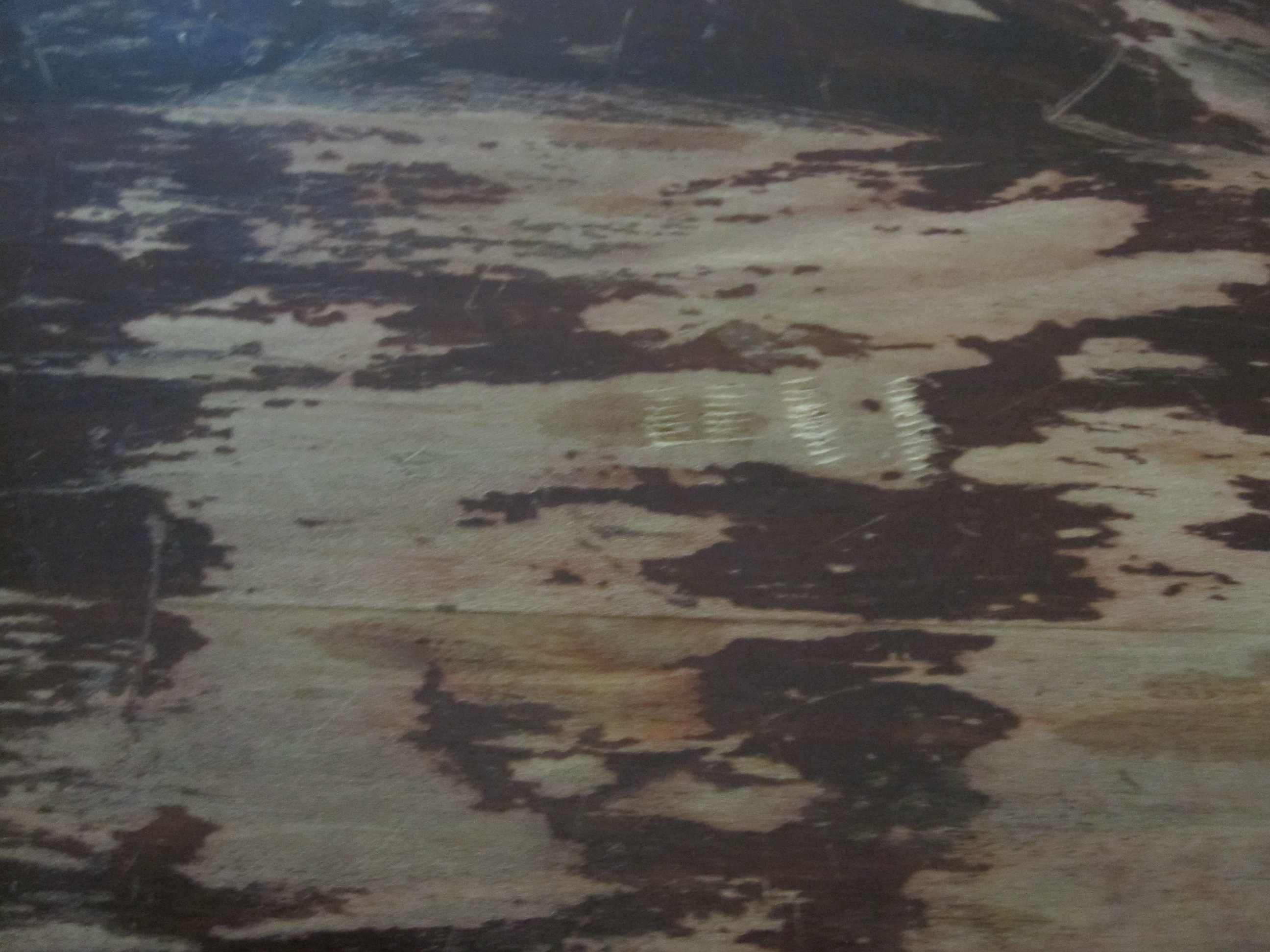
We have had this bookshelf for three years (or more) and have never done a thing to it.  Until now, that is.  I finally got an itch to refinish this sad little guy. 

It all began with a random orbital sander.  I started by sanding the top with 220 grit paper to completely strip the stain finish.  Then, I worked my way down the sides, sanding with the grain of the wood. 

Once I had the top and outsides sanded, Ben removed the back and I worked on sanding the fixed shelves (both the top and under sides) as well as the inside walls. 

After completing all the smooth flat surface areas, I began the tedious, time-consuming task of hand sanding the detailed areas of fluted half round and the finials.  This involved 100 grit sandpaper, folded in half to get into the crevices of the fluting.  It took a good two hours to get the detailed areas sanded smooth, but I knew the end result would be worth it.

I wanted to keep the dark wood tone, so I bought a quart of Minwax Dark Walnut stain.   

Using a synthetic bristle brush, I began applying the stain in small areas to the shelves.  Working quickly, I wiped the area with an old, cut up T shirt to remove excess stain.  I kept a ‘wet edge’ of stain to prevent any overlapping that might make the color uneven.  I continued this process until the entire bookshelf had a coat of stain. 

I let the stain dry overnight.  Once Everett went down for his morning nap, Vincent and I went back to the garage to give the shelf one more coat of stain.  The second coat gave the rich, luxurious walnut tone I had in mind.
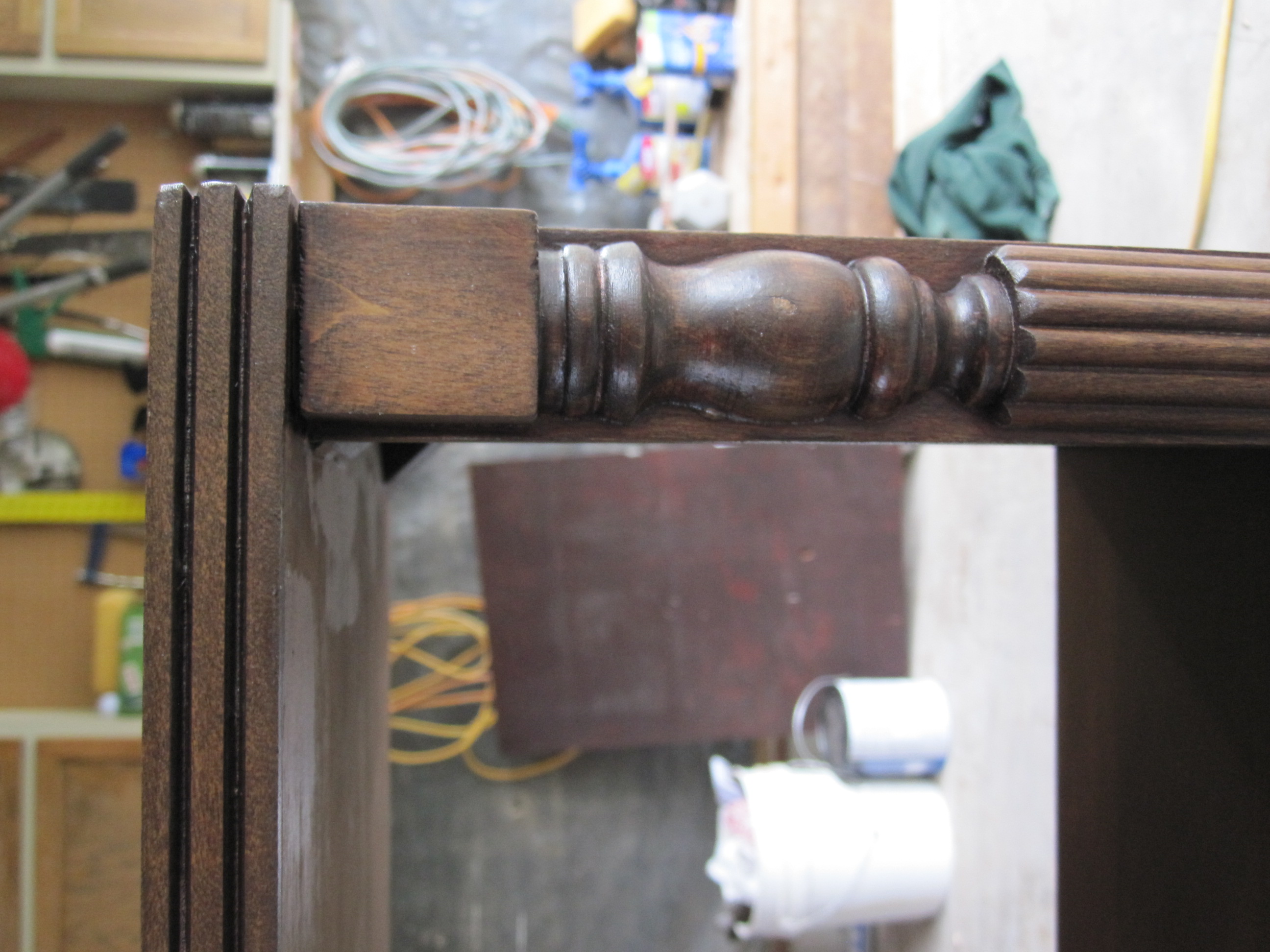
Now that I had the color I wanted, I needed to protect my hard work.  I applied two coats of Varathane Diamond Water Based Polyurathane satin finish to seal the wood and prevent scratches and future damage. 

Just a little note:  This was my first attempt to completely refinish a piece of furniture.  By no means am I an expert, but I think the bookshelf turned out pretty great.  It was time consuming, but not very difficult or expensive.  Speaking of expenses, I here’s a budget breakdown.

Sander and paper: $0.00 (already owned)

1 Quart Minwax Stain: $7.78

Varathane Polyurathane: $0.00 (already owned)

Total Spent:  $7.78

Time:

Sanding: 4 hours

Staining:  2 1/2 hours

Polyurathane Application:  2 hours

Total Time Spent:  8 1/2 hours

Not too shabby, huh?
Simple Solution: Crown Moulding

Do you love the look of crown moulding but can’t afford it?  Maybe it’s just a little too difficult for you to install on your own?  Well, we have a solution for you.

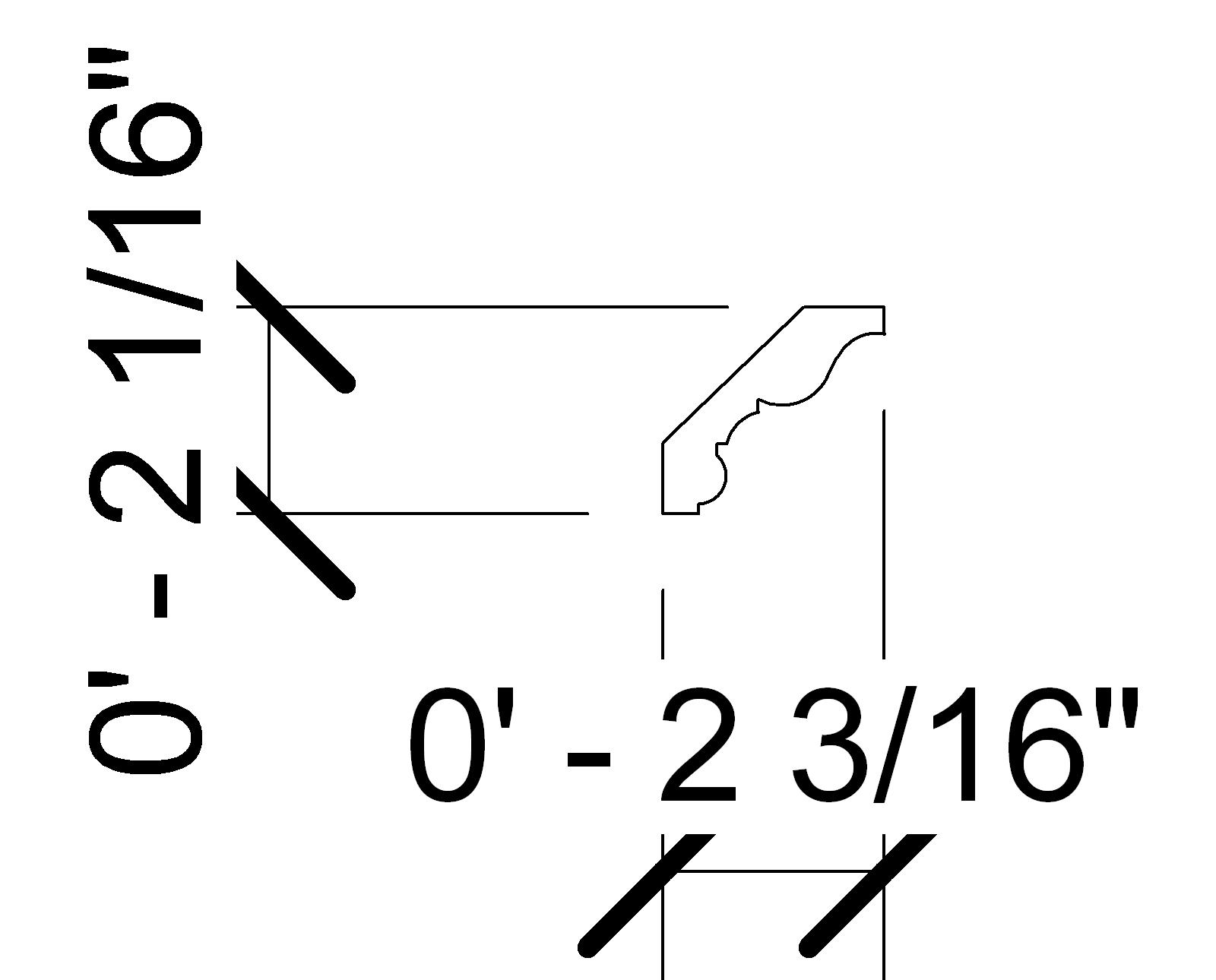
Rather than using actual crown moulding, use decorative casement trim.  Choose a trim with one 90 degree angle and a flat back, similar to these:

Place the square edge along the ceiling and secure with nails. 

This trim is very easy to install and is more affordable than actual crown moulding.  Of course, the ‘crown’ moulding won’t have a 45 degree angle from the wall to the ceiling.

Paint the ‘crown’ the same color as the rest of the trim and it will make the room look polished.

Just Like Tom Sawyer

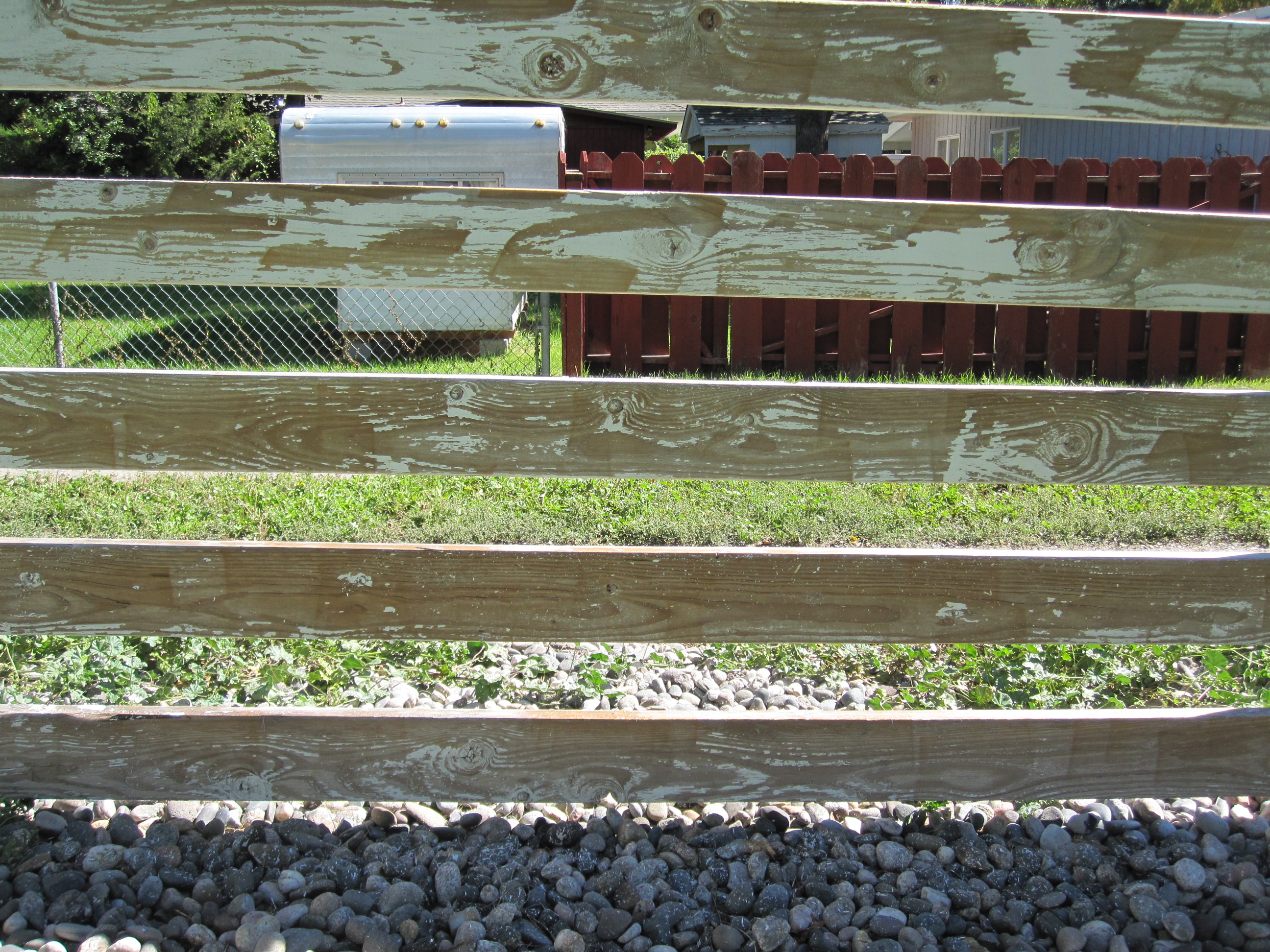
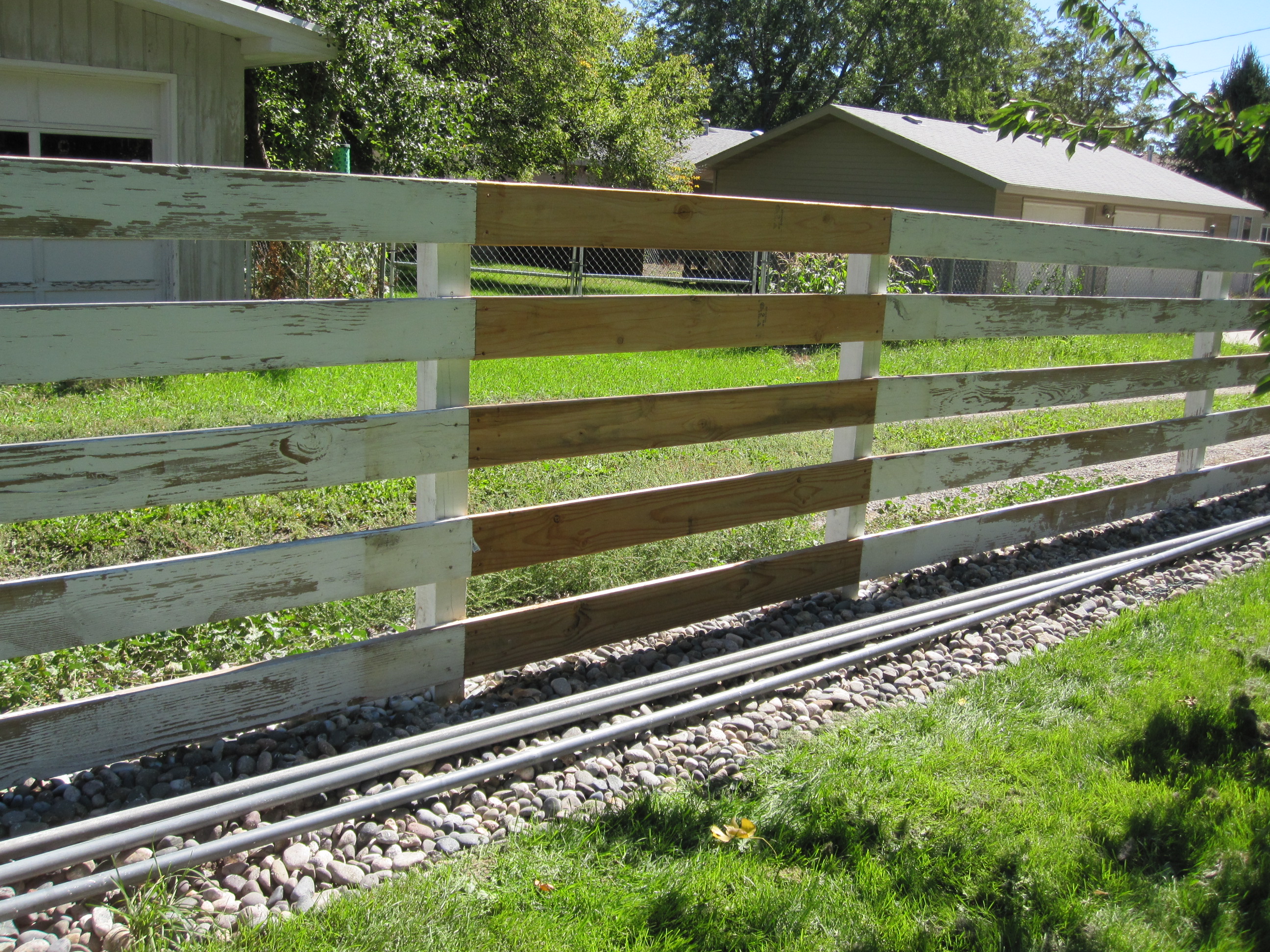
Our Montana summer seemed more like a Seattle summer thanks to the unusually frequent rainfall.  What does this mean?  We didn’t get many outdoor projects done this year.  Fortunately, we didn’t have many on our list.  We did, however, get our fence painted, finally!  Last summer, we primed it, but it didn’t hold up to the elements very well.  So, over the weekend, Ben used a pressure washer to remove any loose, chipping or peeling paint.

Isn’t this lovely?

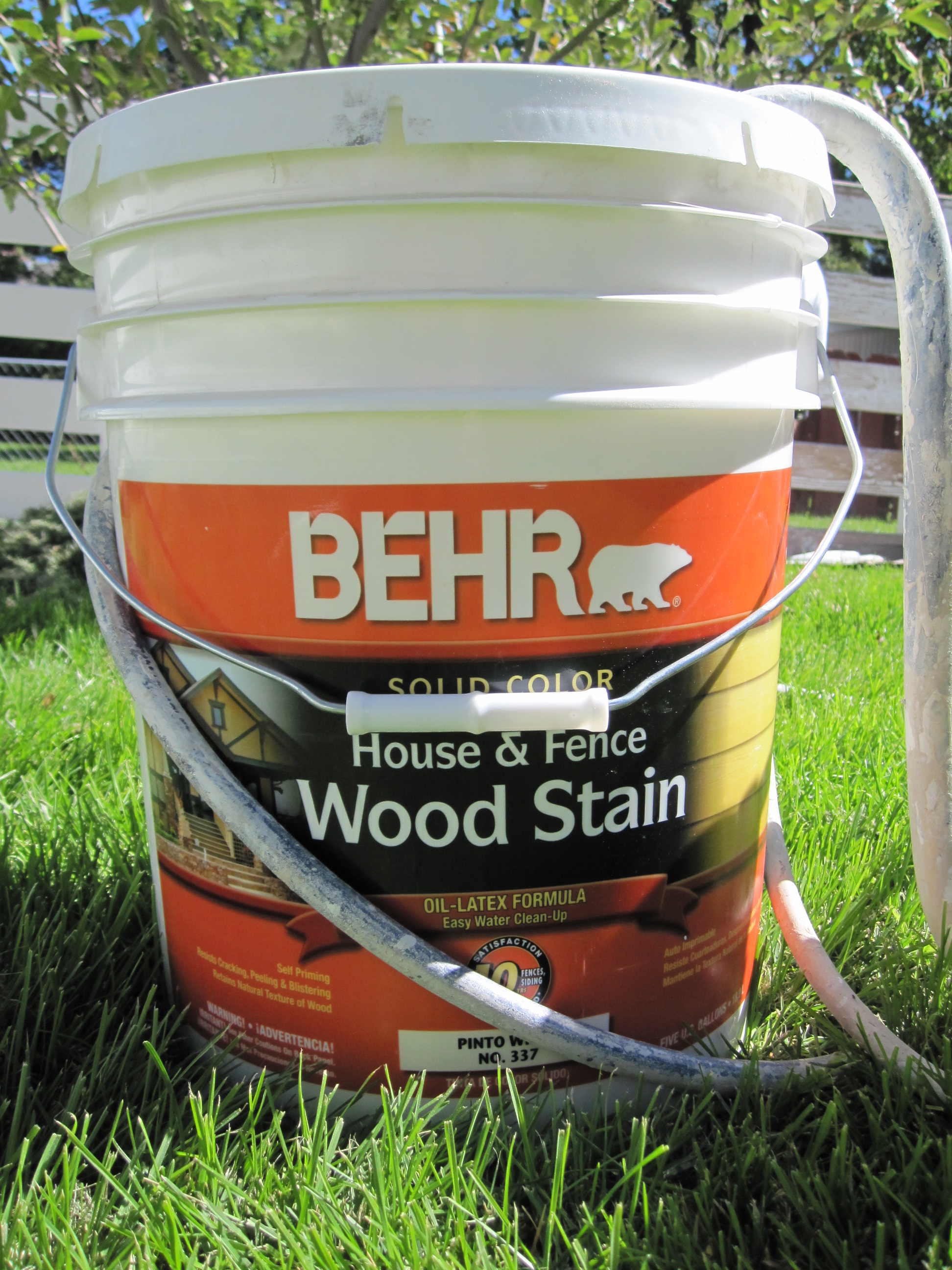
After some reasearch, Ben decided to use an opaque white stain by Behr, specifically formulated for outdoor wood and siding.

Using a sprayer, Ben applied an even coat, then used a brush to smooth it all out.

We also closed the open area where we had planned to install a gate.

When we built the fence, we had large, communal garbage cans in the dead end alley.  I guess our garbage man ran into a few too many things while backing up, so the city gave us individual garbages.  Why am I telling you this?  Because we no longer needed access to the alley as our garbage is now up front.

Long story short, one more item has been checked off our to do list!

I See a Red Bed and I Want it Painted Yellow

Yep, that was my DIY version of The Rolling Stones ‘Paint it Black.’

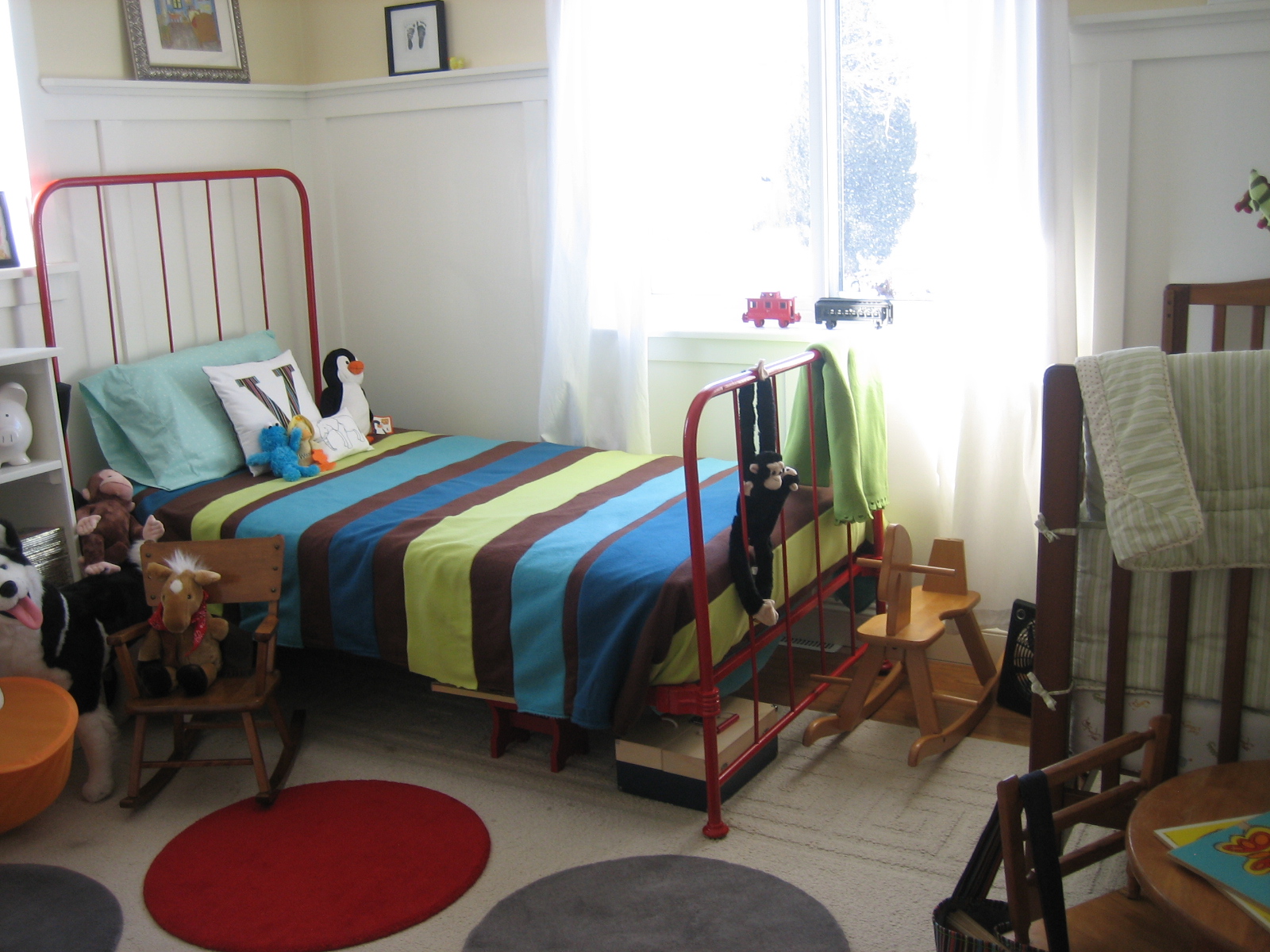
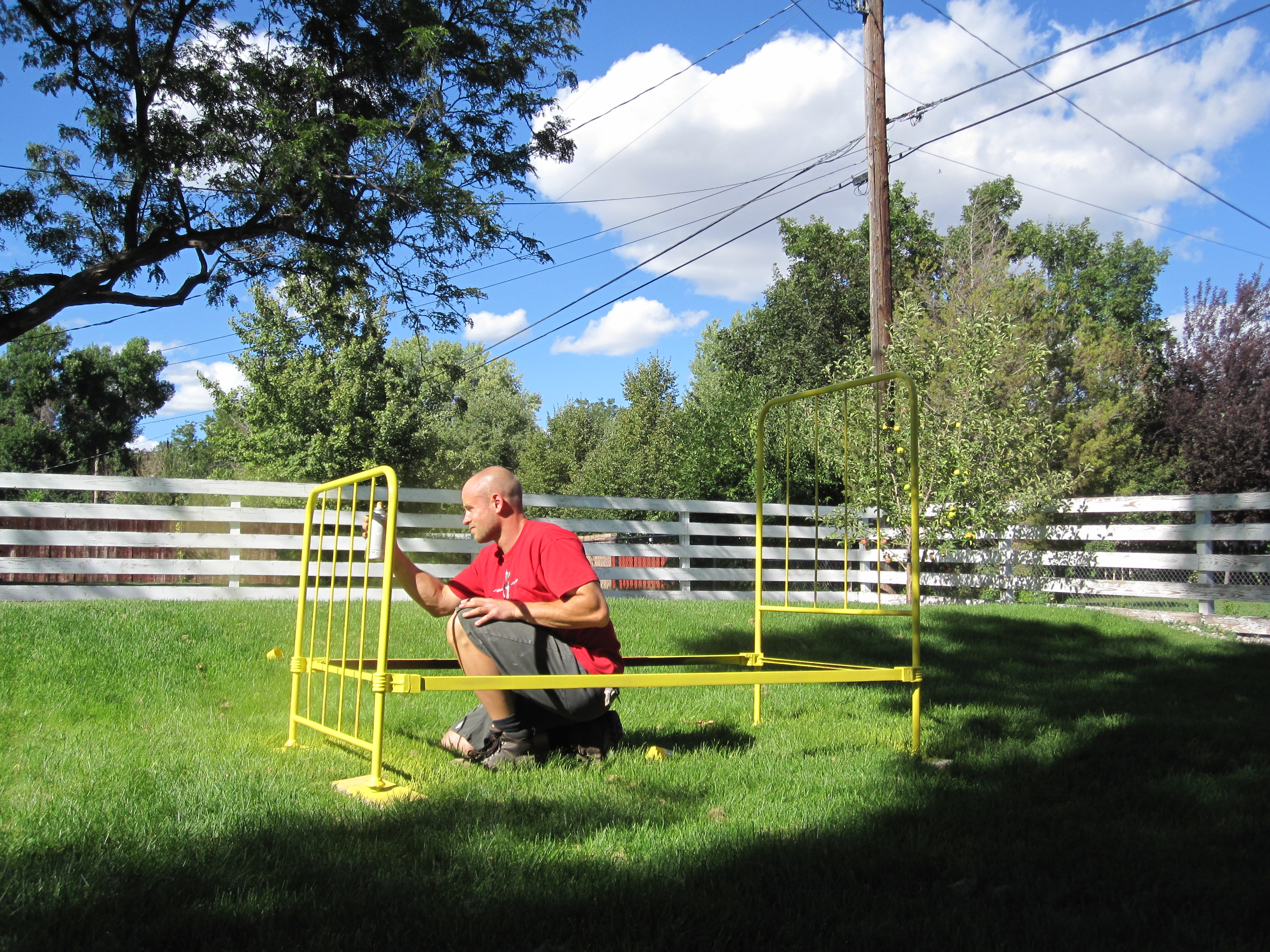
Two years ago, we got a hand me down twin mattress and frame for Vincent.  It’s a simple, 100-year-old steel bed, reminiscent of an old hospital bed.  The frame was green, but we painted it red to work better in Vincent’s newly designed room.

I loved it, until recently.  Now, I want to add a light aqua, lemon grass green and sun yellow to freshen up our boys’ room without repainting.  Initially, I wanted to make an upholstered headboard, but that would require buying a new mattress, box spring, and frame because the current bed is about 5 inches wider than standard twin beds.  We don’t want to buy a new bed yet, so we opted to repaint the bed frame.

I sent Ben to the hardware store and he picked up Rustoleum’s Sun Yellow spray paint.  Rustoleum claims to have 2 times the coverage, so maybe we won’t have to prime.  After disassembling the bed and setting it up outside on wood blocks, Ben started painting.

Sure enough, Rustoleum does have two times the coverage.

While Ben was painting, the boy’s room was a mess.  Fortunately, it didn’t last too long, but here is what it looked like.

Better yet, Rustoleum dries to the touch in 20 minutes and to handle in 1 hour.  That’s great for impatient people, such as myself.  We left the bed outside for 5 hours or so, just to let it air out.  We brought it inside and added bedding.  Vincent did not sleep in the bed, as it was a little smelly, but I love the new look.

I really love the yellow bed with the chevron painted rug.

Next step, bedding!  I have debated between a sun yellow/charcoal grey color palette and sun yellow, light aqua, and lemon grass-green.  I think the yellow/grey is a little too sophisticated for a kids room, so we decided on yellow, aqua and green.  What is your favorite color combination?

Green Equals Green: Cloth Napkins

Today is the start of a new series: tips and ideas to help you live a greener life style, while saving some green.  Some ideas are super simple to carry out and very cheap (level 1), while others are slightly more difficult, but a knowledgeable DIYer could tackle (level 2).  Others are best left to the professionals (level 3), but all showcase eco-friendly options. 

Our first idea is a level 1, so easy a cave man can do it.  Let’s say a family of four uses 1 roll of paper towels every two weeks, at the price of $1.17 per roll (if you buy the cheapest paper towels in bulk from Costco).  The total spent in one year on paper towels (used only as napkins) is $30.42.  If you want to do something a little more eco-friendly, but still use paper towels, you can  buy Seventh Generation Recycled paper towels.  If you opt for this route, you’ll spend $46.54 per year. 

Compare those prices to $1.99 for four cloth napkins from IKEA, ours are IRIS, but I can’t find them online.  Our napkins are white with a subtle checker board pattern.  I chose not to buy pretty napkins, as they’ll look ugly after one use, but I love not having to buy a ton of paper towels.  I think the Earth loves us, too. 

If you don’t have an IKEA, you can always buy fabric and make your own.  Definitely invest in at least 8, so you always have some on hand.  Just throw them in the wash with a full load and reuse!