Teal Table Lamps

After a broken lamp snafu, I had a little shopping to do.  I started where I usually do, TJ Maxx and Ross.  Sadly, both stores were surprisingly bare in the lamp department.  No joke, there were about 10 lamps total in each store.  Boo to their disappointing selection.  Luckily, Target has tons of cute lamps.  But I made the choice to buy non-breakable lamps this time, which quickly whittled down my options.  I settled on two teal lamp bases (on sale for $14.99 each) and plain-Jane white shades for $13 each, meaning each lamp and shade cost under 30 bucks.

Bonus, the bases are resin!  I don’t know that I’m 100% sold on the lamps (hence the tags and stickers), but the price was fantastic.

The teal color is fun and bright, but I think I’m hung up on the shape.  Not as simple as the last pair of lamps.

What do you think?  What are your favorite lamps?  Especially of the unbreakable variety.

My Colortopia

Perhaps you’ve heard of Akzo Nobel and Glidden Paint’s newest site, My Colortopia, a site dedicated to helping you choose the right paint for the job.  And, My Colortopia has an advice column authored by a squad of bloggers at the ready to answer your questions.  Wondering what sheen to go with?  My Colortopia can help.  Need help choosing the perfect color?  Don’t fear, they have answers.

But if you’re looking for inspiration, My Colortopia has a color quiz tool that is as handy as a top shirt pocket.

Answer seven simple questions about yourself.  For each question you answer, two paint colors will be added to your selection.

The last question whittles down the results based on your preference for soft or bold colors.

But that’s not the coolest part (in my opinion).  Click any of the colors and you’ll get coordinated color palettes.

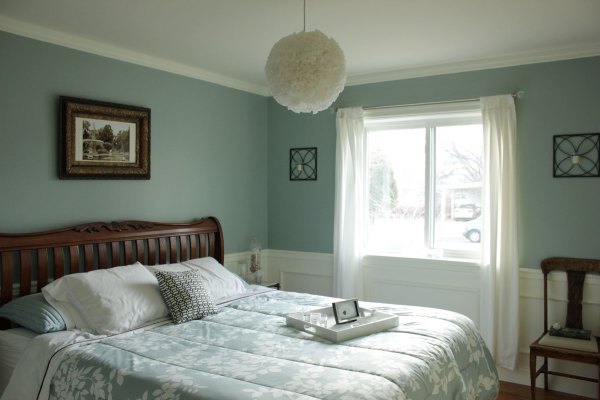
I’m more of a bold color person and I think the blues and brown colors fit me well.  And that got me thinking.  I have versions of nearly every color in our house.  My favorite option was Pale Jade (the top right swatch).  Our guest bedroom is painted a similar color and it pairs wonderfully with chocolate brown, like the rich wood headboard.  Toss some teal or peacock in for more fun.

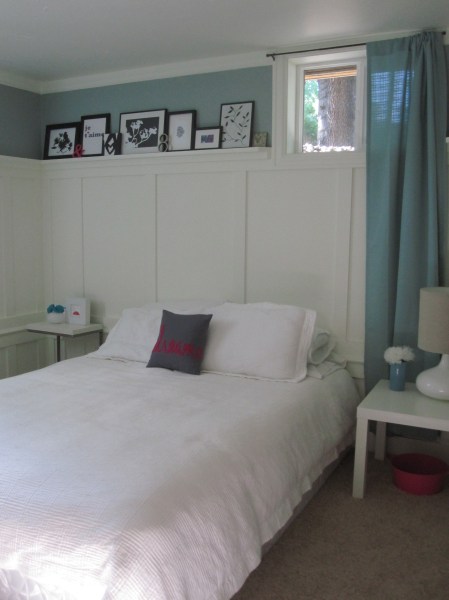
In our smaller basement bedroom, we’ve added splashes of fuchsia for drama.

If pink isn’t your favorite color (Aerosmith anyone?), try various shades of green or orange to spice things up.

Teal Lake (the bottom next to the brown) has dominated our basement accessories, like our painted mirror and pillows in the theater room.

Of course my office is painted a deep brown and our living room is currently a warm tan.

If we didn’t already have these colors on our walls, I’m sure I’d run out to buy some of the colors shown.  Try it for yourself; it’s fun.

I have been sponsored by Glidden brand paint to write this post but the thoughts and opinions expressed are my own.

Reader Question: How We Built Our Kitchen Cabinets

***As a disclaimer, this isn’t a step-by-step-anyone-with-power-tools-can-do-this kind of project.***  

We’ve had several questions and requests for more details of how we built our own cabinets.  Ashley said, “You and Ben should do some sort of a write-up as to the materials you used and how you designed the cabinets, a breakdown of the costs, etc. I also have a small kitchen and am looking to redo it as well. We’d love to make custom cabinets, but I’m not sure how much we’d have to spend or even what materials to use!  I know determining sizes would be unique to each kitchen, but if there’s any sort of snags you came across when measuring, things to look out for or remember, etc. those would be helpful to keep in mind. I think the construction is what I’m most curious about though because we could use our existing cabinets as a means of measurement.”

Those are all very good questions.  And we have answers, hopefully they’re sufficient.  Let’s start with the basics; the material and pricing.  We used 3/4 inch cabinet grade plywood for nearly everything.  The reason?  Plywood is super sturdy and we would rather over build something than have problems down the road.  Better safe than sorry.  Cabinet grade is smoother with fewer knots than other plywood, so it costs a little more.  At Montana Home Depots, a 4 foot by 8 foot sheet of plywood costs about $25.  For all the cabinets, we’ve used 17 sheets.

For the drawer fronts we used MDF because it’s smoother and we don’t need plywood for strength.  When we designed the cabinets, we pretty much kept the layout we already had with some modifications.  If you’re keeping the same layout, you can measure the cabinets to make the new ones.  Our overall sizes were nearly identical to the old cabinets, we just combined a few.  One thing to take into consideration are the wasted spaces in your current layout.  Sometimes there’s a reason for it, like in our corner cabinet.

When measuring, remember you need to allow for clearance of hardware and door swings.  But if it ain’t broke, don’t fix it.

Another thing to consider when measuring is how deep your cabinets are.  A piece of plywood is four feet wide, but you’ll want to make your cabinets just under two feet deep (ours are 23 3/4 inches deep) to maximize sheets of plywood.  Remember, the saw blade eats up a sliver of the wood.  Preventing waste will also help keep the cost down.

To keep things as simple and sturdy as possible, we make the toe kicks out of 2 by 4 studs.  This way you’re not factoring the space into the cabinet, you’re simply building two boxes to set on the other.
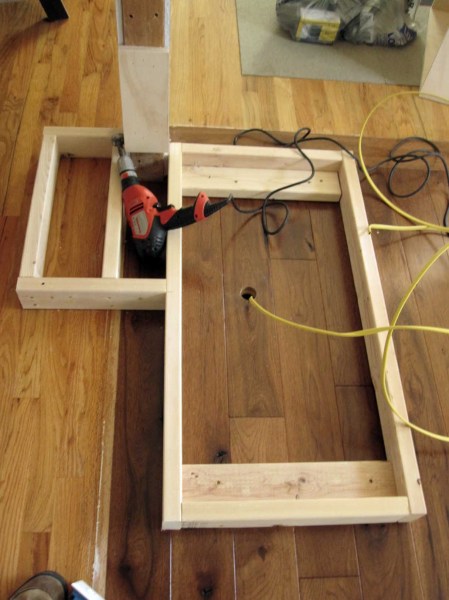
Now that we’ve covered the basics, how about we move on to the building phase?  Ben builds cabinets with the top and bottom pieces the full width and depth of the overall size.

For example, the cabinets by our stove are 42 inches wide by 23 3/4 inches deep by 32 1/2 inches tall, not including the toe kick.

The top and bottom pieces of this cabinet measure 42 inches by 23 3/4 inches.  Because the top and bottom are the full size, the sides and back rest inside.  So the sides of this cabinet are 23 3/4 inches deep by 31 inches tall.  The back is the smallest at 31 inches tall by 40 1/2 inches wide.

To hold everything securely, Ben applies a bead of wood glue, then nails everything together using 16 guage nails in an air nailer.

The process is similar for building the drawers, too.  The bottom piece is the entire width and depth.  Attach the sides next, which extend front to back with the height you prefer.  Each drawer will vary in height.  Finally, the back and front fit between the side pieces.  Everything is glued and nailed into place and allowed to dry.

With the cabinets installed, Ben added another thin strip of 3/4 inch plywood to attach the face framing to.  For our visible end panels, we covered the rougher plywood with smooth 1/2 inch thick MDF.  For added decorative detail, 1/4 inch thick by 2 1/2 inch wide MDF borders the edges.

Using plywood for the drawer sides does come with a complication; hiding the top edge.  You could use iron on veneer but we opted to fill the cracks with wood filler to sand everything smooth to prepare for primer and paint.
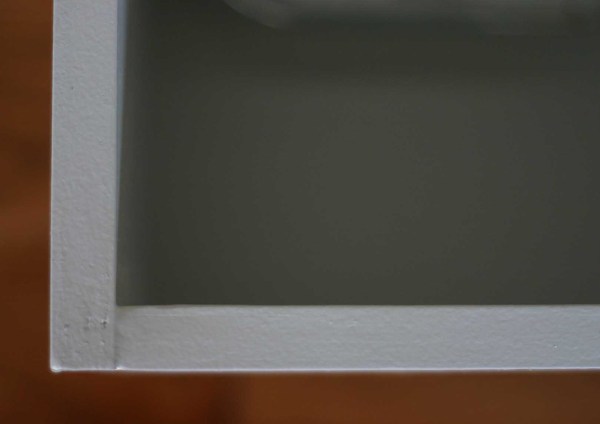
The plywood edges of the cabinets all get a face lift in the form of 1/4 inch MDF.  We decided on a mix of traditional and European style drawers.

Traditional style cabinets have a divider strip between each cabinet and drawer, like these from Young House Love:

European style cabinet doors and drawer fronts nearly touch one another, like these:

Our mix has a 3/4 inch reveal {the width of visible cabinet face} on all outside edges, but the drawers nearly touch each other.

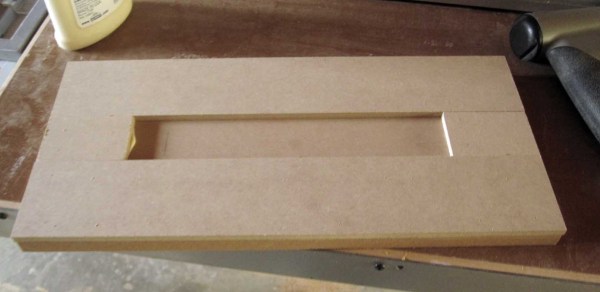
After deciding on the reveal width, Ben started building drawer fronts.  Ours are a simple shaker style; a flat panel with a thin border detail.  To make the drawer faces, Ben cut pieces of 1/2 inch MDF to the overall size for each drawer.  Then he cut tons of 2 1/2 inch wide 1/4 inch thick strips of MDF.  Using a pin nailer and glue, Ben added the trim detail.
And now, for the super tedious part; filling, sanding, priming, and painting the cabinets for a seamless, polished look.  We like to use Elmer’s Wood Filler and a small putty knife to get in the small cracks.  For nail holes, I like to use my finger to squish the filler in the hole.  Let the filler dry overnight, then sand with a high grit (about 220) sand paper.

If necessary, fill areas and sand again.  Run your fingers over the surface.  If you feel a bump, keep on sanding.  The true test is after the coat of primer.  If you see a crack or hole once the primer has dried, don’t hold out hope the paint will fill it.  It won’t and you’ll be more annoyed about touching it up.  And, if you’re like I am, you probably will never do it.

When it’s time to install the drawer fronts, first measure, mark, and drill holes for your hardware.  To save time (and aggravation), I make a paper template.  I measure the distance between the hardware holes and poke holes to easily mark the cabinets.  You could buy a template at the hardware store, too.  These holes will come in handy when trying to attach the fronts.  Use spacers to make sure they’re lined up, then screw through the pre-drilled hardware holes, going into the actual drawer.

This will hold the front in place while you screw from the inside to secure the front.  Back out the screws, drill through the drawer, and add your hardware.

Finish off the 2 by 4 toe kick with a piece of primed and painted 1/4 inch thick  MDF.  If you use caulking, glue, or pin nails, you’ll have minimal touch up paint.

So that’s how we made our lower drawers, but we’ve still got the upper cabinets to discuss.

Upper cabinets begin in much the same way as the lower drawers.  Make a plywood box to size, but you don’t have to build drawer boxes to go inside.  Easy, right?  Hang the cabinet box, screwing into studs.  Here’s where the building is different.  Rather than 1/4 inch MDF facing, you’ll need 3/4 inch thick wood facing.  We used poplar because it’s easy to work with and durable with minimal grain.  Add any decorative side trim first, subtracting the thickness of the poplar to keep an even border.  Nail the poplar trim (ours is 1 1/2 inches wide) to the front edges, keeping the sides flush.  Fill every hole and crack (dirty!), sand smooth, prime, and paint.

If you want solid doors, follow the same steps as the drawer fronts.  But, for glass front doors, you’ve got a little more work ahead of you.  Using real wood, we used poplar but Ben would use oak if he had to do this again, cut 2 1/2 inch wide strips.  Using a router, make a tongue and groove system for the frame pieces to fit together.  Remember, this only has to be 2 1/2 inches from the long ends.  Then, apply a bead of glue and slide the pieces together.  Use pin nails to keep the frames from shifting before drying.  After the glue sets, router out a channel for the glass.
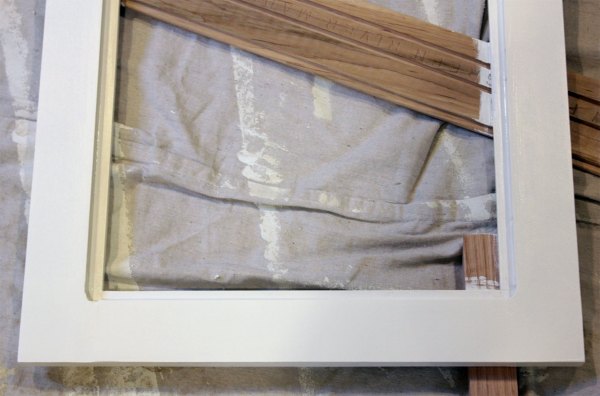
The router can’t get the corners completely square, so use a utility knife and chisel to square everything up.

We took our doors to a local glass shop where they cut and installed the glass for us.

To hang the doors, first use a Forstner drill bit to recess the hidden hinge.

Attach the hinge to the cabinet door.  Get a helper to hold the cabinet door while marking, drilling pilot holes, and screwing the hinges to the cabinet frame.

Then get a beer, wine, margarita, or a Coke and enjoy your new cabinets, relishing how much money you saved by building your own cabinets.  Speaking of how much you’ll save, let’s look at our pricing.

DIY Cabinet Building Budget Break Down:

17 Sheets of Cabinet Plywood: $249.85 {Ben got a really good deal on the plywood, though I don’t remember how…}
2 Sheets of 3/4 MDF:  $69.00 {mostly used for cabinet shelving}
7 Sheets of 1/2 MDF:  $171.50 {for drawer fronts and end panels}
2 Sheets of 1/4 MDF:  $28.00 {for drawer front banding and face frames}
4 gallons of gray Glidden paint: $57.08  {originally $87.88 because Wal-Mart didn’t have their brand in stock; used to paint the insides of the cabinets and drawers-we only used 2 1/2 gallons}
10 2×6 studs (used to support the wall we tore down) and 10 2×4 studs (used for toe kicks): $80.00  {Still grouped together because I don’t know individual costs of the studs}
Acryshield Paint$52.39  {for the exteriors of the gray cabinets}
Drawer Glides:  $56.16
Behr white paint, for upper cabinets:  $32.98
Glidden White Paint, for trim:  $24.97
Vinyl bumper pads:  $7.74 {for three packs}
Bolts and screws for drawer fronts and handles:  $14.78
Cabinet door hinges:  $34.72  for 16
Poplar for cabinet frames: $27.00 for 18 board feet
Drawer Pulls:  $63.00 {or $31.50 for 10 at Lowe’s}
Door Knobs:  $20.00 for 8
2 packages of Shelf Supports:  $9.98
Glass for Doors: $30.60
We already had all the tools as well as wood filler, sand paper, nails, etc.
Grand total for cabinet supplies:  $972.67
Price for KraftMaid cabinets:  $7,000-$9,000 {depending on the style and upgrades}
Total savings for DIYing the cabinets:  $6,027.33-$8,027.33
Things to remember:
This might seem blindingly obvious and unnecessary to mention, but you are deciding every. single. detail.  Unlike buying cabinets, you have a lot to think about and decide.  Where will your toe kicks go; only on the fronts?  How big/deep should the drawers be?  What will the visible end panels look like?  Traditional or European style?
Measure, measure, measure!  That old rule ‘measure twice, cut once’ most definitely applies to cabinet building.  Make sure to take the plywood width into consideration when determining cabinet sizes, too.
It helps to have all supplies before building starts.  Get your drawer glides so you know how big to build your drawers.
If you like your cabinet layout and the existing cabinet frames are in good condition, building new cabinet doors and drawer fronts might be an affordable way for you to update your kitchen.  Because you’ve got pre-determined sizes, building might be easier.
We have absolutely no regrets going with all drawer lowers.  They’re much more functional and we’ve picked up a lot of space, even in the same footprint.
Now, if you still have questions, lay them on me.

Our Sources

Were you wondering where we got something?  Well, here’s one stop before you shop.  A room by room list of nearly everything in our house.

Living Room:

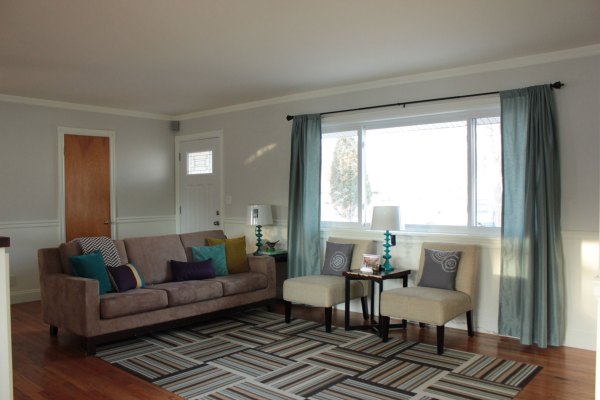
Paint: Silver Drop by Behr and Behr’s Vermont Cream color matched in Wal-Mart’s Colorplace brand    Rug: Flor  Sofa: HOM Furniture    Chairs: Dolce Lounge Chair from Target    End Tables: Dror by Target    Lamps:  Target    Curtains:  Target    Throw Blanket:  TJ Maxx    Pillow CoversHand Sewn Fabric from Joann    Bird Candleholder:  Target    Picture Frames:  Wal-Mart, Target, Michael’s, all spray painted white    Artwork:  Custom made by me    Front Door:  Home Depot    Floors:  Original Red Oak Hardwood

Living Room Other Side:

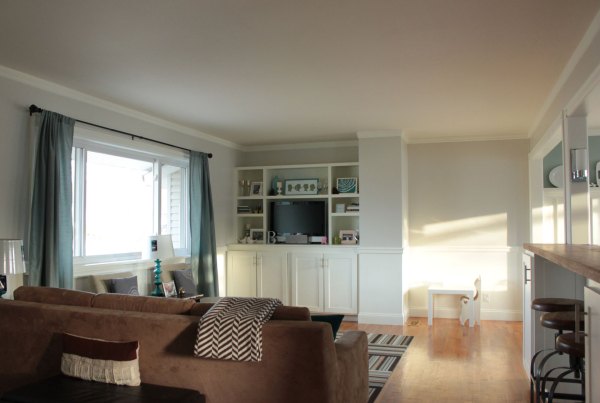
 Small table:  Ikea

Stools:  World Market     Cabinets:  Built by Ben

Entertainment Center:

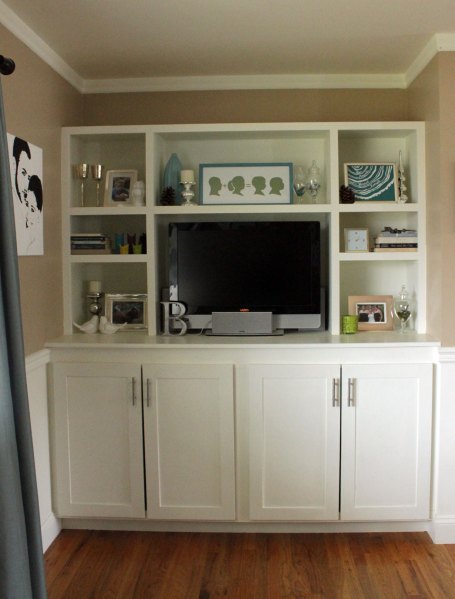
Entertainment Center:  Custom Built by Ben    Door Hardware:  Home Depot Modern Bar    TV:  32″ Vizio from Costco    Silver Picture Frames:  TJ Maxx    B Monogram:  Target    Candle Holders:  Target    Clock:  Restoration Hardware on Ebay    Tall Blue Vase:  Crate and Barrel  Candleholders:  Pier 1, Hobby Lobby, Michael’s     Books:  Used, Barnes and Noble    Cut Out and Silhouettes:  Made by me

Kitchen:

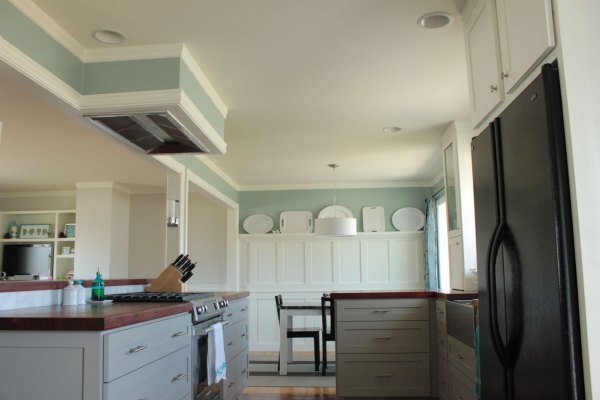
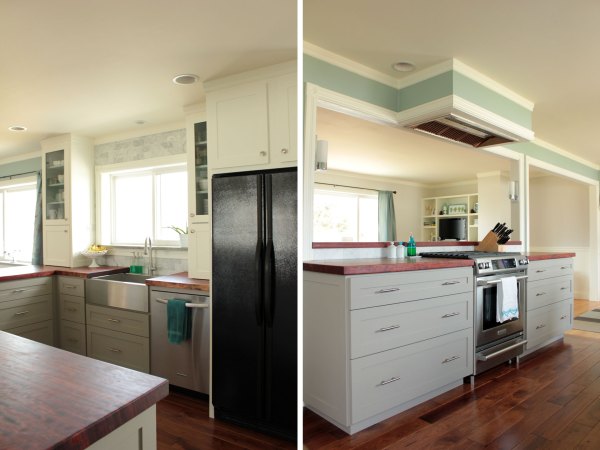
Cabinets:  Built by Ben    Cabinet color:  Lowers: Pewter Tankard by Sherwin Williams, Uppers: Vermont Cream by Behr, Wall color:  Mistinted version of Restoration Hardware’s Silver Sage (The paint is from Wal-Mart) and they used the light base. The formula for one gallon is B-37, E-39.5, and T-37    Counter tops:  Bubinga, an African hardwood    Vent hood:  Proline Range Hoods    Hardware:  Lowe’s

Stove:  KitchenAid    Sink:  Locally custom made    Back splash:  Marble subway tile from Home Depot    Dishwasher:  KitchenAid from Sears

Dining Room:


Paint:  Mistinted version of Restoration Hardware’s Silver Sage (The paint is from Wal-Mart and they used the light base. The formula for one gallon is B-37, E-39.5, and T-37.  This is the color used in our basement, too. It can look more green in some light) and Behr’s Vermont Cream-both color matched at Wal-Mart    Dining Table:  DIY Table    Chairs:  World Market    Rug:  Flor    Curtains:  Hand Sewn from Fabric From Hancock Fabrics    Plates:  Linens N Things and Target    Bird Candleholder:  TJ Maxx   Light Fixture:  CB2   Curtain Rod:  Wal-Mart    Floors:  Original Red Oak Hardwood

Guest Bedroom:

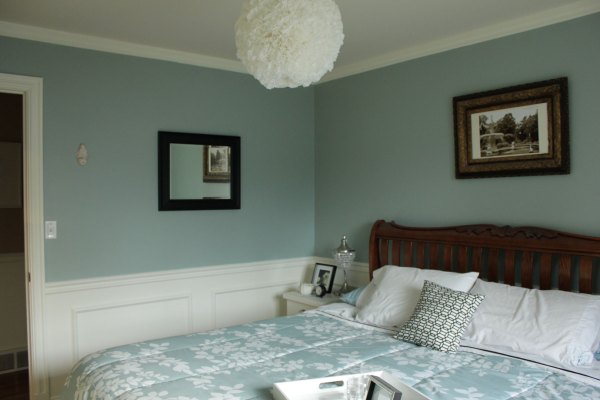
Paint:  Restoration Hardware’s Sea Green, color matched to Behr and Behr’s Vermont Cream    Headboard:  Free from an apartment tenant    Floral Bedding:  Ross    Sheets:  Linens N Things    Blue King Pillows:  TJ Maxx    Pillow:  Hand Sewn from Fabric from Joann    Picture Frame:  From my Great Grandma    Photo:  Forsyth Park Fountain taken on our Honeymoon in Savannah, GA    White Nightstand:  Built by Ben    Lamp:  Target    Clock:  World Market    Candle Sconces:  Bed, Bath and Beyond    Curtains:  Wal-Mart    Curtain Rod:  Target    Apothecary Jar of Shells:  Michael’s     Pendant:  DIY with coffee filters

Guest Bedroom Other Side:

Mirror:  Found in the Trash-from Target    Bedside Carafe:  Two Glasses from World Market    Shell:  Target    Artwork in the Hall:  Family Tree made by Me

Main Bathroom:

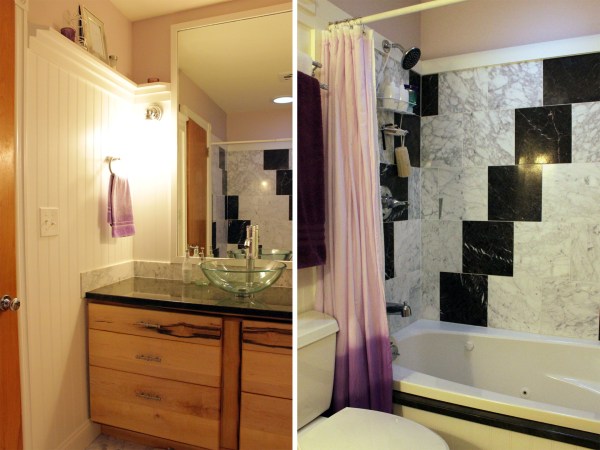
Paint:  Behr’s Vermont Cream and Restoration Hardware’s Lilac    Vanity:  Built by Ben out of Maple    Drawer Pulls:  Home Depot    Countertop:  Giallo San Francsico Granite Remnant    Vessel Sink and Faucet:  E bay    Mirror:  Reused from Remodel    Light Fixtures:  Home Depot    Picture, Frame and Mat:   Michael’s    Glass Jar:  HomeGoods    Soap Pump:  Target    Lotion:  Bath and Body Works    Candles and Jars:  Target  Purple Towels:  Target    White Towels:  Linens N Things    Leaves Painting:  Painted by me

Main Bathroom Shower:

White and Grey Marble Tile (also on floors):  Home Depot    Faucet:  Delta at Home Depot    Shower Curtain:  Bed sheet ombre dyed by me    Towel Bar and Toilet Paper Holder:  Home Depot

Master Bedroom:

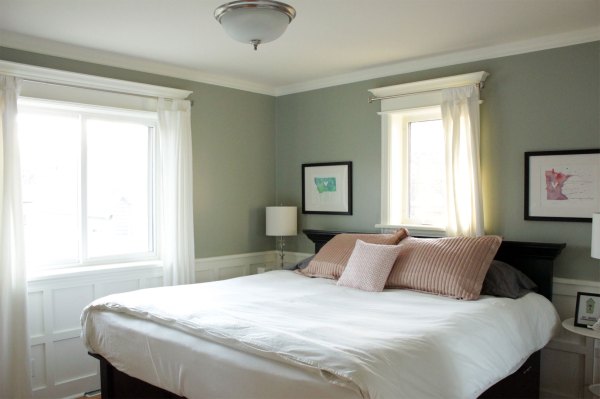
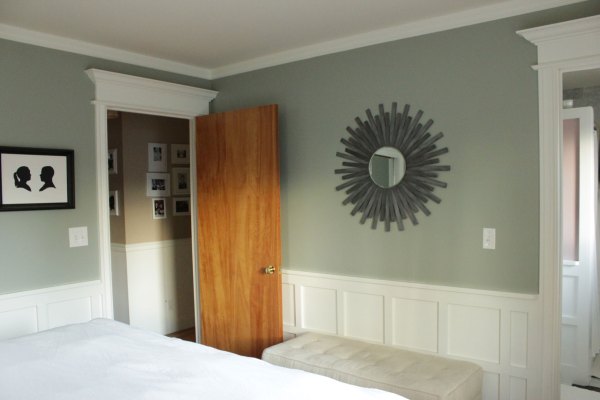
Paint:  Restoration Hardware’s Bay Laurel and Behr’s Vermont Cream   Bed:  Custom Built by Ben    Duvet:  Target    Pillow Cases:  Fieldcrest for Target    Throw Pillow:  Sewn using fabric from Joann    Nightstands:  IKEA    Lamps:  Home Depot     State Paintings:  Etsy seller Poppy and Pinecone    Picture Frames:  Target    Small Print: Etsy seller Ello There   Curtains:  Wal-Mart    Curtain Rods:  Wal-Mart

Master Bedroom Other Side:

Mirror:  DIY using paint sticks    Upholstered Bench:  HOM Furniture     Silhouette art:  Made by me

Master Bathroom:

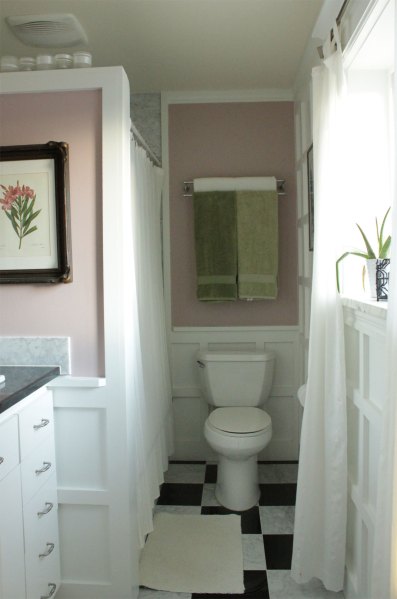
Paint:  Behr’s Vermont Cream and Benjamin Moore’s Sonoma Clay    Curtains:  Wal-Mart    Floors:  Absolute Black Granite and White Marble from Home Depot    Toilet:  Kohler Highline from Home Depot    Vanity:  Built by Ben    Countertop:  Galaxy Black Remnant Ben Finished    Shower Curtain:  Target   Towels:  Target    Towel Bar and Toilet Paper Holder:  Home Depot     Print:  Pierre J. Redoute from Ebay

Boy’s Bedroom:

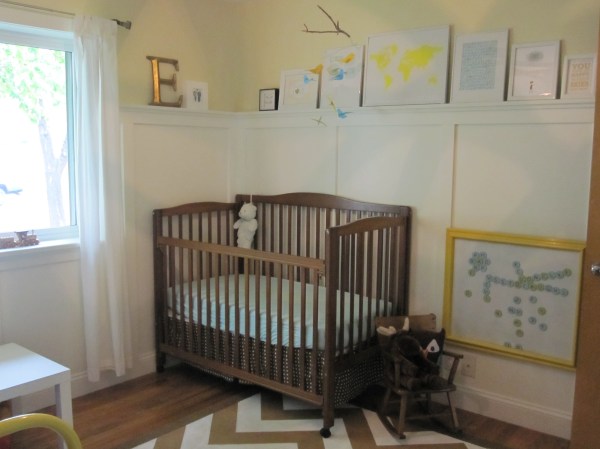
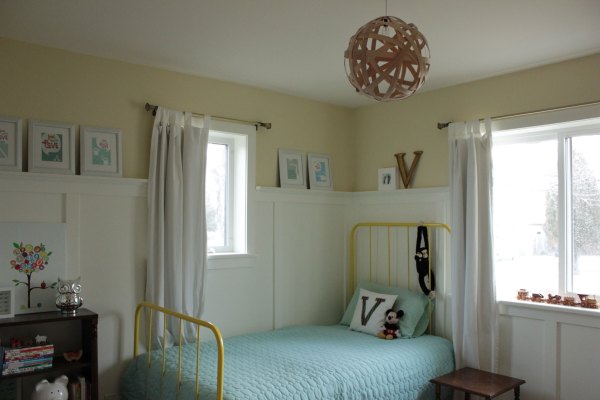
Paint:  Ralph Lauren’s Riesling color matched in Behr paint.  (Gallon formula is AX 11, C 15, and L 10) and Behr’s Vermont Cream    Crib:  Garage Sale    Side Table:  Ikea    Curtains:  Wal-Mart    Curtain Rods:  Home Depot    Sheets:  Target    Crib Skirt:  Target    Rocking Chair:  Family chair    Mobile:  Made by Me    Owl Pillow:  Made by Me    Yellow Map:  Tweet Heart Wall Art    ABC Art Print:  Made By Girl    E and V:  Hobby Lobby    Pillows:  Made by Me

Bed:  Hand Me Down Bed Spray Painted Yellow    Bedding:  Target    Stuffed Animals:  Kohl’s     Pillows:  Hand sewn by me      Footprint Art:  Inked Feet of my Boys    Artwork:  Skinny Cow Ads   Side Table:  Hand me down  Chevron Rug:  Hand painted jute rug   Light Fixture:  DIY’d using iron on wood veneer     Bookshelf:  From my parents     Owl Bank:  Target

Office:

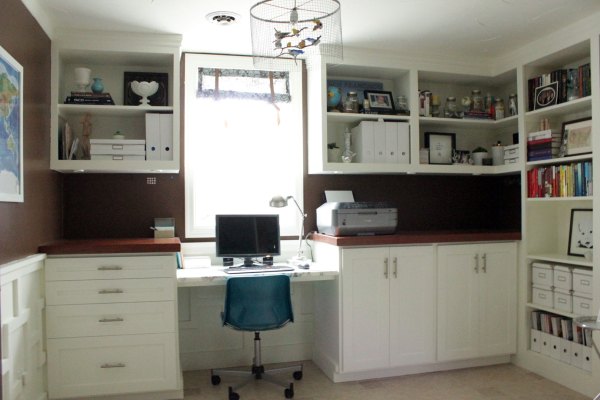
Paint:  Benjamin Moore’s Raisin and Behr’s Vermont Cream    Cabinets and Shelving:  Custom Built by Ben    Countertops:  Brazilian Cherry and Carrera Marble    Desk Chair:  IKEA   Desk Lamp:  Target    Storage Boxes and Magazine Files:  IKEA    Curtains:  Hand Sewn from Fabric from Hancock Fabrics    White Marble Vases:  Restoration Hardware    Small Blue Vase:  Target    Little Bird:  Felt Pincushion from Etsy    Picture Frames on Shelves:  Target    Map Frame:  Michael’s    Map:  Art.com    Light Fixture:  DIY by me   Magnetic Tins:  IKEA

Office Bookshelves: 


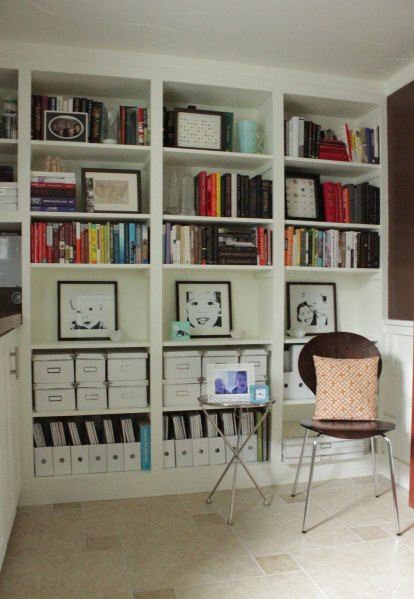
Chair:  Target    Accent Table:  Target    Picture Frame on Table:  Target   Silver Tealight:  Michael’s  Blue Clock:  Hobby Lobby    Storage Boxes:  IKEA    Brown Frames:  Hobby Lobby   Art in Brown Frames:  My modern portraits   Drawing Figure:  IKEA    Rose Candle Holders:  Michael’s, Big Lots and Ross   Pet Portrait:  Custom Painted by Kim at Yellow Brick Home    Wire Buildings:  Target    Hourglass:  TJ Maxx    Butterfly Artwork:  Custom Made by Me    Globes:  Garage Sales and Target    Vacation Jars:  Hobby Lobby filled with vacation items    Books:  Barnes and Noble, Thrift Stores and Garage Sales    Pillow:  Sewn by me

Theater Room: 

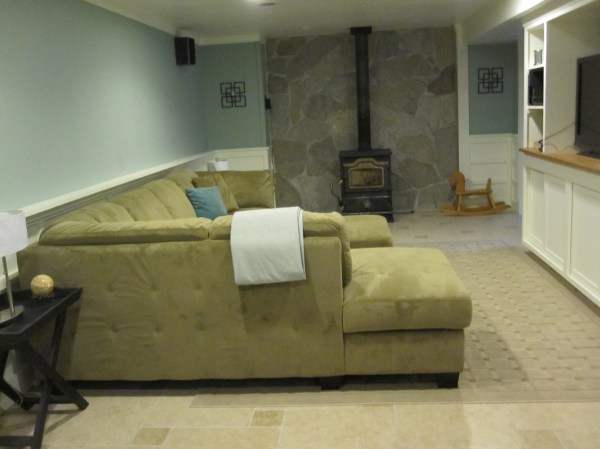
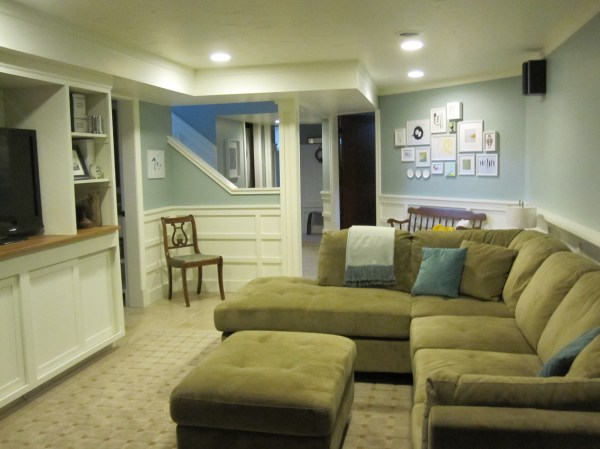
Paint:  Mistinted version of Restoration Hardware’s Silver Sage and Behr’s Vermont Cream (The paint is from Wal-Mart and they used the light base. The formula for one gallon is B-37, E-39.5, and T-37.  We also used this color in our dining room)    Sectional:  Costco    Side Table:  Hand me down    Lamps:  Home Depot    Rug:  Hand me down, originally from JC Penney    Candle Sconces:  Bed, Bath and Beyond    Blanket:  TJ Maxx

Chair:  Free on the side of the road    Bench:  Used Furniture Store    Art:  Etsy

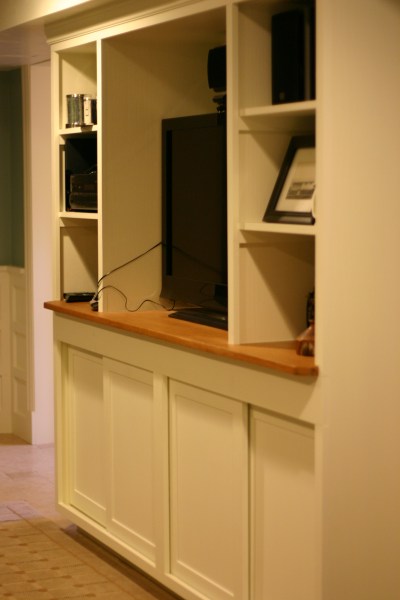
Entertainment Center:  Custom built by Ben    TV:  42 inch Insignia from Best Buy    Sound System:  Onkyo

Basement Bathroom:

Paint:  Sycamore Green by Restoration Hardware and Behr’s Vermont Cream    Mirror:  Free from Ben’s boss    Sconces:  Home Depot    Sink and Faucet:  Home Depot    Lacquer Soap Pump, Dish, Tray, Box and Cup:  Jonathan Adler    Deer Hook:  World Market    Granite:  Verde Maritoka, remnant    Vanity:  Built by Ben    Drawer Pulls:  Home Depot    Art Print:  Etsy seller The Living Room Floor    Frame:  Target    Toilet:  Kohler    Tile:  Costco and Home Depot    Towels:  Target, Linens N  Things, and Wal-Mart

Small Basement Bedroom:

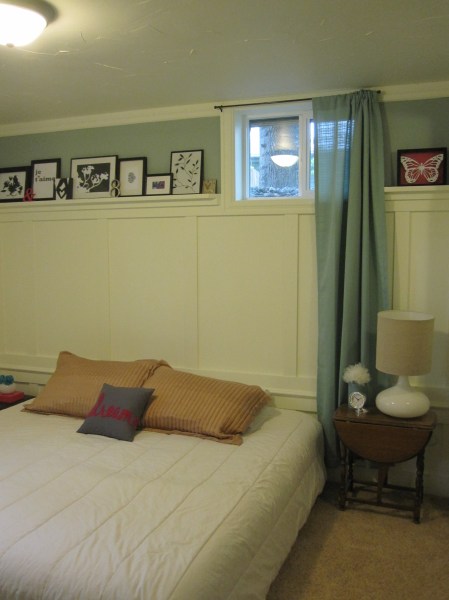
Paint:  Mistinted version of Restoration Hardware’s Silver Sage and Behr’s Vermont Cream (The paint is from Wal-Mart and they used the light base. The formula for one gallon is B-37, E-39.5, and T-37.  We also used this color in our dining and theater rooms)    Art:  Made by me and Etsy    Frames:  Target, Wal-Mart, and thrift stores    Lamp:  Thrift Store with a recovered shade    Side Table:  Hand me down    Pink Shams:  Marshall Field’s (before it became Macy’s)  Curtains:  Target    Clock:  Ikea

Large Basement Bedroom:

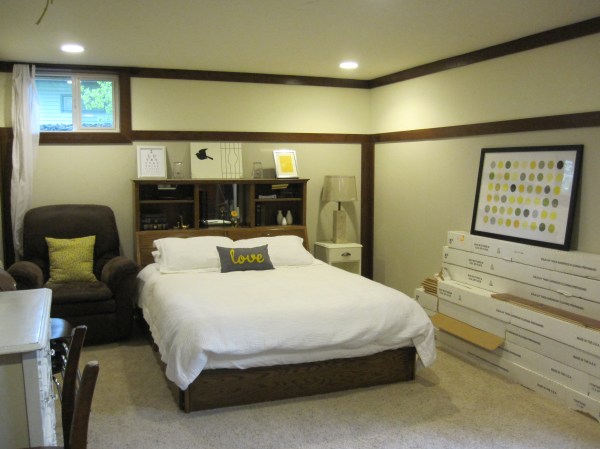
Paint:  I have no idea    Bed:  Hand me down from Ben’s boss    Bedding:  Fieldcrest from Target    Chair: Lay-Z-Boy    Lamp:  From Amanda’s old work    Pillows:  Sewn by me    Circle Artwork:  Made from paint chips    Bird Painting:  Done by Amanda    White Vases:  Target, Ikea, Michael’s

Laundry Room:

Washer and Dryer:  LG from Home Depot    Cabinets:  Built by Ben    Rug:  Target    More to come!

Didn’t see what you were looking for?  Just ask us!

It Happened One Night

No, I’m not talking about the Clark Gable movie.  I’m talking about something that happened last night.  Nothing perverted, but something dirty.  First, let’s see if you can figure it out.  What’s wrong with this picture?

Nope, not the balloon under the chair.  Or the strange coloring from the morning sun.  Let me rephrase the question.  What’s missing from that picture?  Maybe this month old photo will help you.

Have you figured it out yet?  If you haven’t, your time is up.  I’m telling you.  Look at the table by the couch.  See a lamp there?  Yeah, me neither.  Turns out one cute little boy + an inflatable ball (that should have been outside) + ceramic lamp = shattered pieces.  Right after that I thought of Bobby Brady and the infamous broken vase.  “Mom always said, don’t play ball in the house.”

This isn’t the first time one of those lamps has broken.

Unfortunately, this was the good lamp, and it didn’t fare as well as it’s counterpart.  Because I was mad/cooking dinner, I didn’t take a picture of the pieces scattered over our floor.  Ben cleaned up the mess, but before he did, he asked, “Do you want to save the pieces to put it back together?”  I thought he was joking, he was serious.  Apparently I’m crazy enough prone to gluing things back together.  Before he threw the pieces in the trash, he took the shade and finial off.  He knows me so well.

With two broken lamps, I’ll be lamp hunting later today.  Fingers crossed Ross, TJ Maxx, or a thrift store has something good.  If you’re wondering, I have plans to put the less broken lamp in the basement bedroom.  I like the shape too much to part with it just yet.  Plus, it’s nearly identical to this $129 beauty.

What are your favorite lamps?  Have your kids broken something recently?  Tried gluing it back together?

P.S.  I still haven’t fixed the first broken lamp.  I just cheated the back to the wall and no one knows, except you now.