Sew it Begins…

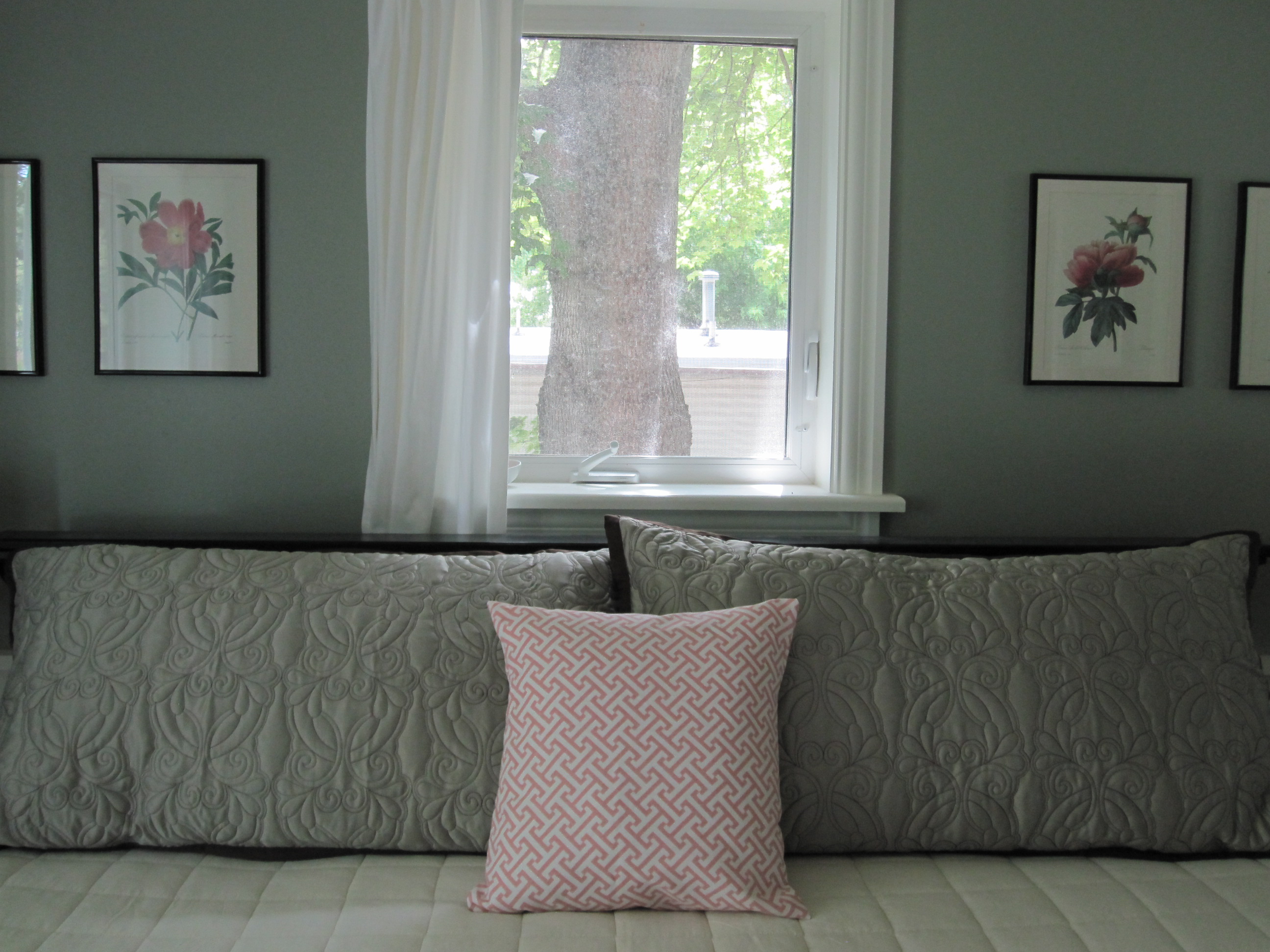
I love patterns and pops of color to freshen up a room.  One easy way to add pattern, color or both is with fabrics.  Pillow covers are an easy, simple and affordable solution.  First,  find a  fabric you like.  I chose this pink geometric pattern for $7.00 per yard from Joann Fabric.  Determine the size of the pillow insert you’ll use; you can also buy inserts from Joann.  I bought a 16 inch square pillow form. 

To make your pillow cover, cut a piece of fabric 1 inch wider than your insert size and 6 to 8 inches longer than double the pillow size.  To make a 16 inch pillow cover, I cut my fabric 17 inches wide by 42 inches long.  
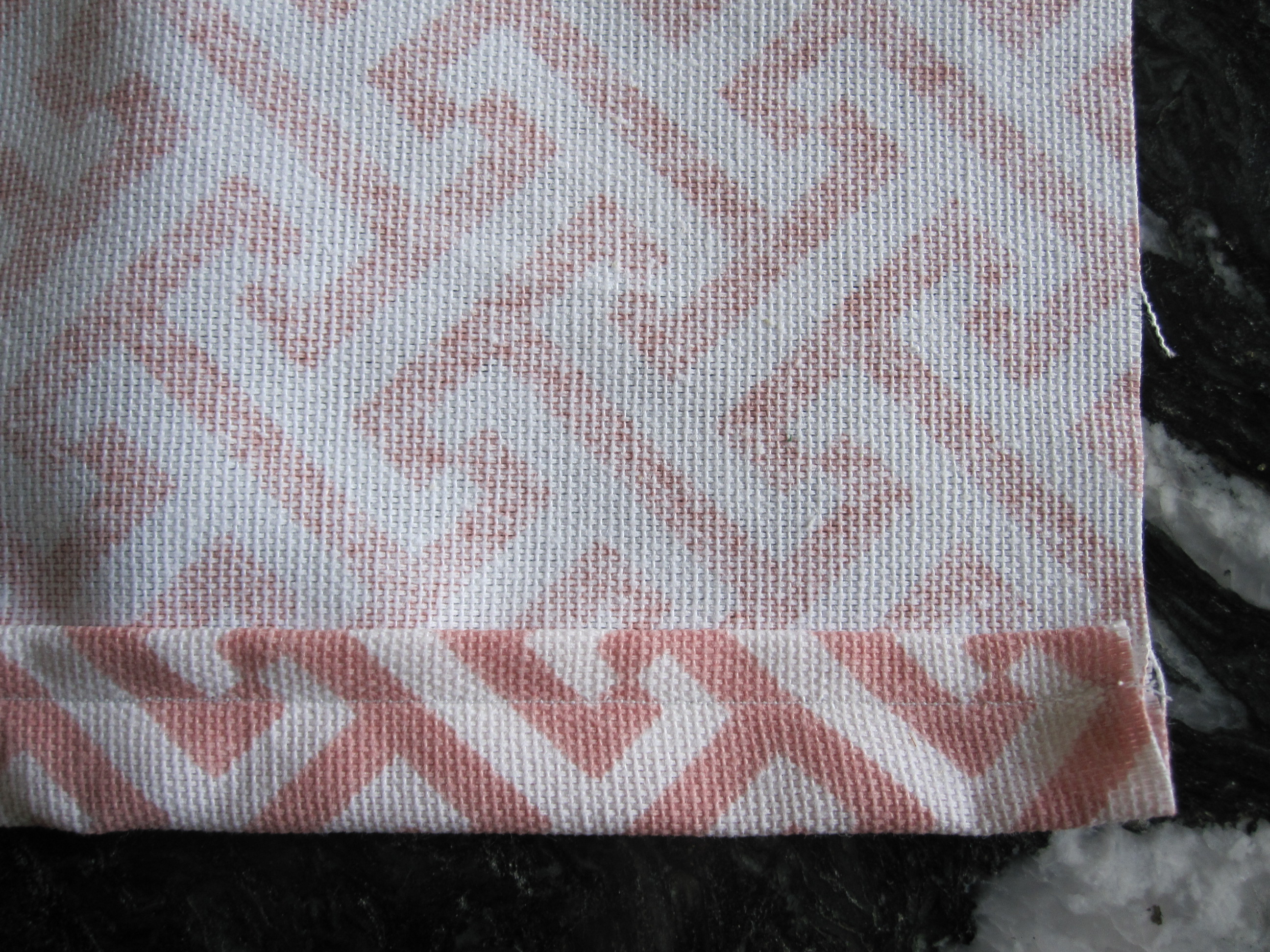
Starting with your fabric face down, fold your short ends over about 1/2 inch and pin to secure.  Then, fold over again, pinning in place.  Sew a straight line across.  Do this to both ends.  Flip your fabric over, right side up. 

Fold one end near the center of the piece. 

Fold the other end over, overlapping the other end about 4 inches.  Measure the distance to make a 16 inch square.  Pin the sides together and sew.
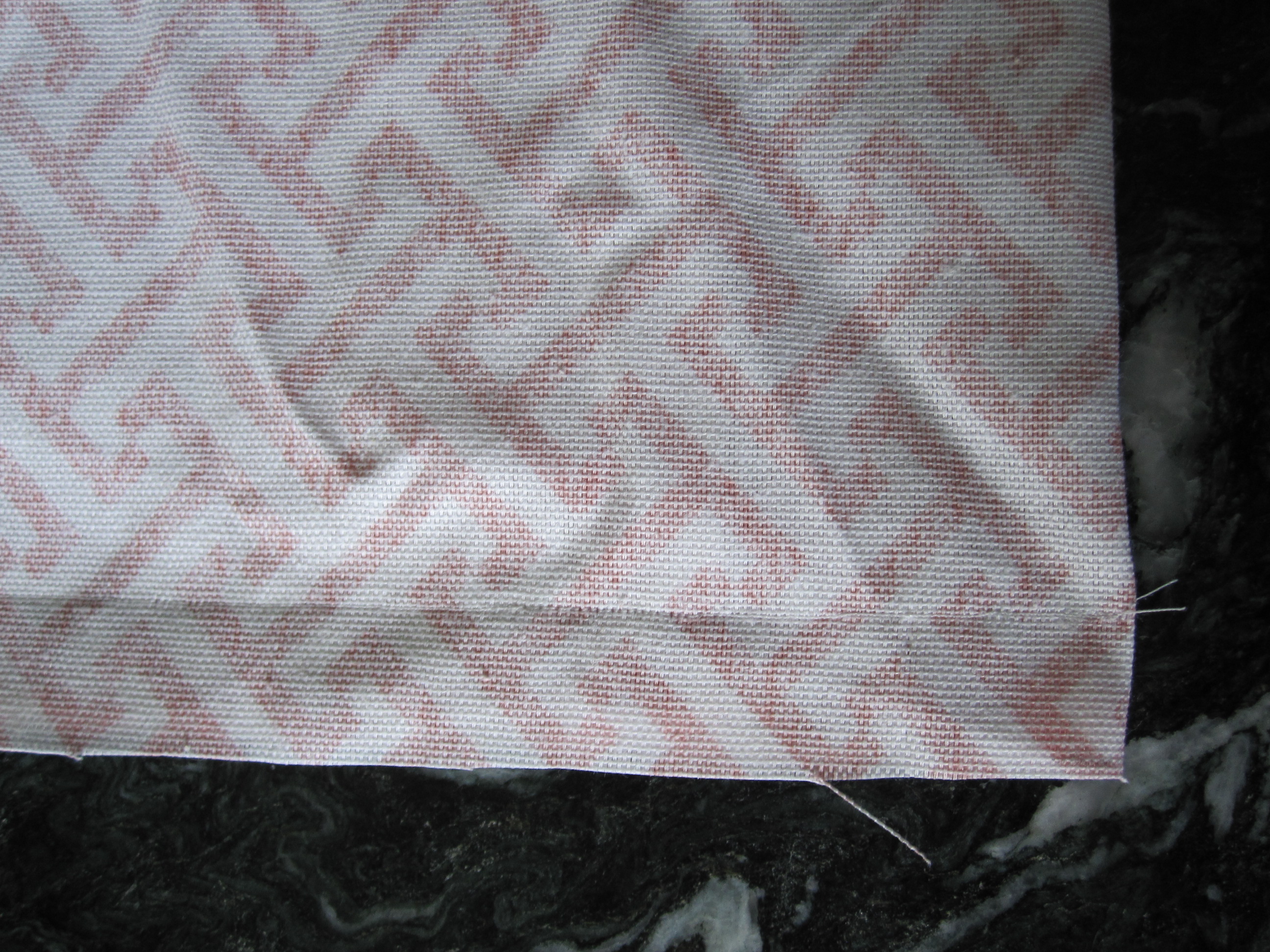
Cut your corners, being careful not to cut your sewn edge, to remove the excess fabric to make sharp corners. 

Turn right side out and you’ve just completed an envelope closure pillow cover.
Trim: Main Bathroom

Before we remodeled our main bathroom, it had pink on nearly every surface.  Even the walls were covered in a metallic pink floral wallpaper.

Before the wallpaper removal began, we planned to have 18 inches of white trim at the top of the walls, a shelf below and lilac paint covering most of the walls.  We thought the paper would be easy to remove becuase it was peeling.  With our trim plan in mind, we began tearing down the wall paper.

It turned out to be far more difficult than we initially thought.  After hours of scraping, peeling and subsequently damaging the sheet rock, we had removed about 18 inches from the ceiling down.  And that was on one wall!  Time for plan B; we opted to install sheets of beadboard to cover up the remaining wallpaper.  A few more hours of scraping and we had the top 18 inches of wallpaper removed from the entire bathroom.

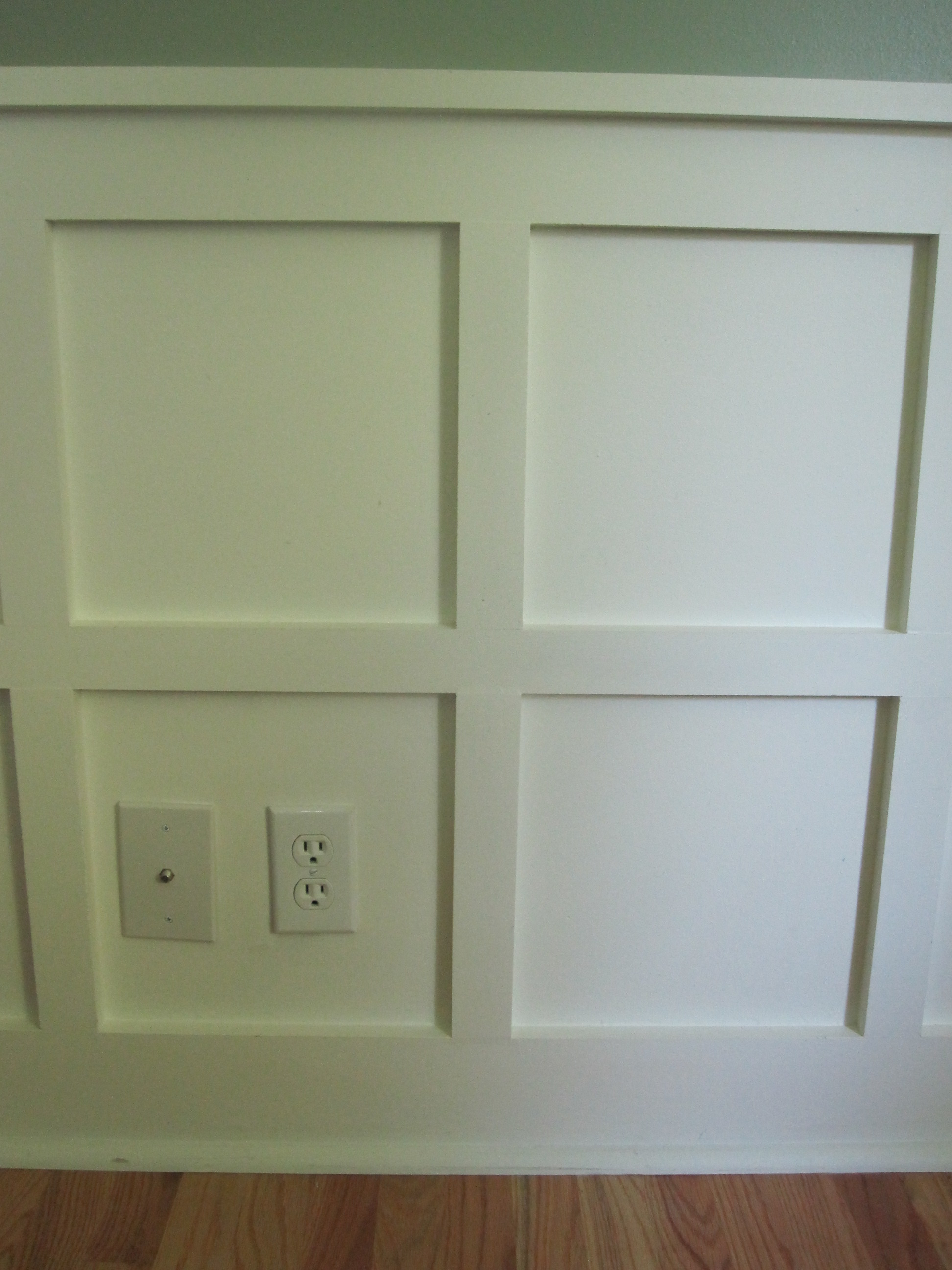
Once we had the paper removed from the areas we knew would be visible, we cut our sheets of bead board from 4 foot by 8 foot down to 76 inches, leaving them four feet wide.  Ben used an air nailer to secure the sheets to the wall, going in to the studs.  Then, we covered the bottom of the bead board with baseboard, hiding the unevenly cut ends and gap between the panel and floor.

To build the shelf to display and store items, Ben cut a sheet of 3/4 inch thick MDF into 3.5 inch,  3 inch, and 1.25 inch wide pieces.  Then, Ben nailed the 3.5 inch cut piece to the wall 77 inches from the floor, checking to keep it level.  He added shims in areas because this piece was partially covering up the bead board panels.

Once the trim was secured, the 1.25 inch pieces were added to provide additional support for the shelf.  Keep the tops of the trim flush with one another.  Cut the trim pieces at a 45 degree angle when approaching doors or other vertical trim.  Finally, the 3 inch shelf was installed on top of the trim pieces.

Then, of course, fill, sand, prime and paint.  This can be modified to any height.  If a shelf is added, be sure the height works for the use of the space.  You don’t want to bump into it.

Gimme a Giveaway: Leaves Silhouette

*This giveaway is no longer accepting entries, Thank You!*

Not long ago, I did a post about a custom art piece I created.  Well, it got a lot of good feedback.

So, I wanted to share the love with one lucky reader.  Want a chance to win?  Here’s how it works:

Prize:  One 11 inch by 14 inch hand painted (by me!) leaf silhouette on 1/2 inch thick MDF.  The background is white with greige leaves.

To Enter:  Subscribe to follow Our Humble A{Bowe}d, if you’re not already.  To subscribe, click the “Sign Me Up!” button under “Be the first to know.”

Bonus:  Comment on this post with the words “LEAF ME ALONE” and tell us what you do or where you go to get away, even if it’s for ten minutes…

Contest Closes:  Thursday, August 27, 2010 at 9:00 pm, central time.

Number of Winners:  One!

Ships:  Anywhere in the 48 connected States

Other Info:  Only one entry per e-mail address.  The winner will be selected using random.org and announced on Friday, August 28th.  Good luck!!

Need some personalized art prints?  Check out our Etsy shop, Our Humble A{Bowe}d.  If you’re interested in invitations or stationery, visit our sister shop, Customized Stationary.  Check us out on Facebook to stay up to date on sales, too!

Trim Terms

We have a lot of trim in our house, so I thought I’d share the technical names of some trim features.  We’ll work from the bottom to the top.

We have baseboard and shoe moulding.  baseboard are the lowest piece of trim, covering the joint between the wall and floor.  Shoe moulding is similar to quarter round moulding, but is higher than it is wide.  Shoe moulding is installed where the baseboard meets a finished floor.

Plinth blocks are a middle ground for door casement and base board to meet.

Chair rail is a horizontal piece of trim that is usually installed 36 inches from the floor to protect the wall from the being damaged by chair backs.

Now, we come to the humble window sill.  I’m sure most, if not all, of my dear readers know what a window sill is.  For those that don’t, the sill is the lower horizontal part of the window opening.  I like for ours to extend 1 inch past our casement.

Casement trim is placed around doors and windows to cover gaps and imperfections. Rosette blocks are a decorative alternative to mitered casement corners.

Terrific Terrarium

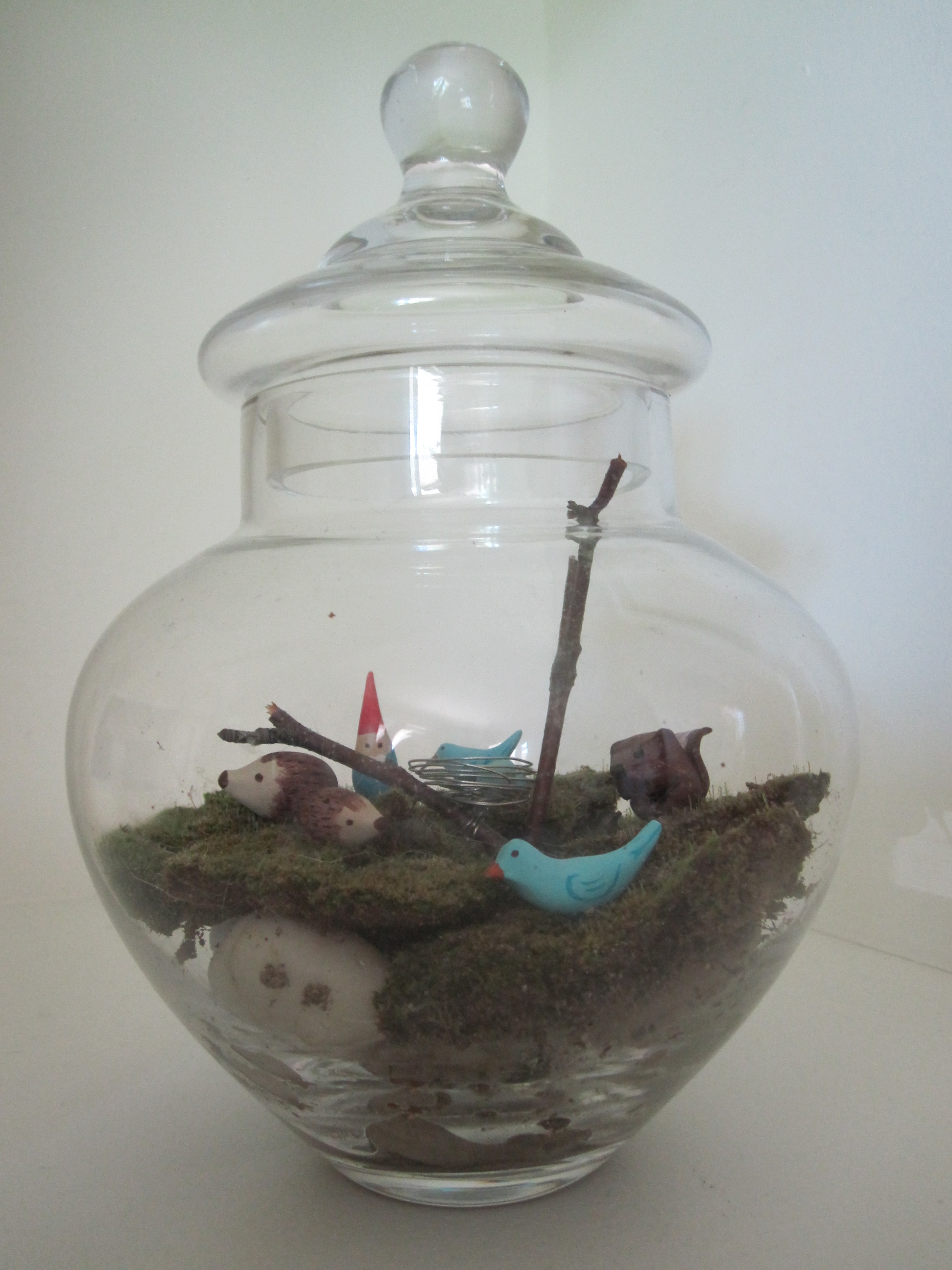
To make a simple terrarium, find or buy pretty rocks, moss and a pretty, lidded jar.  Place the rocks (I bought mine from Michael’s) at the bottom.  Then add moss (we had some growing on our patio) on top, making it somewhat level.  Simple as that.  If you want to add some animal friends, continue reading.

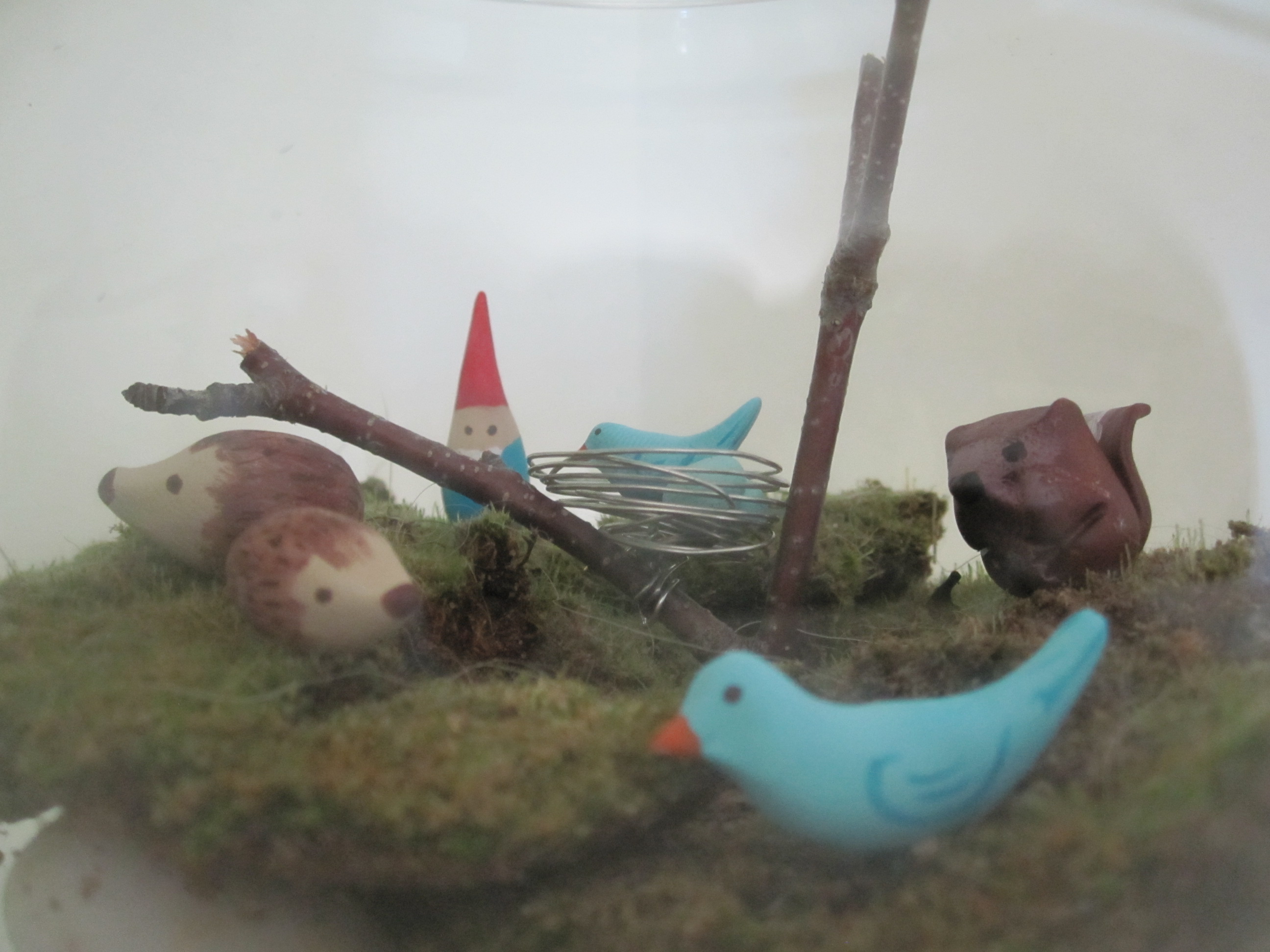
I started out with little birds, inspired by these.  I used polymer clay to make the little guys.  I softened the clay before free forming my animals.  I decided to make birds, eggs, hedgehogs, and a gnome.

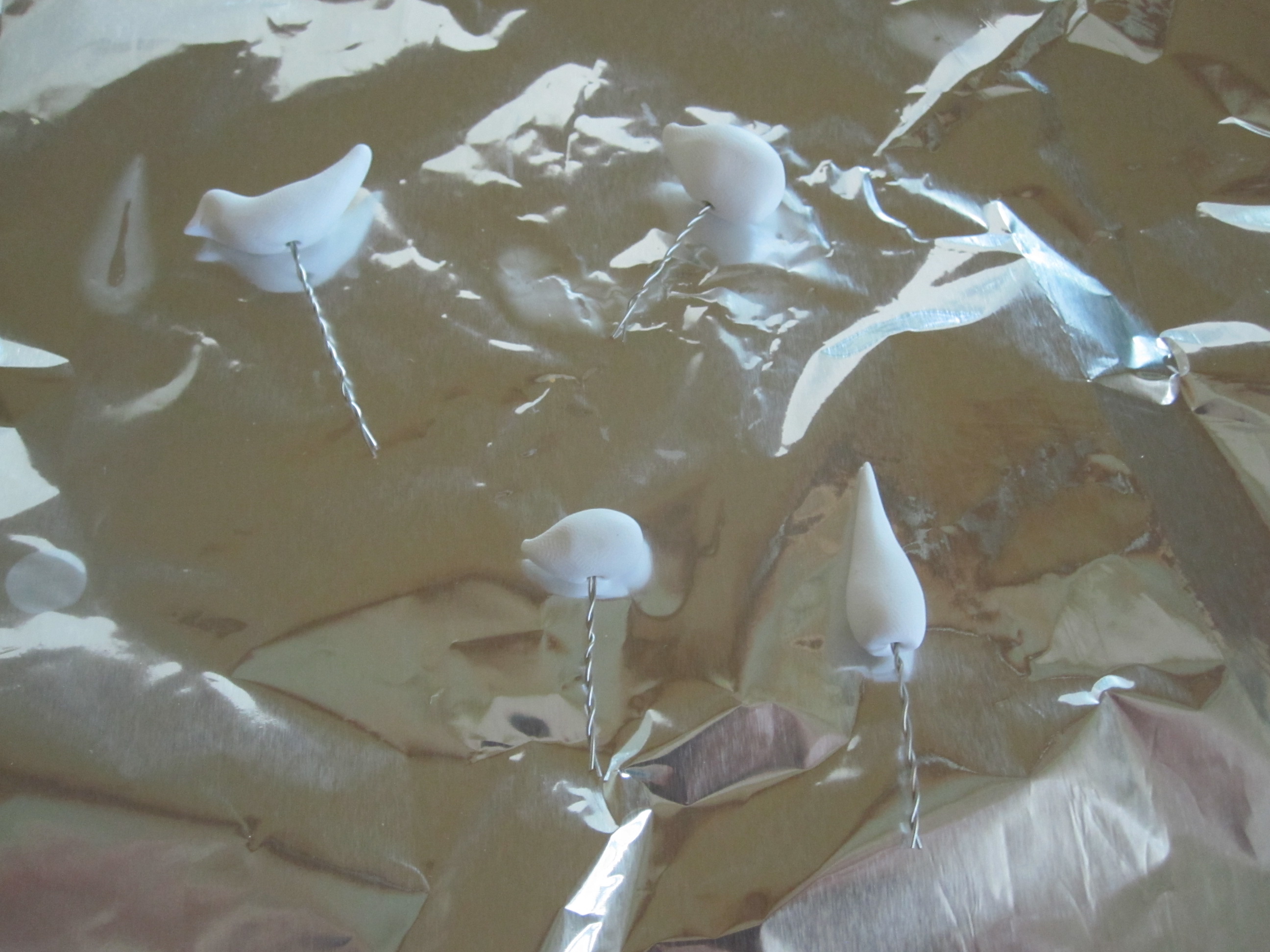
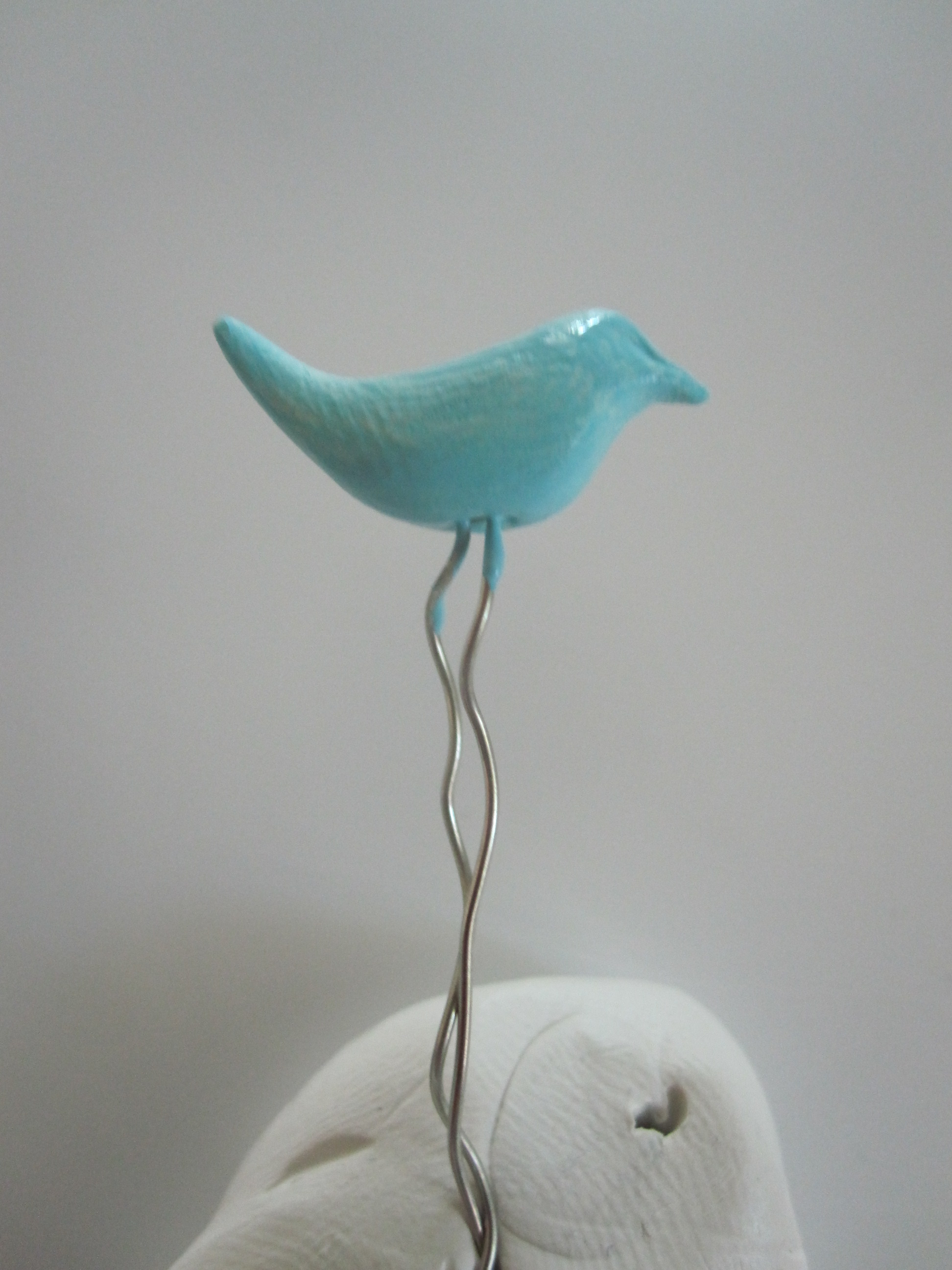
Then, I cut 2 inches of wire, folded it in half and twisted the ends together.  Insert the wire into our clay critter, but do not go completely through.

Follow the baking instructions on the package.  Let your dudes cool.  Now you’re ready to start painting.  I used acrylic paints from Michael’s and gave the guys a few base coats of color.  Add as much or as little detail as you’d like and let them dry.

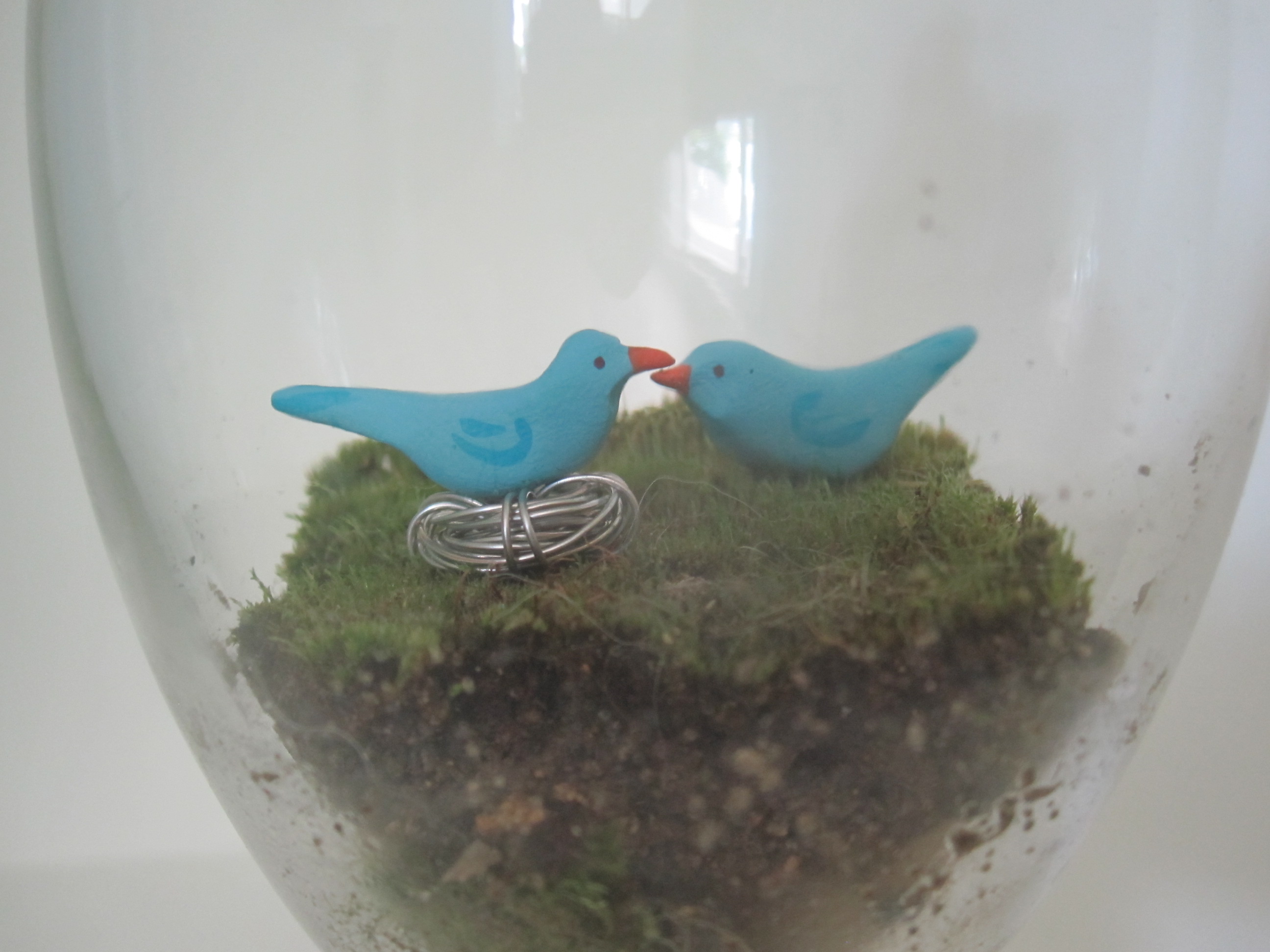
Here are some of my birds.  I added eyes, wings and dipped their beaks in orange to add more color.

I thought I finished with my terrarium, but wanted to add some height.

So, I made a wire nest by coiling wire around.  Then, I needed a tree – do you see the “If you give a mouse a cookie” tendency I have?  To make a tree, I took a dead branch from our tree and snipped it to fit.  To attach the nest to the tree, uncoil the bird base.  Insert the bird wires through the nest and twist around the branch.  Push the tree firmly into the moss.  Add the rest of your critters and admire.

I love the colors and interest the animals add.  Aren’t they cute?

And, it’s cute from above!

I know it’s kitschy, but I think it’s charming and cute.  AND, it should be one plant I can’t kill!  Bonus!  So, what house plants do you like?  Any black thumb people out there?  I’d love to know what plants you’ve had luck keeping alive.