Door Number 1

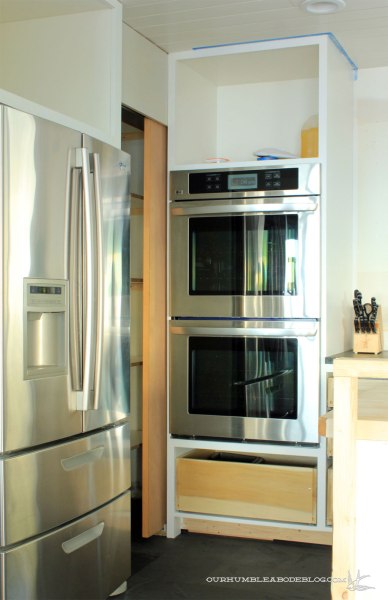
In addition to getting the bar installed this weekend, we finished up the pantry.  Here it is, right after install.

Unfinished-Pantry-Door-Closed

I went back and forth on colors for the door.  Initially, I wanted white to blend in with the surrounding cabinetry.

Pantry-Door-White-Option

But the wood tone looked pretty.  So maybe giving it a darker stain, to pick up on the walnut we’ll add to the island?

Pantry-Door-Stained-Option

Then again, the same gray I used on the rest of the interior doors could look great.

Pantry-Door-Gray-Option

A reader suggested chalkboard paint.

Pantry-Door-Chalk-Option

Great in theory, but I’m almost certain it’d be a dusty mess that would drive me insane.  I’m not far off right now, don’t need to add to it.  It even crossed my mind to use something crazy like a grass green.

Pantry-Door-Green-Option

To work with the green curtain panels in the adjacent living and dining rooms, of course.

Green-Curtains-in-Front-Rooms

While we had the door off to paint, Ben added oak strips to the shelf fronts.  Oak for added strength.  Something’s happening to me; I liked the oak.  I decided to clear coat it, not paint.

Pantry-Shelves-with-Oak-Fronts

Not surprisingly, after weighing the options, I went with the most boring option and my gut.  White paint, to simplify the corner.  In our plans, the pantry door was always white because it isn’t supposed to be a focal point.

Painted-Pantry-Door

To further match the white cabinetry, I used a drawer pull as the handle, just with slightly longer bolts.

Painted-Pantry-Door-Handle

Pantry-with-Painted-Door-Open

Even with the handle sticking out, there’s still a few inches of clearance between it and the oven doors.  Nothing to interfere with opening and closing the oven or pantry doors.

Painted-Pantry-Open-Door-Handle

Much simpler and it’ll match the rest of the cabinetry on this side.  You know, once we’ve built and attached doors and drawer fronts.

Painted-Pantry-Door-Closed The only upper cabinet is up, too.

Upper-Cabinet-with-Lighting

Complete with under cabinet LED pucks to give ample task light.

Don’t Go Chasing Waterfalls

Last time you saw the island, it had only a countertop and a stud wall to house electrical and support the bar top.

Kitchen-Faces-Painted-and-Soap-Stone-Toward-Sink

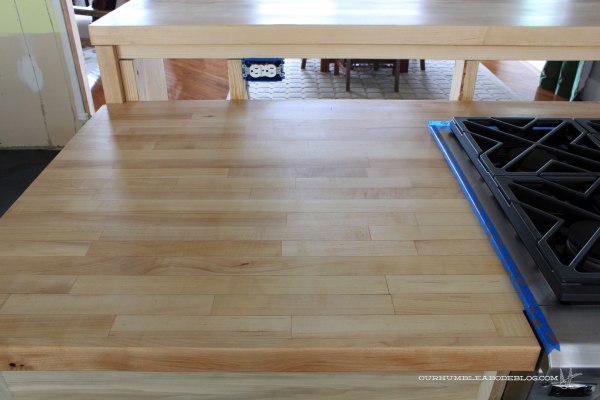
At roughly 9 1/2 feet long, we couldn’t get a natural stone long enough.  To avoid having a third and completely different counter, we chose 2 inch thick hard rock maple.  Same as the butcher block, but we chose wider planks for a more custom look.

Bar-Top-from-Side-Toward-Ovens

Before assembly could start, Ben first had to square up the edges by running them through the table saw.  For a super smooth finish, a few passes through the planer before joining the boards together.  Letting the glue set for several days, then sanding the boards.

Bar-Top-from-Dining-Room

Most maple doesn’t have crazy grain.  We found one piece that has really interesting details.  Luckily, the two top boards blend together almost seamlessly.  Do you spy the joint in the photos below?

Bar-Top-Wood-Grain

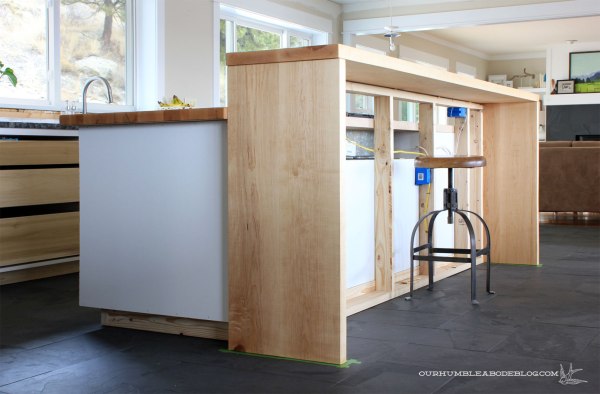
Obviously, we chose a waterfall edge.  To adequately support the overhang, we needed something at the ends.  Weighing our options, we tossed out the idea of corbels, a post, or brackets.  Extending the maple down, creating legs, felt like the best fit.

Attaching the sides was pretty painless.  A few screws through the end studs is all it took.

Bar-Top-Side-Screws-Through-Stud-Wall

Bar-Top-Installed

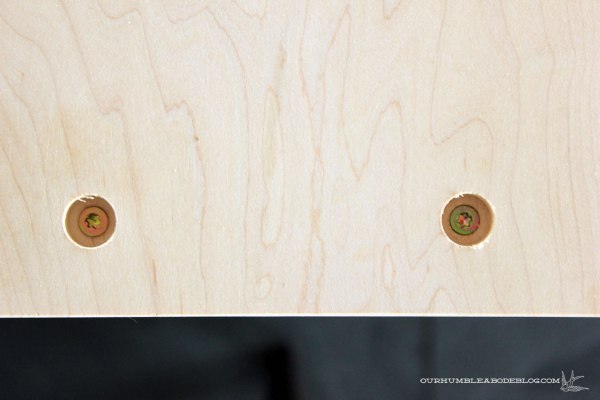
The top is also screwed to the wall top, but to keep the ends rigid, Ben recessed four screws.

Bar-Top-Exposed-Screws

Four walnut plugs fill those holes, giving a little accent.

Bar-Top-Walnut-Screw-Cover-Plugs-with-Detail

Once we wrap the island in American Walnut, the two woods will tie together.  Drawer fronts seem like such a novel idea right now.

Bar-Top-and-Island-from-Breakfast-Nook

Island-and-Bar-Top-Drawer-Side

The sides and back will also get the royal walnut treatment.

Bar-Top-Side-from-Office

Now I’m on a quest to find the perfect finish for everything.

Island-and-Bar-Top

I’ve got five or more products I’m sampling, testing the color, durability, and retouching abilities.

Pantry Party

Before remodeling the kitchen, the cabinet arrangement had a lot of wasted space.

Kitchen-Floor-Plans-Current

Either too specific for a use, like a full bay of vertical dividers.

Divider-Cabinet-in-Kitchen

Or the polar opposite with a big, blank cabinet.
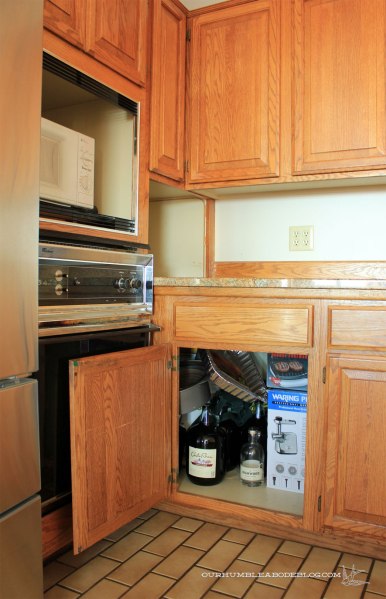
Corner-Cabinet-in-Kitchen

At any rate, we knew lower drawers would help most problems.  But corners are especially awkward and usually wasted.  Knowing we wanted to remove the wall between the kitchen and dining room, we’d need to move the pantry.  Living with every non-perishable item on the opposite side of the cook/prep area got old very quickly.

Kitchen-Floor-Plans-New-Details

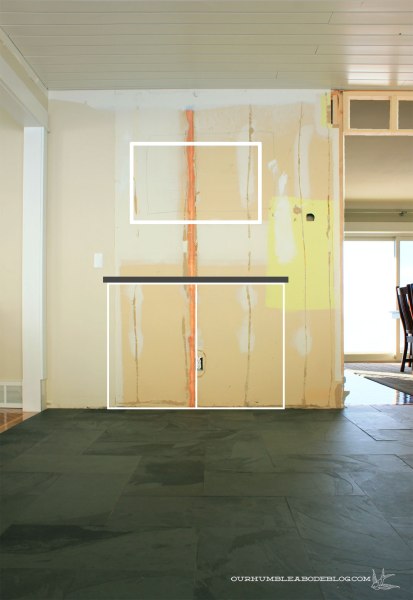
With that in mind, keeping the pantry on the business side of the kitchen was a must.  Hence the corner pantry.  At 52 inches wide by 8 feet tall, we should have plenty of space to store dry goods.  As listed in the original floor plan, we opted for a sliding door to eliminate an awkward door swing.  After talking to several people, we decided not to use a pocket door kit.  If the door comes off the track or needs to be replaced, it’s impossible.  Instead, we went a similar, more user-friendly route with a bypass sliding door kit.
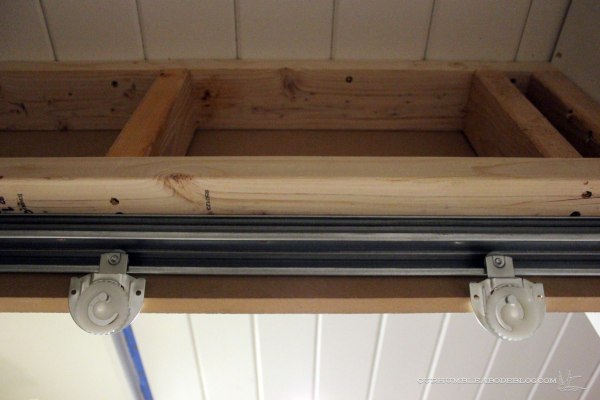
Unfinished-Pantry-Door-System-Inside

Often used in closets, the track has two sides and roller wheels.  Ben built a standard header, secured the track and covered the front with an MDF panel.  Above, as seen from inside, without the door.  Below, from the outside.
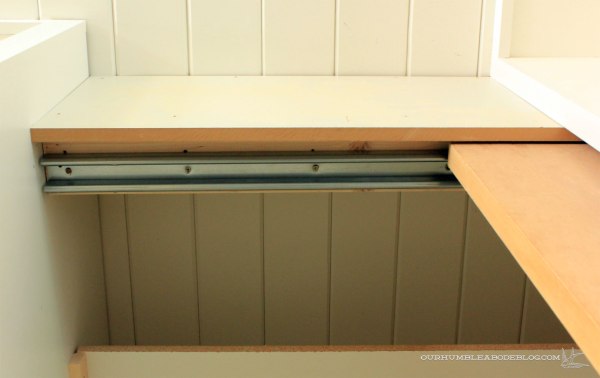
Unfinished-Pantry-Sliding-Door-System

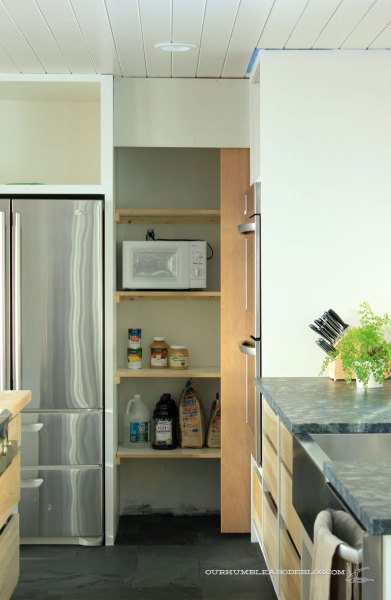
In our case, the door opening is wider than the oven cabinet leaving the last few inches of door visible when completely open.  I worried the 24 inch opening would be too small, but it allows easy access to everyday items.
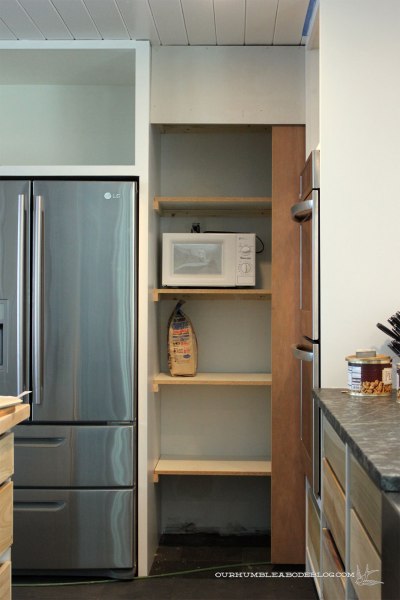
Unfinished-Pantry-Shelves-Added

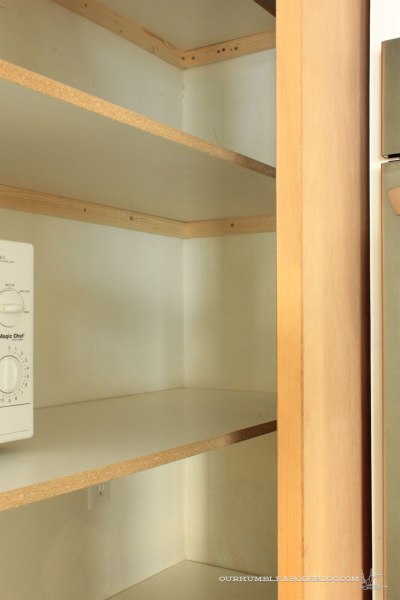
Shelves are 18 inches deep, extending into the corner.  We plan to keep extra supplies here, to grab when we need to refill.
Unfinished-Pantry-Shelves-in-Back

Also, we’ve decided to keep the microwave in the pantry.  This allows easier access and a shorter distance of carrying hot items.
Unfinished-Pantry-Door-Open

Which also frees up space in the smaller cabinet, allowing a full drawer set.  I still plan to keep coffee supplies and extra serving platters over here.
Kitchen-to-Dining-Blank-Wall-Cabinet-Sizing

Now that everything has been cut and fits, we can take everything back out to paint.  I’m oddly liking the wood door though.  I’m undecided if I should paint or seal it.  Thoughts?

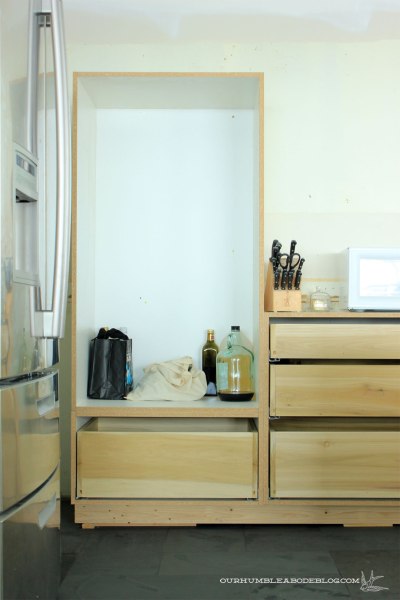
Unfinished-Pantry-Door-Closed

Open:

Unfinished-Pantry-Door-Open-Toward-Ovens

Closed.

Unfinished-Pantry-Door-Closed-Toward-Ovens

Once I’ve painted the inside of the pantry, we’ll set the shelves again and add trim to the fronts to cover the braces.

Unfinished-Pantry-Shelves

It’ll also give us a lip to hide under cabinet light behind to help illuminate the shelves.

Update:  Due to a few emails and comments, here’s a shot of the far end of the pantry:

Unfinished-Pantry-Shelf-Space-Between-Door

The overall depth of the pantry is 25.5 inches from the back wall to the inside of the door.  With 18 inch deep shelves, that leaves 7.5 inches between the shelf front and the inside of the door.  By making the shelves narrower than the full depth, we won’t have to worry about things getting in the way of the door slide.  It’ll also make reaching in the back area easier.  We’ll probably keep a broom in here too.

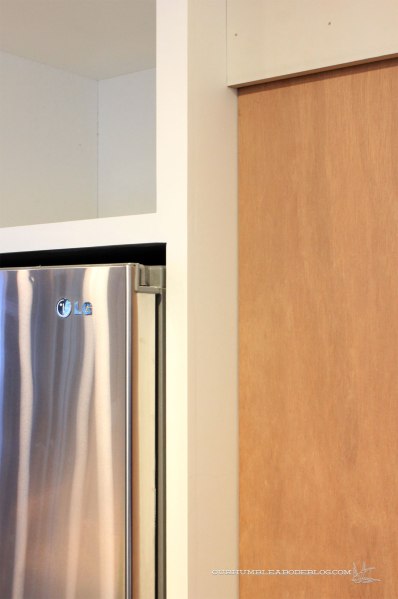
While I’m updating, I thought I’d include a shot of the closed door against the fridge.  
Unfinished-Pantry-Set-Back-from-Fridge

After settling on a sliding door, we agreed we didn’t want the header flush with the front of the fridge cabinet.  Mostly to add some interest to the wall, but also because the door itself would sit 3/4 of an inch back from the front. 

Once that’s done, we can start organizing.  We shop at Costco, which means we have produce for days.  Getting bowls off the counter would be really nice.

I love the function of roll out wire baskets, which can allow ventilation and easy access.  I’ve yet to pin down exactly which ones, but here are a few I’m considering.


This one is actually a hamper, but the depth would maximize space.  Perfect for storing bags of cereal and chips.

Putting the corner to use and not having to walk around the island for everything is a game changer.  Time for me to start painting so we can load it up!

Double Down

As of this weekend, we have every appliance in and working.  Double ovens and dishwasher included.  Before we could install either, we had to add face trim to our cabinet boxes, fill, sand, prime, and paint.  Each cabinet box is made from double-sided melamine, leaving the inner particle board exposed along the fronts.

Kitchen-Cabinets-Installed-Wall-Oven

After talking to custom cabinet makers, we chose melamine for a few reasons.  Unlike plywood, it doesn’t warp as it dries.  Melamine sides also protect the inside from water, without having to paint the inside of every box.  For sleek, finished fronts without seams at every cabinet joint, we prefer to face our cabinets after install.  Below you can see the 3/4 inch painted poplar front added to the melamine box.

Kitchen-Cabinet-Frames

Without fronts, the drawers are recessed about 1/4 inch to allow a tight closure against the cabinet.

Kitchen-Cabinet-Face-Frames

Rather than using plywood for end panels, we used paintable melamine panels.  Having never used these before, I worried the smooth surface wouldn’t take paint well.

Kitchen-Paintable-End-Panel

Turns out, one primer + three paint coats covers flawlessly.  I tried scratching the paint off with my nail and nothing happened, so I’m very hopeful.  The guys at Sherwin Williams highly recommended their ProClassic paint for cabinets because it levels and hardens for a durable finish.  Using an angled brush and small foam roller, I applied satin finish Snowbound.  This paint dries quickly, with a super smooth finish.  Brush strokes faded away.

Kitchen-Cabinets-Dishwasher-End-Panel

Framing the fridge, ovens, and dishwasher just adds to the custom feel and really finished it all off.  While I got my paint on, Ben set the two office drawer stacks.

Office--Cabinets-Set

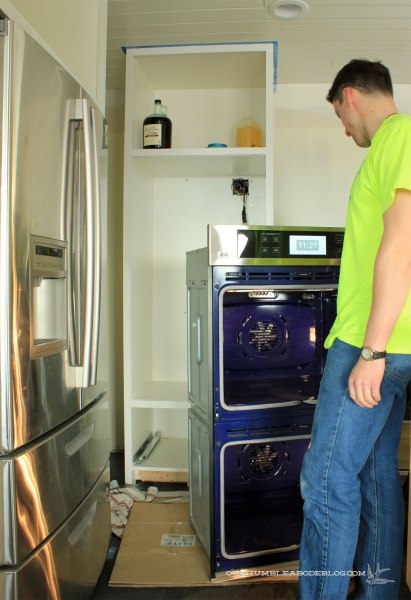
Once the paint dried, we couldn’t get the new ovens in soon enough.  Removing the doors made hoisting it easier.

Kitchen-Double-Ovens-Install

Thanks to Ben’s measuring and remeasuring the cabinet and ovens fit perfectly.  Almost as if they were made for each other.  Oh wait, they were.  It slid right in place, with only a minor tweak of the upper panel.

Kitchen-Installing-Double-Ovens

Ta-da!  LG suggests leaving at least 12 inches from the floor, so we added a drawer below.  This drawer is the same size as the other bottom ones, which also brought the height even with the top of the refrigerator.

Kitchen-with-Double-Oven

After install, we pulled off the packing materials, which left some marks on the doors.

Double-Oven-Stainless-Before-Cleaned

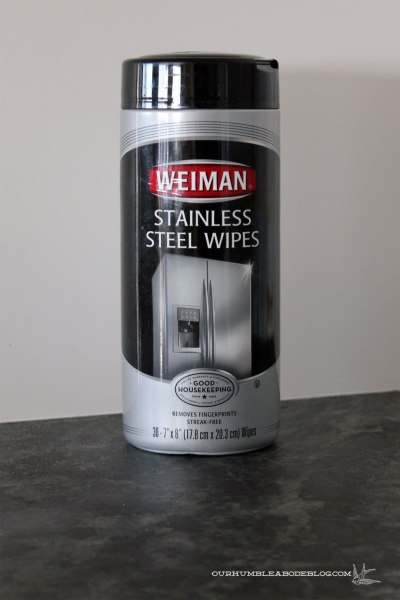
We’ve tried various cleaners over the years, but nothing worked well on our LG fridge.  At the end of my rope, I asked my friend Jamie what miracle cure she used.  She sent me a picture of the spray can: Weiman Stainless Steel Cleaner and Polish.  I couldn’t find the spray, but I did find the wipes.

Weiman-Stainless-Steel-Wipes

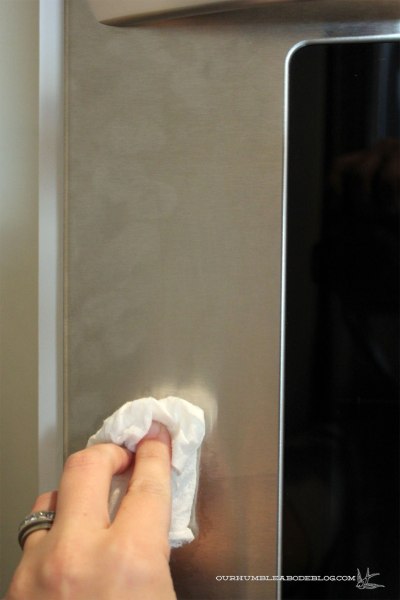
Let me tell you, these are almost as magical as the Magic Eraser.  Seriously, how do those things work on almost everything?!  Anyway, I wiped with the steel grain, then followed up with a dry rag.

Double-Oven-Stainless-Cleaner

Look at the difference between the cleaned top and untouched bottom.

Double-Oven-Stainless-Cleaned-Top

After seeing how well the wipes worked on the ovens, I literally polished every other stainless surface in the house.  The bathroom counters and shower pan have never looked better.  No, this is not sponsored.  Just thought this life changing cleaner was worth mentioning.  Unless I’m the last person to know about these.  In that case, carry on.

Soap Stone

We’ve splurged on many elements in the kitchen: slate tile floors, a gas cooktop, custom stainless sink, and double wall ovens mainly.  Wanting to get it right the first time, regret free, we can justify these expenses.  To balance out the large ticket items, we’ve saved money by tackling everything ourselves and finding deals where we can.  By leaps, the best score for list price to our deal ratio has been soap stone remnants for the counters.

We’ve been in a local granite and marble supplier to be somewhat friendly with the place.  A few weeks ago, on a reconnaissance trip, we started chatting with the owner about matte finish stones.  For whatever reason, I really wanted a lower sheen for the counters.  He suggested either leathered granite, priced between $80-$90 per square foot, and soap stone.  Honed granites aren’t as highly polished as a standard granite, creating a matte finish.  But if something slides across, it basically acts as a sand paper, leaving scuff marks.  Unlike honed granite, leathered granite is finished with brushes, creating a smooth, but low sheen finish.  Leathered granite isn’t very common here yet, so there were only a few options, but I really liked the look.  Then he showed us a gorgeous soap stone slab.  Love at first sight, people.

Realizing we really liked it, he walked us over to a stack of remnants, where he had 6 pieces of a similar soap stone.  We asked about a million questions, he patiently answered each one and told us the pros and cons.  Pro: it’s easy to cut and work with, perfect for a DIYer.  Con: soap stone is soft and can scratch and chip easier than granite.  List price is $82 per square foot.  The six-foot by 2 foot section to the left of the sink alone would cost $984.  Now add in the $328 for the 4 feet over the dishwasher and another $656 for the small cabinet across from the table.  That’s $1968, just for three sections of stone countertops.

Then he made us an offer we couldn’t refuse.  One hundred bucks for all six chunks; enough for the kitchen plus a few extra odd sections.  Sold, to the couple in the front row.  I quickly drove home to get the pick up to haul everything home.  I have no idea what particular variety this is, but it has a lot of mottled veining.  Here’s an uncut, unpolished piece.

Soap-Stone-Counters-Before

Soap stone is a very DIY friendly natural counter because it’s dense, but soft.  Ben has cut granite and marble before, but this was a lot easier.  He used a standard circular saw to cut the edges and our orbital sander to finish the edges.

Kitchen-Soap-Stone-Counter-Overall

After installing the pieces, I applied an oil to bring out the character.

Kitchen-Soap-Stone-Counters-Detail

This step is simply preference, but think of it as a clear coat on wood.  It helps protect, but also show off the natural beauty.

Kitchen-Soap-Stone-Toward-Ovens

With white perimeter cabinets and a light backsplash planned, we wanted dark counters for contrast.  I think they’re perfect.

Kitchen-Soap-Stone-Counters-and-Sink

Of course, there are still to do’s, but let’s focus on what is finished.

Kitchen-Soap-Stone-Counters-and-Sink-Side

For a seamless edge, we carried the stone to the inside edge of the sink.

Kitchen-Sink-with-Soap-Stone

Kitchen-Soap-Stone-and-Sink-Dishwasher-Side

Kitchen-Soap-Stone-Above-Dishwasher

Now that the counters are in, we were able to add cabinet trim and start painting.  Most importantly, with the painted face trim, we could install the double ovens.  More on that soon.

Having never had soap stone, do you have experience with it?