Our boys are fans of Handy Manny, not Bob the Builder, but building better describes what Ben was up to. Maybe we could call his cousin/apprentice, Sam, Handy Sammy. Last Friday, Ben bought twelve sheets of 3/4 inch cabinet grade plywood. You see where I’m going with this, right? Yes, cabinets are built. Kind of. The boxes are assembled. Before Ben could start cutting, we had to do a lot of measuring and some bickering. Both indoors and out in the garage. The measuring, not bickering.
After tons of cutting, Ben had a stack of plywood to piece together like a three-dimensional puzzle. A line of glue around the edges first.
Followed up by several nails to hold the sides together tightly.
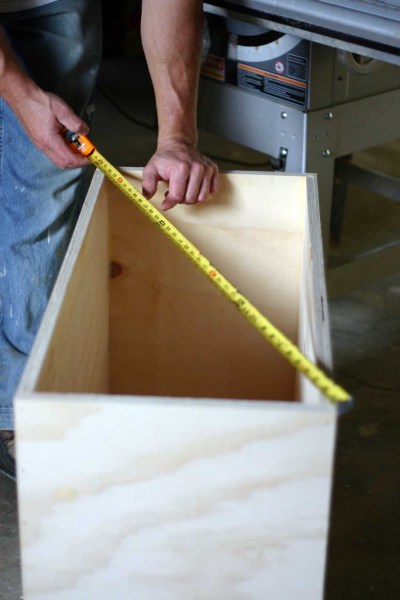
After each cabinet piece was assembled, Ben checked to see if everything was square by measuring diagonally each direction.
Surprisingly, building nine frames only took a few hours. Of course, they’re far from finished, but here’s the super rough version of the peninsula, on the left, with the lower sink cabinet to the far right. The cabinet on top will be divided into two with doors.
Just so you can get an idea of how huge these are, here’s Vincent modeling the coffin cabinet. (Just to clarify, we joked that Ben was building coffins because these cabinet are so huge. I have no intentions of tossing Vincent in one, other than for this picture.) Sam (on the left) is a little over six feet tall. Yeah, I won’t be able to reach the top shelf without a chair or stool to stand on.
And, here’s what the stove side will look like.
Yesterday afternoon, I primed the insides of the cabinets. Afterward, I got a raging headache. We (meaning Ben and Sam while I ‘supervised’) also cut pieces for the drawers. I know these boxes are far from finished, but it’s a start. Still to do:
Build drawers and prime and paint the insides
Build two by four bases for the toe kick
Install the drawers, then build drawer fronts
Prime and paint the drawer fronts and visible outsides of the cabinets
Install in the house, the add the face framing for a seamless look
More priming and painting
Speaking of painting, here’s a glimpse of where we’re headed.
Color me excited. Literally. We saved some money on the paint, too. More pricing details coming tomorrow.
Do you and your spouse bicker about little details? Have you remodeled a kitchen? I think planning a DIY kitchen remodel should be part of marriage classes. If you can successfully plan a kitchen together, I think you can make it through anything. Haha.
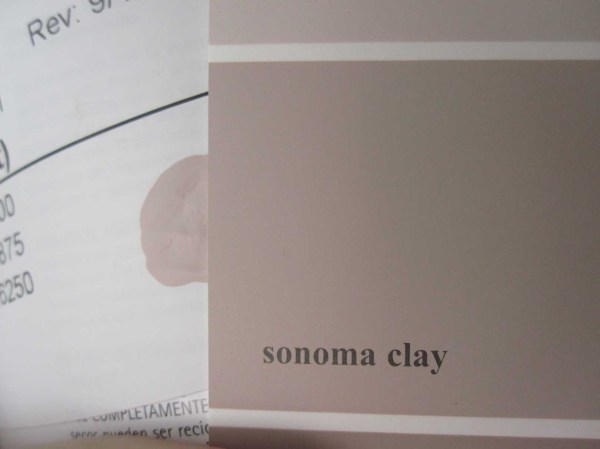
After Thursday’s discussion about new paint samples, I talked myself into Benjamin Moore’s Sonoma Clay. I couldn’t live with the bright pink walls any longer. On Friday, the boys and I went back to Ace Hardware to get a 16 ounce Ben Moore sample can, hoping that pint would cover the entire bathroom. When we returned home, I compared the test sample to the paint swatch.
Nice match, but will it look good on the walls?
Right away, I loved how much darker and muted the color was. Not wanting to leave anything to chance, I painted small areas on each wall to test the color in different lighting.
Yep, this was the right pink. I touched up the white paint, let it dry, then taped off the edges. I had Everett’s nap time to get this done. Vincent watched me paint.
In one way, the ugly, bright pink helped me. It served as a great primer. The Ben Moore paint covered well with one coat, which means I still have half of a pint of pink left. Wahoo, my math was right! That’s a first, just ask my ninth grade geometry teacher. Ha.
Like most paints, the color varies based on the lighting, which I like. Because the back wall gets less light, it reads as a more moody purple-gray-beige-pink.
Au revoir ballerina pink. Helllloooo sophisticated mauve. Eww, I hate describing the color as mauve. It seems so old lady.
One gallon of Wal-Mart paint: $15.00. One pint of Ben Moore paint: $7.00. Finally choosing a color we like and don’t have to repaint: priceless.
Just to clarify, Ben has never said he hates this color. Usually, he’s forthcoming about what he doesn’t like. Not so much with what he does like. I’ll take his silence as approval.
To summarize, if you’re looking for a very pale pink, check out Martha’s Pink Sea Salt. Don’t try to make your own color. If you want something more dramatic and moody, try Ben’s Sonoma Clay.
Did you tackle a painting project over the weekend? Was it the first or fourth time you painted it? Out of curiosity, what’s your favorite brand of paint to use?
Please note: We were not compensated for this post, we simply love the Ben Moore paint we purchased and want to share with you.
As I shared, my first ever fabric dye slash ombre project didn’t go as well as I imagined it would. (Thank you so much for your tips and tricks.) Bummer, but I don’t give up that easily. I’m Polish after all. Wait, maybe Polocks aren’t known for stubbornness as much as ignorance. Either way, I was determined to try it one more time.
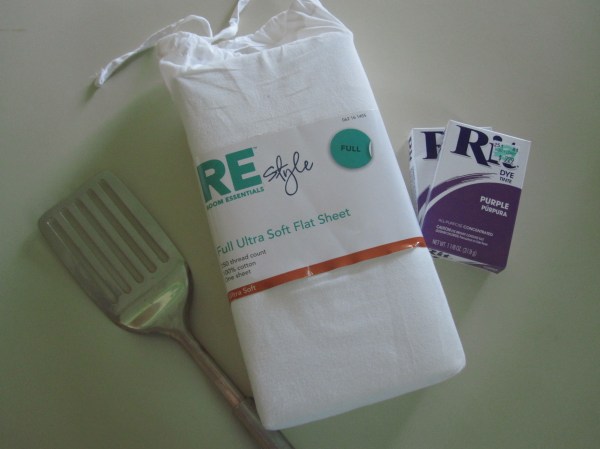
Having learned from my mistakes, I bought two boxes of purple dye and a full-sized flat bed sheet.
I also used the main bath tub. About half way into my process, I laid a junk towel under the bucket to protect the acrylic tub. Pretty sure a dyed bath tub would be an epic failure, even if I successfully dyed the curtain.
To keep the dye line as even as possible, I hung the sheet on the shower curtain using the existing shower curtain rings and a set of curtain clips I had in the basement.
I slipped the curtain clips through the curtain rings because the clips were too small to fit on the shower rod. Then, I clipped my sheet up so I wouldn’t have to touch the curtain, just the rod and clips. I highly suggest this method.
I decided to use one half of a box to dye my first ombre layer.
I didn’t realize it until later, but I completely forgot to add salt or liquid soap. Oops. I did however let the sheet soak for about 20 minutes, stirring constantly with a stainless steel spatula. With a nice, saturated color, I moved the curtain rod up about eight inches and added the second half of the box to the bucket.
After 20 or so minutes, I moved it up another eight inches and added the entire second box to the mixture to let it soak. Before dumping the dye solution out, I dyed the ends of two white towels, just for fun. I rinsed out the sheet and towels, but as I neared the end, Everett woke up from his nap, so I quickly rinsed out the rest and popped it into the washer for a quick clean.
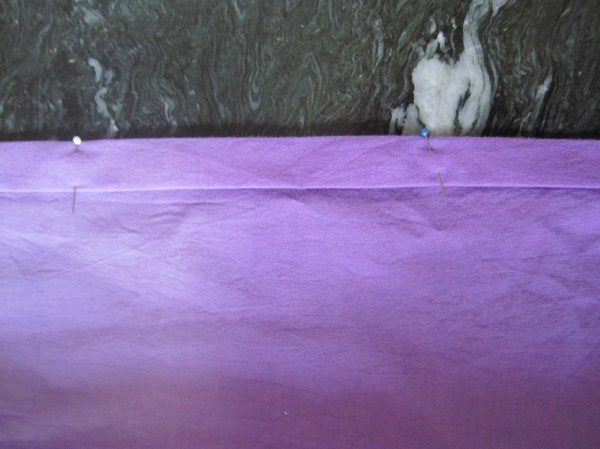
Now, I had to figure out a way to hang this thing. I started by sewing the sides to the width of our shower curtain liner. I ironed the edges and got freaked out because the heat of the iron turned the dye pink. After 15 seconds or so, the color did go back to normal. So, I continued ironing and folded the edge over twice to get a clean edge and pinned. I planned to only sew one side and the top to get my measurements. The white thread from the sheet didn’t absorb the dye, so I was safe using white thread to hem everything. I sewed my side first.
I considered sewing button holes to hang from, but my button-hole function didn’t want to work for me. Plan B. We needed a new curtain liner for our bathroom, so I cut the grommets off the old one to sew to my sheet. I pinned right sides together so my seam would look as seamless as possible.
Then, I stitched right along the plastic edge, but not on it.
A quick pressing with the iron made a nice crisp seam. Unfortunately, I did have dyeing issues again. Off to rectify that situation.
So far, I’ve spent 9 dollars and 99 one hundredths of another buck on a flat bed sheet, and $5.50 for two more boxes of Rit dye, bring our total (including yesterday’s failure) to $18.24. Not too bad considering the only other curtain I liked cost $29.99. So, we’re still $11.75 under budget, failures and all.
How much are you willing to spend on a shower curtain? Have you ever made one yourself?
Over the weekend, Ben acquired a five (more like 6) gallon bucket filled with brass for reloading.
After he sorted it, lovingly stroked it, and oogled it, he had to find a place to put said brass. Which was a problem. Yes, we’ve added cabinets and shelving, but he had already filled two cabinets with other ammo and brass. Notice the ammo cans behind the buckets in the photo above? And we certainly don’t what to put an 80 pound bucket on an upper shelf, even if the bucket weren’t too tall to fit. Hearing something crash down is never a fun event.
Luckily, we have some unused space behind that curtain.
Now you see why we hid that behind a curtain, and this was after cleaning all the junk out. The plumbing along the floor is from the geothermal to our well, the water heater hangs on the wall, and the wire poking out of the sheet rock is not hot, but is for the future steam generator for the basement bathroom.
We decided we could build a shelving unit to store Ben’s ugly reloading equipment and our left over paint.
First, the boys measured the space to see what the largest size could be.
A few 2 by 4’s and scrap plywood worked nicely.
Sorry, I don’t have any in progress shots because it went pretty quickly while I was tending to the kiddos. Basically though, Ben used long screws to secure 2 by 4s to the wall and resting on the floor. Then, he screwed a vertical support and plywood. It’s not the prettiest shelf, but it works and is hidden.
Previously, our left over paint cans were hidden away in the unfinished steam shower, aka under the stairs, blocked by a pile of tile.
The good news? We now have the one gallon formula for the tan paint in our living room: 101-24 107-2Y24 109-12 + B12 That is in the Olympic brand. And, we’ve decided on a laundry room color scheme.
The bad news? We still have plenty of work to do before we can start painting and decorating the laundry room. Like add trim around the door and floors.
And install decorative faces and cover the wires on the upper shelves.
Though, a few weekends ago, I did wet sand the drywall to prepare for primer.
Then, I still have to convince Ben of my back splash solution. Apparently he doesn’t want anything pretty in his office. Does he know who he’s married to? Why wouldn’t I want the laundry room to look pretty?
Even though this room is far from done, it is usable.
Do you have to find creative ways to store your (or your hubby’s) junk? Where do you keep your left over paint? I’ve thought about keeping a small jar of each color for touch up and pitching the rest. I mean really, if I’m going to get off my lazy butt repaint an entire room, why on earth would I ever use the same color again?
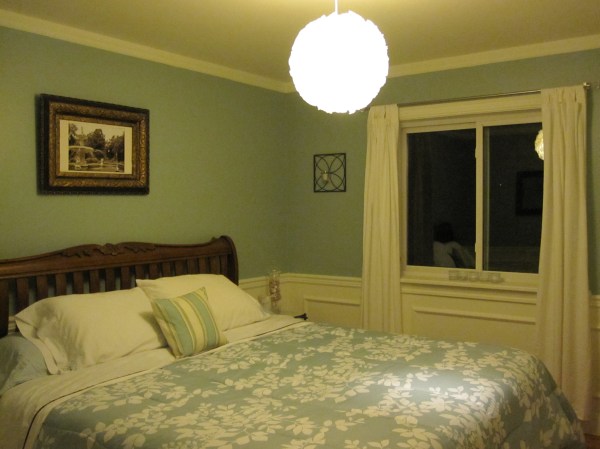
Evidently, home-made light fixtures are my thing. I don’t know how that happened, but so far I’ve made a cloud like coffee filter pendant for our guest bedroom.
Just a warning. I say embroidery hoop about 10,000 times in this post. Enjoy.
We still have more than half a roll of the veneer strips, so I brainstormed ways to use it. One of my ideas was another light fixture. I know, how many wooden light fixtures does one house need? This one isn’t for our home, actually. When I was in Minnesota visiting my blog BFF Jen, she mentioned she wanted a new light fixture for her son, Preston’s, room. That’s when I shared my diabolical plan for a wood veneer/embroidery hoop/bamboo skewer drum shade. And, she loved it. Now, I had to figure out a way to, as Project Runway’s Tim Gunn would say, “Make it work!”
In the words of my favorite 80’s school skipper, Jen Jones, this one’s for you.
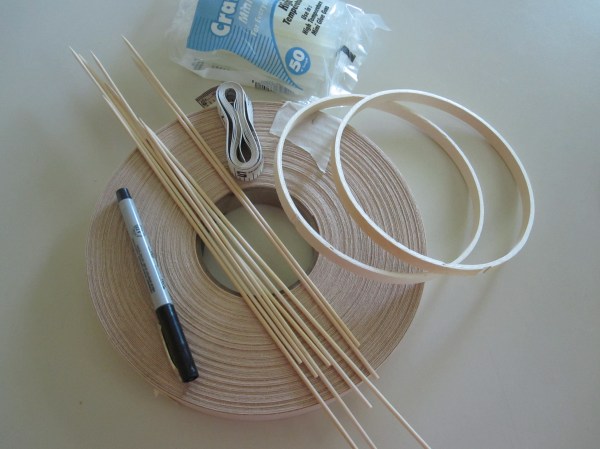
I already had the veneer and skewers, so I took a trip to Hobby Lobby to snag two wooden embroidery hoops.
After gathering a few more supplies, namely a seamstresses tape measure, permanent marker, a hot glue gun and glue sticks, I started my project. I should mention that I should have made a second trip to the craft store to get another itty bitty (like 2 inch diameter) hoop and a length (or two, depending on the diameter of your pendant) of thicker wooden dowel. Something around 1/4 inch should do. Oh, you’ll notice this pendant is tiny. That’s because I didn’t know exactly if my plan would work, so I bought cheaper, smaller hoops. Also, the outer hoop isn’t necessary for this project.
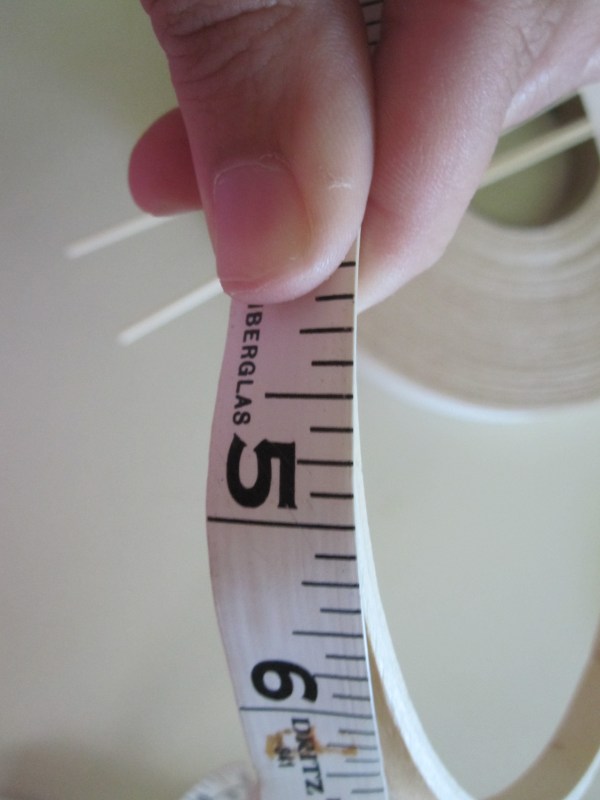
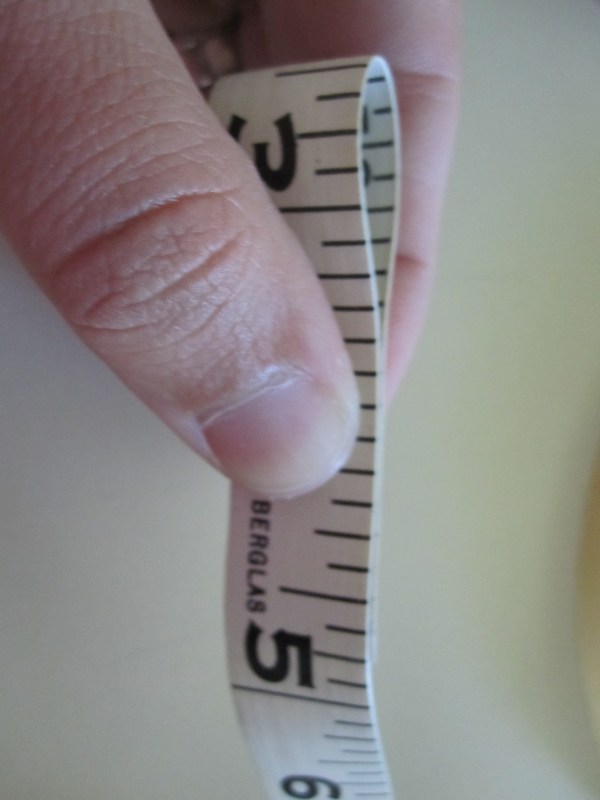
To start, measure the circumference of the hoop, marking on the inside where you started.
Then, fold your tape measure in half to easily (math free) find the half way measurement.
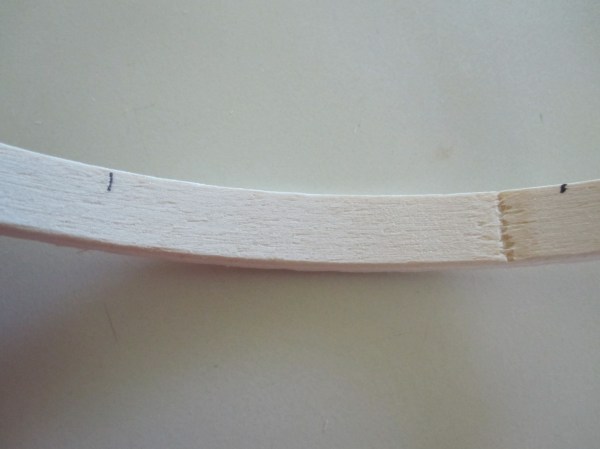
Mark this on the inside of your hoop. Continue folding the tape measure in halves until you’ve made at least 8 marks on the inside of your hoop. Stack the second hoop on top to transfer the marks.
These marks represent the skewer placement.
Helpful hint: I used 8 skewers for a 6 inch diameter pendant. If you’re making a larger pendant, you’ll need more skewers. It depends on the look you’re going for, but I would suggest about 32 skewers for a 24 inch diameter hoop.
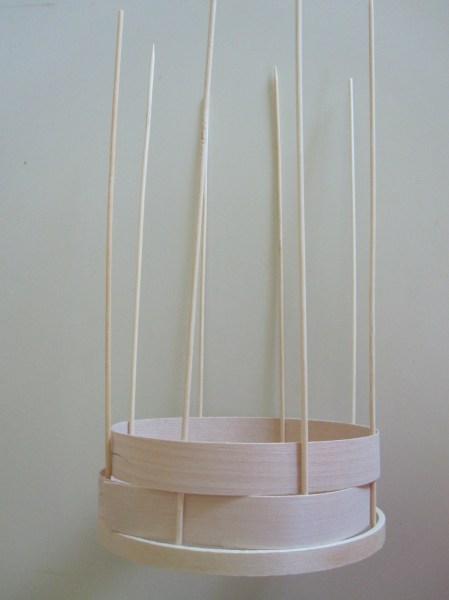
Next, use your hot glue gun to place a skewer on each of the marks you just made. Place the flat end down, against your work surface to make sure the skewers are all flush. Don’t cut the skewers to length until you’re completely finished. This eliminates guess-work or more math. Can you tell I loathe math?
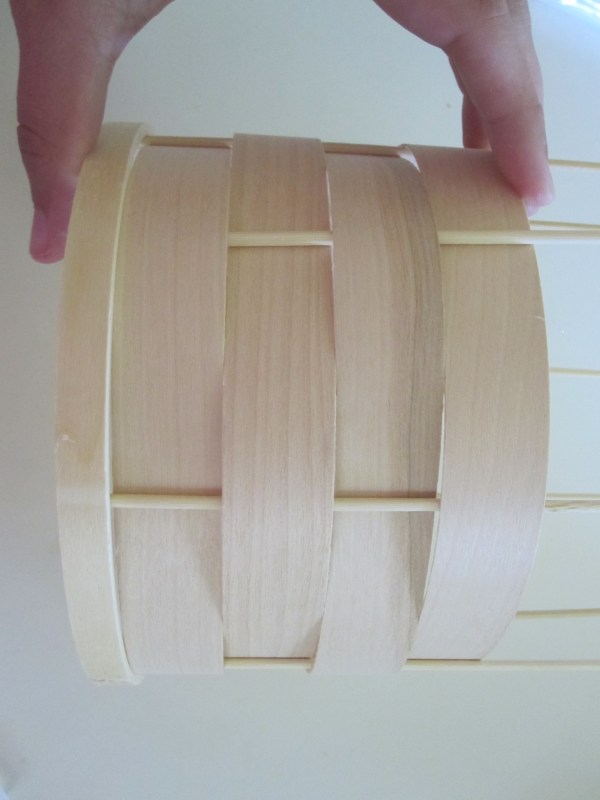
Now, cut 6 (or more depending on the look you’re going for) strips of wood veneer the same length as the circumference of your hoop. Start weaving the strip in and out until you’ve reached the opposite end. Hot glue the overlapping ends together and hold until cooled.
Helpful hint: Each embroidery hoop will have a small notch. Try to line your seams up with this notch, just to keep the ugliness all to the back.
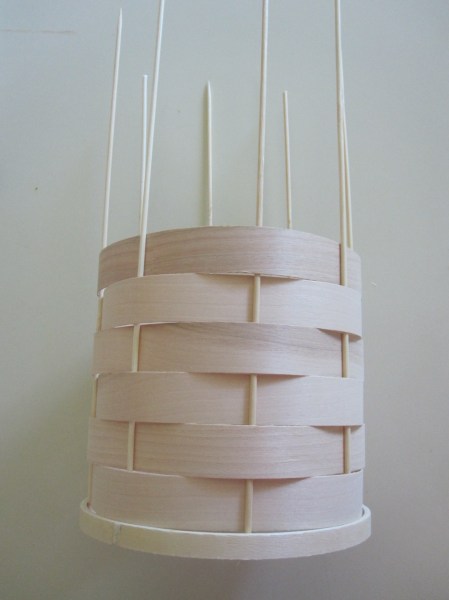
Continue placing each row of veneer, alternating the showing skewers.
Gently push each row down for a tight, even weave.
Place the pendant vertically and slip the second hoop over the skewers. Push down until the top of the last veneer piece is flush with the bottom of the embroidery hoop. Glue the skewers to the inside of the hoop along the marks. Now, use a scissors or a wire cutter to cut the tops of the skewers, keeping them even with the top. The beauty of this plan is that every component is a blonde wood, which could be painted, stained or left natural for a different look.
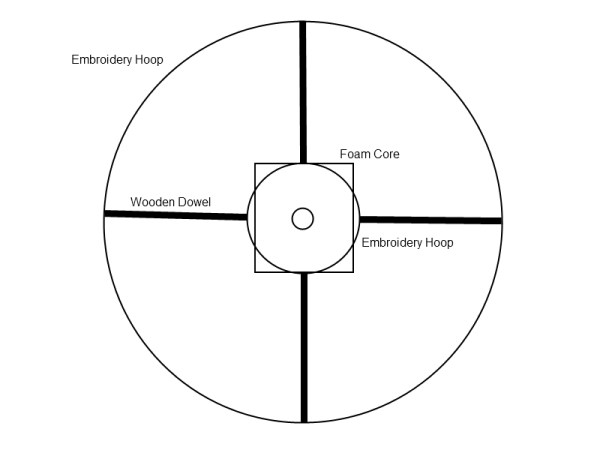
That’s great, but how am I going to hang it, you ask? Here’s how.
What, that didn’t make perfect sense to you? Let me explain. The outer circle is the top embroidery hoop of the shade you just finished. The medium-sized circle is the tiny embroidery hoop which will keep the fixture hanging. The four thick lines are 1/4 inch wooden dowel, epoxied to the pendant shade and the small hoop. Don’t use hot glue for this, you want it to be completely secure. The square is foam core with a small hole cut in the center. Place the foam under the small embroidery hoop with the wiring threaded through the hole.
If you want to make a light diffuser, buy another embroidery hoop that is about four inches smaller than your largest hoop. Stretch a piece of fabric in the hoop, add four more dowels to keep the hoop in place. Make the dowels long enough to rest on the top of the bottom shade hoop. Make sense? If not, just ask and I’ll clarify.
If you don’t want to use embroidery hoops and dowels, track down a wire lamp shade cage and weave veneer around it. You could use something like this for the top and this for the bottom. A heavy gauge wire would work to make the verticals for the weave. I would spray paint these before weaving the design, just to modernize the brass look, for around $10.00, which isn’t bad for a 24 inch diameter pendant.
Think you’re brave enough to give it a try? If you do, we’d love to see what it looks like. Are you a DIY light addict like I am? Running out of places for new lights? Share your home-made lights, please. Have you been lusting after a fancy fixture, but can’t bear to shell out the dough?













 ourhumbleabodeblog.com