Try Again

As I shared, my first ever fabric dye slash ombre project didn’t go as well as I imagined it would.  (Thank you so much for your tips and tricks.)  Bummer, but I don’t give up that easily. I’m Polish after all.  Wait, maybe Polocks aren’t known for stubbornness as much as ignorance.  Either way, I was determined to try it one more time.

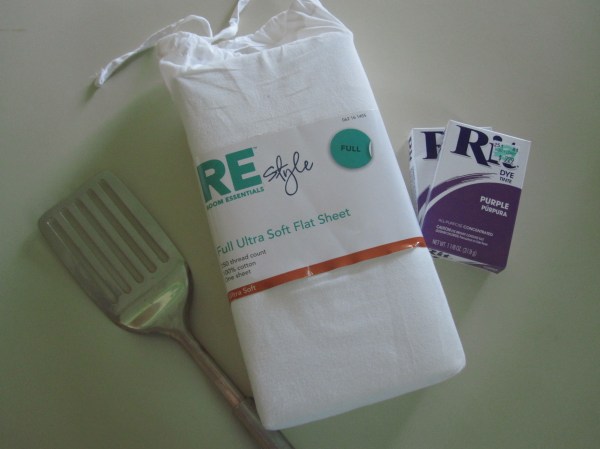
Having learned from my mistakes, I bought two boxes of purple dye and a full-sized flat bed sheet.
I also used the main bath tub. About half way into my process, I laid a junk towel under the bucket to protect the acrylic tub.  Pretty sure a dyed bath tub would be an epic failure, even if I successfully dyed the curtain.

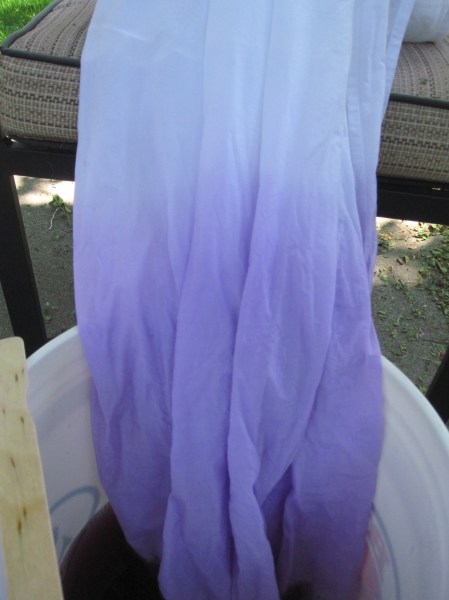
To keep the dye line as even as possible, I hung the sheet on the shower curtain using the existing shower curtain rings and a set of curtain clips I had in the basement. 

I slipped the curtain clips through the curtain rings because the clips were too small to fit on the shower rod.  Then, I clipped my sheet up so I wouldn’t have to touch the curtain, just the rod and clips.  I highly suggest this method.

I decided to use one half of a box to dye my first ombre layer.

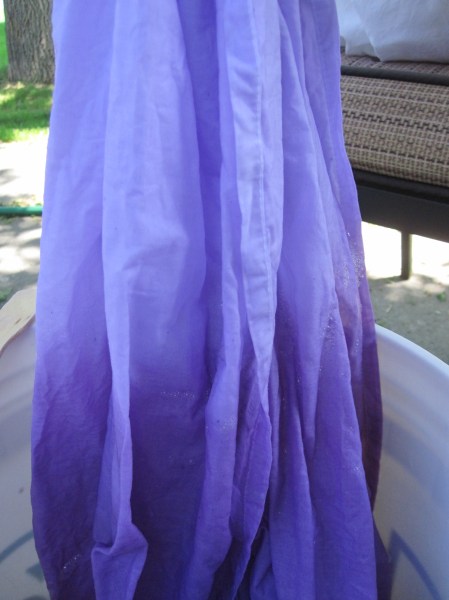
I didn’t realize it until later, but I completely forgot to add salt or liquid soap.  Oops.  I did however let the sheet soak for about 20 minutes, stirring constantly with a stainless steel spatula.  With a nice, saturated color, I moved the curtain rod up about eight inches and added the second half of the box to the bucket.

After 20 or so minutes, I moved it up another eight inches and added the entire second box to the mixture to let it soak.  Before dumping the dye solution out, I dyed the ends of two white towels, just for fun.  I rinsed out the sheet and towels, but as I neared the end, Everett woke up from his nap, so I quickly rinsed out the rest and popped it into the washer for a quick clean.

Now, I had to figure out a way to hang this thing.  I started by sewing the sides to the width of our shower curtain liner.  I ironed the edges and got freaked out because the heat of the iron turned the dye pink.  After 15 seconds or so, the color did go back to normal.  So, I continued ironing and folded the edge over twice to get a clean edge and pinned.  I planned to only sew one side and the top to get my measurements.  The white thread from the sheet didn’t absorb the dye, so I was safe using white thread to hem everything.  I sewed my side first.
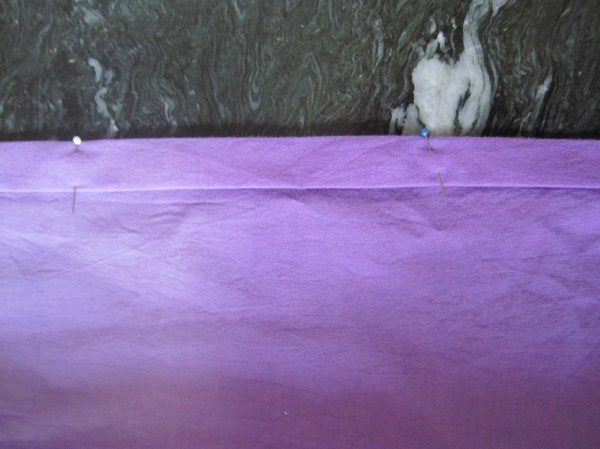
I considered sewing button holes to hang from, but my button-hole function didn’t want to work for me.  Plan B.  We needed a new curtain liner for our bathroom, so I cut the grommets off the old one to sew to my sheet.  I pinned right sides together so my seam would look as seamless as possible.

Then, I stitched right along the plastic edge, but not on it.

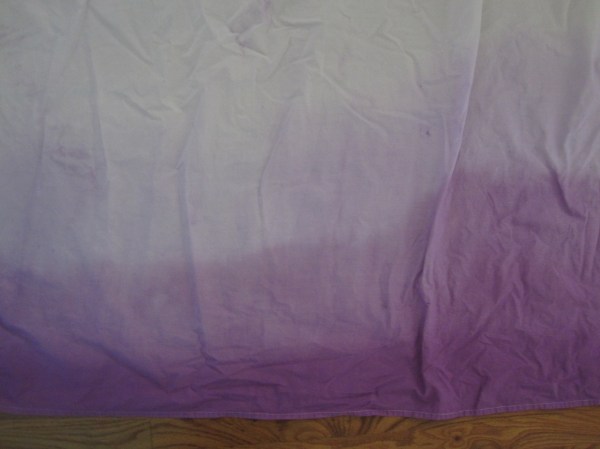
A quick pressing with the iron made a nice crisp seam.  Unfortunately, I did have dyeing issues again.  Off to rectify that situation.

So far, I’ve spent 9 dollars and 99 one hundredths of another buck on a flat bed sheet, and $5.50 for two more boxes of Rit dye, bring our total (including yesterday’s failure) to $18.24.  Not too bad considering the only other curtain I liked cost $29.99.  So, we’re still $11.75 under budget, failures and all.

How much are you willing to spend on a shower curtain?  Have you ever made one yourself?

If at First You Don’t Succeed

I’ve been itching to add more color to our house recently, without breaking the bank.  While innocently browsing Pinterest, I came across an idea.  Dip dyeing fabric.  Easy peasy, right?  You’re smart enough to realize this wasn’t as easy as I originally thought.  So, I went to Hobby Lobby and picked up one box of purple powdered dye and set to work.  What did I dye?  I decided to ditch the plain white shower curtain we had in the main bathroom.

Of course most shower curtains are synthetic or a blend, but the people at Rit suggest an all cotton fabric.  So, I found an old white king sized flat sheet to dye, hem to size and hang as a shower curtain.  With my dye in hand, I gathered the necessary supplies.  A 5 gallon bucket, hot water, salt, dish soap (I didn’t have liquid detergent so I improvised) a measuring cup, bowl, paint stirrer stick, and rubber gloves and took my dirty work outside.

Now looking back, that was mistake number one.  I decided I wanted an ombre dyed curtain, with the top two-thirds white and the bottom a three-layered ombre.  Because of my layers, I decided to divide the box of dye to make my darker shades.  I used 1/4 of the box and about 2.5 gallons of hot water for the lightest layer and let it soak for about 15 minutes.

Then, I mixed up another 1/4 of the box to add to the solution I had going to dye my second layer.

Again, I let this soak for roughly 15 minutes.

I thought the distinction of layers was pretty noticeable, so I continued on with my plan.

Then, I used the remaining half of the box for my bottom layer, adding it to the mix and letting it soak.

When I thought I had several distinguished layers, I started rinsing the fabric in warm water, again outside.  Lesson to you folks, don’t dye large pieces of fabric outside.  Why?  Because the fabric started falling and I grabbed it with my gloved, dye hand.

Mistake number two, I didn’t rinse the fabric out thoroughly enough.  After washing in the machine, I had about 10 areas where the dye touched the undyed portion, leaving ugly blobs.

Mistake number three, I just gathered he fabric in my hand, so the bottom wasn’t even, making the dyed are wavy.

Mistake number four, I either used too little dye or didn’t let my fabric soak long enough because the dyed areas weren’t nearly as dark as I’d like.  Of course, this mistake is personal preference.  Total failure cost: $2.75 and a smidge of my pride, which doesn’t make it an epic failure, but annoying none the less.

Please tell me someone out there has made at least one of these mistakes when dyeing something?  Don’t you hate when you have a brilliant idea and it doesn’t work well for you?

That’s a Little Shelf-ish

Over the weekend, Ben acquired a five (more like 6) gallon bucket filled with brass for reloading.

After he sorted it, lovingly stroked it, and oogled it, he had to find a place to put said brass.  Which was a problem.  Yes, we’ve added cabinets and shelving, but he had already filled two cabinets with other ammo and brass.  Notice the ammo cans behind the buckets in the photo above?  And we certainly don’t what to put an 80 pound bucket on an upper shelf, even if the bucket weren’t too tall to fit.  Hearing something crash down is never a fun event.

Luckily, we have some unused space behind that curtain.

Now you see why we hid that behind a curtain, and this was after cleaning all the junk out.  The plumbing along the floor is from the geothermal to our well, the water heater hangs on the wall, and the wire poking out of the sheet rock is not hot, but is for the future steam generator for the basement bathroom.

We decided we could build a shelving unit to store Ben’s ugly reloading equipment and our left over paint.

First, the boys measured the space to see what the largest size could be.

A few 2 by 4’s and scrap plywood worked nicely.

Sorry, I don’t have any in progress shots because it went pretty quickly while I was tending to the kiddos.  Basically though, Ben used long screws to secure 2 by 4s to the wall and resting on the floor.  Then, he screwed a vertical support and plywood.  It’s not the prettiest shelf, but it works and is hidden.

Previously, our left over paint cans were hidden away in the unfinished steam shower, aka under the stairs, blocked by a pile of tile.

The good news?  We now have the one gallon formula for the tan paint in our living room: 101-24  107-2Y24  109-12  + B12  That is in the Olympic brand.  And, we’ve decided on a laundry room color scheme.

The bad news?  We still have plenty of work to do before we can start painting and decorating the laundry room.  Like add trim around the door and floors.

And install decorative faces and cover the wires on the upper shelves.

Though, a few weekends ago, I did wet sand the drywall to prepare for primer.

Then, I still have to convince Ben of my back splash solution.  Apparently he doesn’t want anything pretty in his office.  Does he know who he’s married to?  Why wouldn’t I want the laundry room to look pretty?

Even though this room is far from done, it is usable.

Do you have to find creative ways to store your (or your hubby’s) junk?  Where do you keep your left over paint?  I’ve thought about keeping a small jar of each color for touch up and pitching the rest.  I mean really, if I’m going to get off my lazy butt repaint an entire room, why on earth would I ever use the same color again?

Kitchen Drawings and Ideas

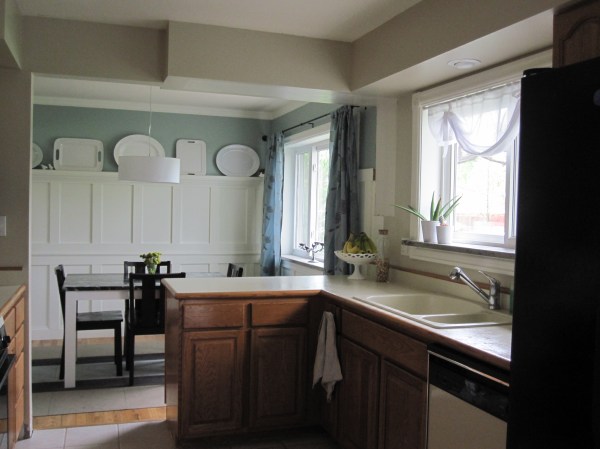
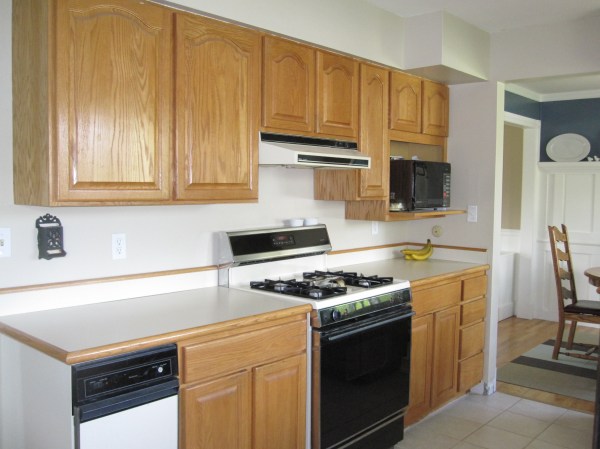
We’ve been seriously discussing our impending kitchen remodel.  Neither Ben or I have ever planned a kitchen remodel, so we have tons of ideas.  Because we don’t talk much about the ugly kitchen, let me refresh your memory on the state of things.  First, we started out with an L shaped sink/dish washing/refrigerator/food prep area.

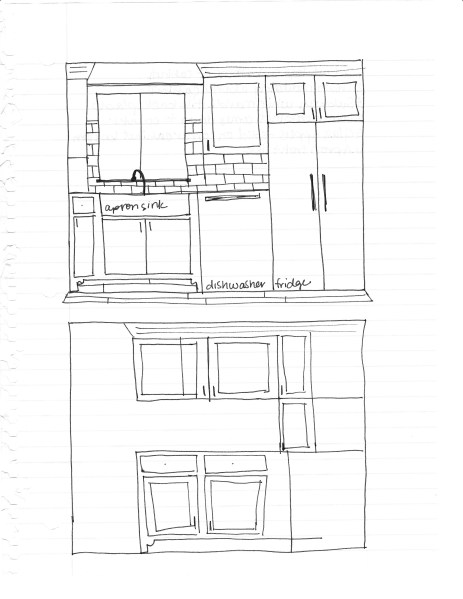
Here’s our first round of ideas from about a year ago, obviously a rough sketch.

Basically, we thought we’d keep the same cabinet layout with a few slight changes.  We’ve always planned to pull out the soffit to add more cabinet space to our small kitchen.  The biggest change we had planned was extending the corner cabinet from the ceiling down to the counter.  Then, we removed the bank of cabinets over the peninsula.

We really loved how much more light and open the kitchen felt, so now we’re nixing that set of upper cabinets.  The stove side of the kitchen backs up to the living room, but feels very closed off.  And if the vent hood is on, forget about being part of a conversation.

To open up the kitchen even more, we plan to knock down part of the wall behind the stove.  It is load bearing, so we have to keep a support pillar on either side and a beam across the top.  Essentially, we’ll have the kitchen entrance doorway, a large, wide ‘doorway’ over the kitchen cabinets, and then the dining room doorway.  When we tear down the wall, we’re also getting rid of the awkward soffit on this side, kind of like this:

Of course, since this drawing, we’ve discussed more changes that we’re happier with.  As far as the design elements go, we’ve never really wavered on those choices.  We’re still gung-ho on the apron sink, subway tile marble back splash, and hardwood floors.  It’s the layout and functionality that we keep changing and evolving, which we’ll share when we have another drawing to explain the madness.  For now, you can read my chicken scratch ideas detailing each element.

I’m glad we didn’t renovate the kitchen a few years ago, because I’m sure we would be just as annoyed as we are with our current kitchen.  Have you put a project on hold?  Are you happy you waited until you perfected the plan?

Floral Pendant

I’ve been Pinspired again.  It all started when I saw this fantastic fixture.

Then, I saw this tutorial detailing how to make a similar design using cardstock, complete with a free pattern.

I loved the look, but didn’t know where I could add yet another home-made pendant.  Light bulb!  In the stairwell.

If you can get past Ben’s faux grumpy expression, the half built wall, holes in the ceiling and wall, and the awful 70’s carpet, you’ll notice hanging wiring for a light.  Since this photo circa 2007, we’ve finished the half wall, filled the holes in the ceiling and wall, replaced the carpet and the light fixture.  The problems?  The fixture is a cheapo ‘boob’ light we had on hand, and it’s off centered.  Technically, the light is centered on the entire wall, but I’d prefer for the light to be centered over the stairs.

If we keep the light centered on the entire wall, we can’t have anything that hangs down because tall people (unlike myself) would hit their heads.  We still haven’t touched the kitchen, except installing a new faucet, but when we do, we’ll probably move that light fixture.  Ben is still undecided, so I decided to use materials I had on hand to make a floral pendant shade for a visual of a centered light.

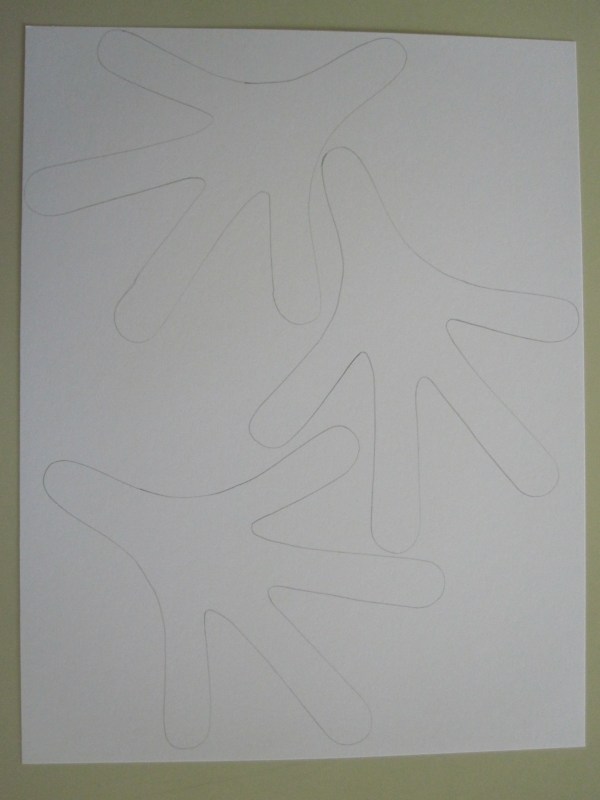
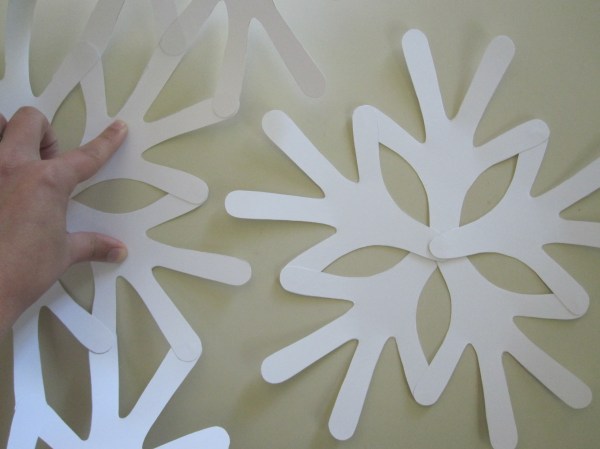
Using 8.5 by 11 inch sheets of white cardstock, I started by tracing the free pattern on my sheets.


Then, I painstakingly cut out each piece, starting with 60 individual pieces.  Several hours and a hand cramp later, I got out my trusty glue gun to attach and assemble the design.  First, I made several five point flowers.


A quick reference to the original design to see how to assemble the five point flowers together, I was ready to go.  Basically, the long points join with short points and vice versa.

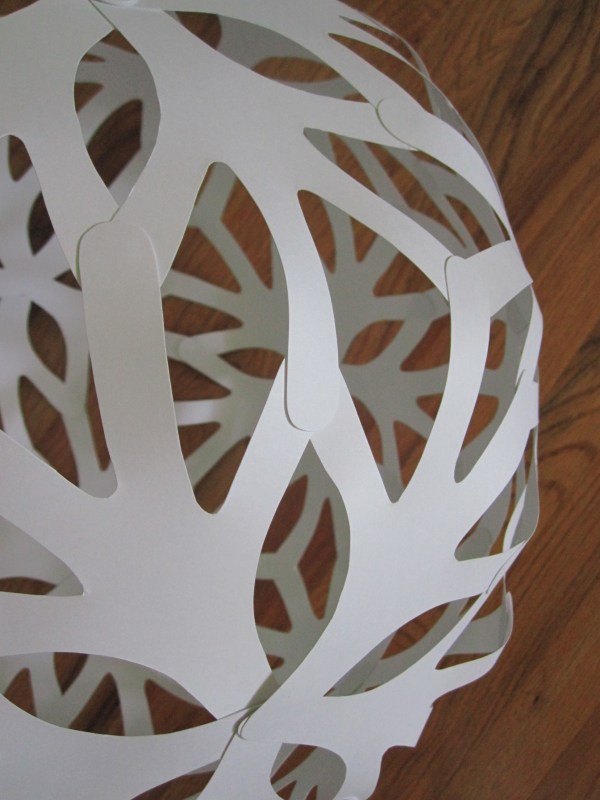
Gluing and assembling went much quicker than cutting.  Unfortunately, some of the glued pieces didn’t meet up perfectly, so the design is slightly lumpy.  Perhaps it is better to use brads to allow wiggle room.  Lesson learned.

If we move the wiring and we like the floral shade, I’ll make another, using brads.

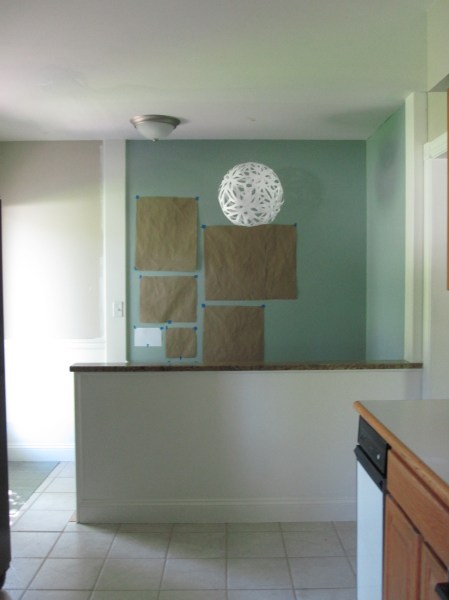
For now, the lumpy place holder works as a lovely visual.

And, the paper templates are a good visual of an in the works gallery wall.  Of course, we’ll fill in the area on the right, but I’m too short to reach.  Right now, I’m trying to decide if I want to hang a picture (or a few) behind the light, or box around the temporary fixture with frames.  We’re also debating how close to the ceiling we want to get and whether to wrap the gallery around to the wall on the right.  Thoughts on the matter?

Now, the real question is how many gallery walls and DIY light fixtures belong in 2500 square feet?  Including those shown today,three gallery walls (the others are here and here) and three home-made fixtures (here and here) so far.