MCM, Modernized

Hello and happy Monday, if there is such a thing.  On Friday I shared the blow-by-blow of my five dollar chair refinishing and upholstering process.  Starting with these 70’s dark stained orange vinyl covered wood beauties.

ReStore-Chairs-by-Fireplace-Before

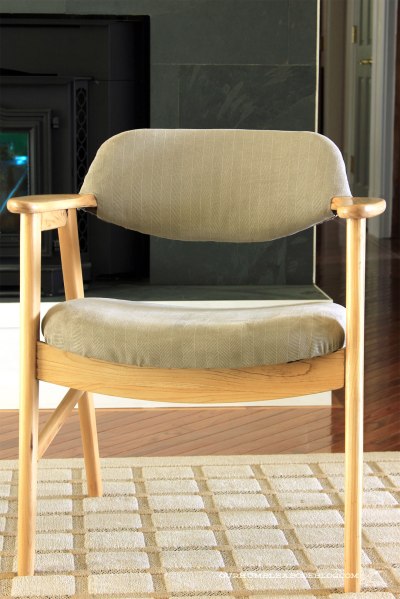
And here they are now, after an overall sanding, clear coat, thick neutral fabric, and satin nickel nail head detail.

MCM Chairs Finished in Family Room

Once I started sanding the wood down, I saw how blonde the wood was.  And liked it.  A lot, for a few reasons.  Lighter felt more updated, less reminiscent of the Brady Bunch kitchen color palette.  The pale wood also contrasted with the dark slate fireplace, instead of blending in.  After going through the trouble to sand to the unfinished wood, I didn’t want a dark stain that wouldn’t be an obvious change.  Also, I’m leaning toward natural finished wood, for a little variety.

MCM Chairs Finished Right

Even though the chairs are neutral, I’m super happy with the go anywhere colors and subtle patterned fabric.

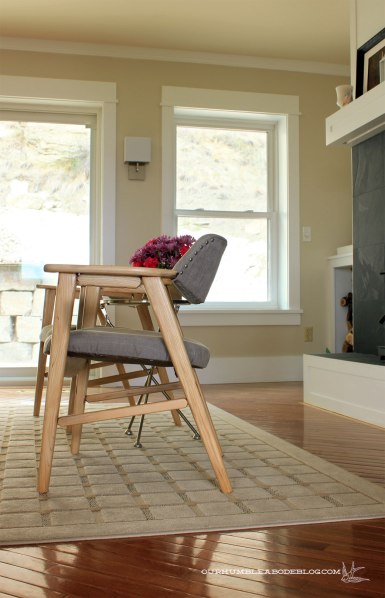
MCM Chairs Finished Left

To bump up the comfort and color, I plan to find or sew lumbar pillows.

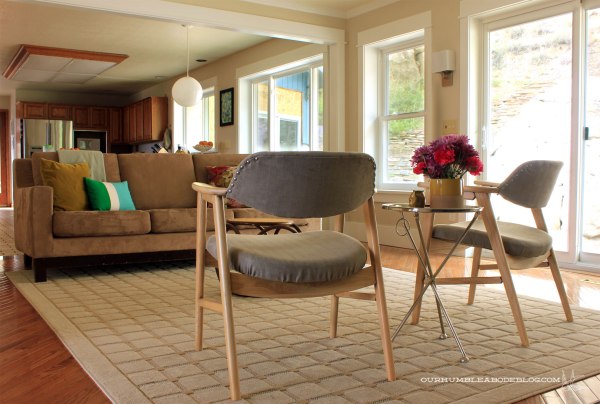
MCM Chairs by Fireplace from Breakfast Nook

That  little footstool will get an update and jolt of color sometime soon, too.  Because paint is easier and cheaper to change than upholstery and stain.  These chairs work great in the family room.  Comfy, but light weight and open.  Can’t forget the price, either.  Only $32 spent on the chairs and materials ($18 for the fabric and four more for the nail head – we had the rest already).

MCM Chairs Finished From Stairs

I might fix the back of the seat because you can see the puckered fabric.  Not perfect, but not terrible for my first rounded corner cushions.

MCM Chairs Finished Toward Kitchen

How’s that for a Cinderella story?  What do you think?  Have any plans for the upcoming long weekend?

I Chickened Out

This is about those five dollar chairs I snagged at ReStore got a little overhaul.  Great lines and deceptively comfortable, but not in the best condition or colors.
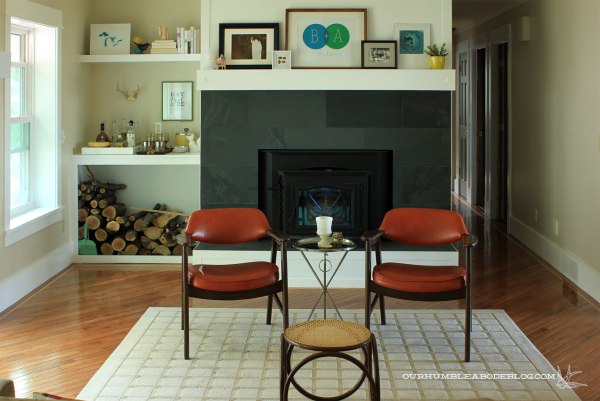
ReStore-Chairs-by-Fireplace-Before

Before I started anything, I took pictures of the upholstery detail.  Because this is my first time upholstering something like this, the pictures could jog my memory if I ran into a problem.

MCM Chairs Upholstery Details Before

With the pictures on my card, I started pulling each staple out.  One at a time, prying with a flat screwdriver then pulling with a pliers.

MCM Chairs Removing Vinyl

Roughly one trillion times.  I counted.  Okay, I didn’t count, but there were a lot. of. staples.

At that point, I wondered what the h–e double hockey sticks I was thinking.  Too late now, I had to keep going.

MCM Chairs Vinyl Tear Off Detail

So I did.  After pulling off the vinyl, I sanded the wood frame down using an orbital hand sander with 220 grit paper.  And loved the lightness against the dark fireplace and the subtle grain.  Two coats of Minwax Polycrylic in a satin finish brings out the grain and protects the wood.  Conveniently, it’s water-based which makes it a breeze to clean up.

MCM Chairs Clear Coat

Then my indecisiveness kicked in.  Upholstery time, but which direction to go.  I stopped in a leather shop, gathered samples and prices, and thought it over.
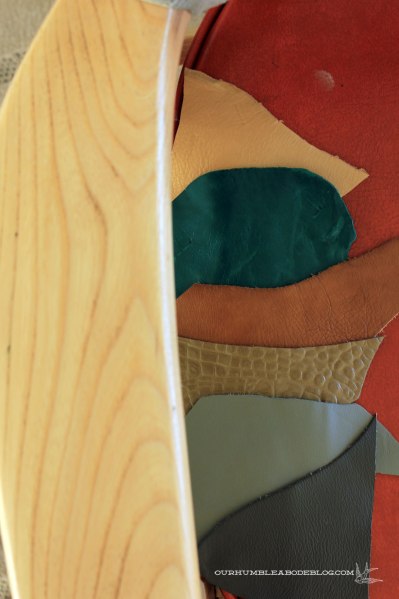
MCM Chairs Leather Samples

Leather is super durable and easy to clean, but far more expensive than fabric.  Not to mention I could only buy the leather as a full hide, roughly twice as much material as I needed.  Perhaps if I had another use for the leather I could justify buying it.  Instead, I hit up two fabric stores where I found a beige subtle herringbone pattern upholstery fabric for 9 bucks per yard.

I bought it, then stopped in the second store where I found a greige subtle herringbone upholstery remnant for six dollars per yard.  And bought three yards.  Now that I could justify.  Yes, I chickened out on a bold color.  Pillows can fix that.  Right?!

MCM Chairs Fabric to Cut

To get started on the upholstery, I used the vinyl pieces I pulled off as templates, tracing it to the front of my fabric to keep the pattern straight.  Don’t do that!  Add at least 1/2 inch around the sides for a little wiggle room.  I don’t have four hands, so I used a clip to keep my pieces straight while I worked.

MCM Chairs Back Fabric

First tacking the arms, folding the fabric under, wrapping around the back.
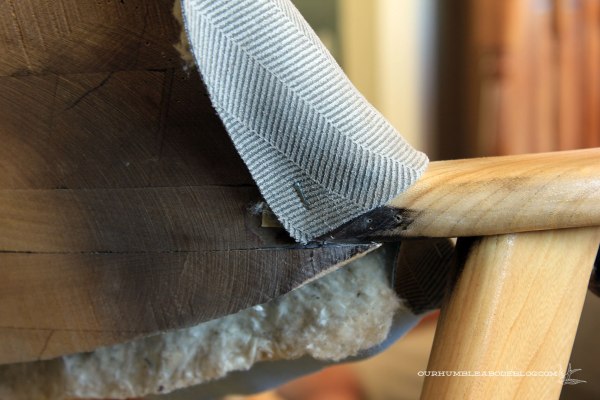
MCM Chairs Back Upholstery Arm Back

From the front, it looks like this:

MCM-Chairs-Arm-Detail

With the arms secured, I stapled along the top and bottom, pulling tightly.  Then the sides and finally the slightly rounded corners.
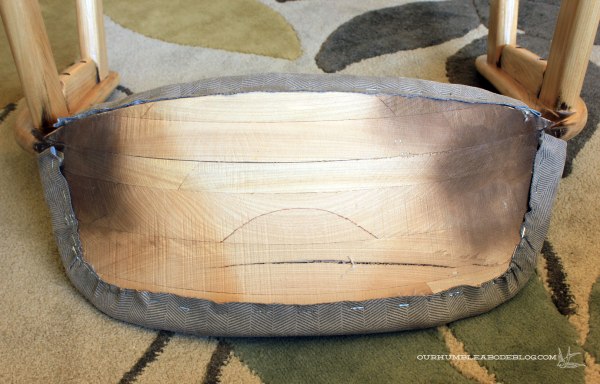
MCM Chairs Back Front Attached

That covers the front of the back rest, so now for the back.  Like the vinyl predecessor, I folded the fabric under, creasing it with my fingers.  Using that crease as a guide for the outer edge, I stapled just inside the crease and worked around the top.
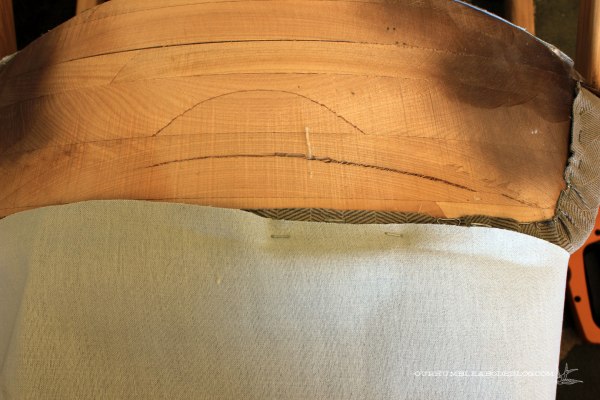
MCM Chairs Adding Back Cover Staples

The corners are tricky to staple under, so then I tacked the bottom of the fabric to the underside.
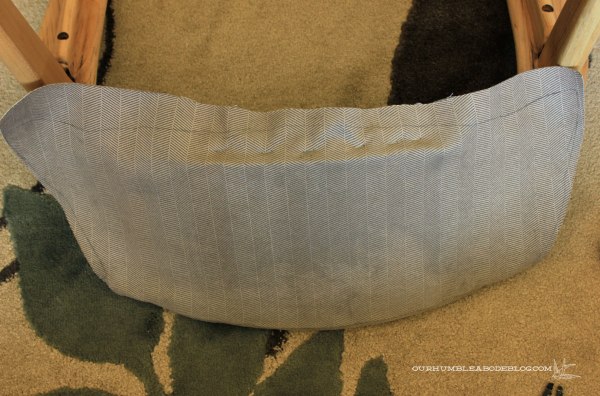
MCM Chairs Back Cover Panel

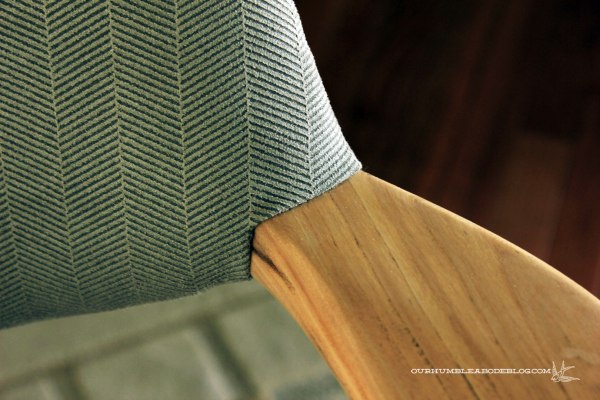
Satin nickel nail heads, placed using a needle nose pliers, hold the sides of the fabric in place.

MCM Chairs Nail Head Detail

I’ve upholstered chair seats before, so I thought the back would be more tedious than the seat.  As usual, I under estimated.

MCM Chairs Seat Upholstery

Turns out, the slight curves of the seat were a pain in the arse.  No matter how hard I tried, the fabric puckerd at the turns.  Finally I gave up and let the slight puckers stay.  So, if anyone has pointers, please share!  I’ll leave you with that, because I have to clean up the family room to take pictures of the finished chairs.  Let’s pretend it’s because there are already 17 pictures in this post, okay?

Bubbling Up

Here’s another quickie project to help you get organized.  Or at least more organized, can’t fix every problem with a few hooks now can ya?  It started when I saw these cute metal cloud hooks.

Then I looked at the pile of Everett’s costumes and set out to make cute hooks.  A stop to Michael’s and Home Depot gave me everything I needed:

1 inch wood dowel

Pre-cut wooden shapes (I chose conversation bubbles, but there are so many fun shapes, including clouds)

Dowel screws

Sharpie paint pen

Convo-Bubble-Hooks-Sipplies

Not pictured, you’ll need craft paint, clear coat, wood glue (or your favorite strong glue), a drill, saw, and pliers.  Cut the dowel to length, mine are 2 inches and sand any rough ends.  Then glue the wooden shapes the front, pressing firmly.  Once dry, paint all sides of the hooks.  Drill a pilot hole the size of your screw shaft in the end of the dowel.  Screw the in, making it tight.

Convo-Bubble-Hooks-Assembled

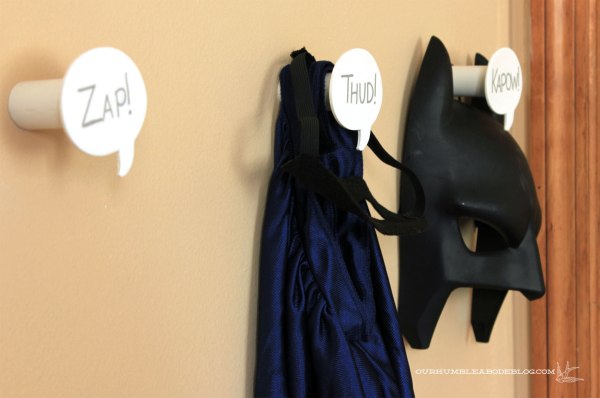
I chose to write on the bubbles, to look like a comic books.  Gotta love a little onomatopoeia, right?  Seemed fitting since the hooks hold super hero costumes.  So I wrote words like Boom, Kapow, Zap, and Thud with the Sharpie pen and gave the hooks two coats of clear finish.  I screwed them to the wall (find a stud or use anchors, just to be safe) and showed Everett.

Convo-Bubble-Hooks-Hung

He thought they were “so nice.”  Mission accomplished.

Convo-Bubble-Hooks-Side

I’ve got two more that I might add, but we’ll see.

Convo-Bubble-Hooks-Behind-Door

Something similar could be fun and functional in an entry, too.  Maybe with names on them?  Maybe not, to look like little floating art…

Leather Cord Cuff

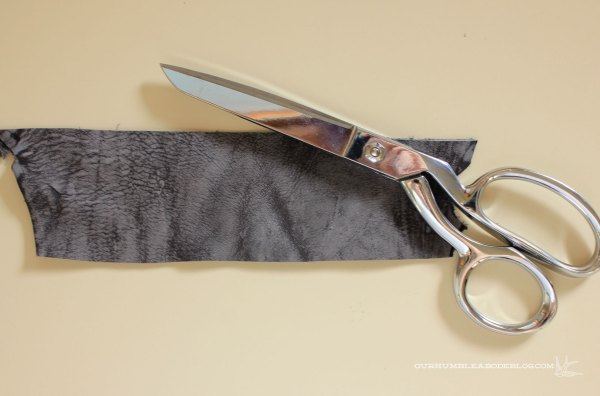
Cords.  We’ve got a mess of chargers for various electronics: phones, computers, cameras, even table lamps.  Here’s a super quick, no sew, and cute way to keep those cords controlled.  Start with a scrap of leather and good scissors.

Leather-Cord-Cuff-Supplies

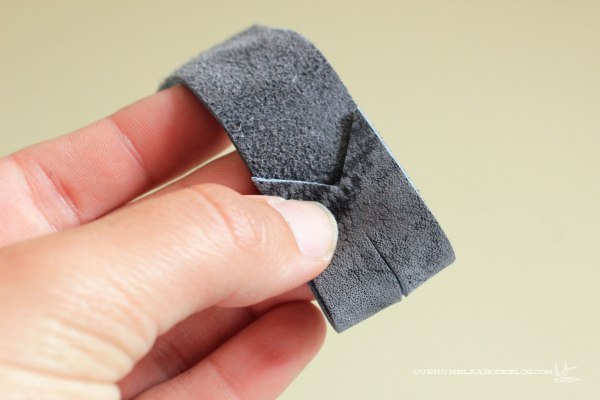
Cut the leather into strips.  For bigger cords, go wider, but mine is about an inch wide by six inches long.  Trim the ends in a cute pattern (at an angle, fringe, whatever tickles your pickle).  Then fold one end over and cut a slit running lengthwise with the strip.

Leather-Cord-Cuff-Hole

At the other end, cut two small notches perpendicular to the slit, not quite to the center.

Leather-Cord-Cuff-Finished

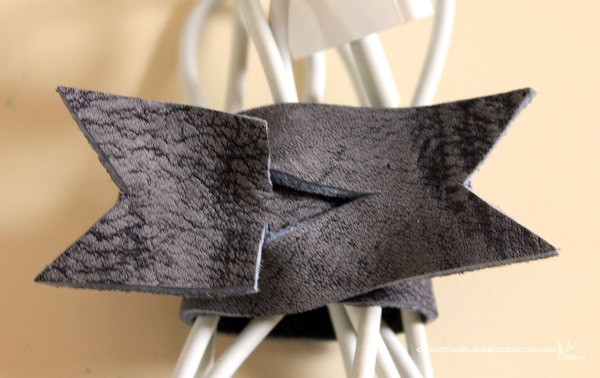
Wrap your cord up and insert the end through the hole.

Leather-Cord-Cuff

Done, an easy way to corral those cords at home or on the go.

Leather-Cord-Cuff-Detail

Of course you could change this up by adding a snap or button.  Or make several to use as napkin rings.  Happy Friday, too!  Whatcha doing this weekend?  And special plans for Mother’s day?

Because Call My Maybe came on while writing this, here’s a video to give you a laugh this Friday.

When Pins Collide

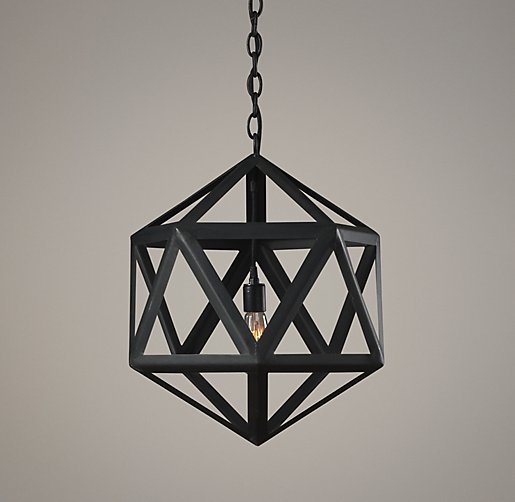
I’ve had a major crush on this pendant, dreaming of having it, or something similar in our entry since we bought this house.

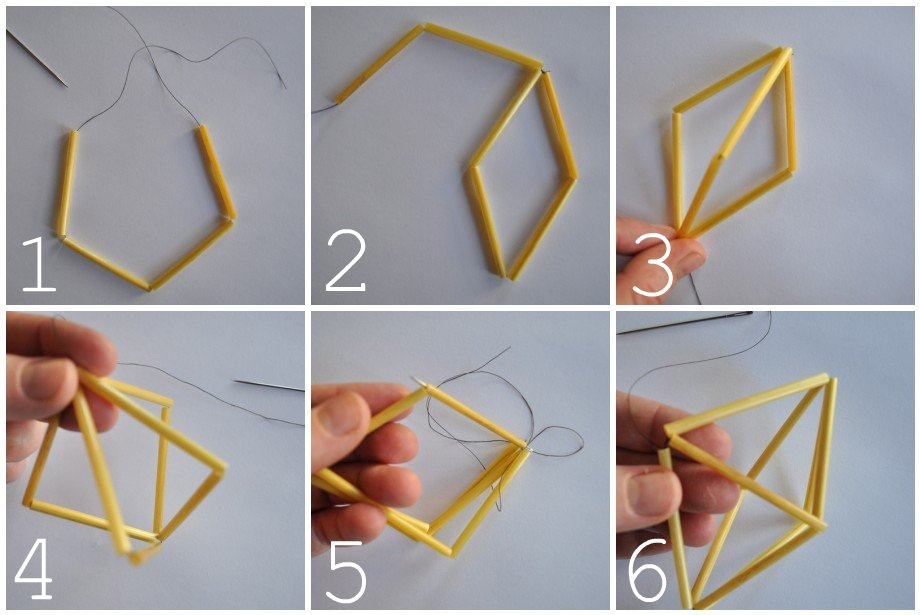
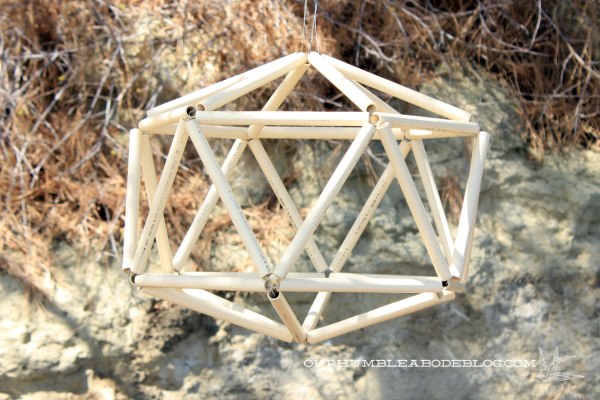
While lying in bed last week, I remembered the traditional Christmas Finnish Himmeli ornaments.

Eureka!  Couldn’t I merge these two together?  I ran my idea past Ben, but he worried a single bulb wouldn’t light the entry adequately.  Determined to give this a try, I decided to scale down the size to make a pendant for our bedroom.  Goodbye old fan.

Master-Bedroom-from-Door-One-Year-Later

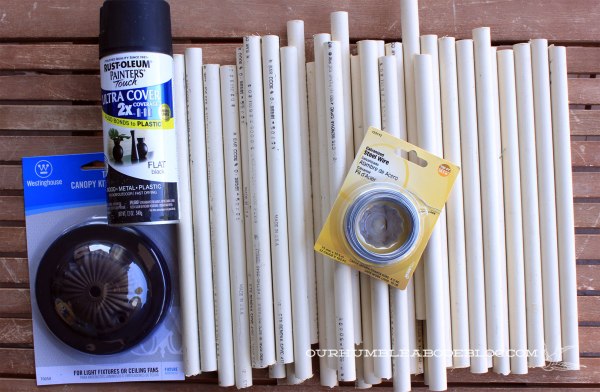
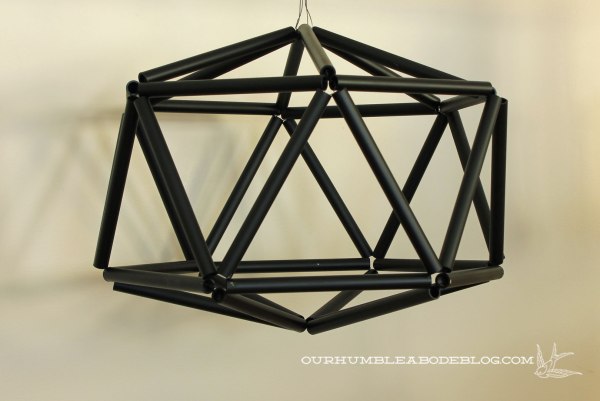
I started with my supplies, 36 one foot pieces of 1/2 inch PVC pipe (under two bucks for 10 feet!), wire, and black spray paint.

PVC-Pendant-Supplies

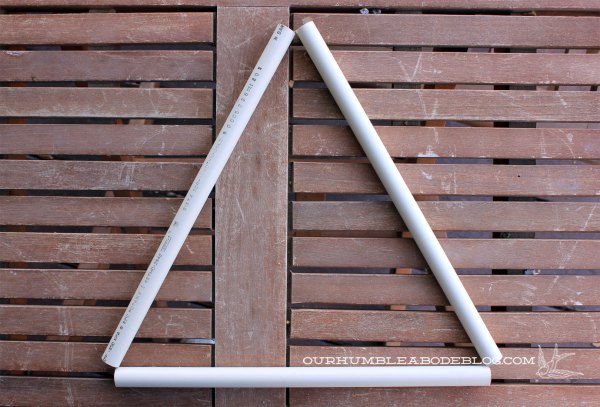
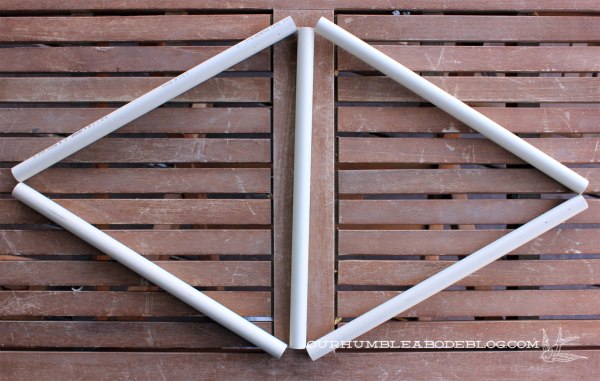
Using the wire, I threaded three pieces on and twisted the wire ends together.

PVC-Pendant-Step-1

Then strung through one of those pieces, adding two more on, securing the ends with a few twists.

PVC-Pendant-Step-2

I made a group of four, brought it in the house and realized it would hang down too far.  So, I took it apart and cut the pieces down to 8 inches.

PVC-Pendant-Step-3

Treating each triangle individually made easier and tighter connections.

PVC-Pendant-Step-4

After twisting the ends several times, I cut the wire and pushed it inside the pipe.

PVC-Pendant-Step-5

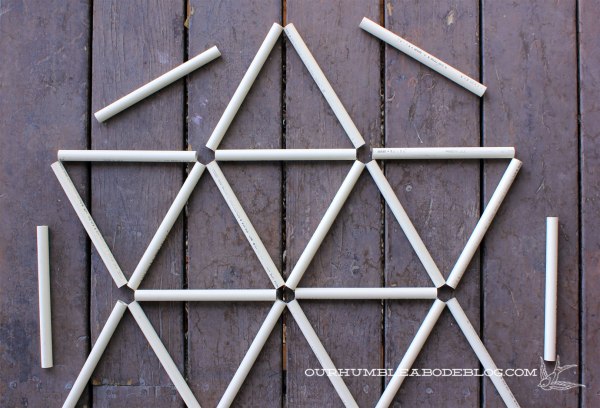
The easiest way to think about this design is a hexagon turned to a six-sided star, like this:

PVC-Pendant-Six-Sided-Star

To make the three-dimensional shape, connect the outer points with another piece.  I’d suggest hanging it to make work easier.

PVC-Pendant-Six-Sided-Star-Connect

String on the last six pieces, connecting all to the center point.  And time for spray paint.  We had beautiful weather, so I strung it up between two trees and got my spray on.

PVC-Pendant-Before-Spray-Paint

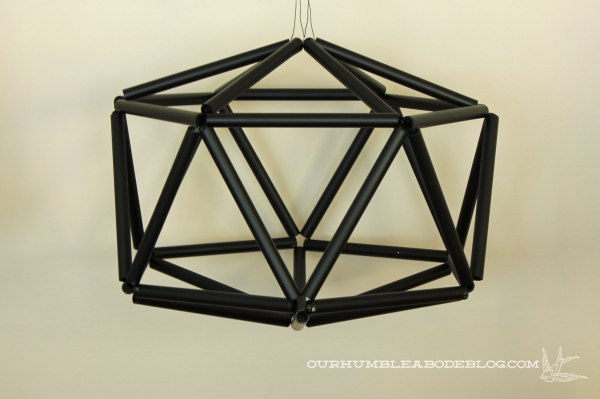
I thought I had a pendant kit, but used it in the guest bedroom.  So this guy hasn’t been installed, but is finished.  Off to ReStore to snag a cheapie pendant to hang this dude.

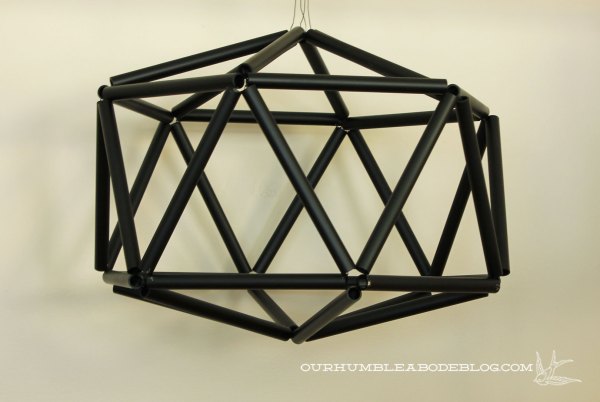
PVC-Pendant-Black-After-2

Now that it’s assembled, I wish I had made the top and bottom six pieces a little longer than the rest.  The points aren’t nearly as noticeable as the Restoration Hardware version.

PVC-Pendant-Black-After-1

Not perfect, but for $16 in materials I can’t really complain.

PVC-Pendant-Black-After-3

What do you think?  Are you crushing on an expensive light?