
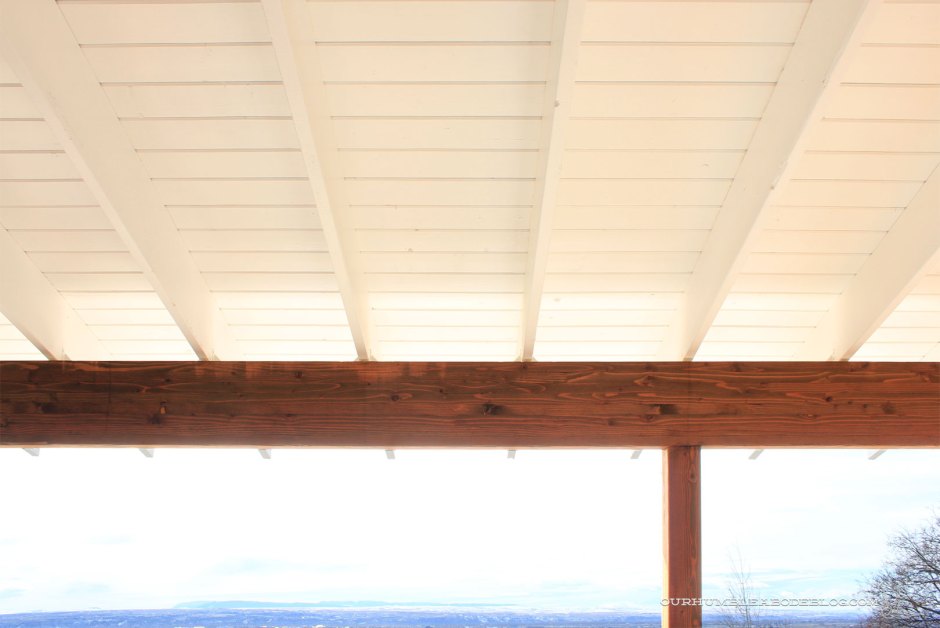
When we last left off with the pool house ceiling install, it looked like this:

Since then, we’ve installed the rest of the tongue and groove on the ceiling, with three skylights left to trim out. It’s thrilling to be at this stage, because it means we’re that much closer to taking the scaffolding down. After discussing the merits of painting versus staining, we’ve decided to paint the ceiling white, while staining the beams.

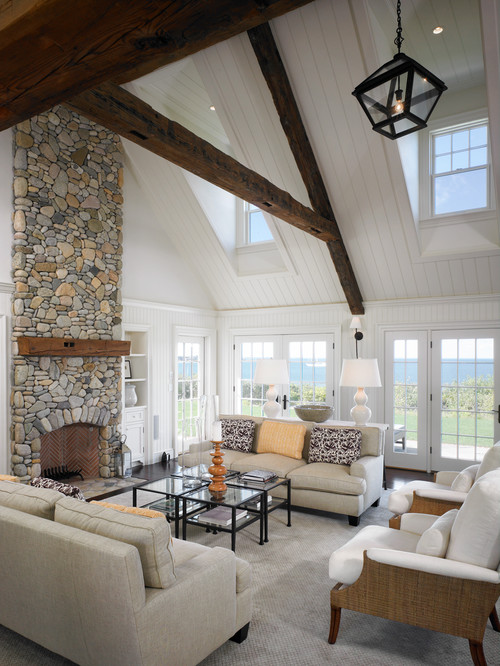
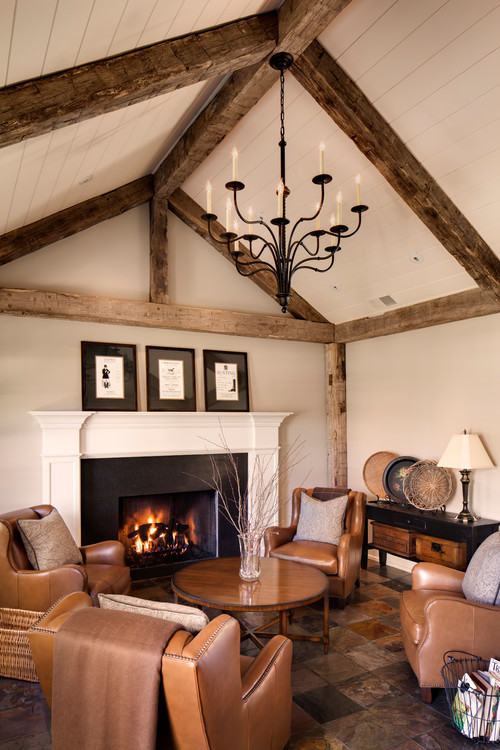
Those two beams are an architectural element that we love and want to emphasize, and the stain will stand out best against the white backdrop. With the decision to paint solidified, we knew we could go darker and more dramatic on the beam color without weighing down the entire room.
When possible, we like to use the same or similar elements throughout our home for a cohesive look and feel. Along the entire pool house front is our recently rebuilt large covered deck:

Like the pool house, we used tongue and groove boards to add subtle texture to the ceiling.

Painting that ceiling white was such an easy choice, because it visually heightens the ceiling, preventing the space from feeling claustrophobic.
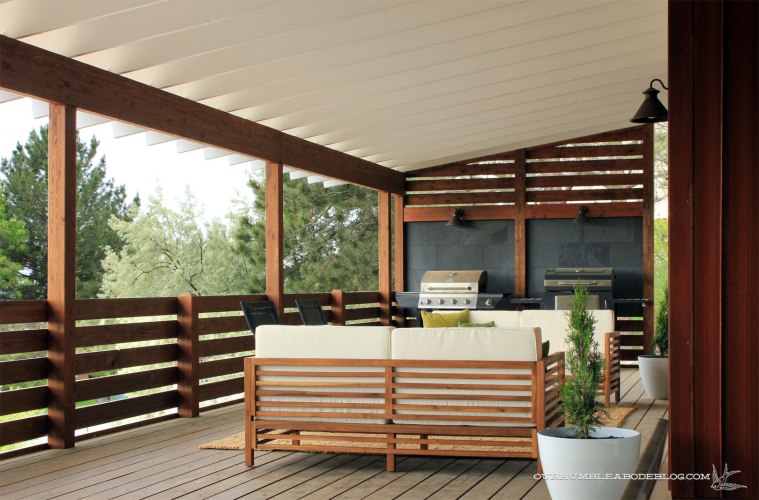
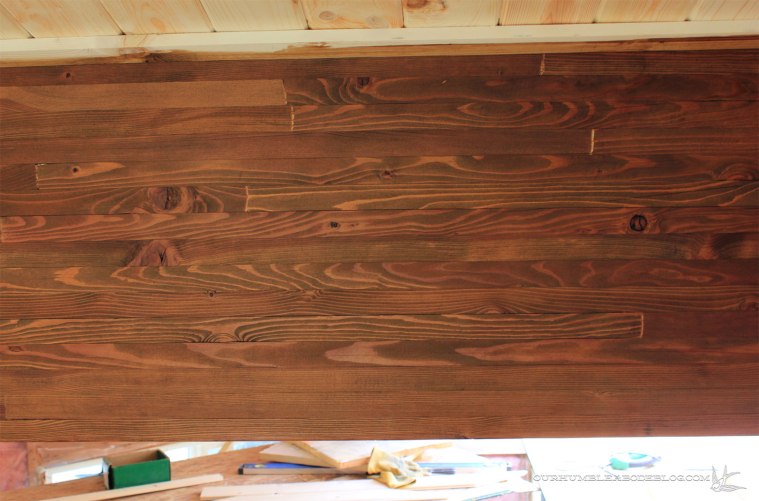
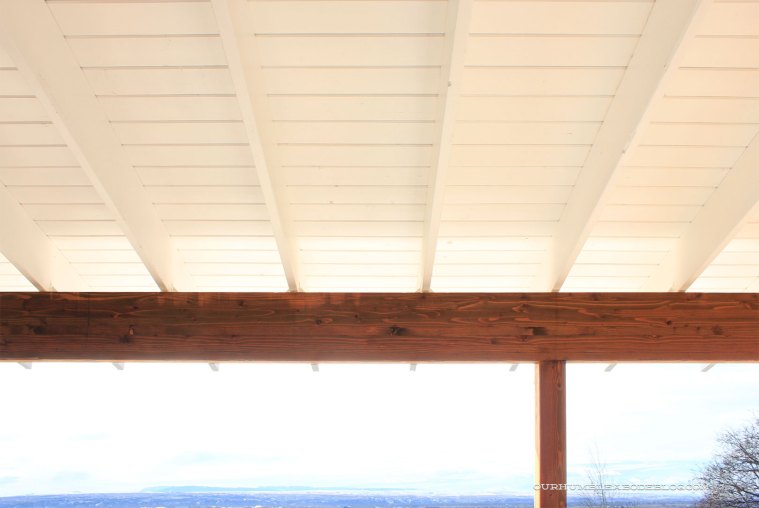
Similar to the pool house, the front of the deck also features a stained beam. Ben and I both love the look of the dark beam against the white ceiling, so we’ve decided to carry that same look inside.
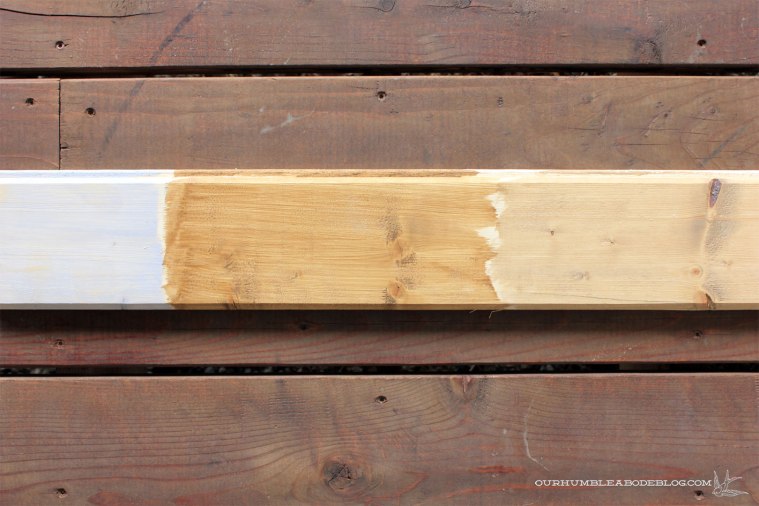
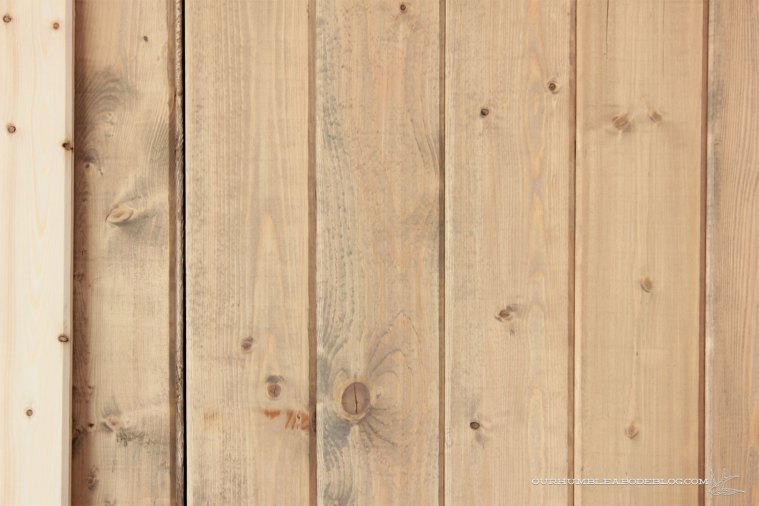
Using the same deck colors will allow a seamless flow from inside to out, but it also made my stain selection painless. As an added bonus, we had leftover stain so this weekend we knocked out the process in about three hours.

Finally, those beams have gotten the attention they’ve always deserved.
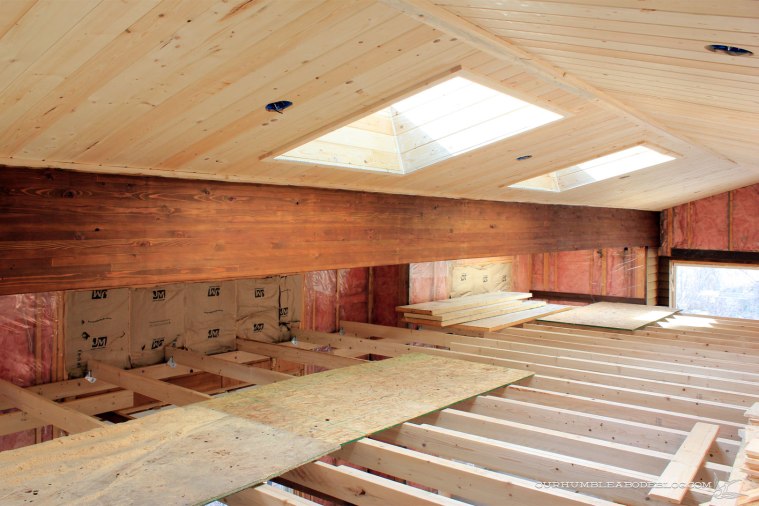
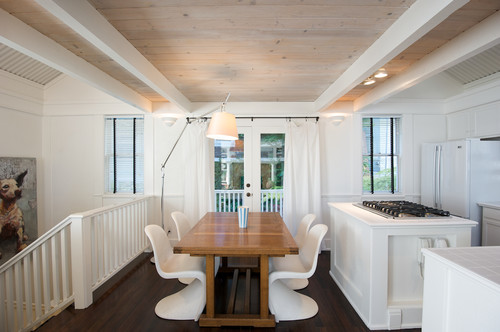
Once the ceiling goes white, the majority of the room will be light and bright, punctuated by contrasting pieces.
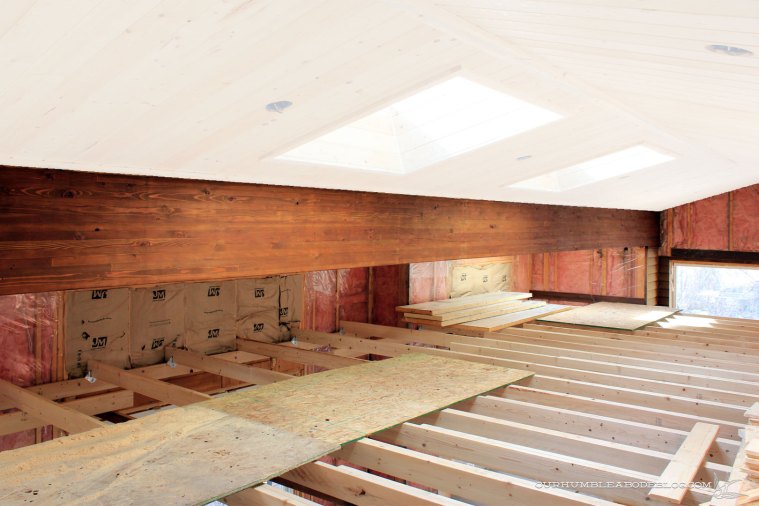
Another benefit of painting the ceiling is that the recessed lights will further recede, rather than the white ring standing out against a stained ceiling.
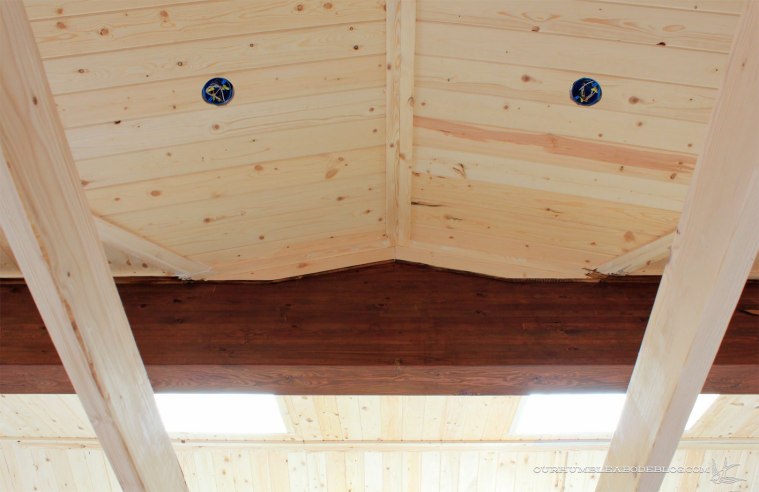
Unfortunately, we’re still looking at the ceiling through scaffolding bits, so it’s not a complete picture just yet.

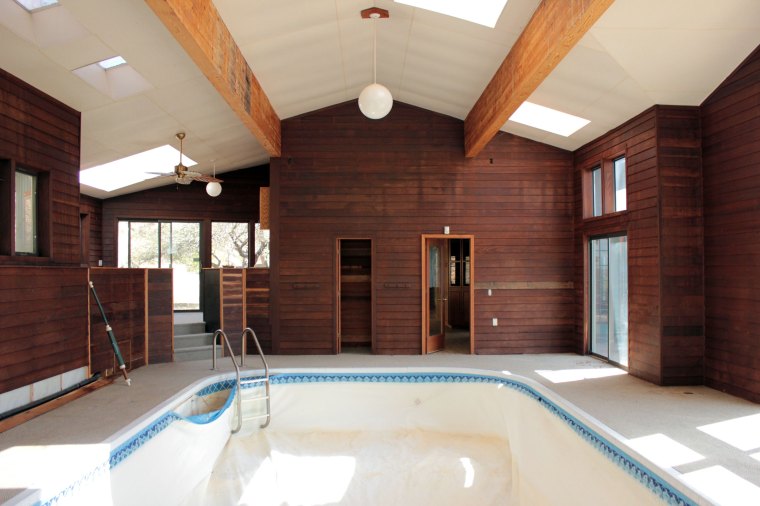




 Having a ceiling peak of 15 feet, plus a 9 foot deep hole to work over, we needed scaffolding. Rather than renting and spending the same or more money, we built a temporary structure to make working easier. Step 1 of 3,286 complete. Then, Ben tore off the old sheets, exposing the structure. Step 2, check!
 Those exposed beams are such a cool structural element, but the leaking roof had streaked and stained both. A thorough sanding brought them back to life. Steps 3-9, done!
 Once the beams were finished, Ben started prep work to install the tongue and groove pine boards. First, two by 4 boards were secured perpendicular to the trusses followed up by new light boxes to adequately light the entire room. Steps 10 and 11. Next, he cut pieces of rigid foam insulation to tuck between the boards for a higher R value and covered with a thin plastic sheeting-12 and 13 are done.
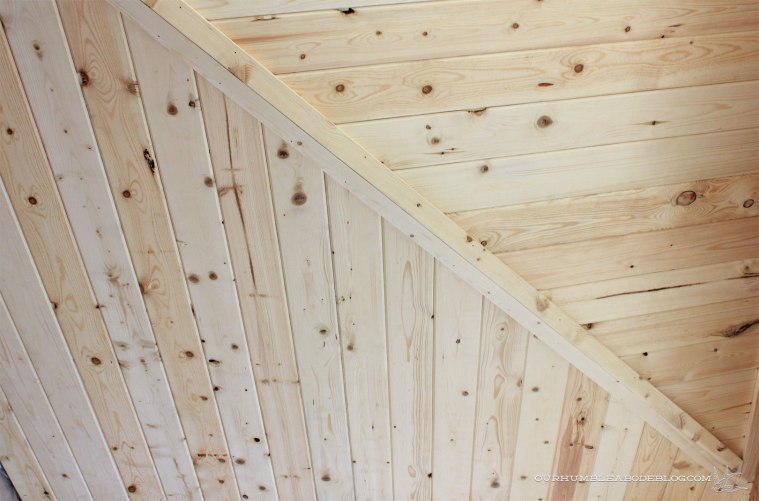
 Board by board, we’ve been installing pine planks. Let’s say that was steps 14 through 20. Below, the center had just been finished, minus the insides of the skylights.
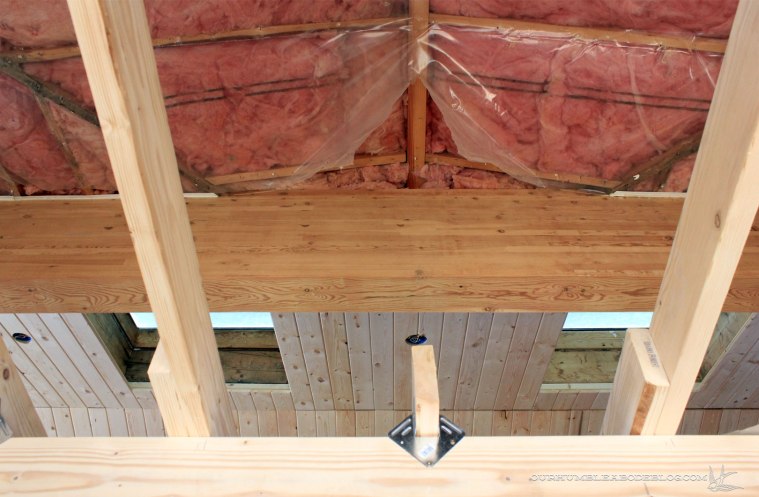 The strips on either side of the beams still need work, the skylights will get boxed in, and trim will go up to cover the gaps, so it’s not a quick process. It is, however, 20 steps in the right direction.





 ourhumbleabodeblog.com