Cover Up, Part Deux

Before getting to decorating, I want to say how deeply saddened and sorry I am for the families in Connecticut.  Such a senseless tragedy.  Our thoughts and love go out to the families, friends, and community of Sandy Hook.  Here’s a link offering various ways to help.

Well, the cover up is working; the fireplace has never looked better.  Ladies and gentlemen of the jury, I present to you exhibit A:

Fireplace-Cover-Up-Side-by-Side

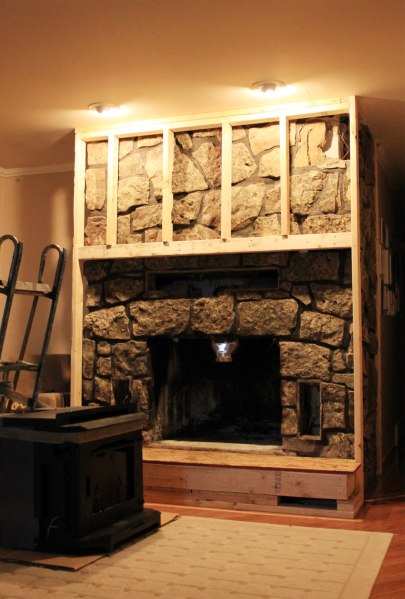
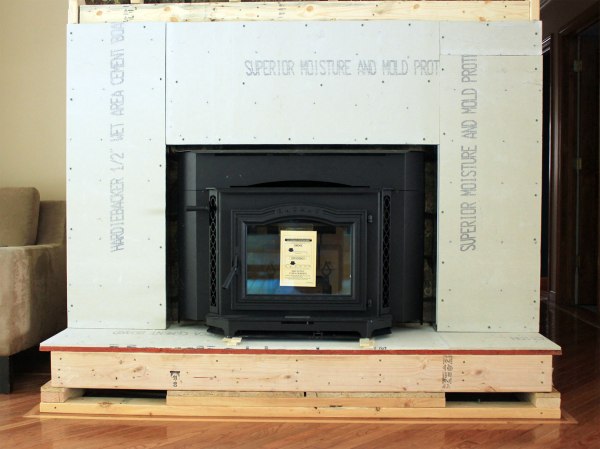
On the left, 70’s moss rock, complete with poorly placed vents.  The right side shows step one of the great cover up consisting of studs and cement board.  And now, exhibit B:

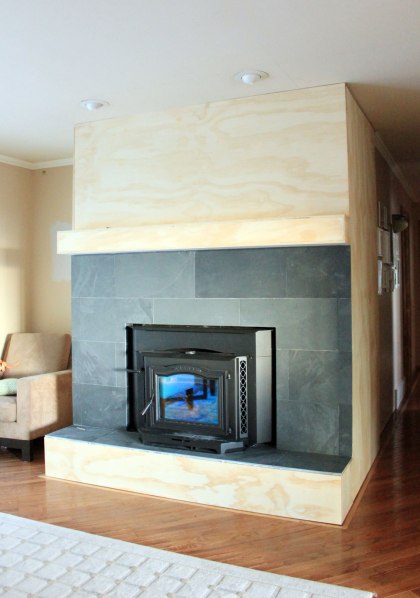
Fireplace Cover Up with Slate Overall

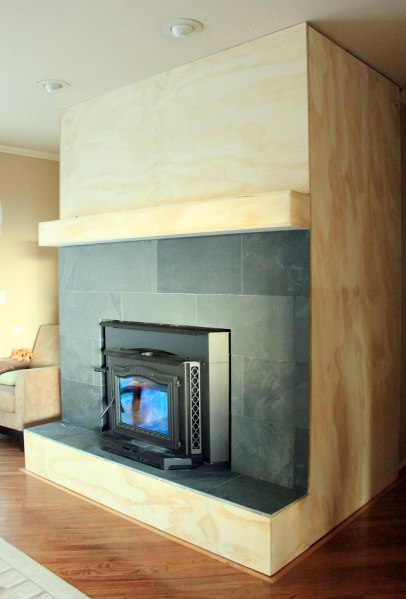
A clean slate, pun intended.  Ben laid the slate tile, saying it was the easiest tile he’s ever worked with.  And we’re both head over heels for the pretty, slightly varied, textural tile.

Fireplace Cover Up with Slate Bottom

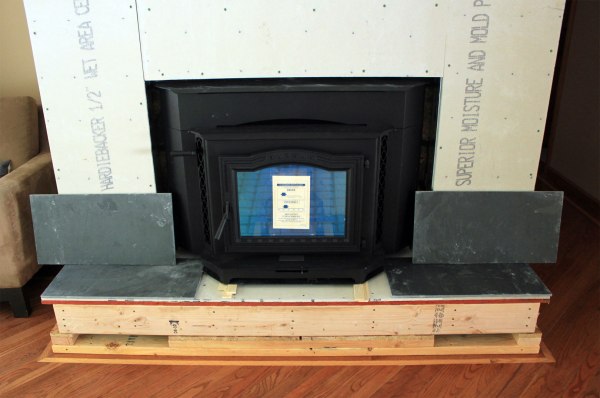
Because the insert has angled sides, we decided to tile the insides of the walls, too.

Fireplace Cover Up with Slate Inset

Everything outside the combustible free area (the tiled surround) has gotten a layer of plywood.  This should come in handy if/when we want to hang something above the mantel.

Fireplace Cover Up with Slate from Side

Speaking of the mantel, we considered a solid piece of reclaimed wood.  Then we thought it might stick out (not in a good way) with the rest of our plans.  Instead, Ben built a simple plywood box to place over a few 2 by 4 boards.  Basically a mantel slip cover over supporting studs.

Fireplace Cover Up with Slate Mantel Detail

Clearly, we’ve still got some work to do before we can call this a wrap.

Fireplace Cover Up with Slate to Hall

For starters, we’ll add 1/4 inch thick by 2 inch wide trim around all the edges, including the mantel.  Because the rock extended into the hall, we covered it up just like the rest of the fireplace.  As it currently is, it seems like an odd little bump out.  To make it fit with the rest of the fireplace and differentiate between the normal walls, we’ll add  more 1/4 inch trim to make a grid.  Then, to brighten up the space and balance out the dark slate, a few coats of white paint.  Something kind of like my Photoshopped version:

Fireplace-Cover-Up-with-Slae-Photoshop-Version

In addition to painting windows, baking cookies, squeezing the boys a little tighter, and usual errands, that pretty much sums up our weekend happenings.  What did you do this weekend?

Cover Up

The great fireplace cover up has begun.  After a day of being annoyed that we couldn’t remove the rock, Ben decided on a plan of attack.  It involves wood 2 by 4s, steel studs, plywood, and concrete backer.  First, he started with the wood studs, building a frame slightly larger than the deepest rocks around the top and sides.  Combustibles shouldn’t be too close to the insert, so we have a slightly higher than we’d like mantle.  The bottom of the 2 by 4 is where the bottom of the mantle will start.

Fireplace Build Out

A 2 by 6 box (basically a very short version of a wall) makes up the base of the hearth, which is sturdy enough to support the weight of the 600 pound insert.

In the hall, the framing is minimal to keep the walkway wide and show as much of the inlay floors as possible.

Fireplace Build Out in Hall

Then Ben had the pleasure of installing the new duct work, with plenty of annoyances and obstacles along the way.  Finally, time to haul up the beast, I mean insert.  Ben and Handy Sammy loaded it on a dolly, hefting it up, one stair at a time.  I pulled in the dolly, trying to help, but I couldn’t get it to budge.  Luckily, the guys are much stronger and got it up the stairs without hurting themselves or the house.

Fireplace Build Out Insert

The next morning, they carefully hoisted the insert, scooting it around to get it in place.

Fireplace Build Out Insert In

As I mentioned before, combustibles can’t be close to the insert, so Ben used steel studs to frame out everything below the mantle.

Fireplace Build Out with Concrete Board

Oh, and we took down the huge mirror.  Fortunately four clips held it in place, so there’s no wall damage.  Oddly enough, the room feels bigger without the mirror reflecting the kitchen.  A layer of concrete board on top and we’re ready for tile.

Fireplace Build Out with Cement Board Detail

Awkward angles of the surround won’t let us tile up to the insert, so we’ve got a small frame around.

Fireplace Build Out Steel Stud Framing

Speaking of tile, we chose 1 foot by 2 foot black slate tiles at Home Depot.  Why?  Because we’re suckers for natural stone, love the color, subtle color differences, the matte finish, and the price.  Most importantly, the dark tile should better disguise soot or ash from the wood fireplace.  Had we gone with a gas insert, we would have chosen a lighter tile.

Fireplace Build Out Slate Tile

To balance out the dark tile, we’ll paint the upper part and hall side white.  Best of both worlds then.

What’s your favorite tile?  Do you prefer the convenience of a gas fireplace?  Or the crackle of a wood fire?

Laboring on Labor Day

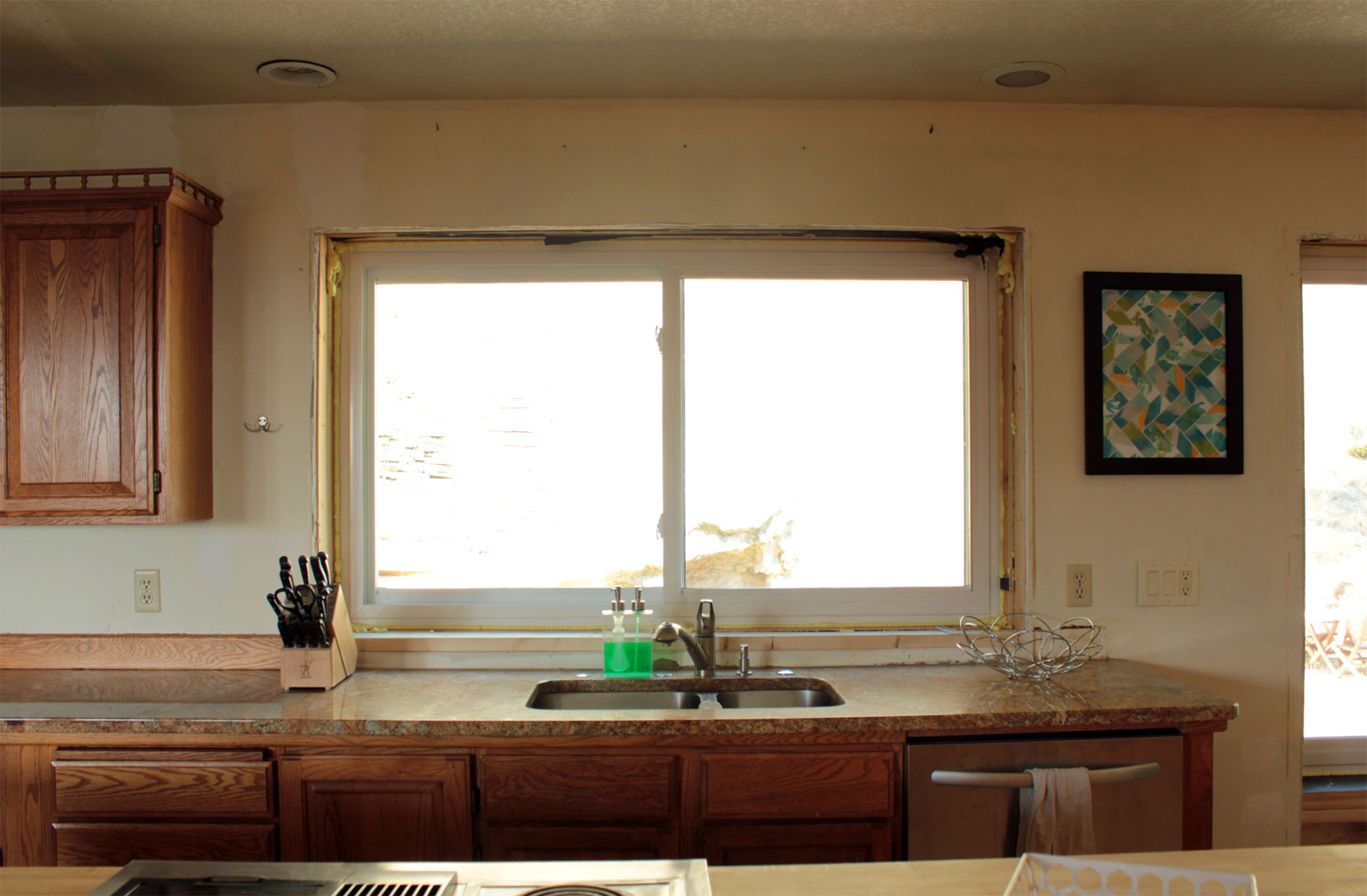
Nope, not pregnant.  No new baby here.  I’m talking about windows.  Now that all most of the windows are in, let’s go inside to take a look at the difference the new windows have made.  First, check out the kitchen in all it’s 70’s wallpapered, oak, bay window goodness.

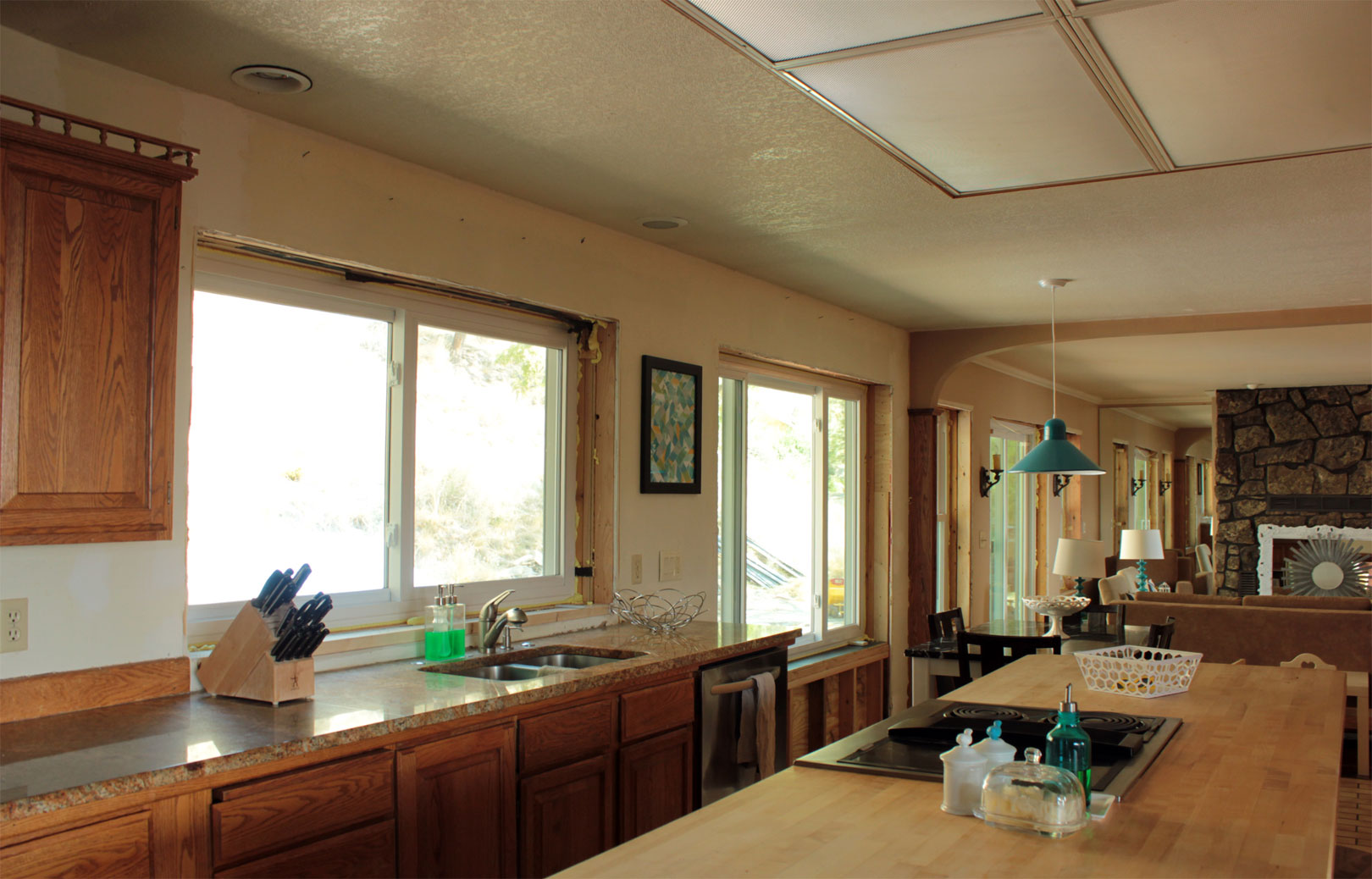
And now with the sliding white window.

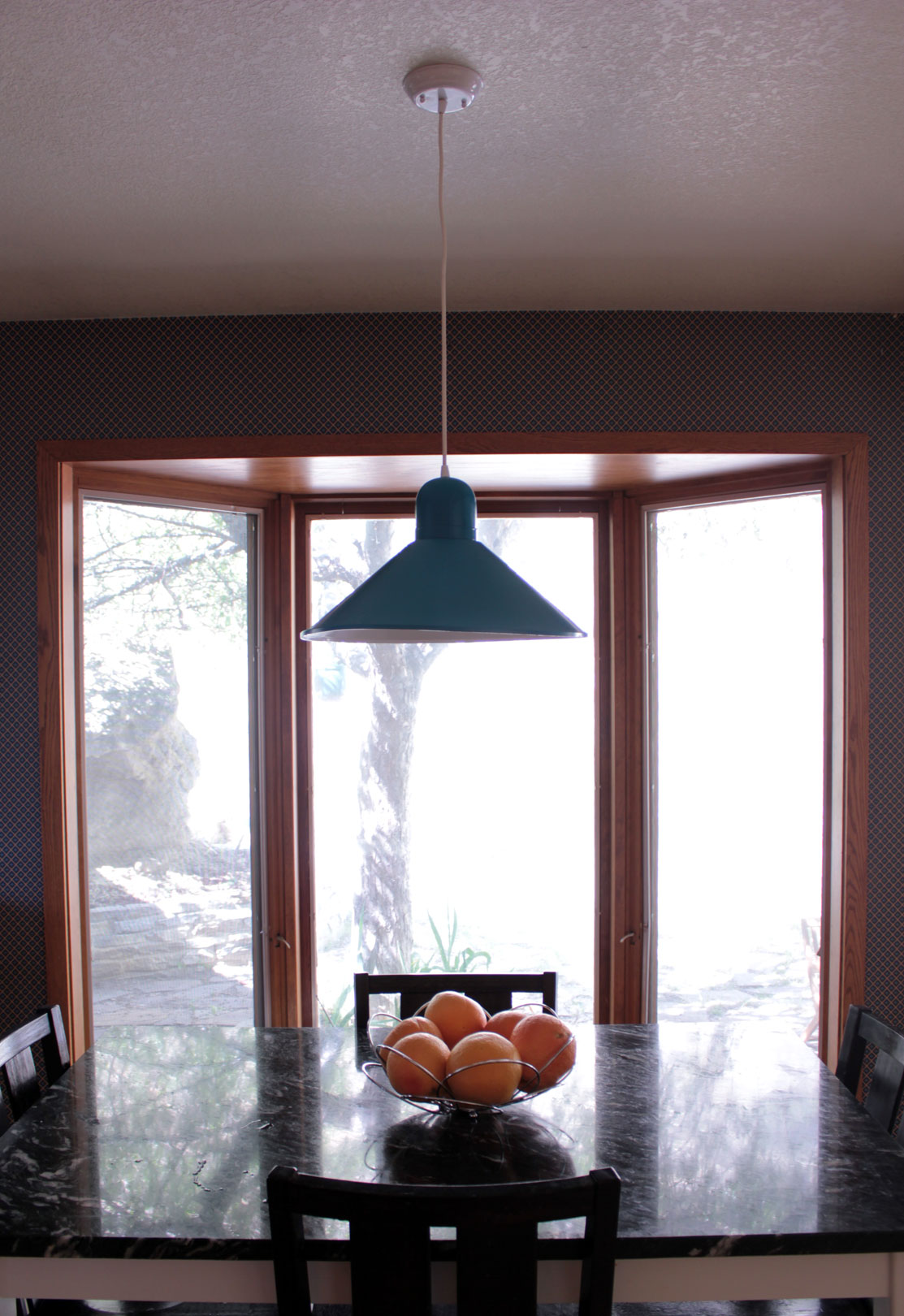
Making this window flat lets in so much more light, and the window seems bigger without dividing it into three sections.  Oh, and the fact this window actually opens.  Go figure.  The same can be said for the breakfast nook window.  Before, V and E used the bay window as their personal dance floor/kitchen/play room.

Despite shortening the window, I think it feels more open.  Perhaps not having a mass of dark oak helped?  Whatever it is, I’m liking it.

Just a breath of fresh air to see a lighter, brighter kitchen.  Removing the ugly wallpaper definitely helped.

In the family room, we replaced the two stationary side lights with shorter double hung windows.  Hooray for air flow.  For some reason, I always feel guilty putting furniture in front of windows.  So this arrangement works better for us.

Also, I think the shorter windows feel more intentional and less like “this is a door, but let’s just take off the handles and no one will know.”   The window height actually matches, instead of looking like someone scored a lot of assorted windows on Craigslist and made it work.

Oh, and these windows and doors are so quiet to open and close.  The old door squeaked and squealed.  Ben is a ninja leaving in the mornings now, sneaking out the quiet door.

While window shopping, we discovered most energy-efficient windows have a low visible transmittance thanks to the UV blocking coatings.  This concerned us, because about 50 or 60 percent of light makes it into the house.  Luckily, we don’t see a drastic difference.

To gain egress in the bedrooms, our city requires 5.7 square feet with a minimum opening of 24 inches tall by 20 inches wide within 44 inches of the floor.  The original height of the bedroom windows was fine, but our casement windows only opened about 18 inches by 4 feet.

To use the same brand and line of windows throughout, our only option was a large (4 foot wide by 66 inch tall) double hung window.

Luckily, our windows sit about 19 inches off the floor, so we didn’t have to use tempered glass.  Wahoo for saving a little money.

These are my favorite windows.  I love the cute courtyard feel of the back yard.

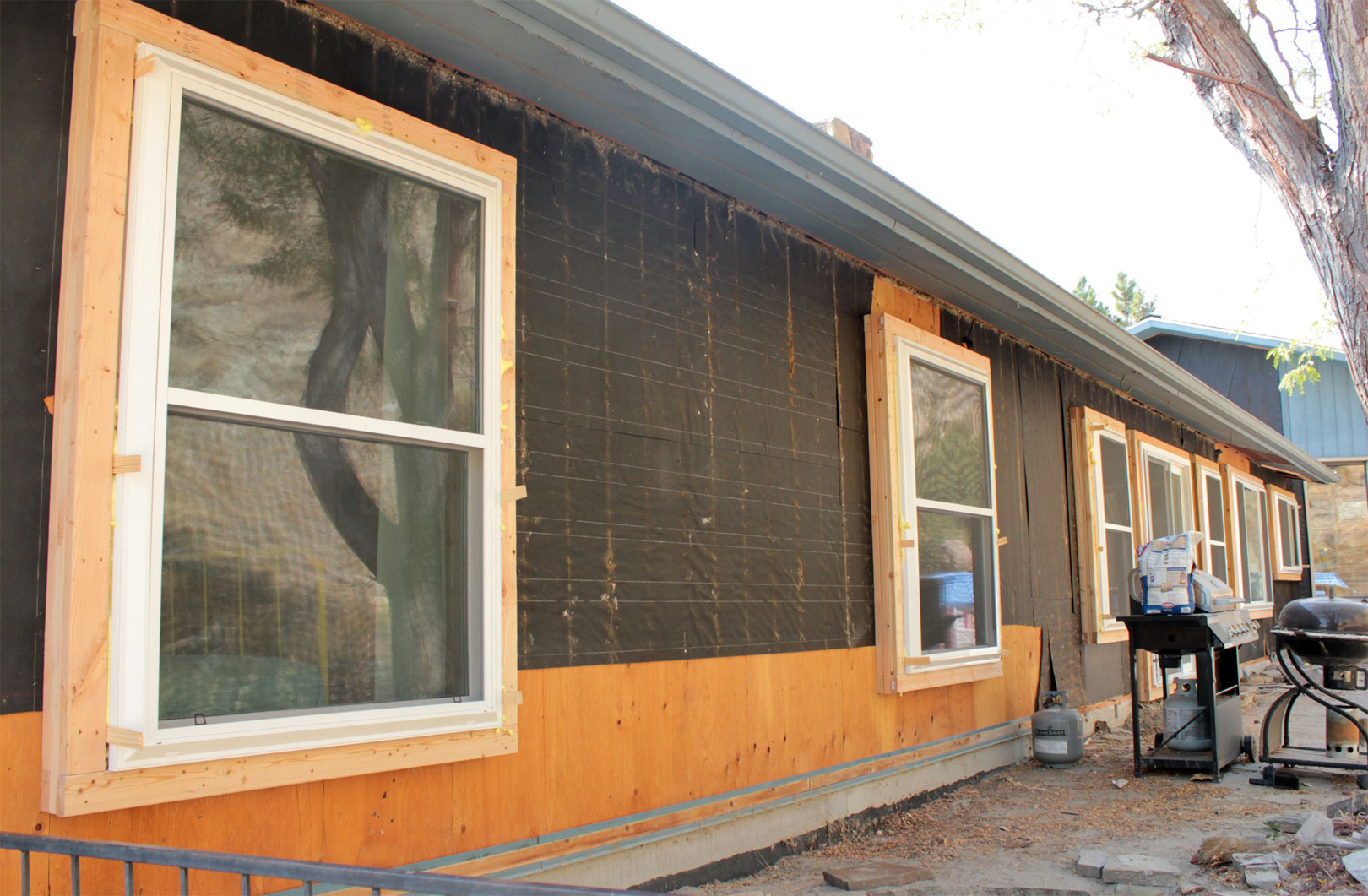
And from outside, the windows are almost the same size.

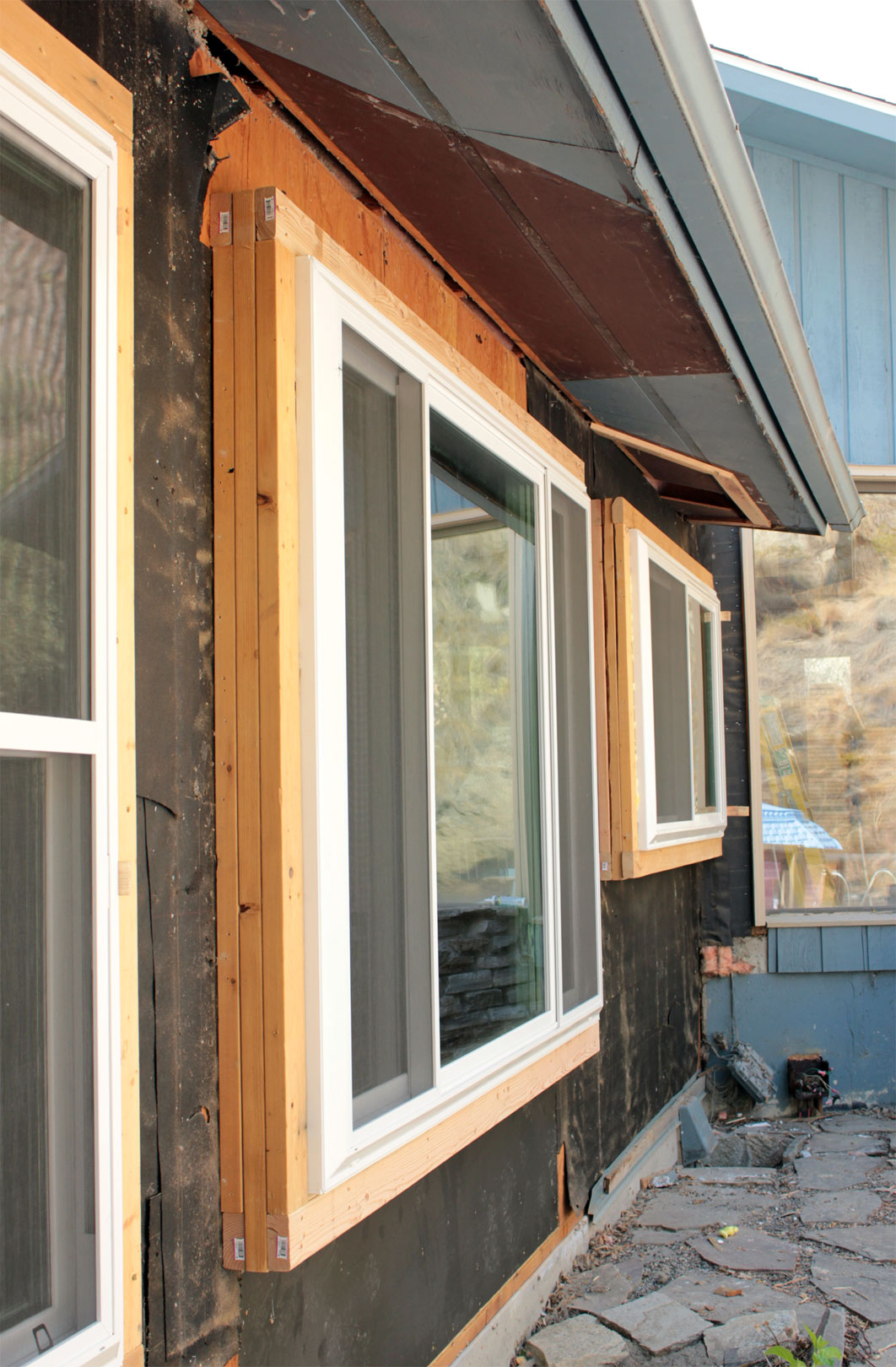
No more awkward bay windows bumping out, either.

Ben used three layers of 2 by 4s to get the windows out.  When he wraps the house in insulation, the siding will sit flush with the edge of the window.  Using the 2 by 4s is a simple and strong way to support the windows while extending for the future insulation layers.

Now to get the insulation on the outside and frame the windows on the inside.  Of course we’ll keep you updated on our progress.

What do you think of the new windows?  Have you gotten new windows recently?  Did it make a world of difference?  Both in looks and monthly savings?

Climbing a Dusty Mountain

Not long ago, we had a ketchup and mustard look on our unfinished entertainment center.

After my bathroom painting marathon, I decided to knock out the entertainment center so we didn’t think of hot dogs.  While I painted, Ben added the face trim, side detail, and crown molding.

Of course painting isn’t that easy.  Oh no, first I had to fill every nail hole, wait for the filler to dry, then sand it smooth.  And then the priming phase.

Man was I ready to start painting.  Originally Ben and I had agreed on a white entertainment center with a colorful backing.  So I tested out my options inside the cabinets he built and liked Ben Moore’s Yosemite yellow.  But then we started talking it over and decided white wasn’t the direction we wanted to take.  Why the sudden change of heart?  Well, Ben pointed out how much light the front window lets in, which also means a lot of glare.  Bright white might cause a lot of eye strain when we’re relaxing in front of the tv at night.  White is a safe choice, and maybe too safe.  Let’s try a darker color, like gray.  But I didn’t want a sea of gray, so it had to be different enough from the wall color.  I picked out two Ben Moore colors, Kendall Charcoal and Amherst Gray.

Kendall Charcoal was a great deep gray, but too blue for our liking.  Amherst Gray was too light.  While at Home Depot shopping for some other supplies, we walked to the paint department and looked at more swatches.  I pulled out a Behr color that I’ve liked for years, Squirrel.  About six years ago, I painted our master bedroom this color, but Ben said it felt like a battleship.  Since then, he has come around to more modern designs, and doesn’t hate all gray paint.  But we quickly agreed Squirrel was too light.  That’s an easy fix, we just chose the color below, Dusty Mountain.  Without hesitation, we bought a gallon of eggshell paint and headed home.

In the pictures above, you can see we bought the paint before I was ready to paint.  After finishing the prep and priming, I started with the color.

Love at first sight.  Especially paired with the reddish Bubinga top.  Yum.

Ben came home, saw this and proclaimed his love, too.

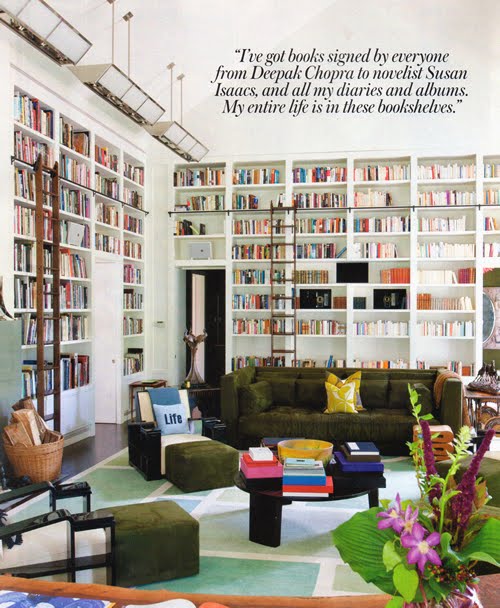
I think the green undertones are lovely and reminiscent of an expensive library.  Just picture this color on crazy tall shelves with a brass bar for the sliding wooden ladder.

{image via}

But I couldn’t let go of wanting a splash of color.  Using the yellow left over from the cabinets, I tested it on the backs.

I love the idea, but the contrast was too much for tv watching.

Ben suggested I paint the back Wood Smoke like the walls.  Instead, I took the easy way out and painted it Dusty Mountain.

Ahh, that’s better.  Ugly speakers blend in with this more.  We’ll build doors for the side cabinets, but the yellow will be a fun surprise inside.

If we had cabinet grade plywood, we could have built the drawers.  Sadly, Home Depot doesn’t have any in stock because it’s seasonal.  Ummm, what?  Hopefully they get it in, because we can’t make the fronts until the drawers are installed.  I’m telling you, our plans are always contingent on something else.

Progress is progress, and I’m happy.

So, what do you think of the color?  Are you into darker, saturated colors, too?  Or are you more of a light and airy person?  Do you and your significant other agree on colors easily?

I Just Dyed in Your Arms Tonight

After hemming and ironing longer than I would have liked, I finished the curtains yesterday.  And I’m now convinced I need to invest in a higher quality iron.  Apparently, the ten-dollar one I have isn’t fit to iron curtains, hence the hours of ironing.  But let’s start at the beginning.  As I pointed out yesterday, we needed a way to take the curtains down without removing the rod.  Why?  This might explain it.

Rather than going the conventional rod route, Ben and I agreed it would look cool to use galvanized pipe for the living space.  Once attached to the wall, it will be difficult to remove just the rods.  The living room window is 125 inches wide, which means we need a looooong curtain rod and extra wide curtains.  When looking for 144 inch rods, its slim pickin’.  Target didn’t have anything longer than 120 inches.  Home Depot had 144 inch rods, but all are more traditional looking that we wanted, like this one that was $45.  However, our Home Depot doesn’t carry that same rod in a shorter length.

So I called Ben while shopping to see what he thought of pipes turned industrial curtain rod.  Luckily, he was down for it.  We discussed the sizes available and came up with three flanges, three 3 1/2 inch nipples (I can tell men named these parts), two 90 degree elbows, and one tee, all 1/2 inch diameter per window.  The larger living room window needed 72 inch long pipes, while the shorter dining window was fine with 60 inch pipes for the rods.

Using a flange, nipple, and tee in the center of each window gives an extra support and allowed us to use two shorter lengths of pipe.

Ben was apprehensive about using drop cloths for the fabric, but I told him it would be okay, so he trusted me.  I walked out of Home Depot $163.76 lighter (dang pipes are expensive) with curtain and rod material in hand.  Now the pressure was on.  I actually had to make these look good.  A quick stop at Joann fabric for three boxes of black fabric dye and I was ready to get to work.  The process of sewing wasn’t difficult, just time-consuming, including a ton of measuring.

With the top, sides, and snaps done, I decided to dye the panels before ironing and hemming the bottoms.  I really wanted a medium gray color, but Joann had light gray and black dye.  Black was my best bet to get a mid saturation, so I mixed one and a half boxes of powder dye with a huge bucket of hot water.  I’m not sure how many gallons, but trust me when I say it was huge.  Then I soaked each panel, one at a time until the colors seemed uniform.  Because I was alone with the boys, I didn’t time anything, just left each panel in a while until it seemed to reach maximum saturation.  Then into the washer for a short, cold wash and a toss in the dryer.  Quite pleasantly, all panels seemed to match and didn’t have uneven spotting.  Success!

And here are the washed, measured, sewn, tabbed, snapped, dyed, hemmed, and ironed curtains in place.  Looking lovely, if I might add.

Each panel barely grazes the floor.

Back tabs are the shiz.  Look how nicely the panels bunch and hang.
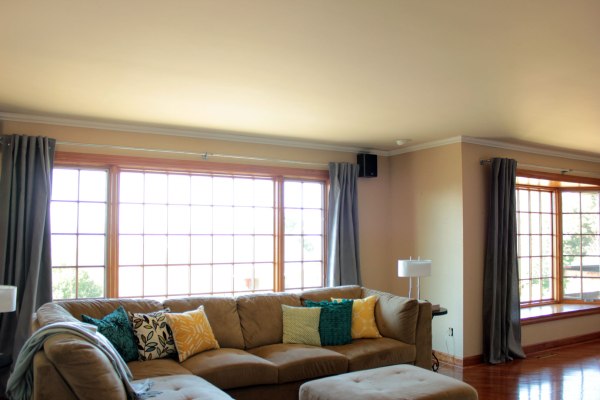
But there is one small downside.  Even though the drop cloths are marked 9 by 12 feet, they’re actually about 8 1/2 by 11 1/2 feet.  Straightening up the edges and adding about one foot of rod length makes the large window panels look short when closed.  Oh well, the window is covered and that’s what really matters, right?

The dining panels are perfect though.

You can kind of see that I didn’t make panels for the French doors out to the deck.  When we replace the windows (which will probably happen next summer), we’re changing things up.  No more door there.  Muhahahaha (that’s my evil villain laugh).

Now if we could just get a dining table.  And a light.  Ha.

Can you tell I’m excited about the new curtains?  I’m loving the warmth they add to the room.  Just makes it look lived in.

Mission accomplished.  We’ve got (pretty) curtains.

And here’s what it cost us:

For living room:  $33.90 for two 72 inch long pipes, $2.24 for one tee, $18.72 for three flanges, $3.12 for two elbows, $4.38 for three 3 1/2 inch nipples, $21.98 for a 9 by 12 foot drop cloth, and $2.29 for one box of fabric dye for a total of $86.63

For dining room:  $27.40 for two 60 inch long pipes, $2.24 for one tee, $18.72 for three flanges, $3.12 for two elbows, $4.38 for three 3 1/2 inch nipples, $21.98 for a 9 by 12 foot drop cloth, and $2.29 for one box of fabric dye for a total of $80.13

If I had bought two standard curtain rods, I would have spent 90 bucks on rods, so basically four curtain panels cost about 75 bucks.  Not too shabby.  But I’m not completely done yet.  I think I’ve decided what I want to do, so I’ll be back with more details when I actually get around to that.

Do you have odd sized windows to work with?  Have you used pipes for curtain rods?  Drop cloths for curtains?