Propagate Like Rabbits

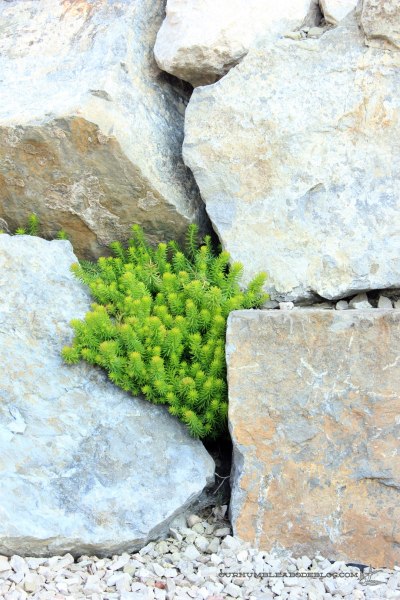
In the early spring, I grabbed an ‘Angelina’ Stonecrop at Home Depot to stick in one of many small cracks near the waterfall.

Succulent-by-Waterfall-in-Back-Yard

Over just a few months, it has doubled in size.  Which is fantastic, but there’s a bonus to planting these, and most other varieties of succulents.

Propagating-Succulents-Large-Plant

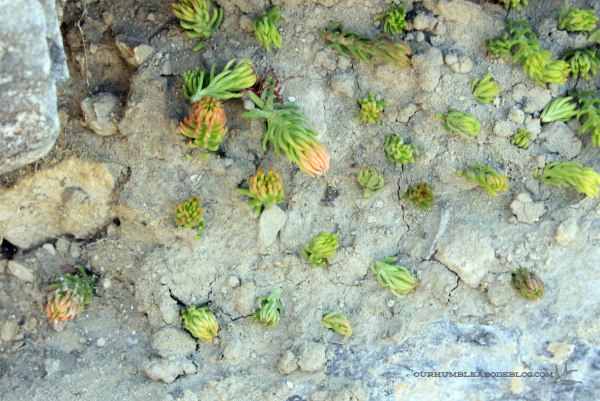
Little branch-type off shoots grow from the main stems.  Sometimes, they fall off if bumped or watered too heavily.

Propagating-Succulents-Offshoots

Rather than letting those tiny stems die, I gather them off the ground.

And poke the ends in wet soil.

Propagating-Succulents-Rooted

If misted with water daily, they set up roots to form another plant.

Propagating-Succulents-Old-Growth

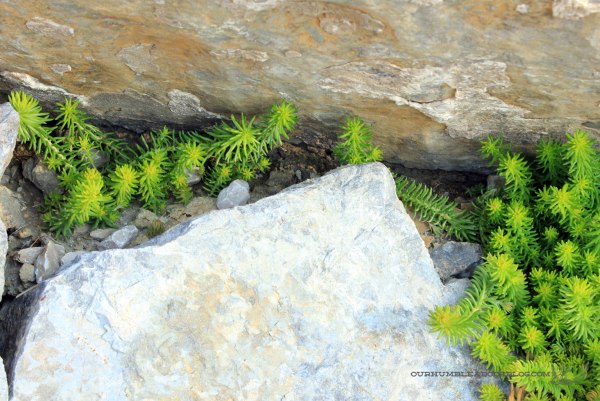
As areas fill in, I’ve spread the fallen pieces around the waterfall.  Filling in cracks to add bright greenery to break up the spans of rocks.

Propagating-Succulents-Large-Plant-by-Waterfall

I haven’t had a need to try this with the ‘Autumn Joy’ Sedum, but I know this also works with Blue Spruce Sedum.  Deer have trampled those to eat the flowers.  Rooting those fallen stems is a crazy easy way to spread the love and save some moolah.

Coal Miner’s Daughter

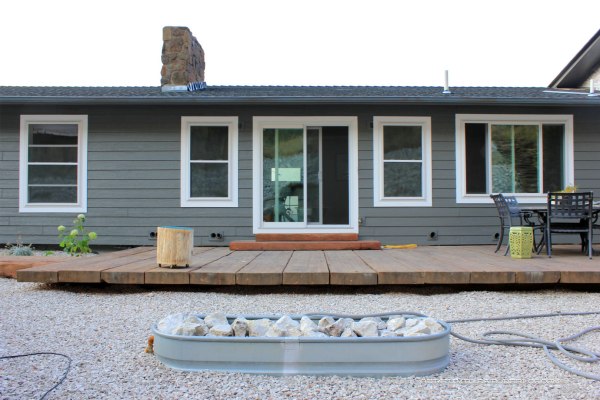
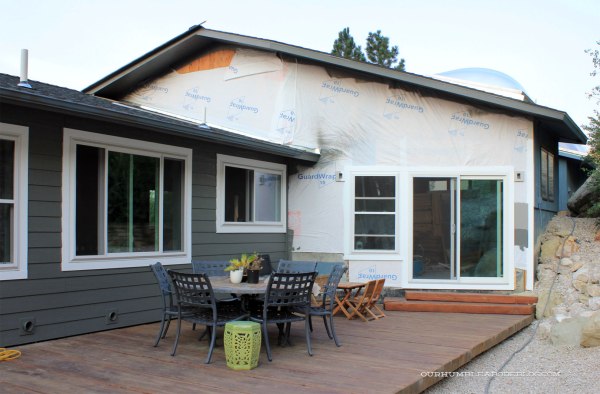
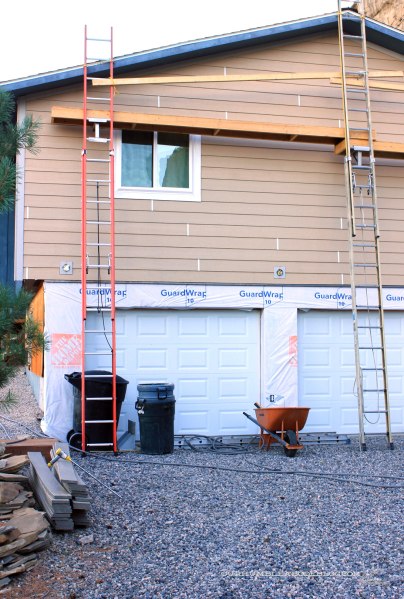
Alternate title: Our house is finally a solid color.  Which is a lie.  Only two sides are painted.  We’re still waiting on windows for the front, then we can insulate, side, and paint.  But, here’s the progress on the back and garage end.  After installing the siding, soffit, and caulking joints we masked off the windows and doors.  I decided it would be easier to mask an inch or so beyond each window, then come back and free hand edge.  Instead of taping each slightly tapered edge of the window.

Painting-Siding-Back-Masked-Off-Outside

Living in a bubble for a few hours was strange.

Painting-Siding-Masked-Windows-Inside

Once masked, the painting went lightning fast.  We used Behr’s exterior paint + primer in Mined Coal.  While stirring the paint, we worried it was too thick for the sprayer (we have this one, if you’re wondering) to apply properly.  Happy surprise, it sucked it up just fine and sprayed evenly.  Though it did use more than we expected.  Each side took about three gallons of paint, using six total.  One gallon should cover 300-400 square feet, we got 100.  Basically the single coat is equal to two or three normal layers.

Painting-Siding-Process-Garage-End

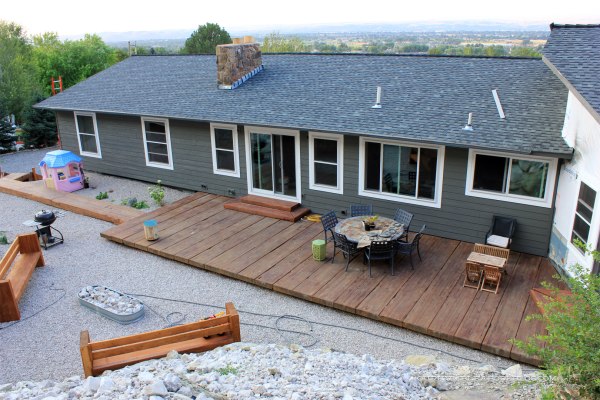
Only a few drips, too, I think because the paint is so thick.  So happy surprise number two, we didn’t have to apply a second coat.  Now the house looks dark and handsome.

Painting-Siding-Back-Finished-from-Hill

Especially compared to our blue starting point a few years ago.

Roof-Shingles-on-Back-of-House

The soffit matches the siding, helping it blend in.  To simplify the process, we chose to paint before installing the steel.  One less thing to mask off, right?

Painting-Siding-Back-Finished-from-Driveway

Missing vent covers are getting a few coats of paint, too.  New lights going in soon.

Painting-Siding-Back-Finished

Next, measuring the steel and getting it installed.

Painting-Siding-Pool-House-Wall

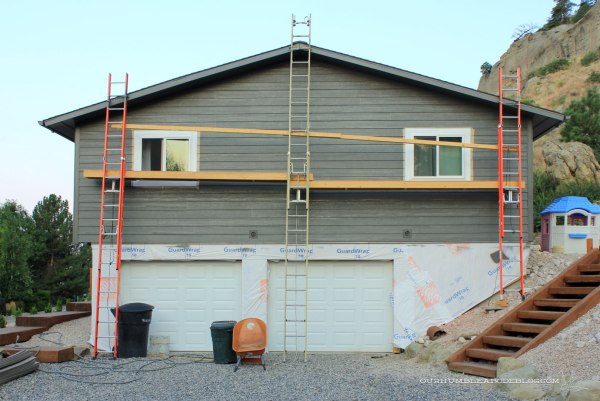
We still have a few areas, around the windows, on the higher garage end to touch up before we can take the scaffolding down.  Ben doesn’t trust me up there because I’m clumsy enough on the ground.  Apparently he doesn’t want me falling.

Painting-Siding-Garage-End-Almost-Finished

Painting went 100 times smoother and faster than I expected.  I think Ben spent maybe an hour actually spraying.  That sprayer kick ’em some booty, as the boys would say.  Masking everything off definitely took longer.  Cutting in each lap took the most time, but wasn’t difficult.  Now we have a much better view when we drive up.  I jokingly said we should paint the little play house to match, but I’m not that crazy.  Yet.  It’s just ugly.

Technicolor Landscape

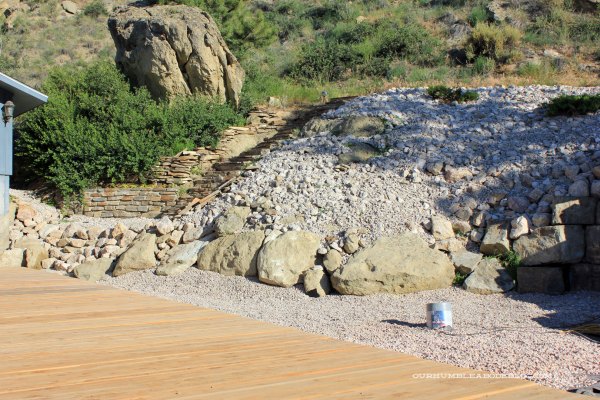
With all the rock we hauled, moved, and spread last summer, this year’s landscape work is a walk in the park, comparatively.  That’s kind of a literal way of going about it, too.  A lot lately, I’m wandering around neighborhoods, looking at my favorite yards for plant inspiration.  Or local nurseries, Home Depot, and Lowe’s.  Over the last year, I’ve been collecting data, looking for full sun plants that can handle heat and cold.  Those twelve aren’t the only good/usable/pretty plants, though.

I’ve become borderline obsessed with Russian Sage.  It’s all over around here and I’m totally envious of the mature plants I see.

A plant that is cold hardy, loves full sun, and requires little watering gets an A+ in my book.  I’ve recently added a few to our yard, and I’m impatiently waiting to put in more after siding wraps up.

In addition to non native plants, like the leafy evergreen boxwood, bright spirea, and shade loving hostas, I want to layer in native plants.  Coneflower, black-eyed Susans, and Lupine grow wild in Montana.  These pink ones will add a nice burst of color.  Coneflower

At the very least, I’ll incorporate native looking plants, because most native plants aren’t available for purchase.  I’m thinking several ornamental grasses.  Foerester’s feather reed grass performs well, as do Elijah Blue Fescue and various fountain grasses.
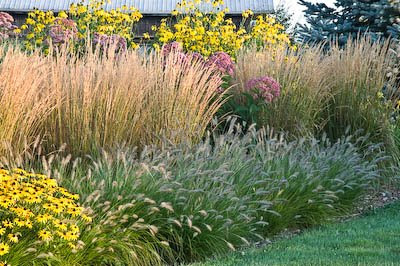
So I drew up a plan.  In part to show Ben exactly what I’ve got in mind.  Also because I can go plant crazy and need a plan to stay focused.  Or, for the times I go plant crazy and he wonders what the hell I’m doing with all those.  Here’s a full property plan, not at all to scale:
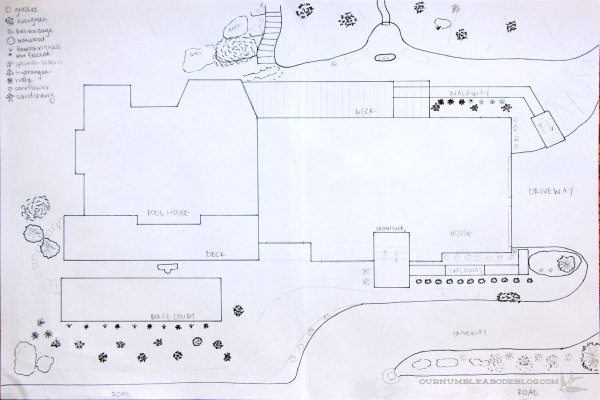
Landscape-Plan-Drawing

But because everything is better in color, this is the Wizard of Oz landscape plans, now in Technicolor:

Landscape-Plan-Current

The plan above is actually what I’ve already gotten in the ground.  Up front, along the bocce court I’ve added an assortment of evergreens, spirea, Russian sage, and grasses.  A few buffalo junipers, succulents, hosta, and hydrangea are living in the back.  Since planning (and really wanting to liven up the limestone) I’ve become a plant addict.  In my mind, I’ve got at least 50 more plants to add around the house.  To help you understand the crazy in my head, here’s a plant key to guide you.

Landscape-Plan-Plant-Key

That’s a lot of plants dotted around.
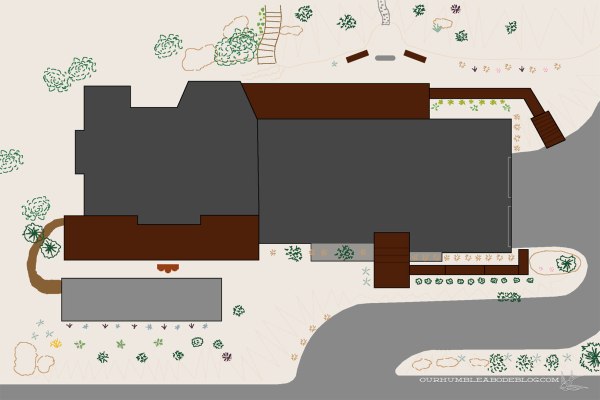
Landscape-Plan-with-Plants-to-Add

I know it’s hard to see everything, so I’ve divided the plan into quadrants to explain.  In the top right section, alongside the walkway, I’d like a mix bag of ornamental grasses and native-like flowers.  In the shaded side, a few more hosta plants to fill in the gaps.  After the siding, a row of tall grasses will border the garage side.  Which I think will look stunning against the rust steel siding.

Landscape-Plan-Top-Right

We’ve kept the top left quarter (behind the pool house) native, so it has short grasses and native Trilobe Sumac.

Landscape-Plan-Top-Left

Going to the bottom left, we’ve got a row of alternating fountain grass and Elijah blue fescue close to the bocce court.  Next row has Russian Sage, a Spanish Broom, three spirea, and a boxwood.  Closest to the hill are nest spruce and a Purple Leaf Sand Cherry.  Oh, and the light zig zag is to show where the hills are.
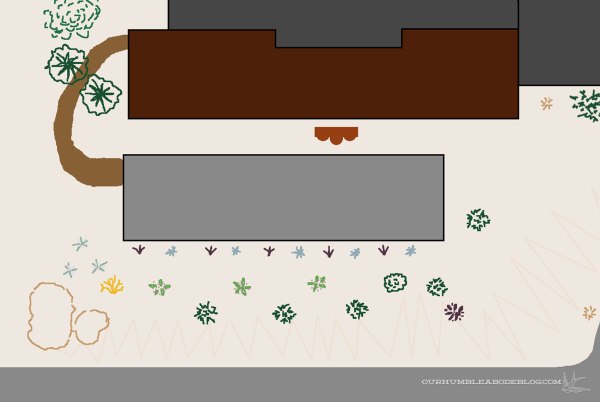
Landscape-Plan-Bottom-Left

Last, between the road and driveway, another mix of creeping evergreens (to drape the rock in year round color) punctuated with Russian sage will soften the hill.  In addition to a straight line of bright green boxwood, I’d like a row of tall grasses close to the house.  They’re perfect because the upright nature doesn’t encroach on walking space.  Under the house bump outs, I want a few more grasses and low evergreens in front of the basement windows.

Landscape-Plan-Bottom-Right

I’m sure I’ll find other plants I have to incorporate, but the basic plan is in place.  My most impatient self is willing the plants to mature at a rapid rate.  Fill in, little buddies.

Lap it Up

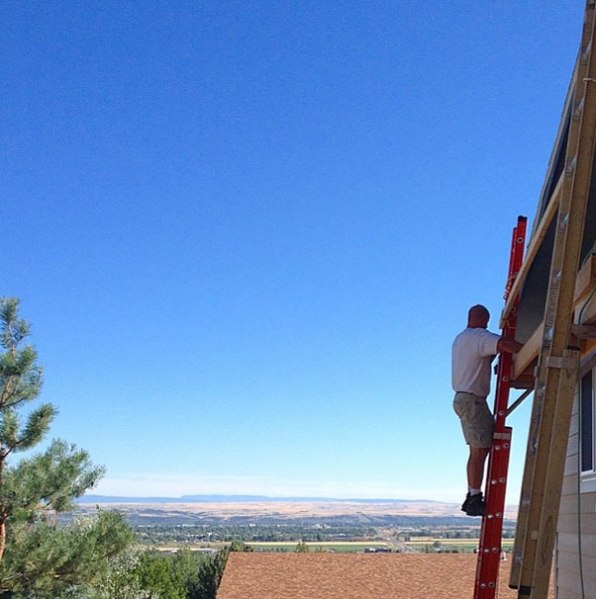
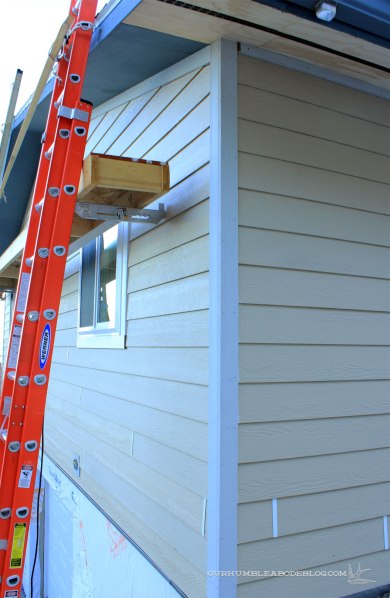
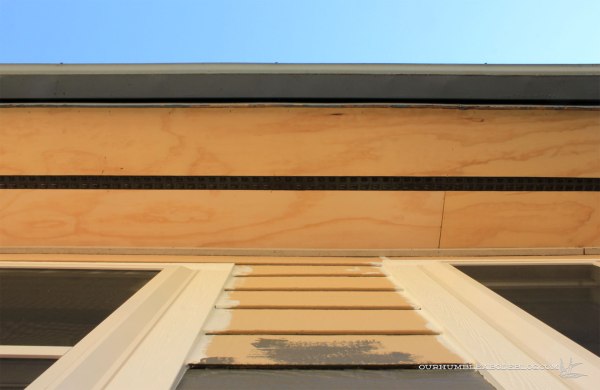
We had a wild and crazy weekend filled with siding projects.  Aren’t you jealous?  Friday afternoon, Ben finished installing the siding above the garage.  I caught him creeping outside the window. Friday-Night-Siding-Install Everything above the garage, to the peak, is lap siding.  Below will be corrugated rust steel, which we’ll install once the siding has been painted. Lap-Siding-Garage-End-Finished White, paintable metal pieces cover the ends of each board. Lap-Siding-Garage-End-Installed On the corners and edges, we used the same trim as the windows for the siding to butt into.  These pieces, along with the soffit and fascia, will get covered with dark gray paint. Lap-Siding-Corner-Deatil On Saturday morning, while we ate breakfast, we watched several hot air balloons take off and land. Hot-Air-Balloons After that, we went to work installing vented soffits. Lap-Siding-and-Vented-Soffit After that, I set out to caulk all the seams around the windows to be sure water can’t get behind the siding.  I followed up with two coats of trim paint to cover the caulking. Lap-Siding-and-Window-Detail We bought a few gallons of Mined Coal exterior paint from Behr to get started on edging. Lap-Siding-Cutting-in-with-Gray Lap-Siding-Finished-on-Back As usual, we’ve still got several steps to go before we can declare it finished.  Even then, we’ll still have to install the corrugated steel.  At least those are big sheets. Lap-Siding-On-Back-of-House More than anything, I’m looking forward to having a finished, not patched exterior.

Forecast: Shade Plants

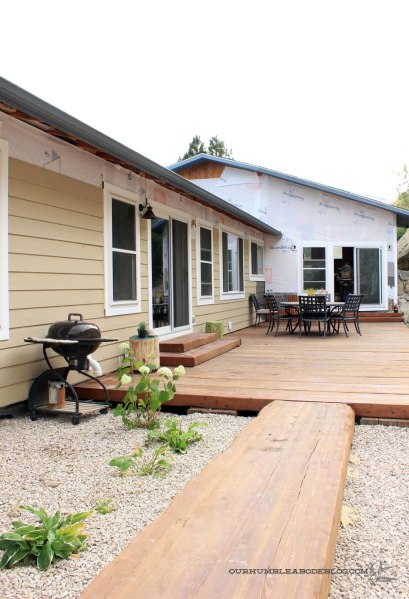
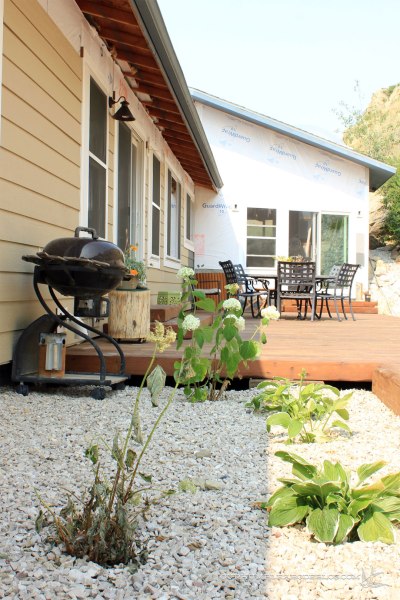
Shade is a hot commodity around our house.  Very few areas are considered full shade because the length of the house faces north/south.  Afternoon shaded areas are usually sunny in the mornings.

Back-of-House-with-Siding-Almost-Finished

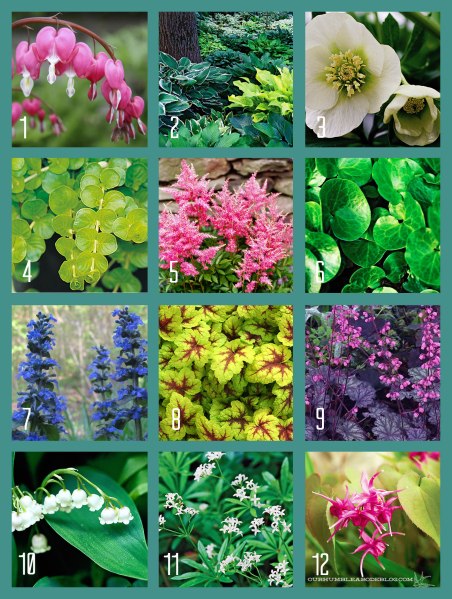
So, we have a thin strip near the back of the house (off the edge of the deck) that can grow part shade or full shade plants.  Which is fine with me, because there aren’t as many shade plants to choose from.  I’ve imagined a hosta/bleeding heart/lily of the valley/hydrangea/coral bells garden.  So that was my starting point, but I wanted to find a few more to add more interest.  Here’s my list:

Top-Twelve-Part-to-Full-Shade-Plants

1.  Bleeding Heart is a delicate, arching spring blooming perennial that can grow up to three feet tall.  Prefers cool conditions and is deer resistant.  After blooming, foliage dies off.  To prevent a bare spot, plant near other perennials.

2.  Hostas are the most popular shade perennial in the United States, and for good reason; easy to grow, low maintenance, and striking leaves.  Best in zones 4-8, typical height is 12 inches to 30 inches wide.

Shade-Garden-Beginnings

Thanks to a friend, I’ve already got a few hosta plants in the back.  And one nice hydrangea, but another isn’t looking too hot.  After we wrap up the siding, I can fill in areas closer to the house with more hosta plants, and perhaps a few more from this list.

3.  Hellebore plants bloom in late winter and early spring, making it a fun choice for gardens.  These deer resistant flowers grow in zones 4-8, reaching 24 inches tall and wide.

4.  Creeping Jenny is a low-growing ground cover with round bright green leaves.  This fast grower prefers part sun and grows about 4 inches tall and 24 inches wide in zones 3-9.

Back-Deck-and-Rock-Around

A few Creeping Jenny live in the rock planter.  When the large shrub fills in, the branches give the plants enough shade to thrive in an otherwise full sun area.

5.  Astible has large flower clumps that bloom in the summer.  Can reach 36 inches tall and wide in zones 4-9 and are deer resistant.

6.  Wild Ginger grows, well, wild in the Eastern half of the U.S.  It can be difficult to track down at a nursery, but are easily transplanted from forests.

7.  Ajuga is also tricky to find locally, but plants can be purchased online.  Thrives in part shade and can tolerate full shade and moderately dry areas.  With a mature height of 6 inches, this groundcover attracts butterflies and hummingbirds.  Great in zones 4-9, and can stay evergreen in areas with mild winters.

8.  Heucherella is a low-growing (8 inches) groundcover, but is also used as spiller in potted arrangements.  Fast growing, and sprouts short spikes of coral flowers in mid-spring in zones 4-9.

9.  Coral Bells are similar to Heucherella, but are easier to find at large home improvement stores.  With a mounding habit, these colorful leaves don’t overtake a garden.  Grow 24 inches wide and tall in zones as cold as 4.  Also have delicate flowers in spring.

10.  Lily of the Valley has dense green foliage with dainty white scallop-edged flowers in the spring.  Spreads rapidly in moist soil, but dry soil can help prevent spreading.  Performs best in zones 4-8.

Shade-Garden-Beginnings-Front

Below the windows, I plan to add some low-growing plants; lily of the valley, coral bells, and creeping Jenny.

11.  Sweet Woodruff is a fast spreading, low growing ground cover.  With shallow roots, it is perfect under shade trees where grass can’t thrive.  Mature height of 8 inches with tiny white flowers in late spring and early summer in zones 4-8.

12.   Epimedium originated in Japan.  This part sun plant has large heart-shaped leaves with spiky flowers in the spring.  Reaches 14 inches tall and is best in zones 4-8.  I have yet to find this locally, but have found great options online.

If you’re looking for full sun plants, here are twelve that are on my radar.  Of course, feel free to add your suggestions and favorites, too.