The Copper Tone

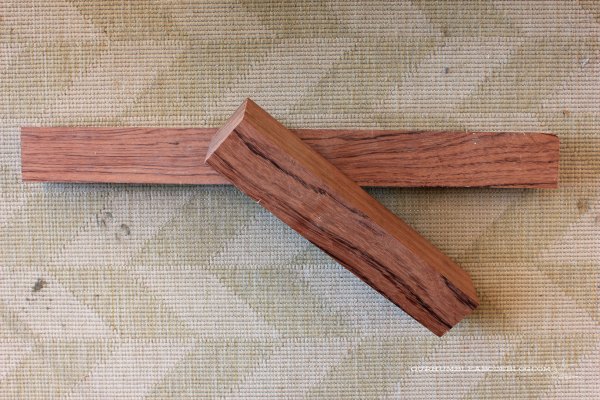
Some of my creations are a way to use left over materials.  Whether fabric scraps, left over wood veneer, or in this case, wood ends.
Copper-Bud-Vase-Wood-Scraps

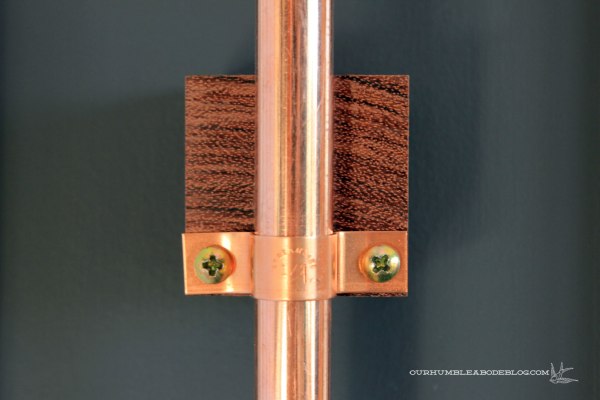
Ben kept these scraps from the Bubinga counters, but had no use.  While cleaning out the garage last weekend, he brought them upstairs and set them in our wood pile.  Knowing I could make something, I saved them from a firey death.  Of course Ben accused me of hoarding, but it’s worth it.  After seeing these beautiful jewelry blocks, I knew what I wanted to do.  I cut a 1 3/4 inch cube (because my pieces were already 1 3/4 inches, which also happened to be the width of the tube strap) and bought a 1/2 inch copper air chamber and copper tube straps, both found in the plumbing aisle.  Add a few screws, a tooth hanger, and we’ve got a chic, industrial, wall mounted bud vase.

Copper-Bud-Vase-Overall

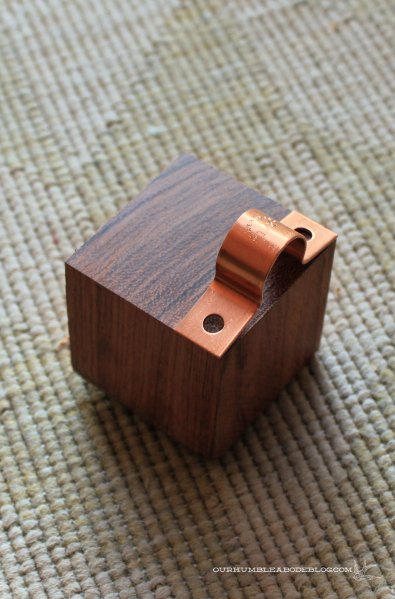
If you want to make your own, start with a wooden cube, dealer’s choice.  Because the Bubinga is super dense, I used a small drill bit to make pilot holes for the screws.  Both front (for the strap) and back (for the hanger).
Copper-Bud-Vase-Wood-Backing

Copper-Bud-Vase-Block-Detail

Short screws hold each in place.  I couldn’t find copper screws, so I used brass instead.  I might get a copper leaf pen to paint the heads.

Copper-Bud-Vase-Side-Comparison

A small nail hangs the vase on the wall, but I didn’t like the slight lean it gave the piece.  A few sticky back felt dots bumped up the bottom to hang parallel to the wall.

Copper-Bud-Vase-with-Shower

If I han’t already hung the astrological cut outs about the toilet, I’d want three or five of these instead.  Loving how the copper popped against the dark bathroom walls, I hung it in the little space between the shower and bathroom door.

Copper-Bud-Vase-by-Shower

A cheap, colorful carnation brightens this dreary winter.

Copper-Bud-Vase-Hanging-Side

Now I have an excuse to keep fresh flowers in the house.  Sometimes, small projects like these are my favorites.  Simple, affordable, and brighten a room.  What do you think of this DIY vase?

Minor Tweaks, Big Impact

I know there’s been a lot of bathroom talk and updates.  But the good news is, we’re nearing the end.  Ben grouted the shower and floors last weekend and they look fantastic!  He used unsanded grout and matching caulk because the lines are under 1/8 inch wide.

Master-Bathroom-Shower-Grouted

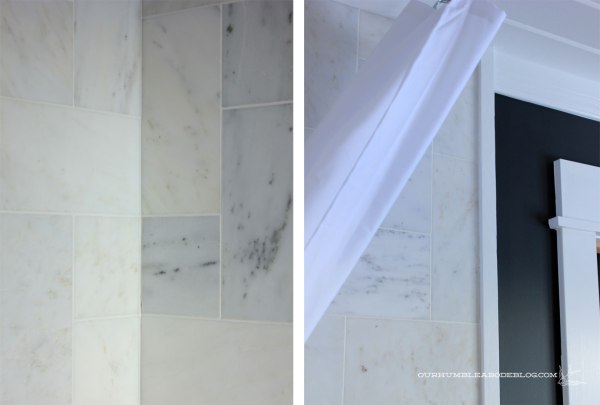
Update: We received a few emails wondering about the corner in the photo above.  This was after grouting, but before we filled the edges with matching caulking.  After allowing the grout to dry, we filled the edges, let it dry, and we’re ready for use.

Master-Bathroom-Shower-After-Caulking

While not a dramatic difference, it makes the shower functional.  And that’s huge.

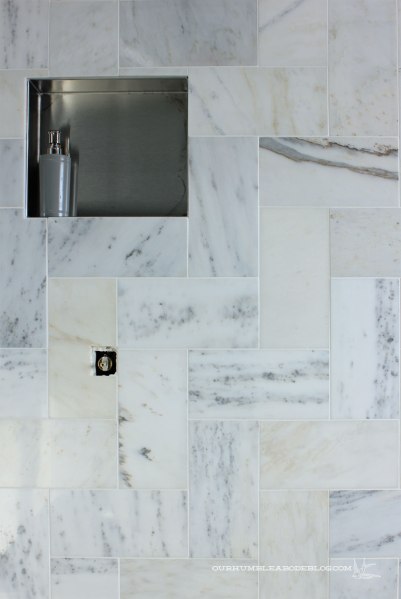
Master-Bathroom-Shower-Grouted-DEtail

Well, almost usable.  Shower curtains are in order.  I ordered these 96 inch shower curtain liners and got them on Thursday, but I’ll get to those in a second.  Here’s the bare shower after grout with the stainless steel shower pan:

Master-Bathroom-Shower-After-Grout

And the grouted floors.

Master-Bathroom-Slate-Floors-Grouted

And here’s the shower now:

Master-Bathroom-Shower-Finished

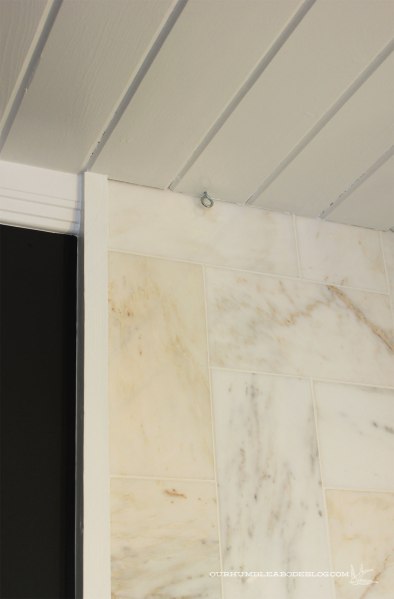
For the pretty tile to be the star, I wanted a super simple, low profile curtain hanging system.  One that didn’t use a tension rod or drilling into the marble tile.  I think we accomplished that, and for about 25 bucks!  We started with three heavy-duty eye hooks, screwed into the tongue and groove ceiling, as close to the walls and post as possible.

Master-Bathroom-Shower-Cable-System-Eye-Hooks

Then we strung a galvanized steel wire rope (30 cents per foot at Home Depot) through, along with a curtain clip (I used two sets, but wished I had gotten two more to bunch the curtain tighter).  Clamps hold the wire rope in place.  We decided to keep a clip inside the loop, so the curtain would always stay close to the wall.

Master-Bathroom-Shower-Cable-Hook-Up

More curtain clips and a clamp on the other end.

Master-Bathroom-Shower-Cable-System-Corner

At the corner, we pulled the wire rope tightly through.

Master-Bathroom-Shower-Cable-System

I know I’m not the only one looking for an extra long curtain, so here are my opinions on these.  After reading product reviews, I worried the curtain wouldn’t be completely waterproof, but they are.  Vinyl curtains drive me nuts because they aren’t washable, but this fabric is.  Which is a big plus.  Decent looking material, too.  The description said it has a weighted bottom, but it’s just a rope sewn along the bottom.  Regardless, I had to hem the curtain a few inches to allow it to hang without pooling and bunching.

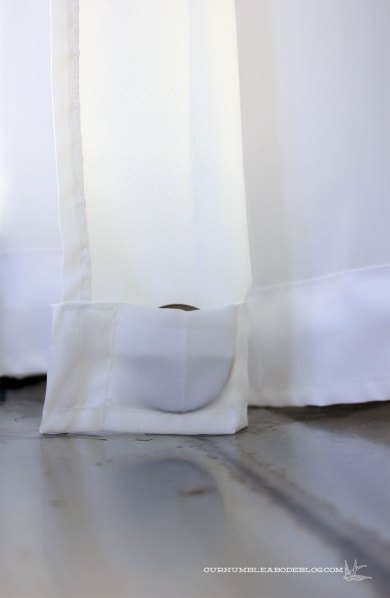
Shower-Curtain-with-Washer-Weights

After sewing along the bottom, I make a pocket on each end for stainless steel washers to tuck in.  Unfortunately, after using the shower, these weren’t heavy enough to hold the curtain with the convection current the shower created.  But they do make the curtain hang nicely when open.  So, I’m on to plan b, suction cups.  Wish the shower pan was magnetic!

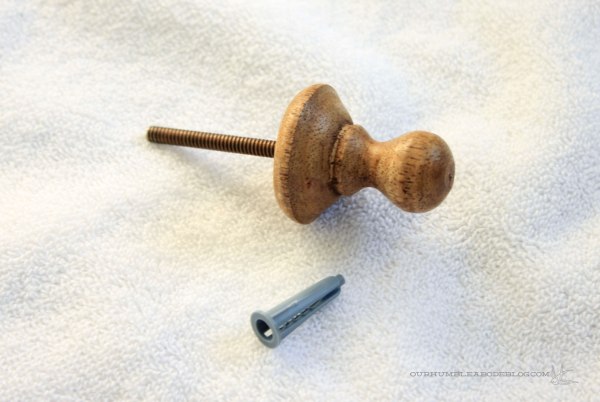
Master-Bathroom-Pulls-Turned-Towel-Hooks

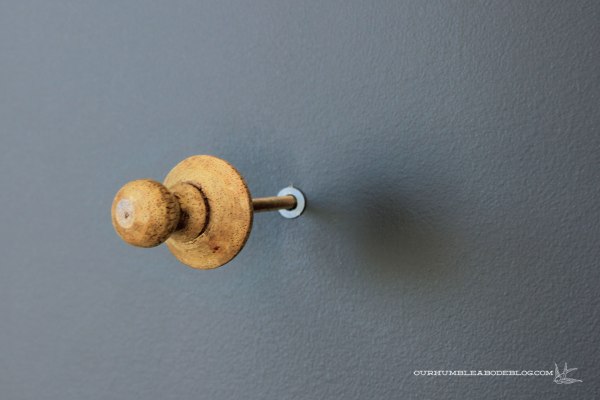
In other small news, I found these wooden drawer pulls at Hobby Lobby.  At $2 each, I thought they would make cute hand towel hooks.  A tight-fitting anchor in the wall worked perfectly to hang these dudes.

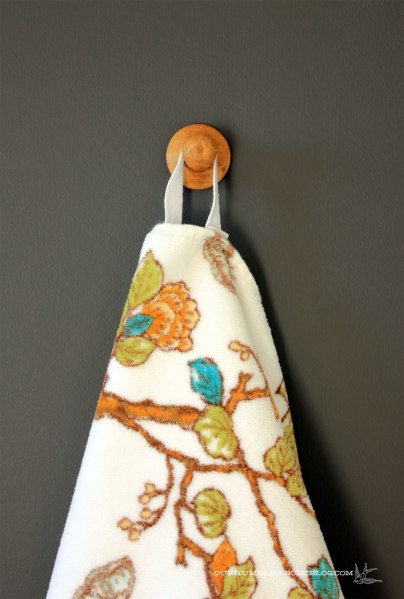
Master-Bathroom-Hand-Towel-Hooks

I love how the wood picks up the branch color of the towels.  And adds a slight touch of warmth to the dark walls.

Master-Bathroom-Pulls-Turned-Hand-Towel-Hooks

We’re still missing a vanity, but we’re all so happy with the progress.  Even the boys; they said black and white are their favorite colors.  Such funny opinions.

Zippity Do Da

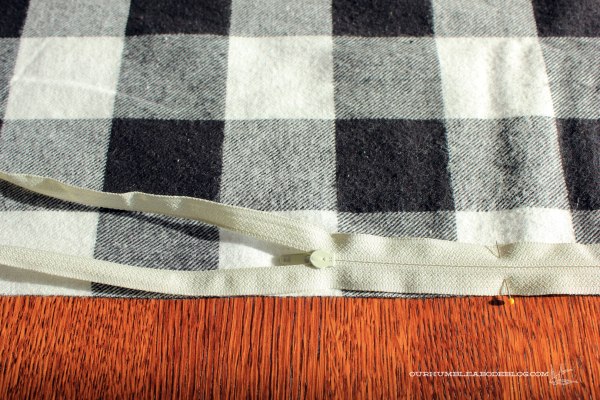
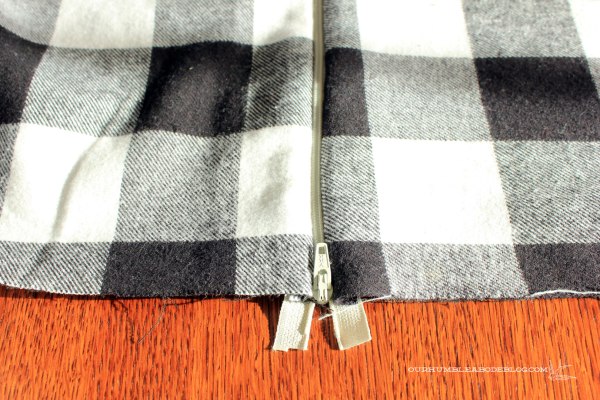
I know there are a ton of tutorials all about sewing a zipper on a pillow.  Most tutorials also use a special zipper foot.  I don’t have one and never had, so here’s how I do it.  Start with your cut piece of fabric, laid out, right side up.  Then, place your zipper, right side down, and align the bottom edges.  Leave the last few inches of the zipper open, like this:

Zipper-Tutorial-Zipper-Pinned

Then sew, with your normal foot.  I keep the edge of my foot along the outer edge of the zipper.  Stop just before the zipper pull.

Zipper-Tutorial-Zipper-Sewing

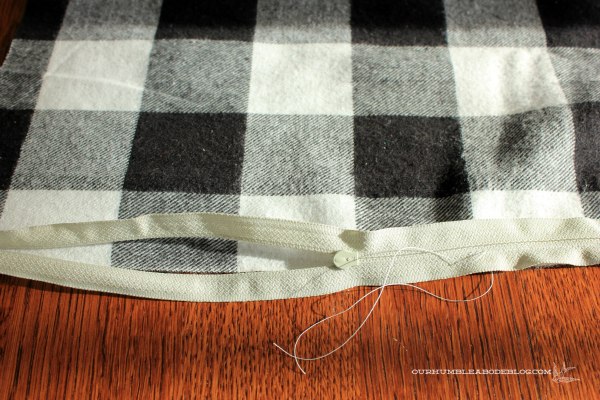
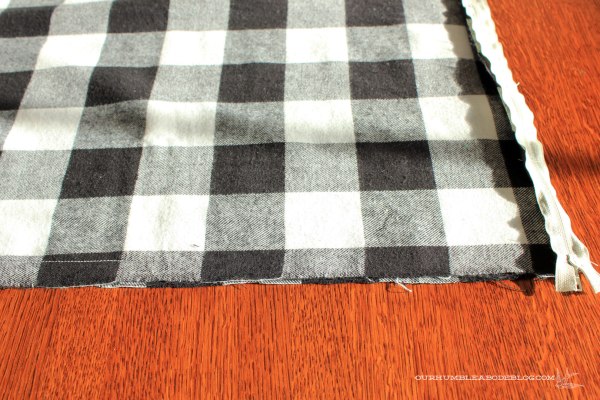
To finish that side, I then pull the zipper up, beyond my stopping point.  I start sewing, back stitch a few, then carry on until I reach the end, back stitching again to lock the threads.

Zipper-Tutorial-Zipper-Half-Sewn

So that’s one half of a zipper.

Zipper-Tutorial-One-Side-Sewn

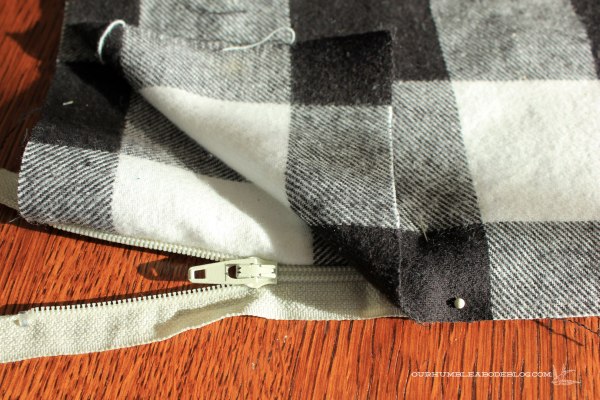
Lay the fabric and zipper out, right sides still up.  Now, place your backing fabric on top, right sides down.  Pin along the edges, leaving the zipper slightly undone.

Zipper-Tutorial-Last-Zipper-Step

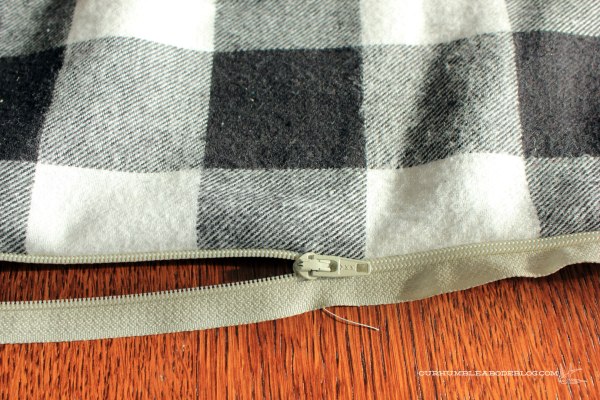
Sew along the outside edge, just as before, stopping before the zipper pull.  Pull the zipper up, then start sewing again.  Now, you’ve got a zipper.

Zipper-Tutorial-Zipper-Sewn

But let’s finish the pillow.  Align the top and sides of your fabric, pinning in place.  I like to sew one side, pivot to sew the top, pivot again to sew half of the last side.  While my zipper is completely closed.  Keeping the zipper closed makes it easier to pin everything together where it should be.

Zipper-Tutorial-Sides-Sewn

If I sewed all three sides with the zipper closed, I’d be stuck with an inside out, unusable pillow cover.  So, open the zipper, then continue sewing the rest of the way down.  Because I’m lazy, I sew over the ends of my zipper with my machine about 20 times, just to lock the ends in.

Zipper-Tutorial-Finished-Pillow

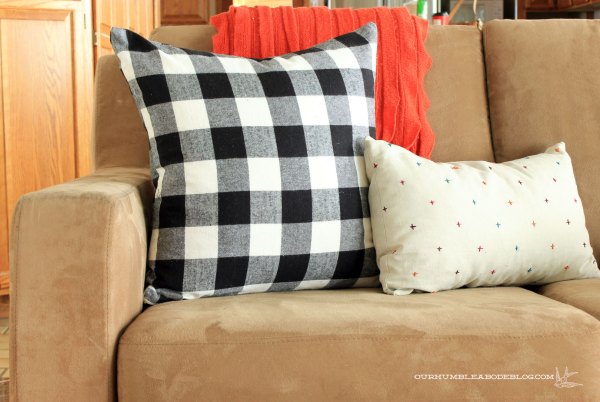
Turn it right side out and put it to use.

Gold & Herringbone-What Could Be Better?

Here’s another tale about tables in the family room.  Apparently I can’t get enough tables.  But this change was prompted by Ben.  Whenever he wore cargo pants, the pocket caught on this little table.  Thus resulting in knocking over my succulent at least three times.  Until the gold pot shattered.  Time for a change.

Gold-Succulent-Pot-in-Family-Room

My small table buying habit came in handy this time.  An old, boring black Target table sat in the entry.  A round table with heavy base should be okay, right?  But it was ho-hum.  So what’s a girl to do?  Pull out the gold spray paint and go to town, that’s what.

Black-Side-Table-Before-Gold

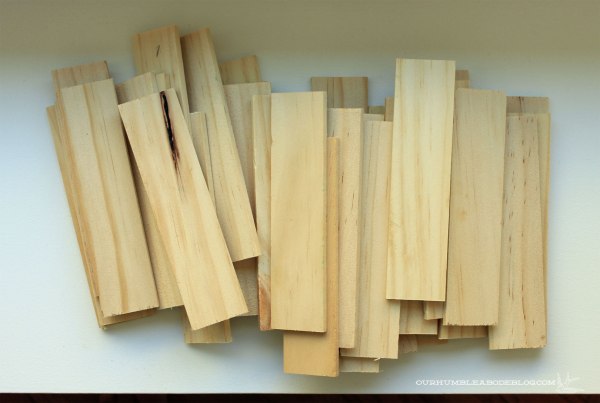
Why stop at gold when herringbone would make it even better?  So I got thin poplar strips and cut into 1 by 4 1/2 inch strips.

Gold-and-Herringbone-Side-Table-Strips

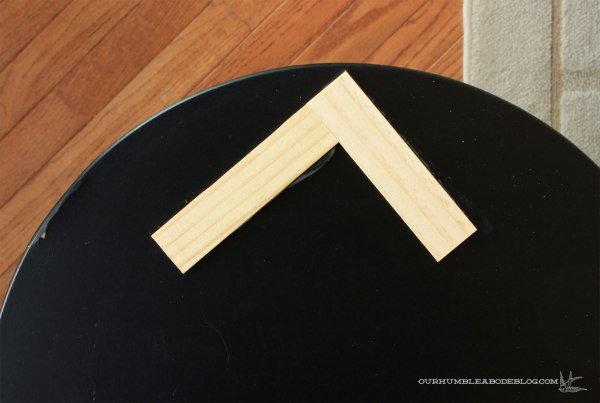
You can find poplar at Home Depot or balsa and basswood at Michael’s and Hobby Lobby, if you’re interested.  To start on the herringbone pattern, I used a tray with a square corner to guide my starter strips.

Gold-and-Herringbone-Side-Table-Step-1

I started with wood glue over the old top and let these two pieces dry.

Gold-and-Herringbone-Side-Table-Step-2

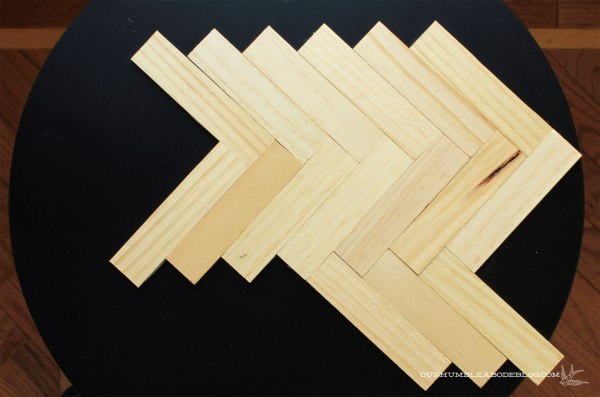
With the starter strips dry, I easily lined up the rest of the rows.

Gold-and-Herringbone-Side-Table-Step-3

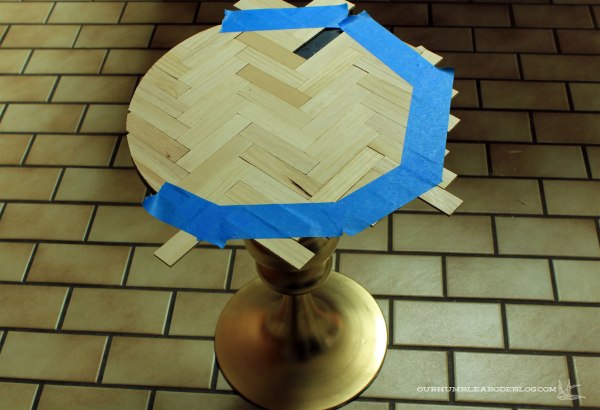
With the entire top covered (I used Liquid Nails for the edge pieces), I taped around the outer line to reduce wood splitting and chips.  After testing a hack saw, I used a sharp utility knife to cut follow the round top.

Gold-and-Herringbone-Side-Table-Step-4

For a clean edge, I glued on birch wood veneer.  Two quick coats of Polycrylic and here she is today:

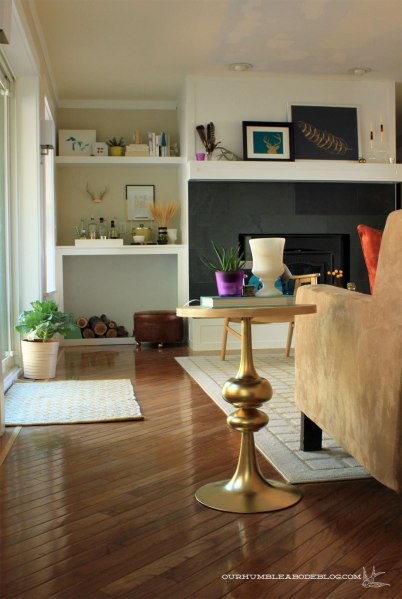
Gold-and-Herringbone-Side-Table-in-Family-Room

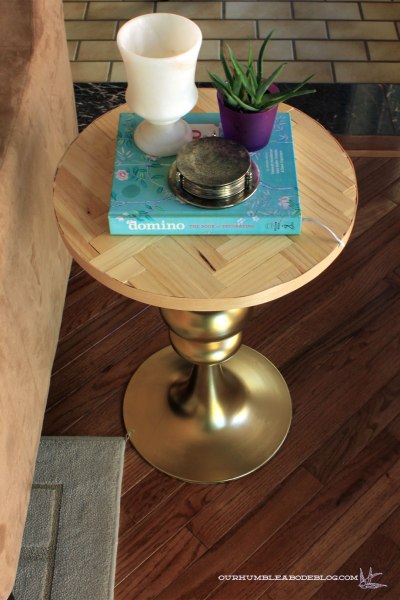
A mix of shiny metal and warm wood to liven up this little corner.

Gold-and-Herringbone-Side-Table-from-Above

It’s not perfect, but it makes me smile.

Gold-and-Herringbone-Side-TableDetail

And ties in perfectly with our fall color scheme and decor.

Gold-and-Herringbone-Side-Table-to-Fireplace

But it can work in year round.  If I change my mind, I can give it a quick coat of spray paint, too.  What do you think of this quick and cheap makeover?

Fall Mantel Tutorials & Free Design

Hey there, you!  How was your weekend?  We got something fun done and we can’t wait to share.  Here’s a teaser until Wednesday.

Dancing-Fire

Aside from warm caramel apple cider and pulling out my sweater collection, nothing gets me more in the mood for fall than decorating for the cooler season.  Last week, our family room and mantel changed from summery greens to fall-ish jewel tones.  And all for only a few bucks.  In fact, I spent about five bucks on the mantel arrangement.  Two dollars for the white acorn (Goodwill) on the left and three bucks for a bottle of Liquid Leaf.

Jewel-Tone-Fall-Mantel-Vignette

The deer silhouette is a cut out mounted to a contrasting card stock.

Jewel-Tone-Fall-Mantel-Deer-Art

If you like Buck, you can make your own using my deer silhouette print.  Choose the opposite direction you want him to face, print on your colored paper, cut out, and tape to another piece of paper.

Deer-Silhouette-Print-Design

But my favorite is the gold Liquid Leaf feather painting.  I already had a large piece of gray paper, but a sheet is about $2.

Jewel-Tone-Fall-Mantel-Feather-Art

Before stinking up the house with Liquid Leaf, I sketched my feather design in pencil.  Once happy with my design, I used a fine artist brush to cover over with metallic gold.

Gold-Feather-Outline

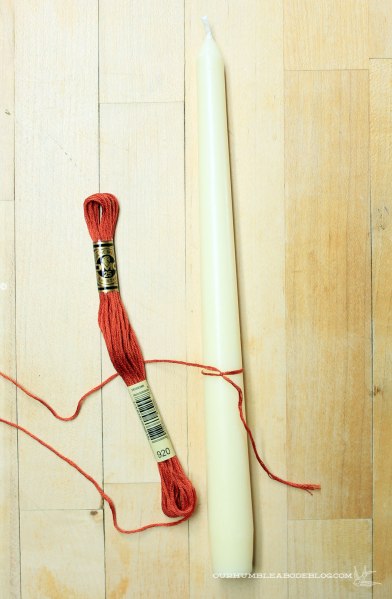
Wrapping anything – candles included – with embroidery floss is a cheap and easily changeable way to add color.

Jewel-Tone-Fall-Mantel-Wrapped-Candles

Start by tying a knot around your object, leaving a long loose tail and the bundle of floss attached.

Color-Wrapped-Candle-Sticks-Step-1

Wrap the floss around, covering the tail as you go up.  Don’t worry about getting each strand right next to the rest.  Gently push down after several wraps.

Color-Wrapped-Candle-Sticks-Step-2

At the top, tie a knot, using the rest of the beginning tail to keep the wrap tight.

While I loved the bright colors in the bar nook, it screamed summer.

Ice-Bucket-on-Bar-Before

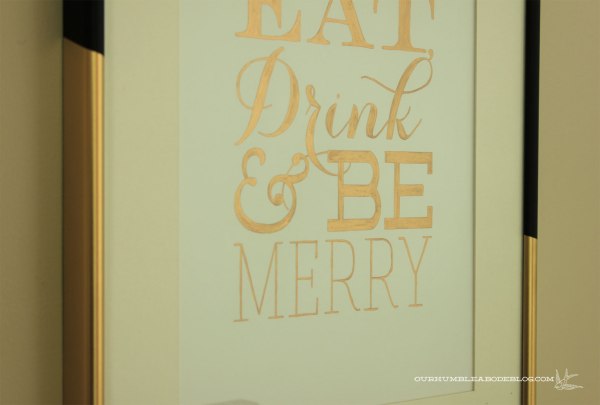
Left over black and gold spray paint covered the green frame.

Gold-Eat-Drink-Be-Merry-Print-and-Frame

And more gold Liquid Leaf over the Eat, Drink & Be Merry print for glitz is fall perfection.

Gold-Eat-Drink-Be-Merry-Print

I’m working on a few more fall pillows, too.  What do you do for fall?  What gets you in the mood for changing seasons?