Wrecking Ball

We sure know how to holiday around here.  As a Christmas gift to each other, we’re tackling the kitchen remodel.  Tuesday evening, Ben removed the bay of 2 feet deep pantry cabinets.  He was able to get each one out fully intact, so they’re in the garage, waiting for a new home.

Kitchen-Pantry-Cabinets-Out

Christmas Eve morning, we picked up 10,000 pounds of slate tile for the kitchen and pool house.   After Ben and a friend unloaded it all, the remodel literally started with a bang.  Ben was itching to knock out this wall.  Unlike our last kitchen remodel, this wall is not load bearing, thanks to free span trusses.

Kitchen-to-Dining-Wide-Opening-Frame-Removal

All the planning and ideas of how this would look still didn’t prepare us for the result.  It’s amazing how open everything is!  We could host a cooking show in here now.  Okay, not right now.  Maybe once we’re finished.

Kitchen-to-Dining-Wide-Opening

Over the weekend, we installed pine tongue and groove ceiling planks.  Keeping the kitchen functional as long as possible is our goal, so the ceiling was something we could work on without interrupting anything else.

Kitchen-Tongue-and-Groove-Planks-Starting

Replacing the large flourescent light with 6 inch cans and LED bulbs has really changed the mood of the room.

Kitchen-Ceiling-Tongue-and-Groove-Planks

Soft light radiates down, rather than the surgical light before.  After finishing the ceiling, we started emptying and removing cabinets.  Instead of this:

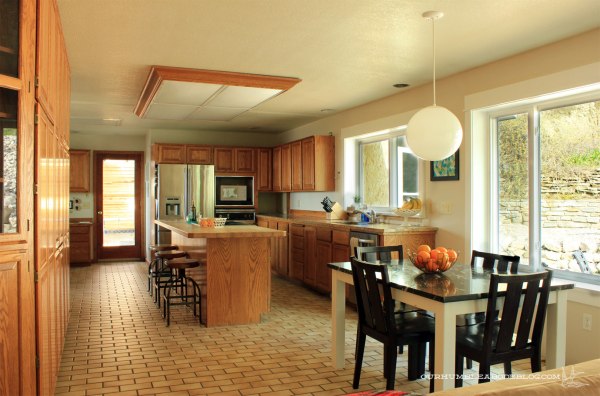
Kitchen-Two-Years-Later

We’ve got this:

Kitchen-After-Moving-Fridge

Fridge in the dining room.  Clutter all over the counters until we get more bins to pack everything away.

Kitchen-Ceiling-Tongue-and-Groove-Planks-and-Wide-Door

A wonderfully large opening connecting the rooms.

Kitchen-to-Dining-Opening-without-Uppers

And loads more work ahead of us.

Kitchen-Ceiling-Tongue-and-Groove-Planks-Toward-Family-Room

Next up, removing upper cabinets, spraying the ceiling white, and then out with everything else.

Green = Green: Winterizing

Making our homes as energy-efficient as possible has always been a priority of ours.  In our last house, Ben replaced every window, added a layer of rigid insulation under the siding, and 22 bags of cellulose insulation to the attic.  Paired with a geothermal system, the average monthly heating/cooling bill came in around $30.  The guy that serviced the geothermal system couldn’t believe the bills were that low, even with the high-efficiency unit. Front of House

When we moved in this house, we knew we wanted to do the same.   It’s taken longer, but we have replaced every window with energy-efficient triple pane vinyl windows.

Master-Bedroom-Window-Trimmed-and-Wallpaper

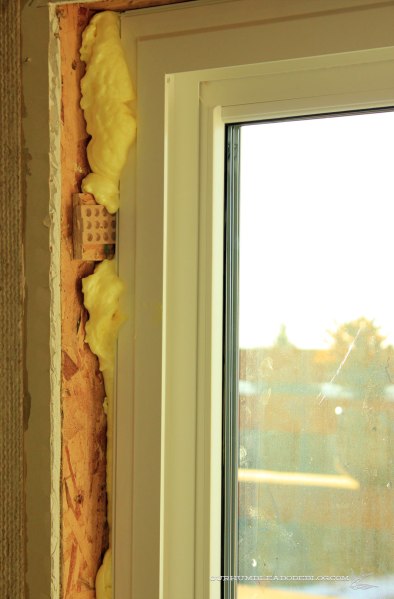
After each window install, we seal cracks with Great Stuff expanding foam.

GREAT-STUFF-Window-and-Door-Foam

This compressed foam fills in cracks around windows, going right around shims.

Basement-Window-with-GREAT-STUFF-Foam

Before replacing the basement windows, we had box elders crawling all over.  It was really gross.  When removing the old windows, we saw the problem.  Absolutely zero insulation around the windows.  Not even fiberglass batting chunks.

Basement-Window-with-GREAT-STUFF-Foam-Edge

Since sealing the gaps, we’ve had maybe 5% of bugs in the basement.  That’s a win-win situation; prevent drafts and keep creepy crawlies out.

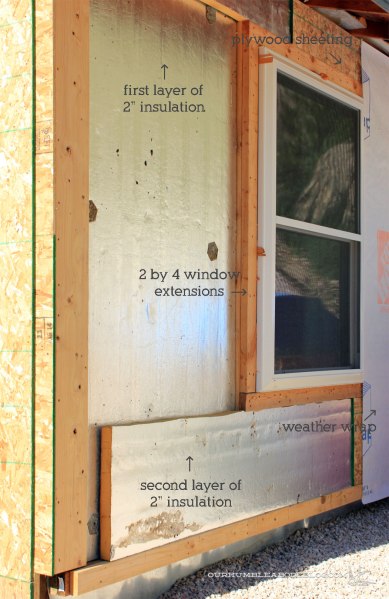
Our first fall here, Ben crawled around the attic, blowing in 100 or so bags of cellulose.  For the house wrapping, we were able to get a good deal on used rigid foam panels on Craigslist.

Pool-Room-Loaded-with-Insulation

Unlike fiberglass batting, rigid foam doesn’t lose R value over time.  By getting used panels, we saved at least a thousand dollars and some space in the landfill.  With the windows and siding in poor condition, we knew we needed to replace everything.  It made the most sense to super insulate while we were in the process.  Wrapping the house with 4 inches of rigid insulation took some time, but we’re already reaping the benefits.

Though we’re just beginning these cold months, we’ve already noticed the house holds heat longer.  Last year, we had a fire burning constantly.  If we didn’t, the furnace ran almost constantly.  Now, without a fire, the furnace kicks on several times a day.  With a fire, it comes on maybe three times.  Even the extremities of the house feel warmer.  To the extent that I refuse to put our thick winter comforter on for fear we’ll roast to death.

I know insulation and house guts like plumbing and electrical are some of the least exciting projects, but they are very necessary.

Kitchen Cabinets, Part 1

During our last kitchen renovation, I shared how we built our cabinets.  Over the weekend, Ben built every drawer, 9 total, for the island.  We’ve made a few changes while building our new cabinets, so I’m giving the scoop now.  To get as much detail as possible, I’m sharing how he built the boxes and drawers now.  Once we finish the fronts, I’ll discuss the materials and process for those.

As he finished each drawer, I sanded the tops and sides smooth for clear coat.  Four days later, here’s our island, ready for install.

Kitchen-Cabinets-Island-Build

The right stack are for either side of the stove.  On the left are the shorter cabinets the cook top will rest on.  Originally, we planned to put the trash under the sink again, but started discussing and agreed it is better under the stove.  With a half width drawer under, if someone is cooking, it’s easy enough to scoot to the side to throw something away.  At the sink, you have to step all the way over, stopping what you are doing.  So, that’s why there’s only one drawer in the lower box.

Our bathroom vanity was a trial run of sorts for the kitchen cabinet process.  All boxes are constructed with 3/4 inch thick, double-sided melamine coated particle board.  Melamine is ideal for wet or potentially wet areas such as kitchens.  Box assembly is otherwise the same as before.

One big change we made is the drawer material.  Last time we used 3/4 inch plywood.  It’s sturdy, but everything we can get now is a lower grade.  Low grade plywood warps easier, which can skew the drawer.  We also didn’t want to fill ugly edges.  This time around, we went with 3/4 inch thick poplar for the sides and 1/2 inch double-sided melamine for drawer bottoms.  Using a dado bit in the table saw, Ben cut a 1/2 inch wide by 3/8 inch deep groove a half-inch from the bottom.
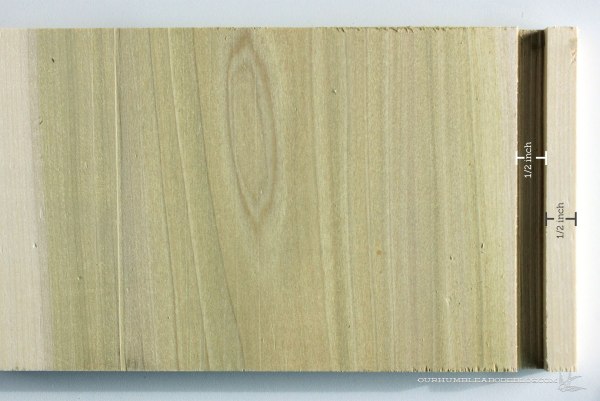
Kitchen-Drawer-Assembly-GroovesHe repeated this process for both sides and the front.  The backs are an inch shorter and are glued directly to the drawer base.  A bead of glue inside the groove holds the base in place.  Each side slips in over, nailing the corners for added strength.

Kitchen-Cabinet-Drawer-Base-Grooves

After the three sides are in place, Ben runs a line of glue on the base and side corners before sliding the back in.  A few more nails and the drawer is assembled.  That’s when I get to start working.  I used 220 grit paper to sand the top edges and sides smooths, paying extra attention to the joints.  Before sealing, I quickly vacuum off dust.  To keep the melamine base clean, I taped off the edges before applying two coats of clear water based poly.

Kitchen-Drawers-Taped-Off-Base

One really great advantage of building our own cabinets is tailoring them to our needs.  For instance, the drawer heights are perfect for us.  We always prefer three drawers over a shorter stack of four.

Before we start building drawers, I measure a bunch of items to decide the minimum height for each drawer.  I tell Ben what I need the usable space to be.  To accommodate tall pots, leaving a little breathing room, our bottom drawer inside space is 11 inches tall.  Our top drawer can be no shorter than 4 1/2 inches inside to store our spice drawers.  Middle drawers are always the remaining space.  Knowing my measurements and that the bottom and glides take up 1 inch, Ben knows where to attach the glides.

Kitchen-Drawer-Glides-Mounted-in-Box

Another big difference this go around are the drawer glides.  Last time, we didn’t want to sacrifice drawer height, so we used side mount glides.  With a bigger kitchen, we are less concerned about that and chose Blum soft close, under mount glides.

Comparatively, these puppies are not cheap.  About $17 per pair versus $6 for the same size.  We made our island deeper than standard, 31 inches, to leave space between the cooktop and bar.  Longer pairs cost $45 each.  That’s 405 dollars in drawer glides for just the island!  Even with the price tag, after using these in the bathroom, neither of us would go back to the old style.  These are the cats pajamas.  Seriously, full extension, 100 pound heavy-duty rating, quiet, and smooth.
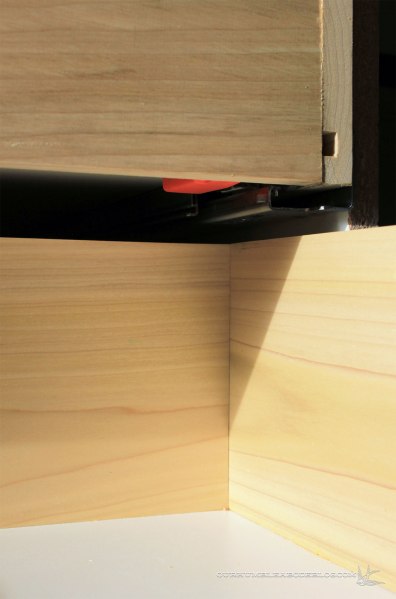
Kitchen-Drawers-Inside-Box

With the slide installed, he secures clips to the under side of each drawer.  That’s the orange thing you see in the above photo.
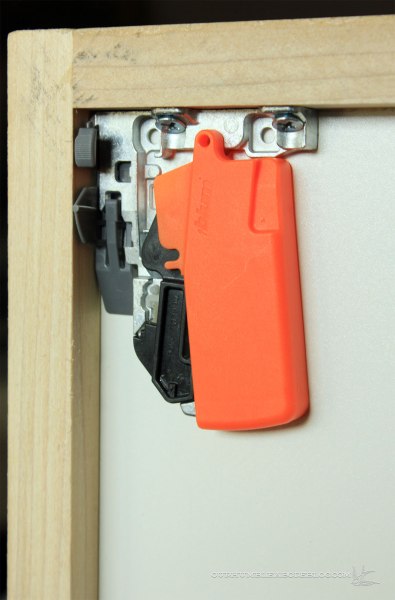
Kitchen-Drawers-Blum-Undermount-Clips-Side

These clips are the only thing physically holding the drawer to the glide.

Blum-Drawer-Glides-from-Under

Did I mention these glides are tucked completely underneath, hidden out of sight.

Kitchen-Drawers-Undermount-Glides

That’s all we can do on cabinets until we get everything set in the kitchen.  Then we add the face frames, drawer fronts, and hardware.  We’re nailing down those details soon.

We also made unexpected progress on the countertops over the weekend.  Hoping to get pricing and see our options, we popped in a local marble and granite supplier.  I said I preferred a dark, matte to satin finish stone.  The owner showed us really beautiful leathered granite and a gorgeous soap stone remnant pile.  After talking it over with him, he made us an offer we couldn’t refuse: 100 bucks for six soap stone pieces.  Three are more than enough for our kitchen, so we loaded it up that day.  Because soap stone is on the soft side, it’s easy to cut and polish at home.  Ben’s no stranger to working with stone counters, so we’re thrilled.  Right now, the slabs are stacked together, with the backs facing out.  But, I can’t wait to share more!

Our rule is to have everything on site and ready for install before anything gets ripped out.  Slowly, things are coming in.  Flooring, a new door, and the sink should arrive soon.  It can’t get here soon enough.  Almost daily, Ben threatens to tear things out.

Dependant Pendants

We’re making progress with the kitchen.  All cabinet boxes are built, except the sink which we’re waiting to build until we have a sink in hand.  As of now, half of the basement is cabinet shells, stacked tetris style.

Kitchen-Cabinets-Stored-in-Basement

For appliances, we’re only missing our sink.  The current dishwasher and refrigerator are staying.  A gorgeous 48 inch cook top, stainless vent hood insert, and stacked double ovens are hanging out, waiting for a permanent home.

What we expected to be easy, has become a search: finding the perfect sink. Knowing we loved the last custom-made sink (as well as our bathroom shower pan and counter by the same fabricator), we started there.  Unfortunately, their rates have almost tripled to complete our design.  Much like Duran Duran, we’re on the hunt.  And hungry like the wolf.

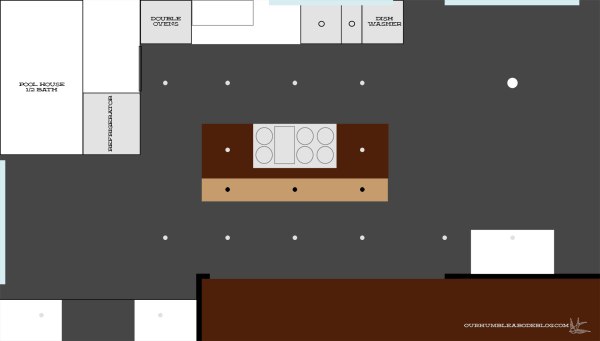
In the interim, Ben is starting drawer assembly and we’re waiting for our new sliding door to arrive.  Nitty gritty details are being discussed and planned regularly.  Lighting is the most recent debate.  After several discussions, I think we’ve settled it.  The smaller white dots represent recessed cans and the black show pendants.

Kitchen-Floor-Plan-with-Lighting

I quite like these small pendants at Home Depot.  Directing the lighting down should make the bar area feel cozier, and won’t blind people in other rooms.

Sleek glass pendants are my back up, if we feel the black attract too much attention.  

Then I start second guessing whether I want pendants or not.  We need a vent hood, and the wider cook top needs a larger fan.  But, with the cook top in the island, that vent hood takes up a fair amount of space.  Visually and literally.  The plan is to box around it as simply and minimally as possible.  Perhaps similar to this, but in the middle of the room.

This white with wood band is really stunning, too.

I’m not sure if I’ll like the look of the big hood and smaller pendant combo.  Especially when the lights are less than two feet from the boxing.  I’ve searched for inspiration, but most island set ups have either pendants or a vent hood.  Not both.  Few that do, have pendants to the sides, not over a bar, like this:

Any ideas, suggestions, or pictures you have to help decide?

Kitchen Planning

It seems fitting this is our 1,000th post.  We’re talking kitchens, which was the only full, real-time remodel we shared from our last house.  Living in this kitchen for the past 2 1/2 years has made us realize what we like and dislike about the layout.  Using our last kitchen as a guide, we have a better idea of what we’re getting into.  We also know more about materials we’d prefer.  Here’s a reminder of our current layout and design.

Kitchen-Two-Years-Later

Here’s a scaled layout of the space:

Kitchen-Floor-Plans-Current

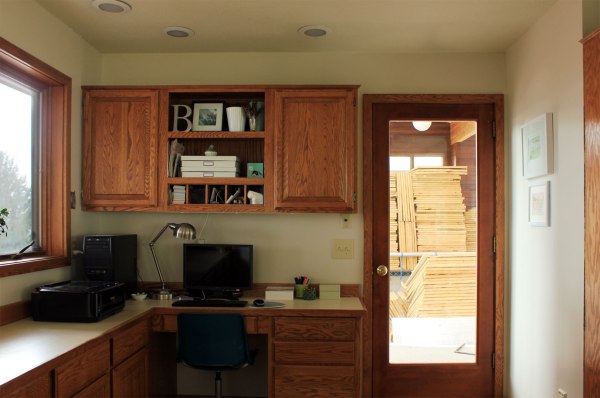
It’s a long room, 29 feet from the family room to the pool house door and 13 feet wide.  Big and totally workable, with three different work zones inside.  The main kitchen, a breakfast nook, and my office.

Painted-Office-from-Kitchen

Painted-Office

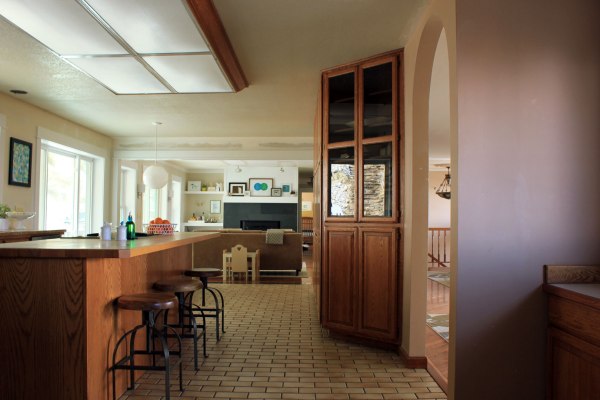
From the office, you can go to the pool house.  If you do a 180 spin, you’ll see a large bay of cabinets we use as a pantry and large item storage.  Small appliances, large dishes, and such.

Office-to-Family-Room-One-Year-Later

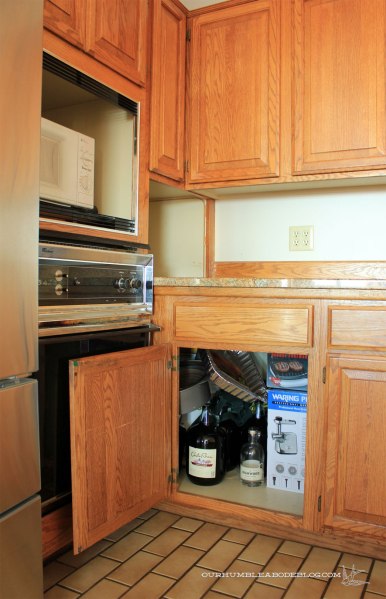
While the kitchen looks (and is) large, the layout of cabinets aren’t the most functional or well planned.  Several cabinets are essentially filler.  Like this large corner cabinet that doesn’t do much beside hold Ben’s cheap wine collection:

Corner-Cabinet-in-Kitchen

Or our giant cabinet housing only a trash can.

Trash-Cabinet-in-Kitchen

I like the idea of this vertically divided cabinet, but we could get away with only half like this:

Divider-Cabinet-in-Kitchen

We’re also not in love with the fridge next to the oven combo.  Especially with the built-in microwave space above.  Our tiny microwave doesn’t help the look either.

Kitchen-Appliance-Side-by-Side

The 3 foot space between the island and perimeter is frustrating, too.  When the oven and/or dishwasher are open, it’s a maze. Add someone at the sink and it’s really cramped.

Kitchen-Doors-Open-Maze

Given those dislikes, we’ve come up with a new plan.  It includes all drawer lowers, which we greatly miss from our last kitchen.  Here’s what we’ve got in mind:

Kitchen-Floor-Plans-New

Most appliances are staying in the same location; refrigerator, sink, dishwasher, and cooktop.  We’ll swing a double wall oven around the corner, turning the wasted space into a shallow walk-in type pantry.  A pocket door means one less door swing to accommodate.

Kitchen-Floor-Plans-New-Details

To get more working room, we’re moving the island another foot away from the perimeter cabinets.  Across from the island, we’re going to widen the doorway, matching the width of the adjacent dining room.  Because we’re losing the big pantry bay, we’ll add in a smaller cabinet to house the microwave and other small appliances.  My office will also get a different layout, nixing the L shape to the corner.  In place, we’ll widen the pool house door to match the other sliding doors we’ve installed.  Our plan is to use the same tile throughout the two spaces, for a seamless flow.  I’ll talk more about the design elements when we get more nailed down.  We’ve already started building cabinets, so hopefully we can demo before the new year.