

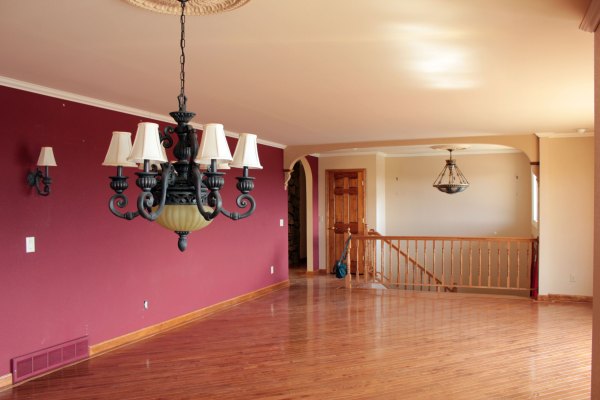
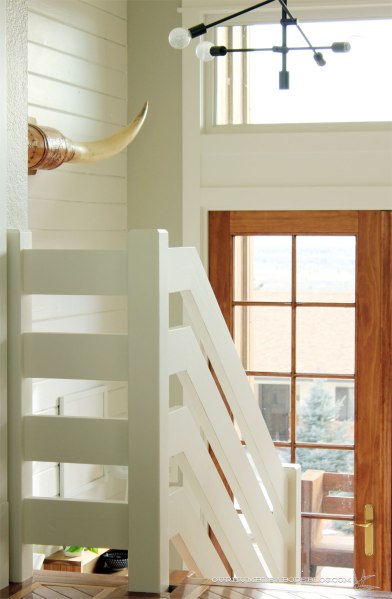
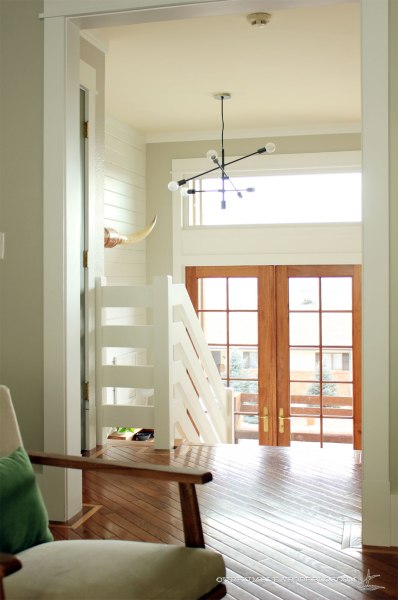
A few weekends back, we took the plunge and replaced our stair railings.

It was our first venture, with a few small things to figure out, but overall went smoothly. To get started, we of course had to remove the old set, loosening the bolts from the underside first.

With the flat side out, we determined our new post placement. Since the old railing was too close to the front door trim, we shifted the posts over an inch.

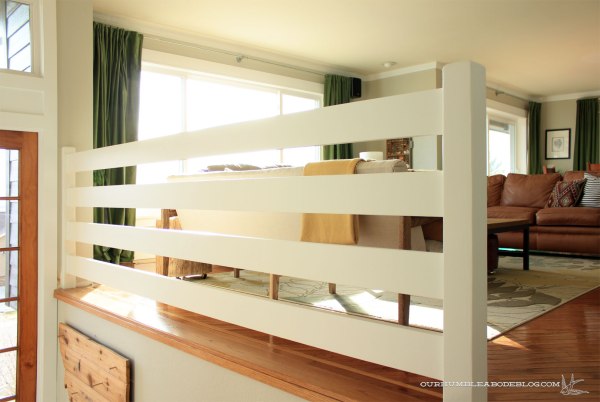
Ben cut the 4 by 4 inch post to size (38 inches above the floor with 11 inches below), set it in the hole, and cut another post in half length wise and to height for the wall side. Neither were fastened in place so we could first attach the horizontal planks. We purchased 2 by 6 boards, but ran the sides through the table saw to cut them down to 5 inches wide and take away the dimensional lumber look. To save some time sanding, we also ran each plank through the planer for an ultra smooth finish. Once all the boards were cut and prepped, we cut 4 inch spacers to make sure spacing between was even.
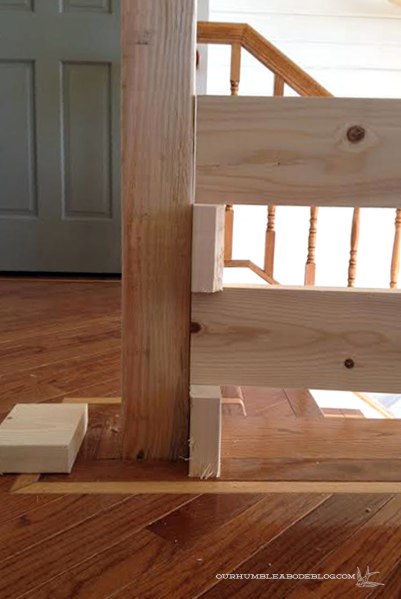
While I held the boards in place on the full post end, Ben worked on the half post side. He screwed through the backside of the post, into each board three times to secure it in place without visible holes. Then we shimmied it into place on the wall and fastened it to the wall.

The full post end was only slightly different since we used longer screws. Ben pre-drilled through the post, creating a recess for the screw head, then drove the screws into place while I kept the each board in place.


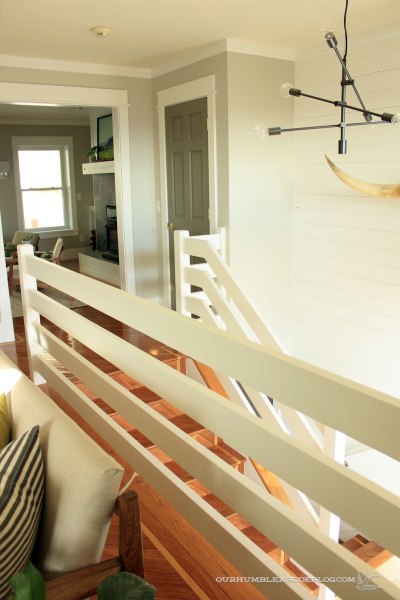
Working on the flat side was easy enough and went quickly, but the angled side was a bit tricky. Again, removing the old was step number one.

Another 38 inch tall 4 by 4 post was set into the hole at the top of the stairs.

To keep the spacing between the boards even with the flat areas, the post at the bottom had to be taller since the angled cuts make the planks taller. This post had to be notched out to cut around the stair wall before screwing it in at the base.

Then time for the straight meets angled cut to follow the stair angle. Once the angles fit perfectly, Ben applied glue on the angle and drove screws in from the top and bottom to keep everything rigid and in place until the glue dried.

Like the other side, Ben put two screws into each plank.

In that corner, where the stairs meet the small section terminated to the wall, we had to stagger the screws so they didn’t cross. Since the wall section is shorter, one screw in the center held firmly.

After everything was securely fastened on the upper sections, Ben drove 6 inch long screws through the posts and into the wall studs below for maximum rigidity.
For a seamless finish, I filled each screw hole, knot hole, and hairline crack with putty and sanded smooth.

Caulking along the seams and walls was the last step before painting.

When painting over raw wood like pine, sap bleed through can be an issue. For greatest durability and stain blocking, I applied one coat of the same stain I used on our bedroom wall: Sherwin Williams Exterior Oil-Based Wood Primer. It’s stinky, so I built a fire and opened the windows to air the room out.

Knowing white will show any dirt, grubby hand marks, and well, everything else, I needed a paint that could withstand a good scrub. After a chat with my favorite paint guy at our local Ace Hardware, he suggested Benjamin Moore’s Ben Exterior paint in the low lustre finish to avoid a glossy finish. Three coats later and it’s a wrap.

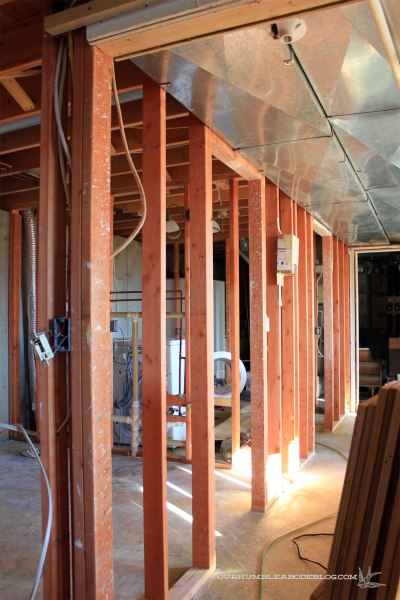
With this checked off the to do list, we can start hanging sheet rock in the basement.

















 ourhumbleabodeblog.com