Butt of the Square

As our outside comes together, I’ve been furiously planting.  Almost 60 assorted plants over our property in the last few weeks.  Which spurred me to add a dose of life next to the front door.
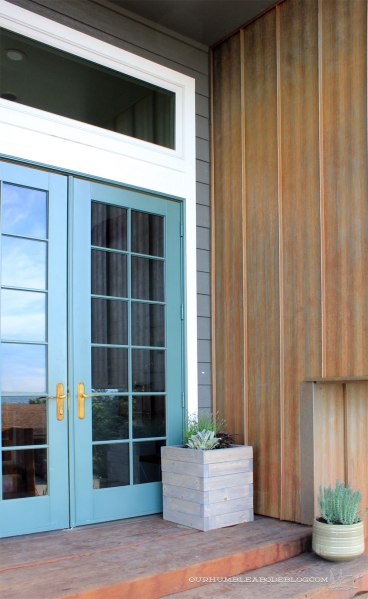
Square-Planter-Box-with-Front-Door

With an 8 foot tall door, I wanted something taller, to not look dwarfed by the oversized door.  A small tree would have been gorgeous, but I didn’t want to block the doorbell.  After thinking about it, I might try a dwarf fruit tree.  We’ll see.  Before building this planter box, I looked at local nurseries, hardware, and home improvement stores but didn’t see any taller planters I liked.  DIY to the rescue.  Using four 8 foot long 2 by 4s and scrap 2 by 2 strips, I built a modern square planter box.
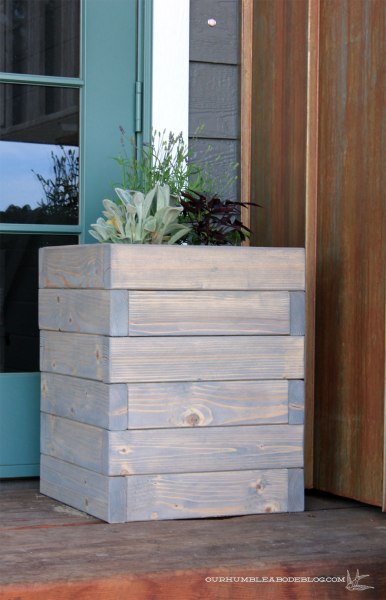
Square-Planter-Box-Filled-by-Front

Before building, I decided I wanted a 17 inch square box six boards (21 inches) tall.  To start, I cut twelve boards into 17 inch lengths.  With the butt end design, opposite sides are the same length, but the adjacent pieces are shorter to fit between.  For the design to be square, I cut twelve more sections at 14 inches long (the overall size minus two 2 by 4 widths).

Square-Planter-Box-Starting-Corner

Based on my finished height of 21 inches, I cut four 20 inch tall 2 by 2 pieces to secure the corners to.  I didn’t want see the nails or the corners once filled.  Working on a flat surface with a square, I set my pieces together and nailed 16 gauge 2 inch long finish nails from the inside, through the 2 by 2, into the 2 by 4.  Much like hardwood flooring, getting the first row straight or in this case, square, makes subsequent rows go smoothly.

From there, adding boards, rotating the exposed ends is the name of the game.
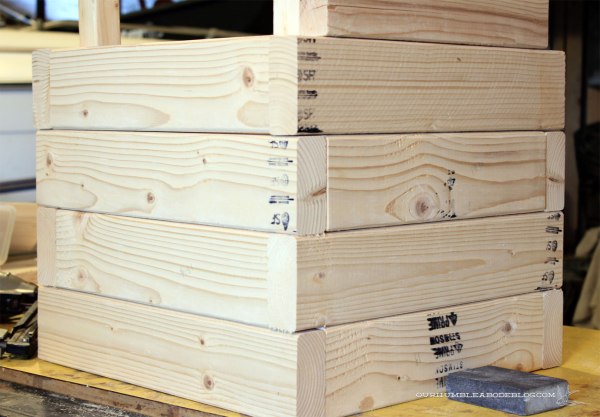
Square-Planter-Box-Assembly

I love the simple interest the staggered exposed ends add.
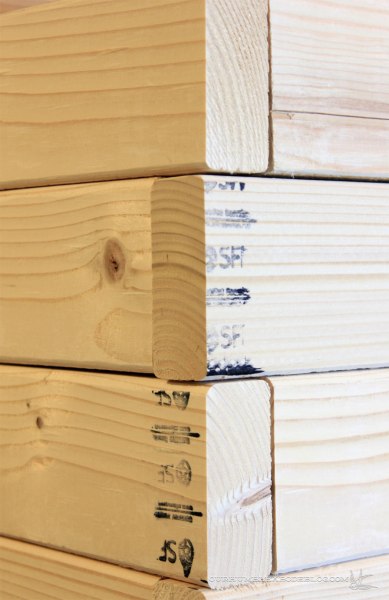
Square-Planter-Box-Corner-Detail

Once finished, the corner posts are tucked an in below the rim and are easily covered.
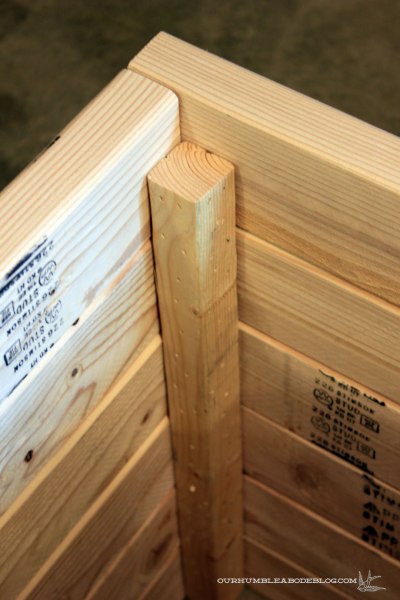
Square-Planter-Box-Inside-Corner-Fasteners

Before staining, I smoothed out the rough lumber with 80 grit sandpaper, slightly rounding the corners at the same time.
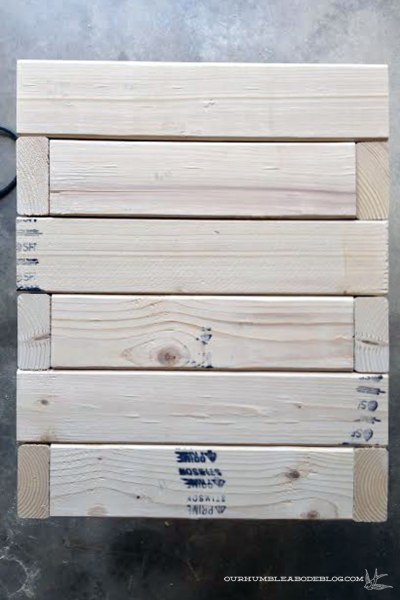
Square-Planter-Box-Before-Sanding

Wanting to accent the exposed end detail, I stained the box light gray.  It darken the end grain just enough to really make it pop.  To create the base support, I nailed scrap wood flush with the top of the third board down.  Then used another scrap of 3/4 inch material for the base, notching around the corner posts.  Sadly, I couldn’t find a square plastic hole-less liner to fit inside.  I improvised with four layers of thick plastic.  I really don’t want this leaking out and rotting the wood.
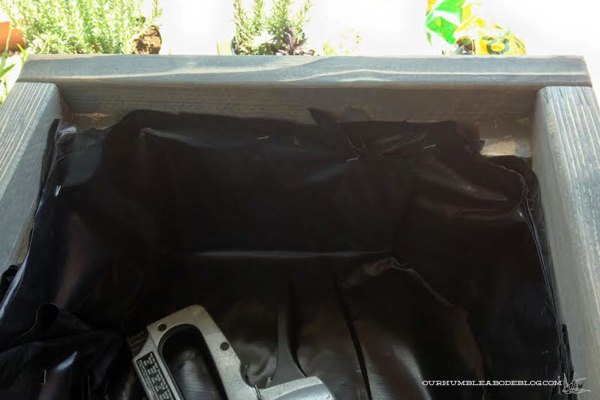
Sqaure-Planter-Box-Plastic-Sheeting-Liner


With the hard parts done, I got to fill it up with pretty plants my little helpers picked out.
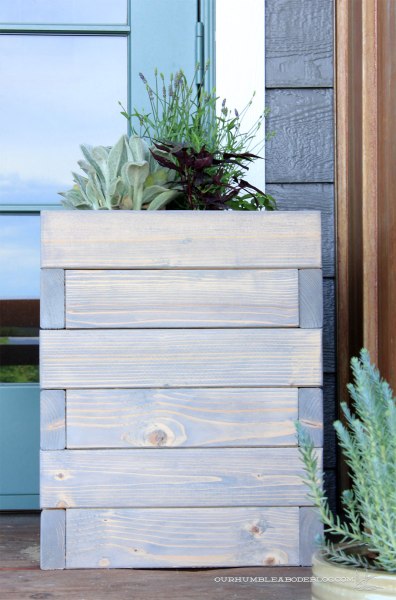
Square-Planter-Box-Front-Detail

Aromatic lavender, fuzzy lamb’s ear, a purple sweet potato vine, and a small basil plant.

Square-Planter-Box-Top-Detail

With such a versatile design, I’d like to build a longer box to create a mini herb garden for our back deck.  The basil may get swapped to that one later on.  And at the end of the season, I can plant both the lavender and lamb’s ear in the ground.
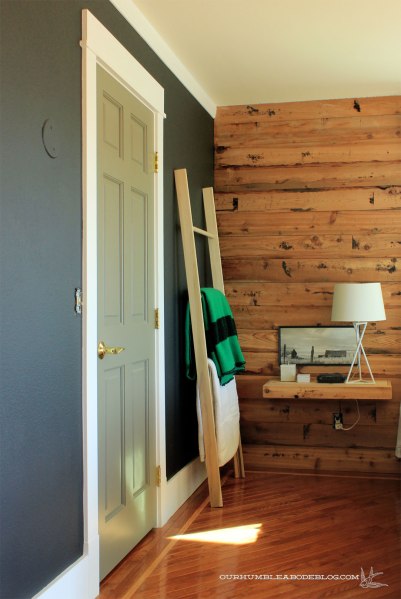
Ladder Rack

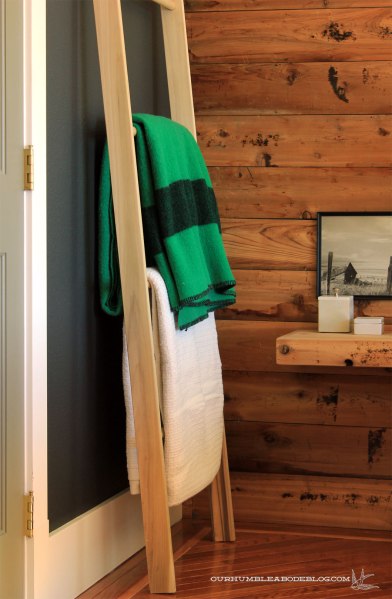
With recent fluctuating temps, light layers are the key to staying comfortable.  Outdoors and well as in.  To neatly store extra blankets, I built a leaning ladder for our bedroom.

Blanket-Ladder-in-Bedroom

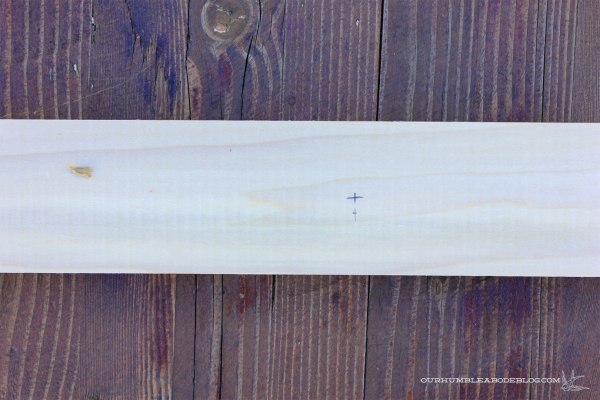
To get started, I used two 3/4 by 2 3/4 inch by six-foot long poplar boards and two 4 foot long 1 inch dowels.  Before cutting, I measured and marked the boards for four rungs.  Mine are spaced 15 inches apart, starting from the bottom.

Blanket-Ladder-Rung-Measurements

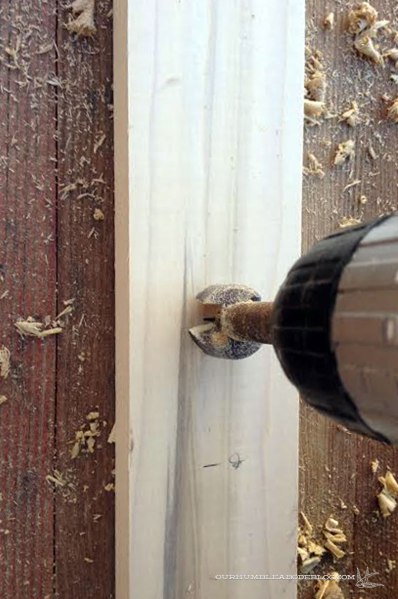
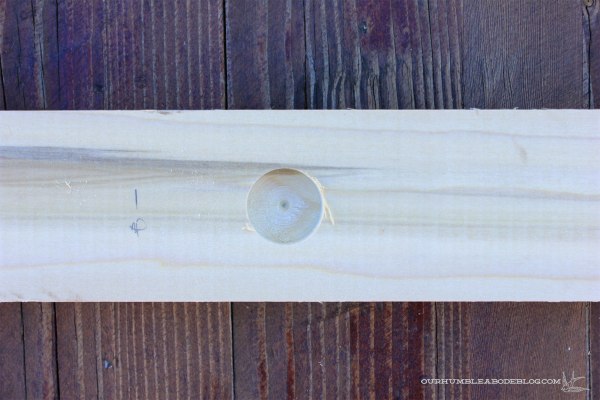
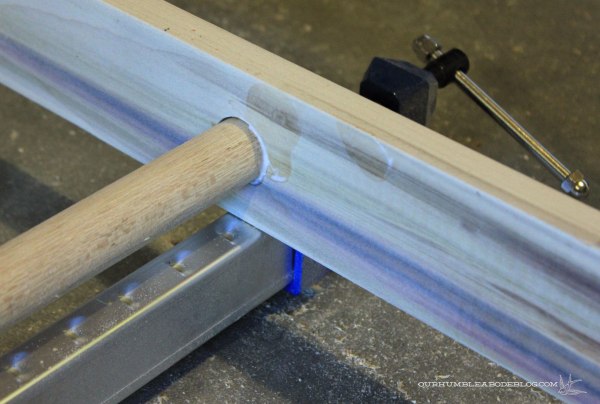
Using a Forstner bit, drilling the holes was quick and easy.

Blanket-Ladder-Drilling

Blanket-Ladder-Rung-Hole

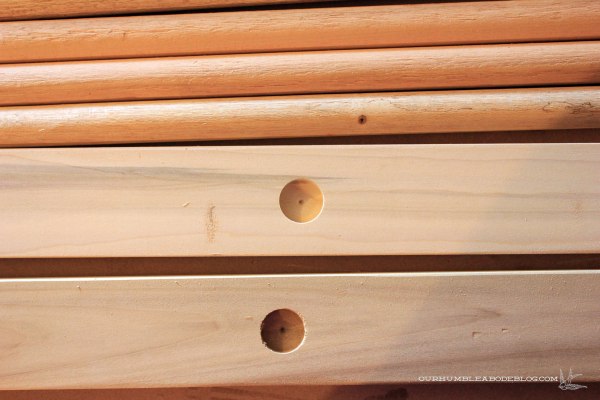
After drilling all holes and cutting the dowels, I used 220 grit paper to sand each piece before assembly.

Blanket-Ladder-Before-Assembly

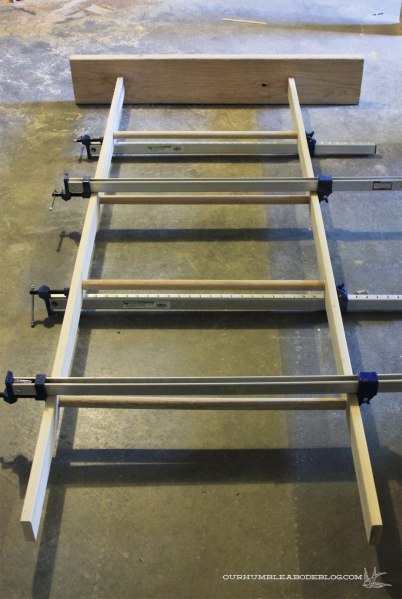
Honestly, sanding almost took more time than all the other steps combined.  Attaching everything was simple.  Working on the garage floor, I squeezed a liberal amount of Gorilla wood glue in the four holes of one board as well as the dowel ends.

Blanket-Ladder-Glued-and-Clamped

That was easy, but inserting the second side was a bit trickier.  Another set of hands would have been really helpful, to line the glued dowels up with the other board.  To keep everything tight while the glue dried, I placed a clamp at each rung.

Blanket-Ladder-Clamped

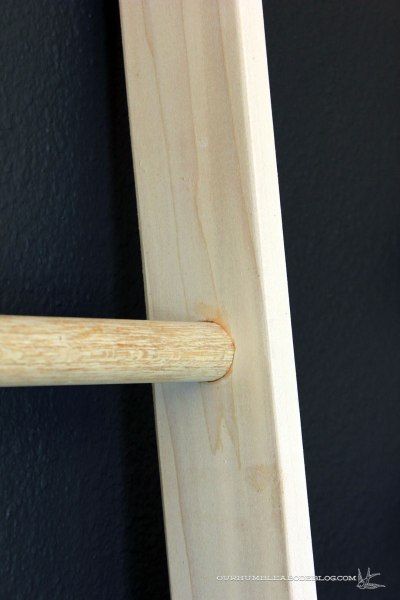
Twenty-four hours later, I pulled the clamps off and lightly sanded the extra glue off.

Blanket-Ladder-Rung-Detail

The two foot wide rungs are perfect for king sized blankets.

Blanket-Ladder-by-Nightstand

I might make a second for the basement to store guest bedding.  Much easier and cuter way to store blankets than a stack on a chair.

Marble Back Splash

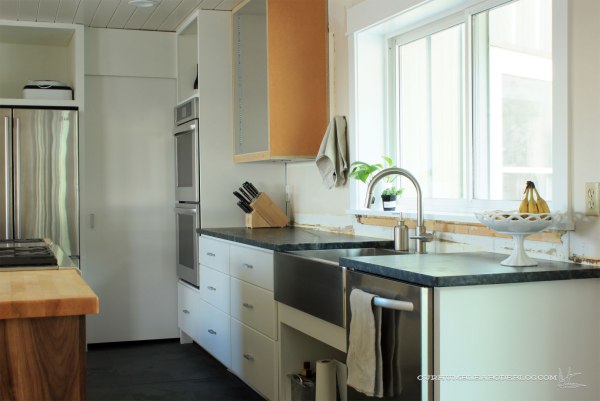
As I mentioned on Wednesday, the backsplash tile is installed.  Just last night we finished it up with grout.  But, here’s the uneven, ugly step before.

Kitchen-Perimeter-Cabinets-and-Drawer-Fronts

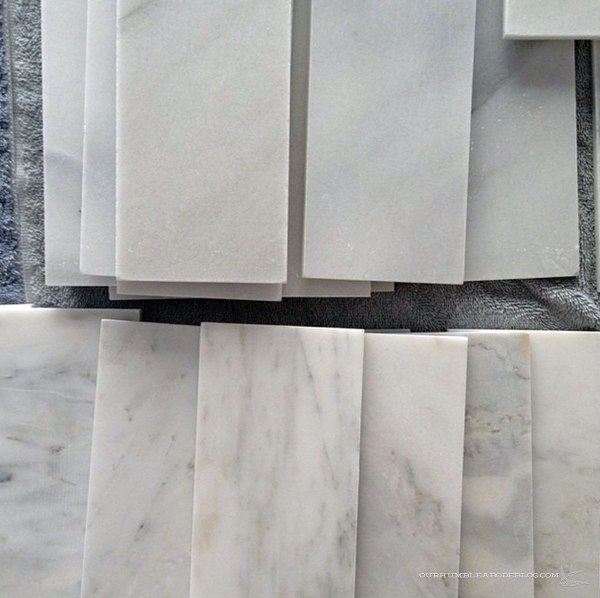
To get started setting tile, I opened and sorted the packages by color.  All tiles are 4 inch by 12 inch Carrara marble from Home Depot.  Indeed I am the crazy person sorting white tile by color. I’ll explain more in a minute.

Marble-Backsplash-Tile-Sorting

Install went smoothly, but took a lot of cutting.  Ben rocked it out in six hours though.

Marble-Backsplash-Under-Cabinet

For detailed tile jobs, Ben prefers to use pre-mixed mastic to avoid making several batches.

Marble-Backsplash-Against-Baseboard

Marble-Backsplash-Around-Sink

Unfortunately, it also took forever to dry completely.  Obviously that is an exaggeration, but waiting four days was a test of my patience.  Pulling out the spacers took only a few minutes and then I cleaned the mastic off the surface.

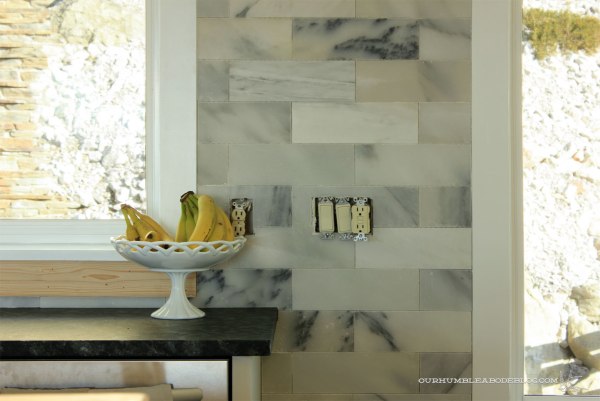
Marble-Backsplash-Ungrouted-Between-Windows

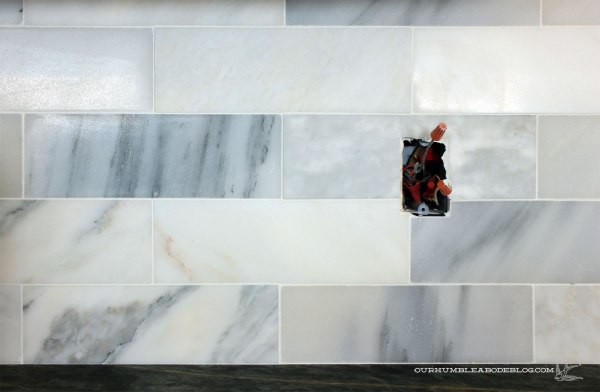
Yesterday, Ben took a couple of hours to grout everything.

Marble-Backsplash-on-Kitchen-Wall


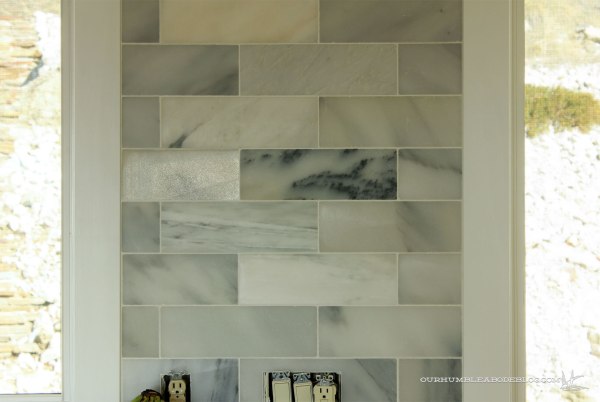
When sorting the tiles, I created 4 different groups.  Group one was bright white with little veining, the second white with veining.  The third group was pale gray, the fourth gray with heavy coloring.

Marble-Backsplash-Color-Variation

With such color variation, we made a point to pull from each group to avoid blocks of similar colors.

Marble-Backsplash-Grouted-Under-Cabinet

Marble-Backsplash-Between-Windows-Overall

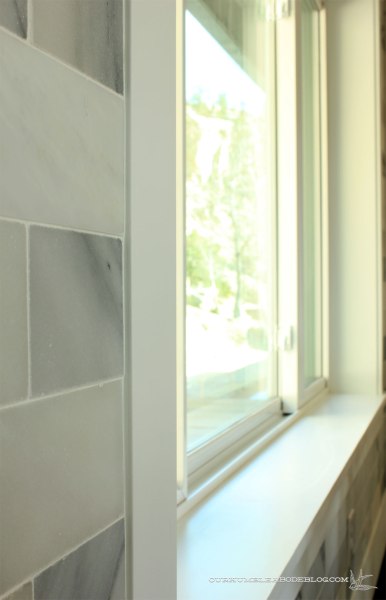
Also, we chose to keep the trim on the windows, cutting tiles to fit around.
Marble-Backsplash-Between-Windows

Marble-Backsplash-Around-Window

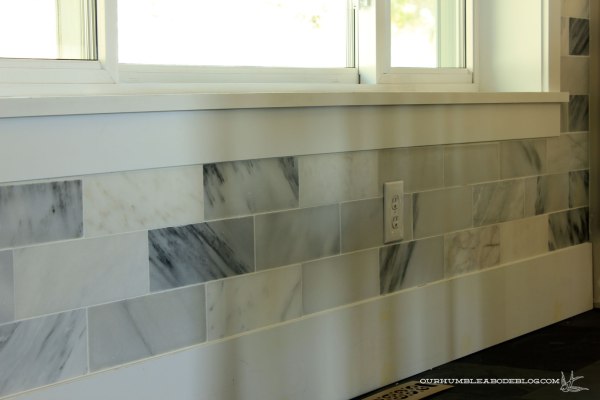
Same goes for the baseboard.

Marble-Backsplash-Under-Window

The only difference is for the crown, because the profile is thinner.  We’ll add a thin spacer behind, then secure the crown, slightly overlapping the tile.

Marble-Backsplash-from-Family-Room

Weekend plans include replacing switches and outlets, building cabinet doors, painting window trim, and working on the office cabinetry.  Hope everyone has a fantastic weekend!

Kitchen Cabinets, Part 1

During our last kitchen renovation, I shared how we built our cabinets.  Over the weekend, Ben built every drawer, 9 total, for the island.  We’ve made a few changes while building our new cabinets, so I’m giving the scoop now.  To get as much detail as possible, I’m sharing how he built the boxes and drawers now.  Once we finish the fronts, I’ll discuss the materials and process for those.
As he finished each drawer, I sanded the tops and sides smooth for clear coat.  Four days later, here’s our island, ready for install.

Kitchen-Cabinets-Island-Build

The right stack are for either side of the stove.  On the left are the shorter cabinets the cook top will rest on.  Originally, we planned to put the trash under the sink again, but started discussing and agreed it is better under the stove.  With a half width drawer under, if someone is cooking, it’s easy enough to scoot to the side to throw something away.  At the sink, you have to step all the way over, stopping what you are doing.  So, that’s why there’s only one drawer in the lower box.

Our bathroom vanity was a trial run of sorts for the kitchen cabinet process.  All boxes are constructed with 3/4 inch thick, double-sided melamine coated particle board.  Melamine is ideal for wet or potentially wet areas such as kitchens.  Box assembly is otherwise the same as before.

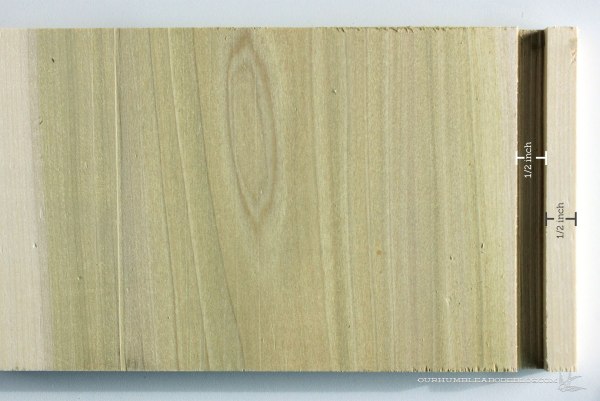
One big change we made is the drawer material.  Last time we used 3/4 inch plywood.  It’s sturdy, but everything we can get now is a lower grade.  Low grade plywood warps easier, which can skew the drawer.  We also didn’t want to fill ugly edges.  This time around, we went with 3/4 inch thick poplar for the sides and 1/2 inch double-sided melamine for drawer bottoms.  Using a dado bit in the table saw, Ben cut a 1/2 inch wide by 3/8 inch deep groove a half-inch from the bottom.

Kitchen-Drawer-Assembly-GroovesHe repeated this process for both sides and the front.  The backs are an inch shorter and are glued directly to the drawer base.  A bead of glue inside the groove holds the base in place.  Each side slips in over, nailing the corners for added strength.

Kitchen-Cabinet-Drawer-Base-Grooves

After the three sides are in place, Ben runs a line of glue on the base and side corners before sliding the back in.  A few more nails and the drawer is assembled.  That’s when I get to start working.  I used 220 grit paper to sand the top edges and sides smooths, paying extra attention to the joints.  Before sealing, I quickly vacuum off dust.  To keep the melamine base clean, I taped off the edges before applying two coats of clear water based poly.

Kitchen-Drawers-Taped-Off-Base

One really great advantage of building our own cabinets is tailoring them to our needs.  For instance, the drawer heights are perfect for us.  We always prefer three drawers over a shorter stack of four.

Before we start building drawers, I measure a bunch of items to decide the minimum height for each drawer.  I tell Ben what I need the usable space to be.  To accommodate tall pots, leaving a little breathing room, our bottom drawer inside space is 11 inches tall.  Our top drawer can be no shorter than 4 1/2 inches inside to store our spice drawers.  Middle drawers are always the remaining space.  Knowing my measurements and that the bottom and glides take up 1 inch, Ben knows where to attach the glides.

Kitchen-Drawer-Glides-Mounted-in-Box

Another big difference this go around are the drawer glides.  Last time, we didn’t want to sacrifice drawer height, so we used side mount glides.  With a bigger kitchen, we are less concerned about that and chose Blum soft close, under mount glides.

Comparatively, these puppies are not cheap.  About $17 per pair versus $6 for the same size.  We made our island deeper than standard, 31 inches, to leave space between the cooktop and bar.  Longer pairs cost $45 each.  That’s 405 dollars in drawer glides for just the island!  Even with the price tag, after using these in the bathroom, neither of us would go back to the old style.  These are the cats pajamas.  Seriously, full extension, 100 pound heavy-duty rating, quiet, and smooth.

Kitchen-Drawers-Inside-Box

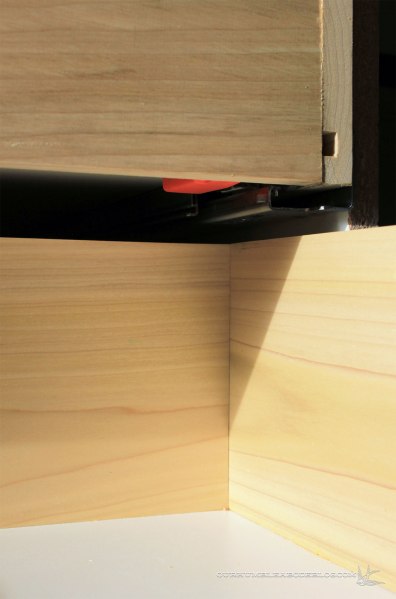
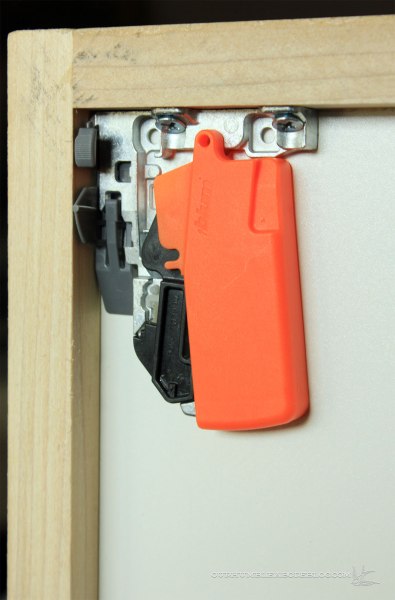
With the slide installed, he secures clips to the under side of each drawer.  That’s the orange thing you see in the above photo.

Kitchen-Drawers-Blum-Undermount-Clips-Side

These clips are the only thing physically holding the drawer to the glide.

Blum-Drawer-Glides-from-Under

Did I mention these glides are tucked completely underneath, hidden out of sight.

Kitchen-Drawers-Undermount-Glides

That’s all we can do on cabinets until we get everything set in the kitchen.  Then we add the face frames, drawer fronts, and hardware.  We’re nailing down those details soon.

We also made unexpected progress on the countertops over the weekend.  Hoping to get pricing and see our options, we popped in a local marble and granite supplier.  I said I preferred a dark, matte to satin finish stone.  The owner showed us really beautiful leathered granite and a gorgeous soap stone remnant pile.  After talking it over with him, he made us an offer we couldn’t refuse: 100 bucks for six soap stone pieces.  Three are more than enough for our kitchen, so we loaded it up that day.  Because soap stone is on the soft side, it’s easy to cut and polish at home.  Ben’s no stranger to working with stone counters, so we’re thrilled.  Right now, the slabs are stacked together, with the backs facing out.  But, I can’t wait to share more!

Our rule is to have everything on site and ready for install before anything gets ripped out.  Slowly, things are coming in.  Flooring, a new door, and the sink should arrive soon.  It can’t get here soon enough.  Almost daily, Ben threatens to tear things out.

Dependant Pendants

We’re making progress with the kitchen.  All cabinet boxes are built, except the sink which we’re waiting to build until we have a sink in hand.  As of now, half of the basement is cabinet shells, stacked tetris style.

Kitchen-Cabinets-Stored-in-Basement

For appliances, we’re only missing our sink.  The current dishwasher and refrigerator are staying.  A gorgeous 48 inch cook top, stainless vent hood insert, and stacked double ovens are hanging out, waiting for a permanent home.

What we expected to be easy, has become a search: finding the perfect sink. Knowing we loved the last custom-made sink (as well as our bathroom shower pan and counter by the same fabricator), we started there.  Unfortunately, their rates have almost tripled to complete our design.  Much like Duran Duran, we’re on the hunt.  And hungry like the wolf.

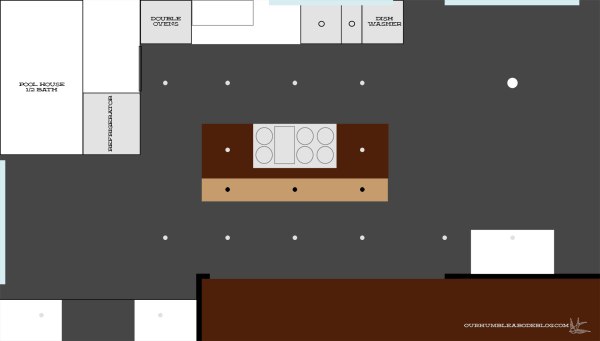
In the interim, Ben is starting drawer assembly and we’re waiting for our new sliding door to arrive.  Nitty gritty details are being discussed and planned regularly.  Lighting is the most recent debate.  After several discussions, I think we’ve settled it.  The smaller white dots represent recessed cans and the black show pendants.

Kitchen-Floor-Plan-with-Lighting

I quite like these small pendants at Home Depot.  Directing the lighting down should make the bar area feel cozier, and won’t blind people in other rooms.

Sleek glass pendants are my back up, if we feel the black attract too much attention.  

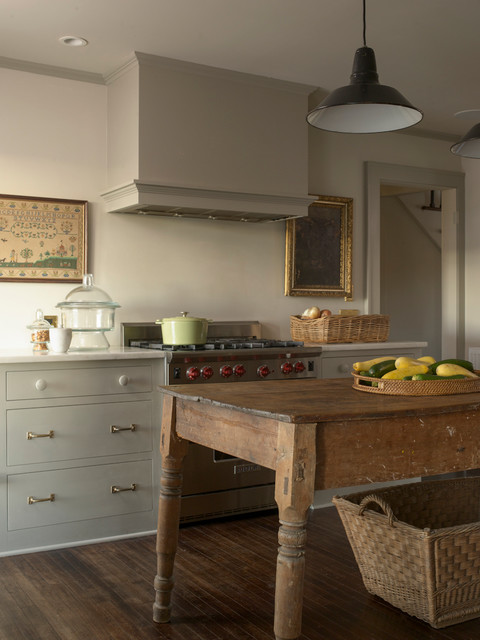
Then I start second guessing whether I want pendants or not.  We need a vent hood, and the wider cook top needs a larger fan.  But, with the cook top in the island, that vent hood takes up a fair amount of space.  Visually and literally.  The plan is to box around it as simply and minimally as possible.  Perhaps similar to this, but in the middle of the room.

This white with wood band is really stunning, too.

I’m not sure if I’ll like the look of the big hood and smaller pendant combo.  Especially when the lights are less than two feet from the boxing.  I’ve searched for inspiration, but most island set ups have either pendants or a vent hood.  Not both.  Few that do, have pendants to the sides, not over a bar, like this:

Any ideas, suggestions, or pictures you have to help decide?