
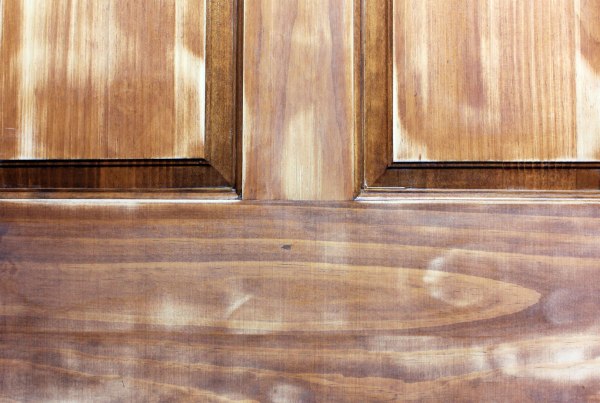
More appropriately titled, “How I paint paneled doors.” I’ve got six finished and three more to go and I’ve learned a lesson (or two) along the way. The first being, we have two completely different doors on the main level. Most of which look like this:

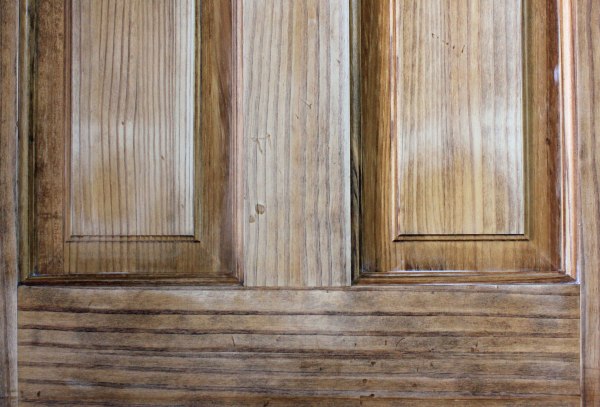
But a few that look like this:

I’m not sure what type of wood the majority of the doors are (maybe birch?) but the odd ones seem to be pine. Not only is the wood different, making the grain drastically different (and not in a good way), but the wood is noticeably softer and easier to scratch/dent. Oh, and the panel measurements are slightly larger. Regardless, I start each door with a thorough-ish sanding. To cut the dust, I tape the shop vac hose to the sander output.

Using 120 grit paper, I cover all the flat parts. I’ve found 120 to work best. 80 is too rough and 220 takes a while longer to get the job done. If you’re painting, just sand until the surface looks matte.
Some parts will need more attention, but it doesn’t take much.
For detailed parts, a coat of liquid deglosser wipes away dirt, grease, and grime, but it won’t take down the sheen. On one door, I used Citristrip on the detailed insets. And quickly became annoyed. For being low odor, it worked really well. But the wait time, scraping, and clean up with odorless mineral spirits wasn’t worth it. Not to mention it still didn’t come off completely in some areas, so I had to scrub with liquid deglosser. That one door took longer to finish than the previous three combined. Simply put, unless you’re planning to re-stain, stripping the coats isn’t worth it.
In the past, I’ve followed the previous steps using traditional primer followed by two coats of paint. Instead, I experimented with Glidden’s Duo paint (paint and primer in one). I’ve gotta say, I love it. Two coats and I’m done. For the smoothest finish, I use a small angled brush to cut in the inside detail of the panels. It helps to paint along the outside and inside flat areas at this time.
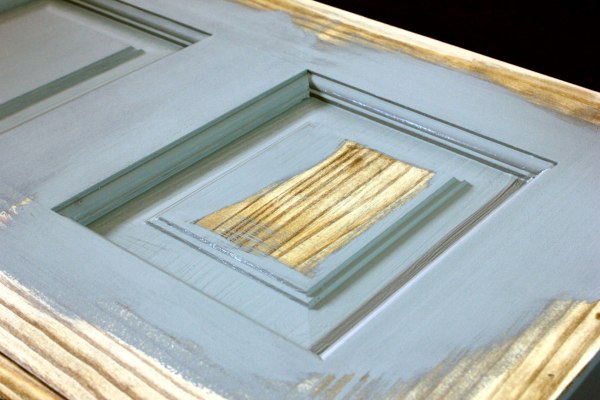
Then use a foam roller to cover the brush strokes and fill in the flat inside.
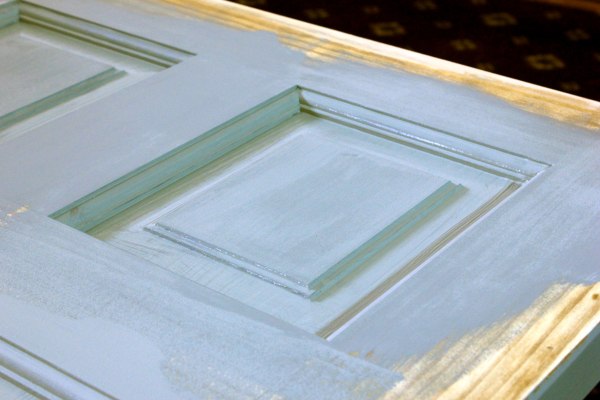
Once all six panels are done, I start at the top painting the frame. Horizontal first, then the three verticals, then the horizontal below, working my way down. Keep a wet edge to blend the paint. Applying the paint with a brush, then rolling over to cover the brush strokes allows me to work quicker because I’m not having to load up a roller each time.
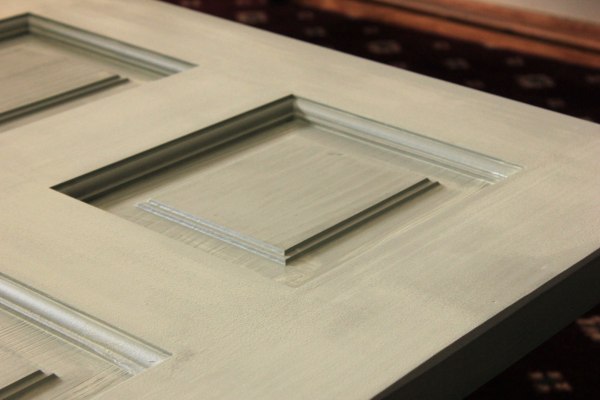
Here’s something else I learned. To quickly and thoroughly clean out a brush, first wipe off the sides. Then hold it upside down under running water. Keep your hand wrapped around it to prevent the bristles from splaying out. Hold it under until the water runs clear, wipe off the sides, squeeze out the water and let it dry.

No more stiff, gunked up brushes because the center of the brush is clean, too. Obviously there are dozens of ways to do the same task, so tell me, how do you do it? What products do you love for refinishing or painting? And how was your weekend?









 ourhumbleabodeblog.com