
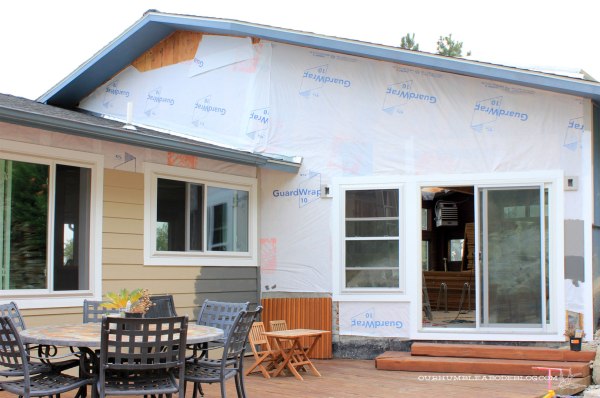
Shade is a hot commodity around our house. Very few areas are considered full shade because the length of the house faces north/south. Afternoon shaded areas are usually sunny in the mornings.
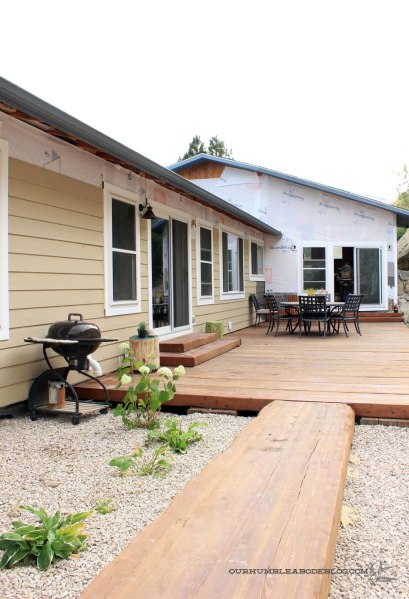
So, we have a thin strip near the back of the house (off the edge of the deck) that can grow part shade or full shade plants. Which is fine with me, because there aren’t as many shade plants to choose from. I’ve imagined a hosta/bleeding heart/lily of the valley/hydrangea/coral bells garden. So that was my starting point, but I wanted to find a few more to add more interest. Here’s my list:
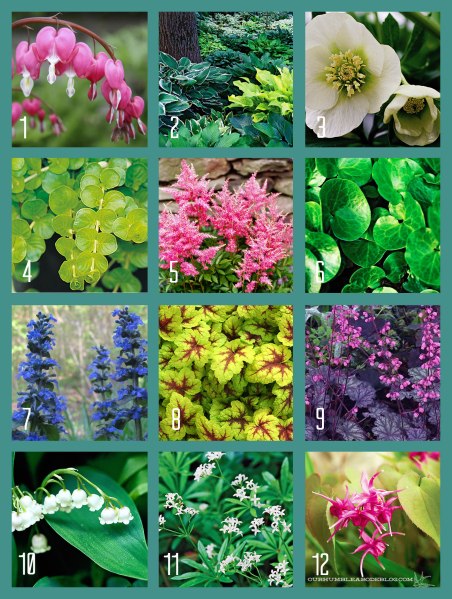
1. Bleeding Heart is a delicate, arching spring blooming perennial that can grow up to three feet tall. Prefers cool conditions and is deer resistant. After blooming, foliage dies off. To prevent a bare spot, plant near other perennials.
2. Hostas are the most popular shade perennial in the United States, and for good reason; easy to grow, low maintenance, and striking leaves. Best in zones 4-8, typical height is 12 inches to 30 inches wide.
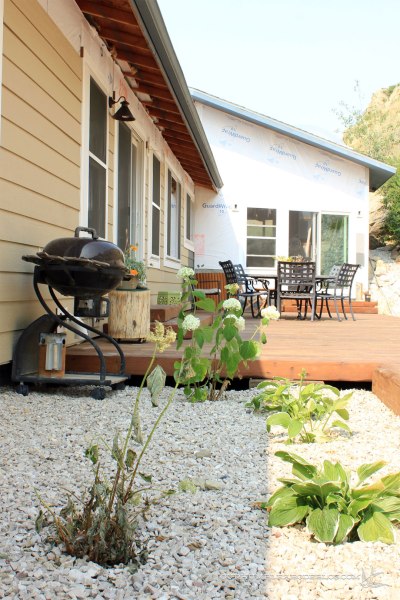
Thanks to a friend, I’ve already got a few hosta plants in the back. And one nice hydrangea, but another isn’t looking too hot. After we wrap up the siding, I can fill in areas closer to the house with more hosta plants, and perhaps a few more from this list.
3. Hellebore plants bloom in late winter and early spring, making it a fun choice for gardens. These deer resistant flowers grow in zones 4-8, reaching 24 inches tall and wide.
4. Creeping Jenny is a low-growing ground cover with round bright green leaves. This fast grower prefers part sun and grows about 4 inches tall and 24 inches wide in zones 3-9.
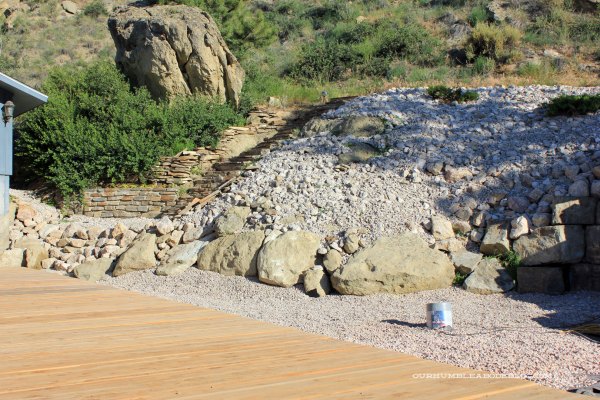
A few Creeping Jenny live in the rock planter. When the large shrub fills in, the branches give the plants enough shade to thrive in an otherwise full sun area.
5. Astible has large flower clumps that bloom in the summer. Can reach 36 inches tall and wide in zones 4-9 and are deer resistant.
6. Wild Ginger grows, well, wild in the Eastern half of the U.S. It can be difficult to track down at a nursery, but are easily transplanted from forests.
7. Ajuga is also tricky to find locally, but plants can be purchased online. Thrives in part shade and can tolerate full shade and moderately dry areas. With a mature height of 6 inches, this groundcover attracts butterflies and hummingbirds. Great in zones 4-9, and can stay evergreen in areas with mild winters.
8. Heucherella is a low-growing (8 inches) groundcover, but is also used as spiller in potted arrangements. Fast growing, and sprouts short spikes of coral flowers in mid-spring in zones 4-9.
9. Coral Bells are similar to Heucherella, but are easier to find at large home improvement stores. With a mounding habit, these colorful leaves don’t overtake a garden. Grow 24 inches wide and tall in zones as cold as 4. Also have delicate flowers in spring.
10. Lily of the Valley has dense green foliage with dainty white scallop-edged flowers in the spring. Spreads rapidly in moist soil, but dry soil can help prevent spreading. Performs best in zones 4-8.

Below the windows, I plan to add some low-growing plants; lily of the valley, coral bells, and creeping Jenny.
11. Sweet Woodruff is a fast spreading, low growing ground cover. With shallow roots, it is perfect under shade trees where grass can’t thrive. Mature height of 8 inches with tiny white flowers in late spring and early summer in zones 4-8.
12. Epimedium originated in Japan. This part sun plant has large heart-shaped leaves with spiky flowers in the spring. Reaches 14 inches tall and is best in zones 4-8. I have yet to find this locally, but have found great options online.
If you’re looking for full sun plants, here are twelve that are on my radar. Of course, feel free to add your suggestions and favorites, too.






 ourhumbleabodeblog.com