Framebridge Art

As we make progress on the basement remodel, I’m getting closer to working on the details and smaller accessories.  This is my favorite part, as it’s when character, personality, and depth are added.  With all the new wall space we’ll have, I’m excited to get a few pieces out of storage, but there are a few smaller strips of wall in need of art.  Enter, stage left, Framebridge.

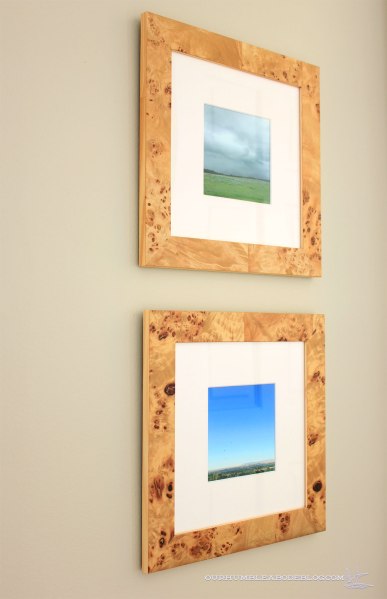
Framebridge-Art-in-Hall-Overall

I’m always on the search for good deals, that shouldn’t come as a surprise.  Though I love low prices, I don’t want to sacrifice quality.  This is why I love to DIY and thrift, because many of those pieces have withstood decades of abuse and are still standing.  Even when it comes to smaller, decorative elements, I like to have quality whenever possible.  These frames certainly deliver in the quality department.

Framebridge-Art-in-Hall

Unlike other custom framing options, these frames didn’t cost me an arm and a leg.  Framebridge offers the option of printing photos from Instagram, or they’ll send you a prepaid mailer to send in the art you already have.  How great is that?!

Framebridge-Art-in-Guest-Room

Knowing I wanted a few smaller pieces, I selected two of my favorite Instagram photos, both scenes from Montana.  After looking through the 31 frame options, I landed on the Cairo burl frame because I wanted a wooden frame.  Honestly, I was concerned about the print quality simply because both shots were taken with my iPhone and could easily look grainy.  When I opened the package (free shipping, by the way) I was pleasently surprised by the photo quality, clarity, and vibrancy of color.

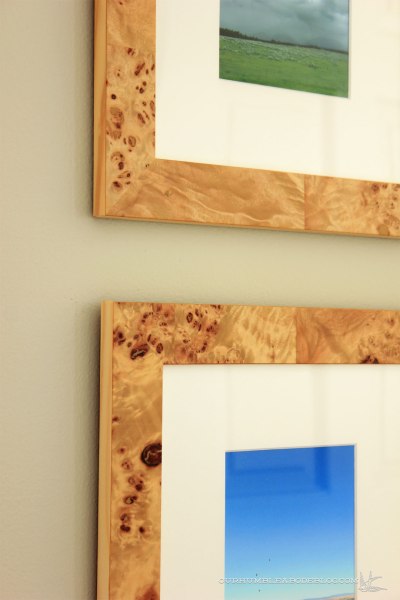
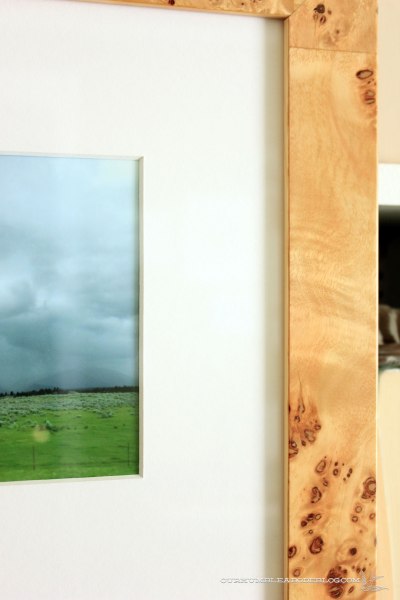
Framebridge-Art-Detail

The mat is thick and beefy.  And the burl wood is exactly the warmth I had envisioned.  If I were being super nit-picky, my only complaint, and it’s a very small one, is that the burl doesn’t wrap around the sides.  It’s not a big deal, because the sides are a wood of the same tone.

Framebridge-on-Mantel-in-Family-Room

Because I jumped the gun on ordering, these little guys will float around the house until the basement is ready.

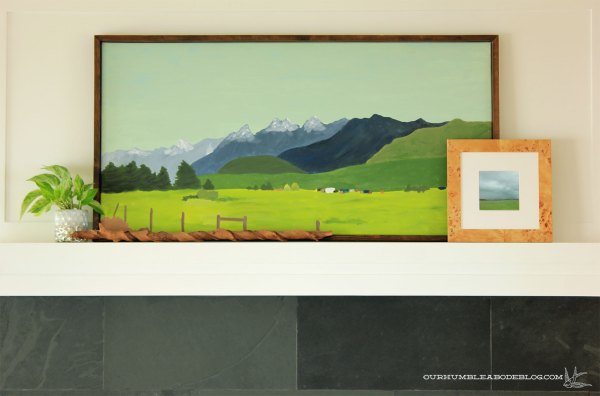
Framebridge-on-Mantel

I love displaying travel photos, and this small landscape pairs perfectly with the large painting on the mantel.  Look how similar the colors are:

Framebridge-on-Mantle-Detail

I’m excited to have a reliable, affordable custom framing option for future use.  It’s better when you’re not required to leave the house to get something like this done, even for large scale art.

Furniture Thrifting Guidelines

It’s no secret I love hunting thrift stores for hidden gems.  Those dusty, dirty, seen-better-days pieces that make the perfect ugly duckling to beautiful goose transformations.  Far more often than not, I leave empty-handed or maybe with a small trinket, bowl, or more likely, a book or two.  Stumbling on those big furniture pieces is exciting, of course, but not too frequent.  But before I make a large (in terms of size) purchase, certain rules/criteria must be met:

  1.  Will this piece satisfy a need in our home?
  2. Do I have a place in mind for it?  Can it also work in other rooms?
  3. Do I like the shape, size, lines, style of this piece?  If not, can I change that?
  4. Is it sturdy and in good condition?  If not, how difficult it is to fix?
  5. Is it worth the price?  How much will I have to put into this piece to make it what I want?

I’ll get into each point as I go, and of course, for something I’m absolutely gaga over, I can make exceptions, usually in the need department.

First and foremost, do I need this?  I do realize I have a very small furniture hoarding problem, but mostly because we still have two large areas to furnish: the basement and pool house.  So, when I see something that might work, especially at a reasonable (or great) price, I get it.  Worst case scenario, I put it on Craigslist or donate it and eat the loss.

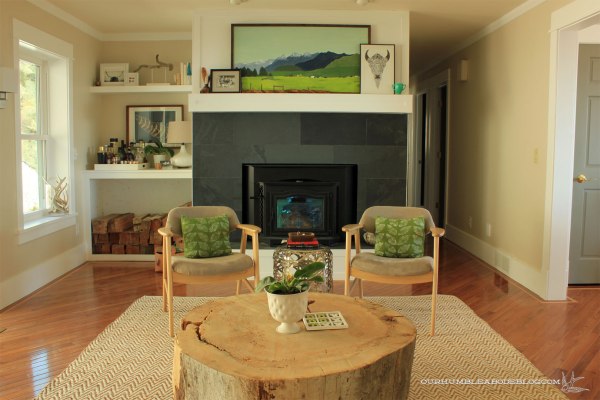
Two years ago, I scored a pair of chairs, which by the way, pairs seem incredibly elusive in my thrifting adventures, for ten dollars.  The petite size was surprisingly comfortable, yet lightweight enough to move easily.  After a thorough sanding, a couple of coats of polyurethane, and new fabric, they rounded out our family room seating arrangement.
West-Elm-Rug-In-Family-Room-by-Fireplace

Flash back to a fateful day this past November and you would have found me standing in a thrift store, staring at another pair of chairs, internal debate running through my head.  To buy or not to buy-that is the question.  I loved the lines and shape, the frames were in good, solid condition despite needing a refresh, and only $5 each.  People spend more than that on a specialty coffee, at least I’d have something to show for it, right?

Five-Dollar-Chair-Before

In my mind, I knew they’d look great by the fireplace, in the exact spot I already had chairs.  Did I need this new set?  Nope, technically I didn’t.  Even so, I bought them with plans to use the previous set in the basement.  If they don’t work down there, for the two years of use we got out of them, I haven’t lost anything.  After my standard refinish + new fabric combo, the pair cost me roughly twenty dollars each.  More than anything, the size and style of these chairs works better in our family room.

MCM-Chairs-Updated-in-Family-Room

Do I have a place for this?  Can it work in more than one room?  If you habitually change your mind, move things around, or just like a change of scenery, this is a big question.  Of course, the larger the item, the more difficult it will be to move around to different rooms.  This little dresser, a hand me down that previously belonged to my grandfather, has lived in several rooms and in both houses.  It can function as a dresser (duh) but could also work in a small nook, in an entry, or mini desk surface in a pinch.

Guest-Room-Makeover-Green-Walls-White-Dresser-Chair

Do I like the size/shape/style/lines of the piece?  Occasionally, friends will ask me to keep a look out for a specific piece they need, say, a dresser.  I’ll send pictures of anything that might work, and if I get the go ahead, I’ll buy it.  When I found this beaut, it also came with a mountable mirror.

White-Painted-Dresser-Top

Lucky for me, my friend didn’t need it, and I desperately wanted it for my main bathroom.  The size was perfect, the simple brass details were lovely, and I had wanted to add more wood tones.  A quick strip and oil coat added the warmth this bathroom needed.

Campaign-Mirror-Hung-in-Bathroom

Is it in good shape?  If not, can the damage be fixed?  I think Ben (and perhaps several others) thought I was nuts when I dragged this small orange sofa (settee?) home with me.  Right away though, those gorgeous legs had me interested.

Thrifted-Vintage-Orange-Sofa-Front

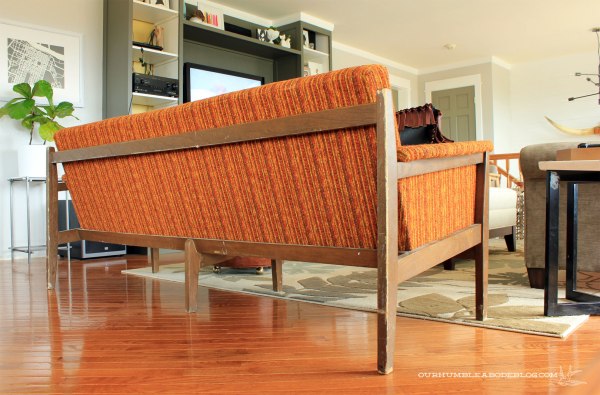
Then I turned it around and saw the exposed wood frame detail on the back and that was it.  I had. to. have. it. Despite the loose joints, because wood joints, unlike the human variety, are typically very easy to fix with a little wood glue.
Thrifted-Vintage-Orange-Sofa-Back

Since scratchy, smelly, 70’s fabric isn’t my bag, I followed my standard fix up recipe of refinished wood and new fabric for a look I love.

Horizontal-Railing-with-Linen-Sofa

Fixing the frame was as simple as applying wood glue in the dowel holes, clamping, and letting it dry before sanding and staining.  Pieces with serious damage, like a missing leg, shouldn’t be passed over if all legs could be replaced.

Thrifted-Vintage-Sofa-Back-Corner-After

Is it worth the price?  I feel like I’m notoriously cheap with my thrifting, but it really irks me when stores ask near full retail price for something that was donated.  I think the most I’ve paid for something from a thrift store (this does not include Craigslist) is this Drexel dresser, snagged for $67, originally priced at $90.  At the time, I was searching for a wooden dresser to fit between the beds, below the window.  Measuring about three feet wide and in very used condition, the $90 price tag seemed steep.  After a 30% discount, the price was more in line with the quality, considering I still had a full refinish before it looked nice.

Boys-Bedroom-with-Large-Rug-from-Door-Wide

Then, when the stars align, there’s the lucky you’ve been very patient, once-in-a-lifetime deal, such as the case of our Craigslist leather sofa.  Simple lines, beautiful leather, and listed at $220?

Parallel-Couch-Window-Seat-Arrangement-Toward-Dining

Throw every damn rule out the window, quickly contact the seller, and arrange to pick it up pronto.  Then thank your lucky stars you saw the beauty first and lovingly pet it while you watch tv.

Favorite House Plants

I can’t say exactly when it happened, but I’ve become a plant hoarder.  Maybe because I’ve had increasing luck (or skill) keeping various species alive.  Perhaps because there are so many fun, beautiful, and different options out there.  Whatever the reason,  I’m certainly not sorry.  Plants add color and life-like nothing else can.  In honor of the impending spring, as well as my hoarding tendencies, I thought it’d be fun to round-up my favorite house plants.  Let’s start with the fern group, since that’s what I happen to have the most of.

By far the most fickle of my collection is the infamous Maidenhair Fern, an adiantum raddianum, to be exact.  I’m particularly proud to say I’ve kept this specific one alive for over two years.  My secret?  Don’t be afraid of over watering.  Ferns notoriously need more frequent watering, so I water this one a little every few days or so.  Giving it a mist at the same time never hurts.  This fella lives in our southern exposure living room where it gets plenty of bright, indirect light.

Coffee-Table-Finished-Top-Detail

Also in our living room is this ‘Kimberly Queen’ Australian Sword Fern.  Unlike the Maidenhair, it can tolerate a little more neglect, but I still water at the same time to save myself the hassle.

Australian-Sword-Fern-in-Living-Room

This Sprengeri Asparagus Fern has lived in our dining room for the past year, after picking it up from the outdoor annual section.  What started off as a small starter has begun to fill out and get those great droopy fronds.  I have a bar cart full of plants near our dining room door, so this one gets more light, some direct and it seems happy.

Asparagus-Fern-on-Plant-Stand

Bathrooms are a great place to keep ferns because of the higher humidity levels.  Luckily, our master bathroom has a south-facing window, letting in ample light for this guy.  Paired with the shower humidity, I water this one about once a week and it always looks fresh and healthy.

Fern-in-Master-Bathroom

Some ferns can handle slightly darker conditions, like this Kangaroo Paw.  The foliage on this is so beautiful and grows out fuzzy little ‘legs’.  As with the others, watering once or twice a week has kept this alive and thriving, with a ton of new growth.

Kangaroo-Paw-Fern-on-Coffee-Table

And the smallest in my grouping is this Selaginella Snow Top that I picked up around Christmas.  It loves water, especially in our low humidity home, so I keep it perched on the north facing kitchen window sill for easy watering every other day.

Selaginella-Snow-Top-Fern-on-Kitchen-Window-Sill

Other tips for keeping ferns alive:

  1.  Don’t remove the plant from the plastic store pots.  Instead, place inside a hole less planter.  If you’re an habitual plant killer caused by under watering, it’ll help show more exact watering needs.  Water, then check every day to see if there’s standing water left behind, and you can check the roots for dampness.  Try to keep track of the consumption and you’ll know how often to water.  If there’s standing water, it’s easy to dump out to prevent over watering.
  2. Keeping finicky plants near a water source makes it much harder to forget.
  3. Don’t place in direct sun.  Instead, choose a spot in the center of a bright room or closer to a window in a north facing space.

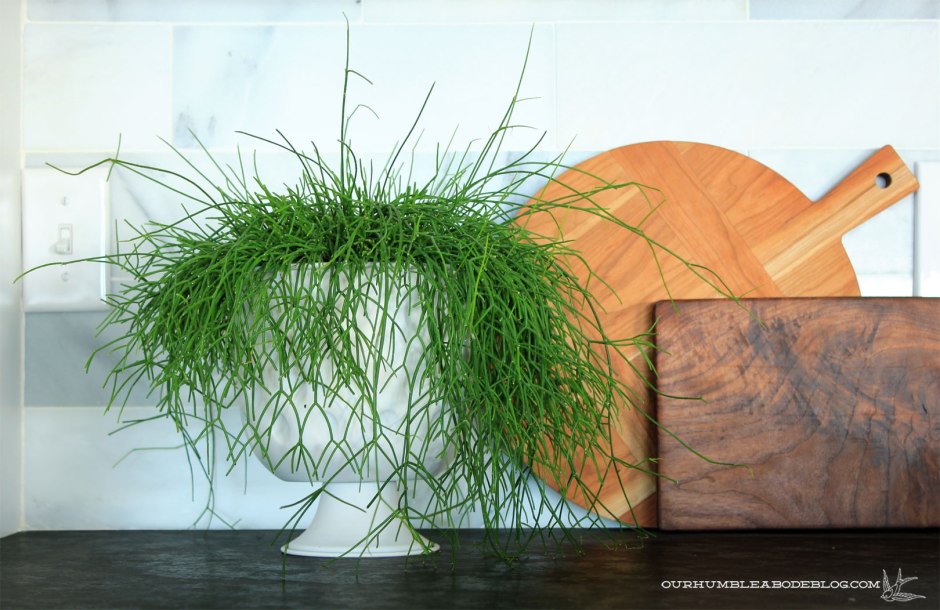
Okay, moving from the more difficult to the easy care plants, succulents and cacti.  Well draining soil is this categories BFF.  This long-haired Muppet is a Rhipsalis Baccifera.  It can tolerate low light, but prefers moderate light.  I happened upon this in the hanging plant section at Lowe’s, but prefer it in a taller footed planter.

Rhipsalis-Plant-in-Kitchen

In terms of texture, this Princess Pine succulent packs a punch.  Living in a smaller pot has forced it to branch out, spilling over the edges.

Princess-Pine-Succulent-on-Master-Window

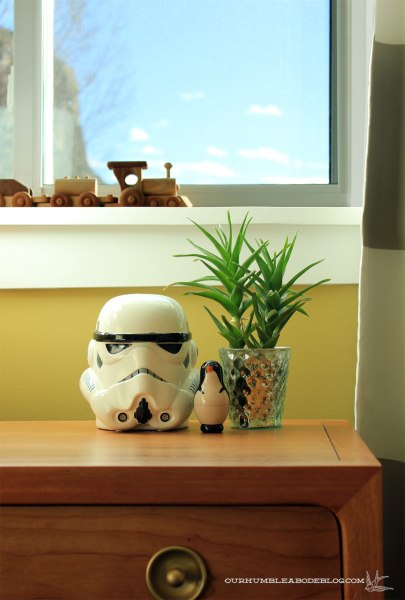
The boys asked for a plant in their room, but it’s so easy to forget about it so I chose a super low maintenance Climbing Aloe.  The east window lets in plenty of light and the occasional watering is easy enough to handle.

Climbing-Aloe-Plant-in-Boys-Room

Sitting on the cart in the dining room, next to the asparagus fern is a Christmas Cactus.  It too is so easy to care for, just a watering per week and that’s all.

Christmas-Cactus-on-Plant-Stand

In my opinion, the easiest house plant of all is the Snake plant.  Luckily, they’re just as easy to find at home improvement stores.  Honestly, I think I water this one maybe every two weeks and let it soak up as much sun as possible next to our north facing door.  That’s it, nothing special.

Snake-Plant-in-Family-Room

As for larger growing plants, of course there’s the Fiddle Leaf Fig.  I found this one at Wal-Mart several weeks ago, but I’ve kept my other alive for nearly three years.  I can’t say I know all the tricks, but watering weekly and keeping in a bright room seem to help.

Fiddle-Leaf-Fig-in-Dining-Room

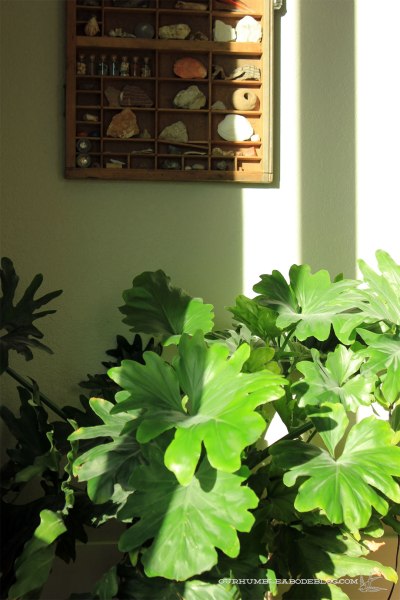
A Big Leaf Philodendron resides in a corner of our living room, near a window.  What started off as a smallish plant has become a crazy, splayed out creature of greatness.

Big-Leaf-Philodendron-Plant-in-Living-Room

Around the holidays, Norfolk Island Pines are abundant.  This one is small, but has doubled in size since I got it two years ago.  I water thoroughly once a week.

Norfolk-Pine-Tree-in-Living-Room

Now for the random group, starting with this Hoya I picked up on clearance because it was looking quite sad.  After bringing it home, I cut off all the dead, droopy leaves.  It’s perking up, but I’d love any tips on keeping it healthy and happy.

Hoya-Plant-in-Bathroom

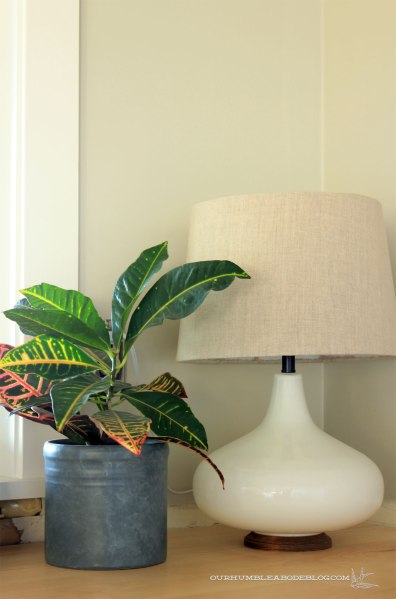
For colorful foliage, a Croton can’t be beat.  Mine is on the small side, but has been a cinch to keep alive and growing.  New leaves sprout out the top and gradually change color with age.

Croton-on-Desk

I think the fastest growing plant in our home is this Peperomia.  When I bought it, it had three leaves on each stem.

Peperomia-Plant-in-Master-Bedroom

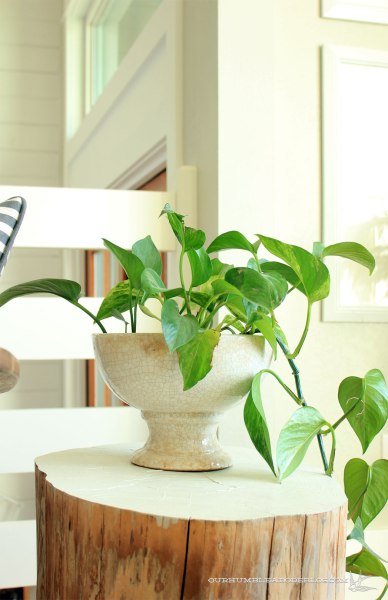
Pothos are another easy to find, easy to care for greenery.  I have three, two living in the brighter living room and entry and another on our mantle.  They’re not picky with lighting requirements, ranging from bright to low.

Pothos-in-Living-Room

Now that I’ve shared mine, care to share your favorite houseplants?  There are so many options, and I’ve realized I prefer greenery over flowers simply because I assume the plant is dying after the flowers fade away.

Building a Sleek Railing

A few weekends back, we took the plunge and replaced our stair railings.

Stair-Railing

It was our first venture, with a few small things to figure out, but overall went smoothly.  To get started, we of course had to remove the old set, loosening the bolts from the underside first.

Basement-Demo-Stair-Railing-Post-Base

With the flat side out, we determined our new post placement.  Since the old railing was too close to the front door trim, we shifted the posts over an inch.

Railing-Building-Old-Out

Ben cut the 4 by 4 inch post to size (38 inches above the floor with 11 inches below), set it in the hole, and cut another post in half length wise and to height for the wall side.  Neither were fastened in place so we could first attach the horizontal planks.  We purchased 2 by 6 boards, but ran the sides through the table saw to cut them down to 5 inches wide and take away the dimensional lumber look.  To save some time sanding, we also ran each plank through the planer for an ultra smooth finish.  Once all the boards were cut and prepped, we cut 4 inch spacers to make sure spacing between was even.

Railing-Building-Spacing

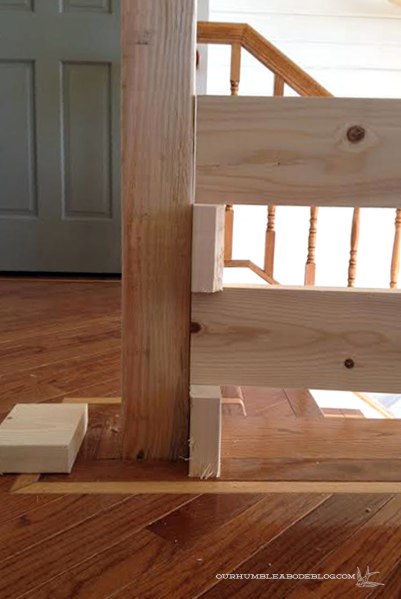
While I held the boards in place on the full post end, Ben worked on the half post side.  He screwed through the backside of the post, into each board three times to secure it in place without visible holes.  Then we shimmied it into place on the wall and fastened it to the wall.

Railing-Building-Wall-Edge

The full post end was only slightly different since we used longer screws.  Ben pre-drilled through the post, creating a recess for the screw head, then drove the screws into place while I kept the each board in place.

Railing-Building-End-Screws-Detail

Railing-Building-End-Detail

Working on the flat side was easy enough and went quickly, but the angled side was a bit tricky.  Again, removing the old was step number one.

Railing-Building-Angled-Side-Out

Another 38 inch tall 4 by 4 post was set into the hole at the top of the stairs.

Railing-Building-Top-Post-Installed

To keep the spacing between the boards even with the flat areas, the post at the bottom had to be taller since the angled cuts make the planks taller.  This post had to be notched out to cut around the stair wall before screwing it in at the base.

Railing-Building-Base-post

Then time for the straight meets angled cut to follow the stair angle.  Once the angles fit perfectly, Ben applied glue on the angle and drove screws in from the top and bottom to keep everything rigid and in place until the glue dried.

Railing-Building-Stair-Angle

Like the other side, Ben put two screws into each plank.

Railing-Building-End-Post

In that corner, where the stairs meet the small section terminated to the wall, we had to stagger the screws so they didn’t cross.  Since the wall section is shorter, one screw in the center held firmly.

Railing-Building-Sides

After everything was securely fastened on the upper sections, Ben drove 6 inch long screws through the posts and into the wall studs below for maximum rigidity.

For a seamless finish, I filled each screw hole, knot hole, and hairline crack with putty and sanded smooth.

Horizontal-Railing-Installed-at-Top

Caulking along the seams and walls was the last step before painting.

Horizontal-Railing-Straight-Section

When painting over raw wood like pine, sap bleed through can be an issue.  For greatest durability and stain blocking, I applied one coat of the same stain I used on our bedroom wall: Sherwin Williams Exterior Oil-Based Wood Primer.  It’s stinky, so I built a fire and opened the windows to air the room out.

Railing-Building-Primer

Knowing white will show any dirt, grubby hand marks, and well, everything else, I needed a paint that could withstand a good scrub.  After a chat with my favorite paint guy at our local Ace Hardware, he suggested Benjamin Moore’s Ben Exterior paint in the low lustre finish to avoid a glossy finish.  Three coats later and it’s a wrap.

Horizontal-Railing-and-Living-Room

With this checked off the to do list, we can start hanging sheet rock in the basement.

A Sleek Stair Railing

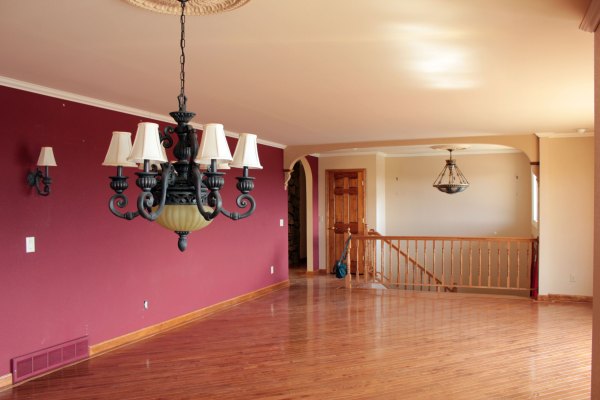
Back on closing day, nearly four years ago now, our living room had a lovely variety of honey toned oak.  Floors, doors, trim, and the railing.  The light fixtures, red accent wall, and arch over the railing were high points, too.

New-House-Dining-into-Living-Room April 13 2012

We’ve since added new trim, painted the doors and walls, replaced the lighting.  Basically changed everything except the floors (which will remain the same) and until recently, the railing.

Living-Room-Space-for-Window-Seat-3

With the basement completely gutted and free of drywall, we finally had access to the underside of the railings.

Basement-Demo-Stair-Railing-Post-Base

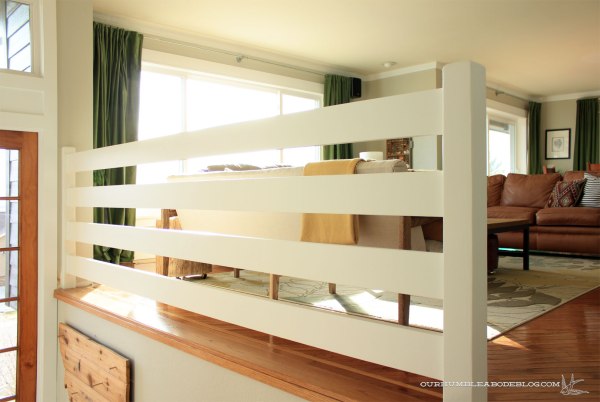
Over the weekend we removed the old oak railings and built a new, sleeker design.  Two years or so ago I started planning what would eventually replace the oak and thought a horizontal layout would look best.  A few months ago I spotted this railing by Milk and Honey Home and knew it would work for our home, too.

Horizontal-Railing-by-Milk-and-Honey-Home

To build our railing we used four by four posts and two by six boards for the rails.  It took a day to build and install, and even before primer and paint, it looked light years better.

Horizontal-Railing-Installed-from-Living-Room

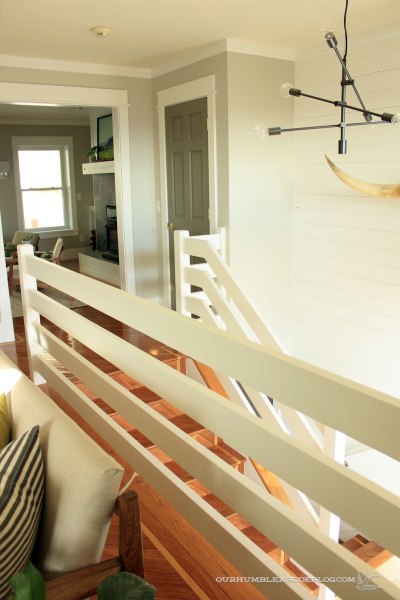
One coat of primer and three coats of white paint later and here we are today:

Horizontal-Railing-with-Linen-Sofa

Be prepared for photo overload.

Horizontal-Railing-Toward-Closet-1

The simple design doesn’t attract unnecessary attention and is sturdier than the old design.

Horizontal-Railing-Straight-Side

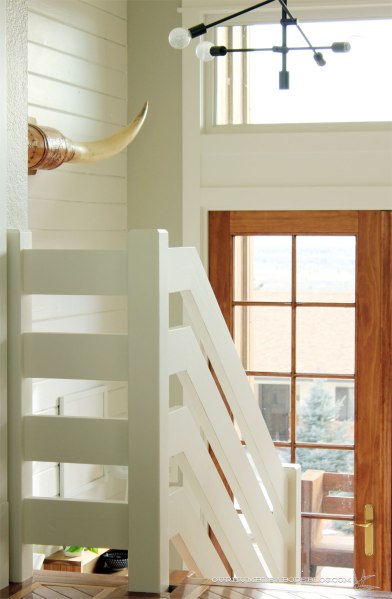
Getting the straight section by the living room done was pretty straight forward, but the angled section was trickier.

Horizontal-Railing-from-Top-Toward-Door

I’ve got a post in the works covering the building process, so I’ll save the specifics for then.

Horizontal-Railing-Looking-Down

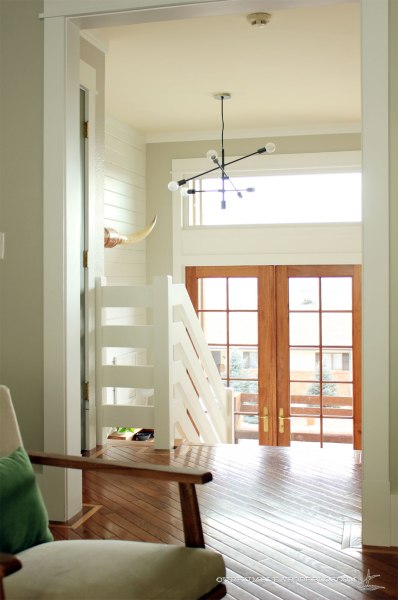
It’s much more modern and more in keeping with the straight lines of the house.

Horizontal-Railing-Top-Detail

Horizontal-Railing-Small-Straight-Section

I may regret my decision to paint it white after the millionth round of washing dirty hand prints off, but I love the way it blends with the tongue and groove wall.

Horizontal-Railing-Angled-Section

The post tops are simply a 45 degree angle and rise 2.5 inches above the top rails.

Horizontal-Railing-Angle-at-Entry

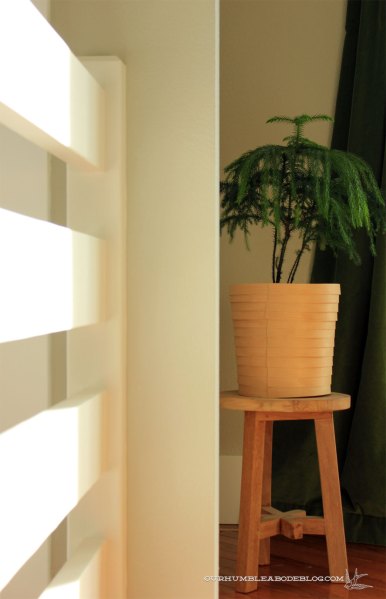
To give the boards a defined termination into the wall, we cut a post in half for a seamless look.

Horizontal-Railing-Half-Post-End

Every new change is so exciting to see when walking past, and this one has been a long time coming.

Horizontal-Railing-from-Family-Room

The way it brightens up the entry and living room is my favorite.

Horizontal-Railing-and-Living-Room

Once we’ve replaced the tile, our entry checklist will be complete.

Horizontal-Railing-from-Front-Door

And with the railing complete, we can continue work in the basement and should be ready for sheet rock soon.  Then the fun can begin!  I’m already gathering paint samples, measuring for furniture, and we’ve purchased a couch for the theater room.