Built in Hutch

If we hop into the way back machine, it shows a kitchen closed off by a wall of dark oak cabinetry.  Ignore the boxes, this was right around moving in.

Kitchen-Pantry-After-Move-In-April-30

Not only did those cabinets make the kitchen feel isolated, it made a fun game of ring around the island to get anything ready to cook.  When we remodeled the kitchen, we pulled those out.

Kitchen-Pantry-Cabinets-Out

To open the kitchen to the dining and living rooms on the other side, we knocked down most of that wall, leaving us with the glorious open floor plan we love.

Kitchen-to-Dining-Wide-Opening-Frame-Removal

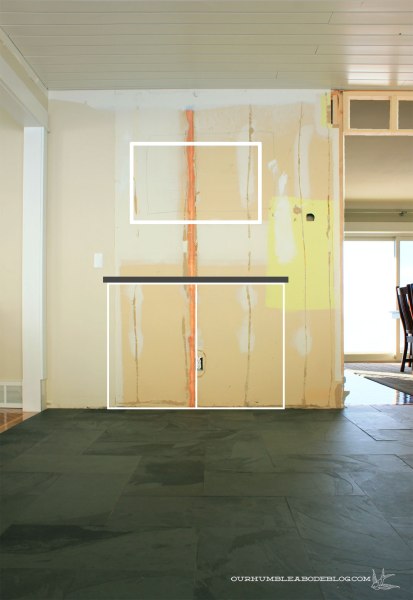
Across from the breakfast table, there’s about six feet of wall to work with.  Initially, we considered hanging art or a tv above a base cabinet, like so:

Kitchen-to-Dining-Blank-Wall-Cabinet-Sizing

The base cabinet became our bar area, which has quickly expanded from a few bottles to a variety.

Kitchen-Bar-Cabinet

To accommodate bottles, bar ware, extra serving platters, and dishes, we agreed a built-in hutch above the base cabinet was the best use of space.

Built-in-Hutch-Plan

My plan included one open shelf for easy access for drinks in addition to three shelves closed off by glass doors.  Ben surprised me by including under cabinet lights to illuminate the glasses.

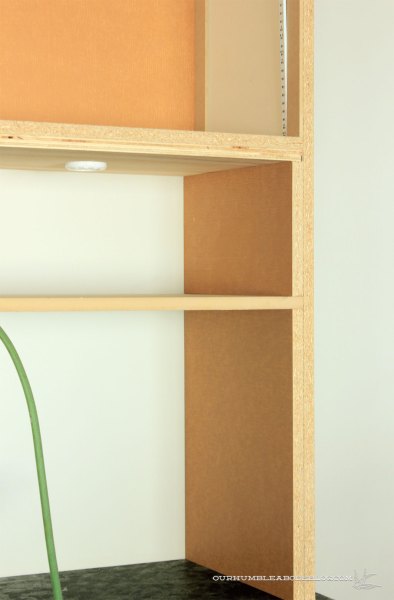
Built-in-Hutch-Building-Sides

To easily store serving platters, dishes, and anything else, we wanted adjustable shelves.  Tucking the tracks between 1/4 inch thick MDF gives a smooth inside.

Built-in-Hutch-Recessed-Track

And here it is, done.

Built-in-Hutch-Building-Upper

Kidding, only the building was complete there.  Primer and paint to the rescue!

Built-in-Hutch-Overall

This was after paint, but before shelves went in, but take a look at the way the lights make the glasses sparkle.

Built-in-Hutch-Upper-Section

I’m sure the placement of everything inside will change many times, but I’m calling the hutch complete.

Built-in-Hutch-Finished

On the counter, the bottles are super easy to get to, along with glasses right within reach.

Built-in-Hutch-Bar-Area

Glass front cabinets are one of my favorite elements in kitchens, striking the perfect balance between solid doors and open shelving.

Built-in-Hutch-Upper-Storage

Built-in-Hutch-Right-Side

Taking the cabinet sides down to the counter grounds the upper cabinet, making it one piece and gives this small side definition.

Built-in-Hutch-Sdie-Toward-Hall

Platters, large bowls, and other special smaller pieces are safely on display in the above cabinet, but can easily be pulled out to use.

Built-in-Hutch-Upper-Section

Before, those pantries took over that side of the kitchen.

Family-Room-from-Kitchen-Two-Years-Later

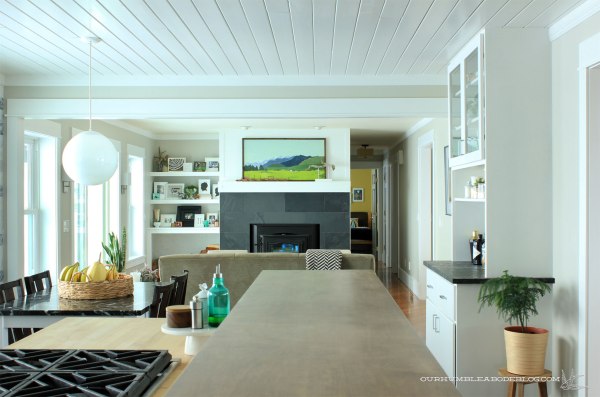
Wow, that feels like a million miles ago, but a year ago, we had that view.  Now, it’s bright and open, while still making that corner functional.

Built-in-Hutch-Before-and-After

Wrapping up small projects is on the list before we gut the basement, and it feels amazing to cross this off the list.  Using it is pretty great, and having a drink station came in so handy on Thanksgiving.

Box Cushion Tutorial

Quite often, I have a hard time passing up a good deal.  Even though I didn’t need another set of chairs, the shape, style, lines, and potential these lovelies had made it impossible for me to pass up.  As if I needed more encouragement to just get the dang chairs, the $4.99 price tag did me in.

Five-Dollar-Chair-Before

Clearly, their better days were behind with dings, stains, missing cushions and atrocious fabric.  With a dozen or more full refinishing projects under my belt, I knew the wood would come right back to life with a thorough sand and new stain color.  What I hadn’t done before was sew box cushions.

MCM-Chairs-Updated-in-Family-Room

Measuring and math are seriously the worst in my opinion, and sewing precise covers almost made me lose my marbles.  To get started, I dug three yards of a heavy small herringbone patterned upholstery fabric from my stash.  Let me tell you, that was the most stressful part, knowing I had only three yards, without a possibility of getting more fabric since I’ve had this for a few years.  So, I carefully measured each section of my cushions and marked it on the fabric, leaving as little waste as possible.

Box-Cushion-Panel-Layout

The outer black shows the cut lines, while the inner gray shows where I’ll actually stitch.  For every piece, I added 1 inch to my measurement, leaving me with a 1/2 inch seam allowance on all sides.  This is just a little wiggle room to work.

As the chairs originally were, a stretched, worn out vinyl web was the support for the seat cushion.  This system offered zero support and sagged like a weeping willow.  Not going to work, so I decided a plywood base would offer the lacking support, but could easily be wrapped with fabric for a seamless look.

Starting with the seat cushion, I measured from front to back and side to side and cut out one 21 inch deep by 20.5 inch wide top panel for each chair.  The foam was only 3 inches thick, but I cut 5 inch pieces to wrap the sides, leaving extra to staple to the wooden base.  One option to make the side wrap is to cut one long, skinny strip to go around all sides.  With my patterned fabric, even a small, subtle pattern, I wanted to keep the design going the same direction.  When I cut the left and right panels, I cut in line with the design to match the top piece.

Once my pieces were marked and cut, I broke out the sewing machine.  Warning, don’t do exactly as I have pictured here.  This was my first round and while it worked, I did make one small adjustment to my method for the remaining three cushions.  First, pin everything right sides together, but don’t sew a single stitch.

Box-Cushion-Seat-Sides-Pinned

Pretend that right side hadn’t already been sewn and there are only pins in place, because that stitched area adjusted my corner seam.  See how it doesn’t meet up?  Do as I say and not as I show!

Box-Cushion-Seat-Corners-Pinned

On my remaining three covers, I pinned all the pieces together before stitching anything.

Box-Cushion-Corners-Pinned

Typically, the side pieces would be stitched together first to create that single long, skinny wrap ‘belt’ piece.  I found it was easier to sew the side panels to the top section first, staying an inch or so away from the corner.  Then, I stitched the short box corners, going end to end and reversing to lock in the stitching.
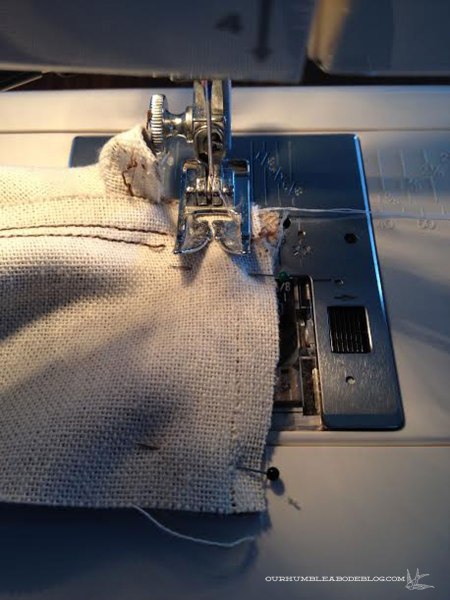
Box-Cushion-Sewing-Corners

With the sides sewn to the front and the box corners stitched, this is when the corners meet.  I found it easiest to first pin the pieces together like this:

Box-Cushion-Corner-Pinned

Then to flatten out the seam for a tight corner.
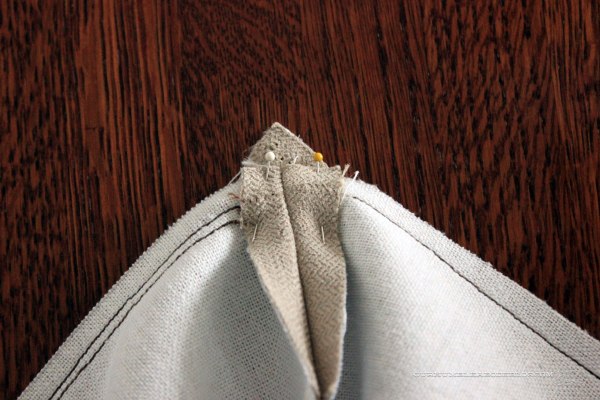
Box-Cushion-Corner-Pinned-Flaps

To close the gap, line up the needle where the corner stitching (the brown thread in the above photo) left off.  Start sewing, reverse to lock it in, then continue until the corner where you’ll need to turn.  Leave the needle down, then pivot to continue until you’ve overlapped the side stitching, reverse and one corner is complete.

Box-Cushion-Stitching-Corner

After sewing two base cushions, I set the foam on my wood base, then covered the top with the sewn box.  I followed the same upholstery process at that point, pulling tightly and making sure the seams fall in place.

Box-Cushion-Upholstered-Seat

To create double-sided, removable covers with a zipper, the process isn’t much different, just a few small changes.  First, rather than cutting four side panels, cut five: left, front, right, top of zipper, and bottom of zipper.  For the ease of it, I cut my zipper sections the same width, leaving extra to cut off before stitching it in place.  Secondly, the sides will be the thickness of the foam plus the seam allowance on either side.  For a two-inch cushion with a 1/2 inch seam allowance, you’ll need to cut a three-inch wide piece.

To create the zipper panel, start by marking where your zipper starts and stops on each piece, centering the zipper on the width.  Then, at a half-inch allowance, sew right sides together on a short stitch (between a 1 and 2) for the areas at the first end, until you hit the mark.  Without removing the fabric or lifting the presser foot, change the stitch length to the longest stitch possible and cruise along until you hit the other zipper end mark.  Change back to the original close stitch and finish down to the end.  Always reverse a few stitches at a starting a stop point of close stitches to create a ‘knot’ and lock everything in place.

Box-Cushion-Zipper-Panels

Iron the seam flat before sewing the zipper in place for a smooth finished piece.  Center the zipper face down on the underside of that sewn strip and stitch into place as usual.

Box-Cushion-Zipper-End-Inside

Once the zipper is in place, turn the panel over and carefully cut out the long stitch in front of the zipper.  This creates a tiny pocket/flap to hide the zipper under.

Box-Cushion-Zipper-Opened-Detail

But the ends are tightly sewn shut still, thanks to the shorter stitch.

Box-Cushion-Zipper-Opened

Trim off an excess on the sides of the zipper, making it match the width of the other side sections.

Box-Cushion-Finished-Zipper

Then, follow the first steps, sewing sides to the top, followed by the corners until you’re ready for the back panel.  Open the zipper-this is crucial, or you won’t be able to turn the cover right side out.  Pin the back piece in place and carefully stitch along, working slowly around the corners.

Box-Cushion-Back-Pinned-On

Before turning right side out, snip away any bulky areas, but still leave enough fabric so it won’t tear with use.  If you’re feeling up to it, iron all the seams for really straight, tight seams and corners and then stuff the foam in.  Give yourself a big pat on the back and your favorite treat (chocolate, wine, beer, a nap!) for not giving up/throwing it in the trash/creating something that is a pain in the butt.

Helpful tips:

  1.  Use the longest stitch for the first corners, just to make sure it all lines up and looks good.  If it doesn’t, it’s easy to pull out and try again.  If it does look good, go back over that stitching with a shorter stitch to secure everything in place.
  2. If you’re cutting foam, wait to cut until the covers are sewn.  It’s better to have a tighter fit than to find out you have to stitch with a wider seam allowance to shrink the covers down.  I left my foam an inch wider and taller than my back cushions for a fuller look.
  3. Have extra needles on hand.  I broke one, then had to wait until morning to get extras and it was stupidly annoying to me.

As daunting as the covers seemed, after the first one, I had worked out the kinks and felt much more confident in what I was doing.
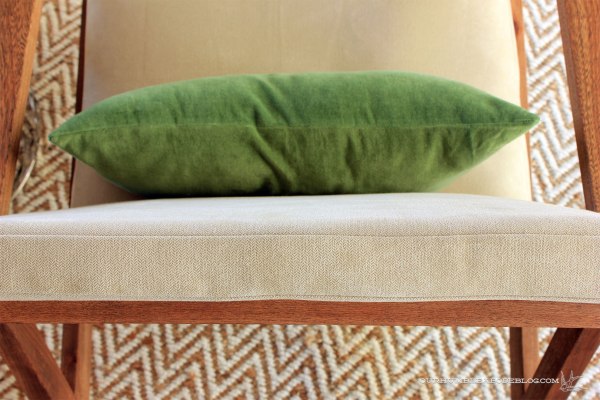
MCM-Chairs-Updated-Top-Cushions

The subtle pattern of the fabric is noticeable up close, but looks like a nice neutral from across the room.
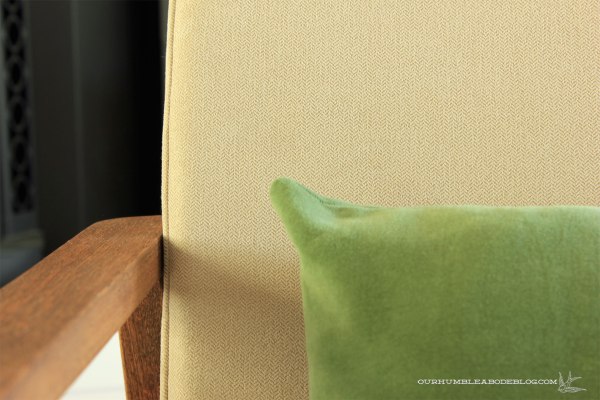
MCM-Chairs-Updated-Fabric-Detail

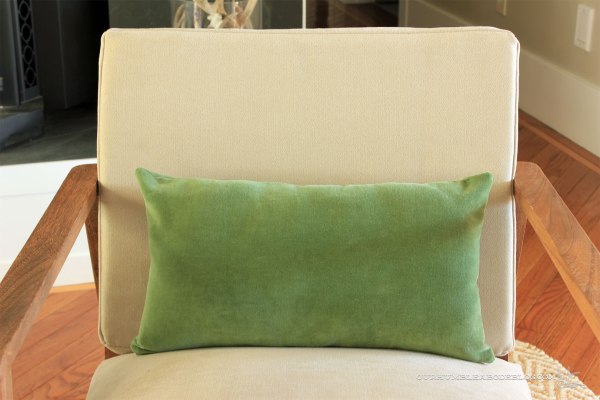
If, okay, more likely when I feel up to it, I still need to iron the seams for a straighter, clean fit.  Hashtag OCD problems-ha!
MCM-Chairs-Updated-Back-Cushion-Detail

Honestly, sewing the covers went easier with each one.  It seems like a lot of steps and work, but once you get the hang of it, it’s really not so bad.  As long as you have extra needles.  And a good seam ripper.  Have you entered the Minted giveaway yet?

Minted Giveaway

Update:  Random.org has chosen Laura as our winner.  Happy Holidays, everyone!

Have you heard?  In addition to beautiful, quality stationery (including Christmas and holiday cards, for those still looking), Minted now offers home goods.  Oodles of pretty pillows, table linens, and fabrics to add character and charm to any room in the house.

This Painterly Ikat Pillow comes in ten color options, including a lively green.


The hand drawn looking design of the Uneasy Stripes Pillow is perfectly simple.

If you gravitate toward geometric designs, the Iron Gate Pillow is for you.

Add a splash of nature with the Leafy Berries Pillow.  I adore the wat the kelly green backing makes the design pop.


Art is a great gift for the hard to buy for, person with everything, and with custom options this cute, they’re sure to please.  Turn any kids drawing into art with foil or a Drawing as Letterpress Art.

Years ago, I commissioned a custom house painting of our previous house and it’s still a favorite of mine, even though we’ve moved since then.  I love the modern take of these Custom House Portraits.

Think how happy a parent or grandparent would be to receive a Custom Silhouette Art piece this holiday season?

Of course, fine art prints are still available, too.  Favorites of mine like Mornings Away by Emily Jeffords.

A moody, abstract Gesturing Man by Derek Overfield to add drama.

The cheery, springy Sun Seeking by Elaine Lamb can wake up the dreary winter days.


The Goods:  A $50 shop credit good for or toward anything on the Minted site.

To Enter:  Check out Minted and leave a comment with your favorite item.

For additional entries:

1.  Like Our Humble Abode on Facebook.  Come back to leave a second comment.

Contest Closes: Sunday, December 13th.

Number of Winners: One!

Other Info: We will select the winner using random.org and announce on Monday, December 14th.

Another $5 Chair Pair

Around a year and a half ago, while searching for thrifted treasures in need of some love, I found a pair of chairs, each priced at only five bucks.  Of course, at that price, the chairs weren’t perfect.  Far from it, in fact with torn orange vinyl seats and dark stained wood.  Basically, all 70’s glory.

ReStore-Chairs-by-Fireplace-Before

After a few hours of sanding, several yards of fabric, and elbow grease, the chairs were much more sturdy and neutral.

Update 70's Chairs

Rewind two weeks ago and I had a similar experience, stumbling on a pair of mid-century chairs in need of help, for a mere five dollars each.

Five-Dollar-Chair-Before

The size and shape are exactly what I wanted, offering a more relaxed, reclined seat.  The wood wasn’t in terrible (or excellent) condition, but each came with only bottom cushions that had been quickly recovered in a two-tone damask fabric.  After removing the outer fabric, I found the original mustard fabric lurking beneath.  Ugly, but in good shape.

Five-Dollar-Chair-Before-Back

Five-Dollar-Chair-Before-Detail

Following my usual refinishing process, I backed out the screws, disassembled the chairs, and started sanding with 220 grit paper.  Sanding is a little tedious and time-consuming, but in my opinion, the easiest and most effective way to get a clean slate.  Paint strippers leave behind a residue that’s tough to clean off and gums up sanding pads after.  For hard to reach, detailed, or delicate areas, strippers are okay, but for all flat parts, stick with sanding.  Whew, got out the pent-up feelings on paint strippers and now I’m carrying on.

With the similar style wood and linen sofa in the neighboring living room, I wanted the new chairs to coördinate.  A coat of Special Walnut stain warmed up the wood beautifully, followed with a teak oil protective coat.  As long as the sanding process can seem, that was the easy part.  I took my first crack at sewing box cushions.  I’m pleased to report, after a few trials, moments of frusteration, and a broken sewing needle, the box cushions didn’t get the best of me.  Full tutorial for the cushion covers coming at you soon.  We now have beautiful, updated chairs in the family room.

MCM-Chairs-Updated-from-Top-of-Stairs-Detail

Even though I liked the previous chairs, the upright, smaller seat was comfortable, but not inviting or especially conducive to relaxing.  This low-slung style and deep base are comfy and stylish.

MCM-Chairs-Updated-from-Top-of-Stairs

Just look at the old versus the new.

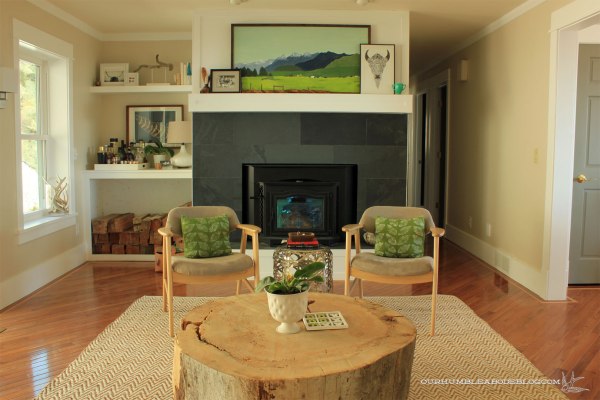
West-Elm-Rug-In-Family-Room-by-Fireplace

MCM-Chairs-Updated-in-Family-Room

A slightly darker wood tone offers a better contrast against the stump turned coffee table, too.

MCM-Chairs-Updated-by-Fireplace

Applying a lighter toned and thinner stain also lets the pretty grain shine through.  Before, it wasn’t obvious.

Five-Dollar-Chair-Before-Side

Now, look at that great detail!

MCM-Chairs-Updated-by-Fireplace-Side

For a small dose of my favorite color, I used leftover fabric from our headboard to create lumbar pillows to jazz up the neutral fabric.

MCM-Chairs-Updated-by-Fireplace-2

Because I’m a fabric hoarder, I mean lover, I was able to use an upholstery fabric I already had.  Reusing the base cushion foam, sturdy metal zippers, and stain I had on hand means the only purchase made (besides the chairs themselves) was two-inch foam to create the back cushions.  Total monetary investment per chair: a whopping $14.  Total time invested: countless hours.  Outcome: priceless, and worth it.

Green and Plaid Thanksgiving

Each Thanksgiving, I combine plates, glasses, and silverware we already have with a few new pieces to create a table setting.  In 2011, we had a navy and gold theme, complete with DIY’d bread boats.

Thanksgiving 2011 Place Setting

2012 was the year of neutrals including gray, gold, copper, and wood.

Thanksgiving 2012 Table Setting Candles

In 2013, seemingly to make up for the lack of color the previous year, I went color crazy with cacti, pink, orange, yellow, and red.

2013-Thanksgiving-Table-Setting-Detail-3

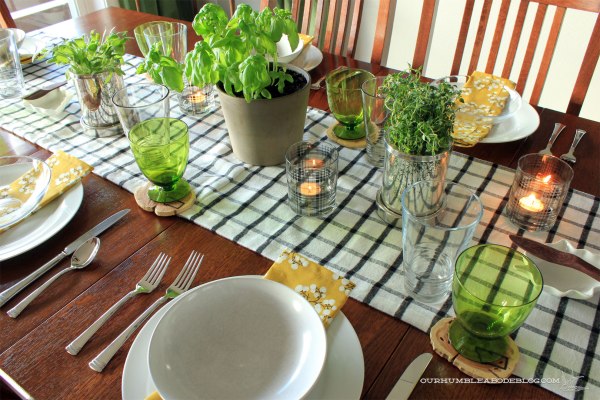
This year, fresh and simple won me over.  Plain white plates and bowls, clear glasses and silver flatware are always my base layer.  To shake things up and create a different look, I add color through the centerpiece, napkins, and accents.

Thanksgiving-Table-Setting-Overall-Vertical-End

After spotting a black and white flannel in the fabric store, I knew it’d make the perfect runner.  Along with mustard yellow printed fabric to create napkins.

Thanksgiving-Table-Setting-Overall

Thanksgiving-Table-Setting-Overall-from-Side

In place of flowers, I went for practicality in the form of living herbs.  Not only does the potted greenery brighten the table, we can use the fragrant leaves to season the meal.

Thanksgiving-Table-Setting-Candles-and-Herbs

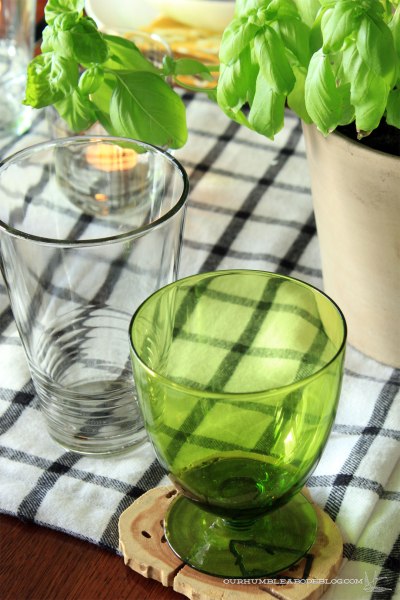
Green stemmed goblets continue the color around, and are my most recent dish addition.

Thanksgiving-Table-Setting-Herb-Detail

In place of standard candle holders, I popped tea lights into black and gold plaid tumblers from Target.  Perfect way to use the decor after the holiday.  Shallow leaf-shaped bowls are used as butter dishes and scattered around the table along with hand carved wooden knives.

Thanksgiving-Table-Setting-Thyme-and-Butter-Dish

For a little warmth, wooden coasters, made by my brother-in-law as wedding favors, are mostly decorative.

Thanksgiving-Table-Setting-Glasses-and-Coaster

All that’s left to do is get everyone over, make the food, and enjoy the company.  This is the first big holiday meal we’ll get to create in our remodeled kitchen-those double ovens and extra burners should come in super handy.